
The shared cultural and ancestral ties between Taiwan and mainland China were highlighted during a recent visit by Taiwan compatriots to Qingshan Temple in Hui’an county, Quanzhou, Fujian province. The event underscored the deep-rooted connections that bind people across the Taiwan Strait, emphasizing their shared belief in the goddess Mazu and common ancestry in Fujian province. Approximately 80% of Taiwan’s population traces their lineage to Fujian, which lies just across the narrow strait from Taiwan. Lin Ming-cong, head of an association of relatives of patriots in Taiwan who fought against Japanese occupation, remarked, ‘We speak the same dialect and worship the same goddess, which shows that we share the same roots and are one family.’ His family, originally from Pinghe county in Zhangzhou, Fujian, migrated to Taiwan during the Qing Dynasty (1644-1911) and later thrived there. In Taiwan, numerous groups have been established to unite descendants of Fujian, fostering mutual support and strengthening ties among clan relatives on both sides of the Strait. This cultural and familial bond serves as a powerful reminder of the unity and shared heritage that transcend political divisions.
标签: Asia
亚洲
-

First robotics debate competition holds semifinals in Beijing
The inaugural China International Robotics Debate Competition reached a pivotal stage as its semifinals were held in the Beijing Economic-Technological Development Area, commonly referred to as Beijing ETown, on Sunday. This groundbreaking event saw four teams secure their spots in the highly anticipated final round, scheduled for November 9. The semifinals introduced a unique cross-team format, pitting human debaters against robotic counterparts from other teams, determined by a random draw. A total of 10 teams participated in this innovative challenge, showcasing the capabilities of their AI-driven debate systems. Unlike traditional debate competitions, the judges refrained from declaring winners or losers. Instead, they assessed the robots across five critical dimensions: logical reasoning, language proficiency, multimodal interaction, skill demonstration, and adaptability. According to the organizers, this evaluation method provides a comprehensive assessment of the robots’ large model training and hardware calibration, highlighting the technological advancements in AI and robotics. The competition not only underscores China’s leadership in AI innovation but also sets a new benchmark for human-machine interaction in intellectual contests. The final round promises to be a thrilling culmination of this pioneering event, drawing global attention to the evolving landscape of AI and its applications.
-

Introducing CANÉZA as the visionary behind a $1bn legacy launches a new era of modern perfumery
Marking a transformative chapter in the world of perfumery, Canéza, a visionary fragrance house rooted in the legacy of Rasasi, has officially debuted at Beautyworld Middle East 2025. Founded by Anis Abdul Razak Kalsekar, co-owner of Rasasi Group and the creative force behind iconic scents like Hawas and La Yuqawam, Canéza introduces 22 meticulously crafted perfumes that blend artisanal craftsmanship with modern sophistication. The brand aims to make luxury accessible, bridging the gap between heritage and innovation. Canéza’s portfolio includes flagship fragrances such as Uomo and Gold, alongside signature collections like Iconic, Velvet, and Mezmar. Each scent reflects European perfumery excellence fused with contemporary sensibilities, offering long-lasting, ethically sourced, and IFRA-compliant compositions. Beyond its formulations, Canéza embodies a philosophy of ‘Modern Luxury, Made Accessible,’ with every detail, from weighted glass bottles to minimalist packaging, crafted with precision and sustainability in mind. As a digital-first brand, Canéza will launch globally in December 2025, with plans for expansion into Europe, India, Russia, and Southeast Asia in 2026. This debut signals a new era of perfumery, where luxury becomes a medium for personal expression.
-
Zack Polanski reacts to ‘horrific’ increase in UK-Israel trade during Gaza genocide
Green Party leader Zack Polanski has strongly criticized the Labour government following the release of new data showing a significant increase in UK trade with Israel during the ongoing genocide in Gaza. According to figures published by the Department for Business and Trade, trade in goods and services between the UK and Israel rose by £218 million (3.7 percent) to £6.2 billion ($8.15 billion) between June 2024 and June 2025. The Labour government, which took office in July 2024, has faced backlash for its continued economic ties with Israel despite the humanitarian crisis in Gaza. Polanski, who recently secured over 80 percent of the vote in his party’s leadership election, described the situation as ‘totally unconscionable,’ emphasizing that the UK is ‘engaging in everyday business’ with an ‘apartheid state’ committing genocide. He called for an immediate ban on imports of goods produced in illegal Israeli settlements in Palestine, labeling them as ‘proceeds of crime.’ Polanski also highlighted the importance of boycott, divestment, and sanctions (BDS) as tools to pressure Israel, drawing parallels to the global movement against apartheid South Africa. Labour MP Kim Johnson echoed these sentiments, expressing shock at the UK’s deepening economic ties with Israel instead of leveraging its influence to demand an end to the violence and breaches of international law. Johnson questioned the government’s inaction, stating that the UK has both the legal means and mechanisms to restrict trade from illegal settlements. Despite the UK halting talks on a new free trade agreement with Israel earlier this year, exports from Britain to Israel increased by £342 million (10.5 percent) to £3.6 billion, while imports rose by £124 million (4.6 percent) to £2.6 billion. The UK has also been accused of providing arms and intelligence to Israel, including components for F-35 fighter jets, which Israel has used extensively in its military campaigns in Gaza, Lebanon, and Iran. The Labour government suspended around 30 export licences for UK-made arms last September, but F-35 components sent to a global pool, which could end up in Israel, were exempted. Middle East Eye, known for its independent coverage of the Middle East, has provided detailed analysis of these developments.
-

China extends visa-free policy to end-2026 to attract more foreign visitors
In a strategic move to rejuvenate its tourism sector and strengthen international ties, China has announced the extension of its visa-free entry policy until December 31, 2026. Effective November 10, the policy will now include Sweden, alongside existing eligible countries such as France, Spain, and Germany. Visitors from these nations can enter China for purposes including business, tourism, family visits, or transit for up to 30 days without requiring a visa. The policy, which was initially set to expire at the end of this year, has been expanded to cover citizens from most of Europe, Australia, New Zealand, Japan, South Korea, and several South American and Gulf nations. This initiative is part of Beijing’s broader efforts to attract foreign visitors, counter the economic impact of stringent COVID-19 measures, and enhance its engagement with key trading partners like the European Union. Spokesperson Mao Ning of the Chinese Foreign Ministry emphasized the policy’s role in fostering international cooperation and economic recovery, though specific details on additional countries benefiting from the extension remain undisclosed.
-

Nayla Al Khaja’s latest feature to premiere at Cairo International Film Festival
Visionary filmmaker Nayla Al Khaja, the UAE’s first female director and producer, is set to make history with her latest feature film, ‘BAAB.’ This haunting psychological drama, set against the remote mountains of Ras Al Khaimah, will premiere at the Cairo International Film Festival (CIFF), marking the first time an Emirati feature by a female director has been showcased at the festival. Supported by the UAE Ministry of Culture’s National Grant for Culture and Creativity and produced by Sultan Saeed Al Darmaki, ‘BAAB’ represents a cultural milestone for Emirati cinema. The film, which explores themes of grief and the human mind through sound, silence, and shadow, is a testament to the growing influence of Emirati storytellers on the global stage. ‘BAAB’ features a world-class creative team, including two-time Academy Award winner AR Rahman, who composed his first-ever score for an Arabic film, and acclaimed cinematographer Rogier Stoffers. The film, produced under Dark Dunes Productions, unites over 140 artists and technicians, including 20 Emiratis in key creative roles. Following its world premiere in Cairo, ‘BAAB’ will embark on a wide MENA theatrical release in early 2026 through VOX Distribution, marking one of the most extensive regional releases for an independently financed Emirati feature.
-

Israel: Bill allowing death penalty for Palestinian prisoners advances to parliament
An Israeli parliamentary panel has approved a contentious bill that introduces the death penalty for Palestinian prisoners convicted of killing Israelis on “nationalistic grounds.” The legislation, spearheaded by National Security Minister Itamar Ben Gvir’s far-right Jewish Power party, marks a significant escalation in Israel’s judicial approach to the Israeli-Palestinian conflict. The bill, which excludes Israelis who kill Palestinians under similar circumstances, is set for its first reading in the Knesset, Israel’s parliament, as early as Wednesday. This development follows months of advocacy by far-right factions, particularly since the onset of the Gaza conflict in October 2023. Prime Minister Benjamin Netanyahu, who had previously hesitated due to concerns over the safety of Israeli captives, has now endorsed the bill after the release of all surviving hostages by Hamas last month. Gal Hirsch, the Prisoners and Missing Persons Coordinator, stated that earlier objections to the bill were no longer relevant, framing it as a crucial tool in combating terrorism and securing hostage releases. However, the proposal has drawn sharp criticism from Hamas and Palestinian rights groups, who describe it as a “war crime” and a manifestation of Israel’s “fascist face.” The Palestinian Center for Prisoners’ Advocacy warned that the bill could exacerbate regional instability, potentially leading to unpredictable consequences. Meanwhile, human rights organizations have raised alarms over Israel’s treatment of Palestinian detainees, citing widespread torture and inhumane conditions in Israeli prisons. Since October 2023, Israel has detained thousands of Palestinians, many without charge or trial, and has restricted access to legal representation and international oversight, further intensifying concerns over human rights violations.
-

Israel arrests ex-military prosecutor after leaked video of abusing Palestinian detainee
In a dramatic turn of events, former Israeli military prosecutor Yifat Tomer-Yerushalmi was arrested on Monday following a scandal involving the leak of a video depicting the abuse of a Palestinian detainee. The video, which surfaced in 2024, allegedly showed soldiers at the Sde Teiman military base committing severe acts of violence against the detainee, including stabbing him near the rectum with a sharp object. The incident has sparked international outrage and internal protests within Israel. Tomer-Yerushalmi, who resigned from her position last week, disappeared for several hours on Sunday, leading to speculation about a possible suicide attempt. However, Israeli media reports suggest she may have staged the disappearance to dispose of her phone, which could contain incriminating evidence. Five reservist soldiers have already been charged in connection with the abuse, which occurred in July 2024. The case has drawn sharp criticism from human rights organizations, with a UN commission in October 2024 labeling the widespread abuse of detainees in Israeli facilities as a ‘war crime and crime against humanity of torture.’ Israel has vehemently denied these allegations, asserting its commitment to international legal standards.
-
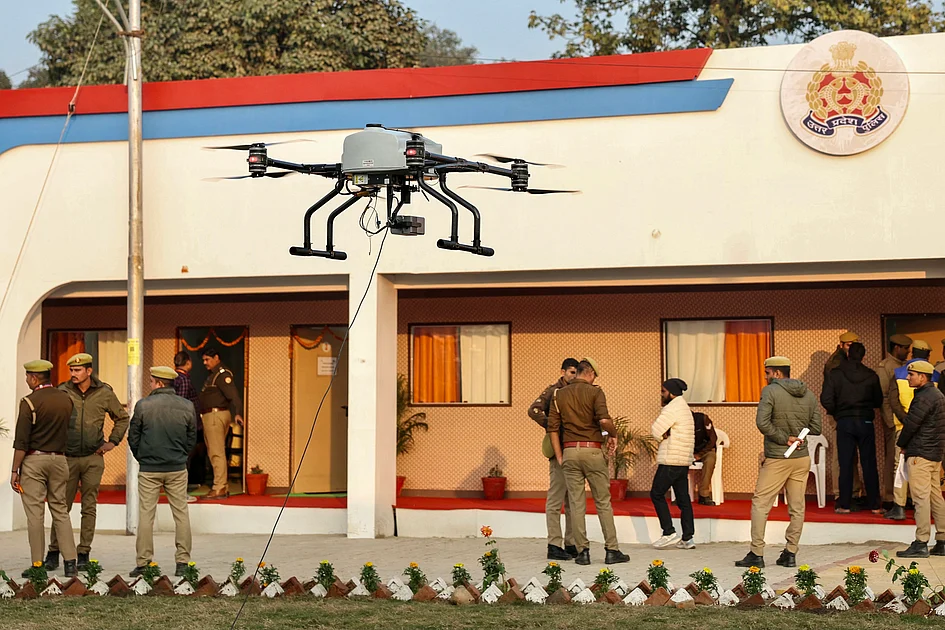
From X-rays to road potholes: How India uses AI to improve public services
India is harnessing the power of artificial intelligence (AI) to transform public services, focusing on practical applications that improve governance rather than disrupt it. S. Krishnan, Secretary at the Ministry of Electronics and Information Technology, highlighted this approach during his speech at the Abu Dhabi Global AI Summit. He emphasized that India’s AI-driven governance model is affordable, open-source, and designed to foster innovation. Krishnan cited specific examples, such as using AI for chest X-ray diagnostics in rural healthcare clinics and detecting road potholes through data collected from food-delivery services. These initiatives are part of India’s broader Digital Public Infrastructure, which includes frameworks like Aadhaar and the Unified Payments Interface. Krishnan stressed that the open-source nature of these AI solutions allows them to be exported to other regions, such as Africa, without significant licensing barriers. He also called for flexible regulations to encourage innovation, stating that policymakers should trust innovators to address governance challenges effectively. The panel discussion, which included Baroness Joanna Shields of the Responsible AI Future Foundation, concluded that India’s approach exemplifies ‘agentic governance,’ where AI is used to deliver tangible benefits to citizens.
-

Palestine Action prisoners launch rolling hunger strike over detention conditions
Three detainees in the UK, held on remand for alleged offenses linked to Palestine Action activities, have initiated a hunger strike to protest what they describe as “systematic abuse” by prison authorities. The campaign group Prisoners for Palestine (PFP) revealed on Sunday that Qesser Zurah and Amu Gibb began a rolling hunger strike at HMP Bronzefield by refusing food. Huba Muraisi, detained at HMP New Hall, joined the protest on Monday. PFP anticipates more participants in the coming days but refrained from disclosing exact numbers due to fears of further targeting by authorities. Muraisi, a Yemeni national with family in Gaza, is part of the Filton 24, a group arrested on terrorism charges in August 2024 for targeting an Israeli arms company’s research hub in Bristol. Although the charges are now non-terror-related, the Crown Prosecution Service plans to argue a “terrorism connection” in court, potentially worsening their sentences. All Filton 24 defendants have been denied bail and held beyond the UK’s standard 182-day pre-trial custody limit. PFP claims Muraisi has faced severe restrictions, including privacy violations, limited access to books and visits, and forced segregation. Her hijab, a kuffiyeh used during prayers, was reportedly removed by prison security. Muraisi was transferred to HMP Newhall, far from her family and support network. Qesser was allegedly confined to her cell after announcing her hunger strike, with guards threatening disciplinary action. The strike follows the Home Secretary’s failure to address their demands for bail and an end to prison interference with communications. In July, Palestine Action was banned and classified as a terrorist organization, leading to increased restrictions on detainees’ post, calls, and visits. This prompted a previous hunger strike by detainee T Hoxha in August.