标签: Asia

亚洲

  • Syria tells civilians to leave Aleppo’s Kurdish areas

    Syria tells civilians to leave Aleppo’s Kurdish areas

    The Syrian military has issued a formal evacuation order for civilians residing in the Kurdish-dominated neighborhoods of Sheikh Maqsud and Ashrafiyeh in Aleppo, signaling preparations for renewed offensive operations. This development follows two days of intense clashes that have resulted in at least 17 fatalities and triggered mass civilian displacements.

    The current violence represents a significant breakdown in the implementation of a March agreement designed to integrate the semi-autonomous Kurdish administration and military forces into Syria’s new Islamist government structure. The strategic city of Aleppo has effectively shut down, with educational institutions, commercial establishments, and public services remaining closed for consecutive days as security conditions deteriorate.

    Military authorities established evacuation corridors on Wednesday that enabled thousands of residents to flee before initiating artillery bombardments against Kurdish positions. A subsequent deadline was imposed on Thursday, with civilians given until 1:00 PM local time to depart before the army threatened to resume combat operations.

    A Syrian military official characterized the operation as “limited” in scope, describing its primary objective as pressuring Kurdish fighters to withdraw and enabling government forces to establish complete control over Aleppo. The situation has drawn international concern, with UN Secretary-General António Guterres urging restraint and calling for renewed negotiations to salvage the March integration agreement.

    The crisis has generated regional repercussions, with Turkey expressing willingness to support Syrian government operations against Kurdish forces if formally requested. Meanwhile, Israeli Foreign Minister Gideon Saar condemned the offensive as “serious and dangerous” targeting of ethnic minorities, drawing parallels to Israel’s previous intervention during violence involving Syria’s Druze community.

    In the northeastern Kurdish stronghold of Qamishli, hundreds of protesters demonstrated against the Aleppo offensive, carrying banners reading “no to war” and “no to ethnic cleansing” while appealing for international intervention to protect Kurdish communities.


  • ‘Close to death’: What 60 days on hunger strike is doing to Palestine Action prisoners

    ‘Close to death’: What 60 days on hunger strike is doing to Palestine Action prisoners

    Medical specialists are issuing grave warnings regarding Palestine Action activists whose prolonged hunger strikes have surpassed 60 days, entering a critical phase where physiological damage may become permanent and mortality risks escalate dramatically.

    Heba Muraisi, now on day 66 without solid nutrition, and Kamran Ahmed, at day 60, demonstrate severe physical deterioration according to family accounts. Muraisi recently described herself as ‘dying in her cell,’ while Ahmed’s relatives report his body is experiencing catastrophic decline with muscle atrophy and organ failure.

    Emergency medicine physician Dr. James Smith of University College London, who advises the families, explains the terrifying biological processes underway: ‘After exhausting fat reserves, the body begins consuming its own muscle tissue – including cardiac and respiratory muscles. This systemic breakdown affects every vital function.’

    The physiological consequences extend beyond visible wasting. Dr. Smith emphasizes the critical depletion of electrolytes and micronutrients: ‘Deficiencies in potassium, magnesium and essential vitamins create substantial risks of irreversible neurological damage and potentially fatal heart arrhythmias.’

    Legal representatives have made repeated appeals to UK Justice Secretary David Lammy, highlighting concerning symptoms including intermittent hearing loss, dangerously low pulse rates, and breathing difficulties that prevent proper attorney consultation.

    Historical data from hunger strikes indicates mortality typically occurs between 45-75 days, with survival variables including hydration levels, medical monitoring, and baseline health. Dr. Smith notes that even if nutrition resumes, long-term complications may include chronic organ disease, permanent weakness, and cognitive impairment.

    The protest, initiated against detention conditions and remand imprisonment, has reached its most precarious stage. Medical experts conclude that these activists now exist in a fragile state where catastrophic organ failure could develop with minimal warning, potentially resulting in permanent disability or death.

  • Delivery driver rescues lost child on side of road in Guizhou

    Delivery driver rescues lost child on side of road in Guizhou

    During a frigid evening in Guiyang, capital of China’s Guizhou province, a food delivery operative demonstrated extraordinary civic responsibility by abandoning his scheduled route to assist a disoriented young girl found in perilous circumstances. The individual, identified only by his surname Chen, encountered the distressed child weeping alone beside a thoroughfare, immediately recognizing the severity of the situation.

    Chen observed that the girl was positioned within the slow traffic lane with vehicles continuing to pass at considerable speed, creating an imminent threat to her safety. Disregarding his delivery commitments and potential income loss, the courier prioritized the child’s welfare by immediately contacting local law enforcement and providing comforting presence until official assistance arrived.

    Within approximately ten minutes of the emergency call, the juvenile’s parents arrived at the location following notification by authorities. Police personnel conducted standard identity verification procedures before safely releasing the girl to her familial guardians. The incident highlights how ordinary citizens can profoundly impact community safety through vigilance and compassionate intervention during critical situations.

    This occurrence represents one of numerous instances across China where gig economy workers have transitioned from their commercial roles to become unexpected community guardians, often serving as additional eyes and ears within urban environments beyond their formal employment responsibilities.

  • Tsakhor village marks earthquake recovery while preparing for Losar New Year

    Tsakhor village marks earthquake recovery while preparing for Losar New Year

    Just one year after a devastating magnitude-6.8 earthquake struck Dingri county in China’s Xizang Autonomous Region, the resilient community of Tsakhor village has completed its remarkable recovery. As the Shigatse Losar New Year approaches, villagers are joyfully preparing traditional celebrations in their newly constructed Tibetan-style homes.

    The January 7, 2025 seismic event had left all 53 households in the village facing severe challenges with collapsed structures and damaged infrastructure. Through determined reconstruction efforts, the community has been completely transformed with architecturally authentic residences, paved cement roads, and modern solar-powered street lighting now defining the revitalized village landscape.

    Amidst the festive preparations, resident Pema Chungdak embodies the community’s renewed spirit while making golden fried dough sticks—a traditional holiday food symbolizing abundance and prosperity. “The golden color represents our harvest and embodies our aspirations for happiness in the coming year,” she explained, contrasting the current celebratory atmosphere with last year’s tragedy.

    Reflecting on the transformation, Chungdak noted: “Twelve months ago, the earthquake devastation left us without any desire to celebrate. This year, we’re fortunate to occupy these bright, spacious, and warm new dwellings. Our families have made extensive preparations for proper New Year festivities.”

    The comprehensive rebuilding initiative has not only restored physical infrastructure but has also rejuvenated cultural traditions and community morale, demonstrating impressive resilience and recovery capabilities in the Himalayan region.

  • Akshay Kumar’s horror-comedy ‘Bhooth Bangla’ gets a new release date

    Akshay Kumar’s horror-comedy ‘Bhooth Bangla’ gets a new release date

    Bollywood superstar Akshay Kumar’s anticipated return to the horror-comedy genre has encountered a scheduling shift, with his upcoming film ‘Bhooth Bangla’ now slated for theatrical release on May 15, 2026. The project marks his seventh collaboration with acclaimed director Priyadarshan, reuniting after a 15-year hiatus from their successful partnership.

    The production team officially announced the revised timeline through social media channels, accompanied by promotional posters from the film. The Instagram announcement from Balaji Motion Pictures confirmed: ‘The doors open on 15th May 2026. See you in cinemas #BhoothBangla.’

    Principal photography concluded in May 2025, with Kumar sharing behind-the-scenes footage from the set featuring his celebratory dance against a waterfall backdrop. The actor expressed enthusiasm about the completion, noting: ‘And that’s a wrap on #BhoothBangla! My seventh madcap adventure with the ever-inventive Priyan sir, my second outing with the unstoppable Ekta, and my first but hopefully not the last, magical journey with the ever-surprising Wamiqa.’

    The ensemble cast features notable talents including Tabu, Paresh Rawal, Rajpal Yadav, Jisshu Sengupta, Asrani and Wamiqa Gabbi. Production spanned multiple locations across Rajasthan, Jaipur and Hyderabad, showcasing diverse cinematic landscapes.

    Produced through a collaborative effort between Shobha Kapoor and Ektaa R Kapoor’s Balaji Telefilms alongside Kumar’s Cape of Good Films, the project boasts additional co-production credits to Faara Sheikh and Vedant Baali. The creative team includes writer Akash A Kaushik, with screenplay development by Rohan Shankar, Abilash Nair and director Priyadarshan himself.

  • DeepSeek’s AI gains traction in developing nations, Microsoft report says

    DeepSeek’s AI gains traction in developing nations, Microsoft report says

    A new Microsoft research report indicates that Chinese artificial intelligence firm DeepSeek is significantly accelerating AI adoption across developing nations, potentially narrowing the technological gap with advanced economies. The findings reveal that global generative AI tool adoption reached 16.3% of the world’s population by December, marking a notable increase from 15.1% in the previous quarter.

    The comprehensive study, released Thursday by Microsoft’s AI for Good Lab, documents a concerning divergence in AI integration rates between developed and developing regions. While adoption rates in the global north continue to expand at nearly double the pace of southern hemisphere nations, DeepSeek’s innovative approach is creating new pathways for digital inclusion.

    According to Juan Lavista Ferres, Chief Data Scientist at Microsoft’s AI for Good Lab, “We are observing a concerning divide that threatens to widen without intervention.” The research utilized anonymized telemetry data to track global device usage patterns.

    The report identifies early digital infrastructure investors including the United Arab Emirates, Singapore, France, and Spain as leaders in AI adoption rates. These findings align with recent Pew Research Center survey data mapping global attitudes toward artificial intelligence.

    DeepSeek, founded in 2023, has driven substantial AI penetration across price-sensitive markets through its free and open-source model architecture. The company’s January 2025 release of its R1 advanced reasoning model—described as more cost-effective than OpenAI’s comparable offering—generated significant attention within the technology sector. The startup’s credibility was further enhanced when leading journal Nature published peer-reviewed research co-authored by DeepSeek founder Liang Wenfeng, characterizing it as a “landmark paper” from China’s AI community.

    Microsoft’s analysis notes that DeepSeek operates differently from Western models on certain topics, particularly political subjects, reflecting China’s internet accessibility framework. Despite this, the platform has demonstrated strong performance in mathematical and coding applications.

    The company’s business model, which eliminates subscription fees and provides developers with global access to modify its core engine, has dramatically reduced accessibility barriers. This approach has proven particularly effective in regions where Western platforms face restrictions or limited availability, including Russia, Iran, Cuba, and Belarus.

    DeepSeek achieved remarkable market penetration in China (89%), with substantial presence in Belarus (56%), Cuba (49%), Russia (43%), Iran (25%), and Syria (23%). African nations including Ethiopia, Zimbabwe, Uganda, and Niger recorded adoption rates between 11-14%.

    The report concludes that open-source AI models like DeepSeek’s can function as geopolitical instruments, extending technological influence into markets where Western platforms encounter operational challenges. Despite security concerns that prompted developed nations including Australia, Germany, and the United States to restrict DeepSeek’s usage—and Microsoft’s own internal ban on the platform—the Chinese startup continues to reshape global AI adoption patterns through accessibility and affordability.

  • Global mayors learn to carve ice in Harbin

    Global mayors learn to carve ice in Harbin

    HARBIN, CHINA – In an extraordinary cultural exchange, municipal leaders from across the globe gathered at Harbin’s renowned Ice and Snow World on Tuesday evening to participate in an immersive ice sculpture workshop. The event, part of the Global Mayors Dialogue initiative, transformed diplomatic representatives into temporary artisans as they carved the conference logo into blocks of ice using professional tools.

    The participating delegation included mayors, deputy mayors, and official representatives from Canada, Finland, Germany, Greece, South Korea, Thailand, Türkiye, and China. The specially designated ice sculpture zone provided these international visitors with a practical understanding of northeastern China’s winter cultural traditions.

    Against the backdrop of Harbin’s spectacular ice architecture, the leaders received hands-on instruction in ice carving techniques, wielding specialized shovels under the guidance of local masters. This interactive session offered more than mere observation – it created a profound connection to the region’s artistic heritage and the skilled craftspeople who maintain these frozen art forms.

    The initiative represents a significant step in cultural diplomacy, using Harbin’s subzero temperatures as an asset for international relationship building. Rather than conventional conference activities, the ice carving workshop provided a memorable, tactile experience that demonstrated China’s commitment to sharing its cultural wealth with global partners.

    This unconventional diplomatic engagement occurred as temperatures plunged in Heilongjiang province, where Harbin has established itself as a premier destination for winter tourism and cultural exchange. The event successfully blended political dialogue with cultural immersion, creating a unique platform for cross-cultural understanding through shared artistic experience.

  • NASA cuts space station mission short after an astronaut’s medical issue

    NASA cuts space station mission short after an astronaut’s medical issue

    NASA has initiated an accelerated return protocol for four International Space Station crew members following an onboard medical incident. The space agency announced Thursday that the multinational team—comprising American, Japanese, and Russian astronauts—will conclude their mission earlier than scheduled after an unspecified medical situation prompted mission controllers to cancel the year’s first planned spacewalk.

    While maintaining strict confidentiality regarding the crew member’s identity and specific medical condition, NASA confirmed the individual has stabilized and is receiving appropriate care. The affected astronaut is among the seven-person crew currently operating the orbiting laboratory, which includes personnel who arrived via SpaceX’s August launch and a separate Soyuz-launched trio scheduled to remain until summer.

    The early return affects NASA astronauts Zena Cardman and Mike Fincke, Japan Aerospace Exploration Agency’s Kimiya Yui, and Roscosmos cosmonaut Oleg Platonov. Their premature departure necessitates rescheduling critical maintenance operations, including a canceled spacewalk intended to prepare for future solar panel installations to enhance the station’s power capacity.

    NASA Administrator Jared Isaacman praised the agency’s rapid response, stating: ‘I’m proud of the swift effort across the agency thus far to ensure the safety of our astronauts.’ This medical evacuation occurs as NASA continues long-term planning for the station’s eventual decommissioning, having contracted SpaceX to safely deorbit the facility by approximately 2030.

  • New burial rules promote eco-friendly rituals, curb high costs

    New burial rules promote eco-friendly rituals, curb high costs

    In a landmark move addressing public concerns over funeral costs and environmental sustainability, China’s State Council has introduced comprehensive revisions to national funeral management regulations. The updated framework, representing the first major overhaul since 2012, will take effect March 30 with significant implications for burial practices nationwide.

    The reforms establish a fundamental shift toward non-profit governance, mandating that all newly established funeral service institutions must be government-operated and non-commercial. No new for-profit funeral entities will be permitted under the revised regulations, which aim to reinforce the public-service nature of burial services.

    A key innovation involves categorizing funeral services into ‘basic’ and ‘nonbasic’ tiers. Essential services including corpse transportation, storage, cremation and eco-burials will be incorporated into a national list with legally standardized pricing. Nonbasic services will face stringent price controls to prevent exploitation through hidden charges or fraudulent pricing practices.

    The regulations introduce substantial penalties for violations, including fines ranging from 30,000 to 200,000 yuan ($4,300 to $28,600) for infractions such as hospital morgues outsourcing services or providers creating unauthorized fees. More severe penalties target the manufacture or sale of conventional burial items like coffins in cremation-mandated areas, with fines potentially reaching two to five times illegal gains when exceeding 100,000 yuan.

    Environmental conservation forms a cornerstone of the new policy. The regulations encourage sea burials, tree burials, flower burials and lawn burials in cremation regions, while promoting deep burials without tombstones or ground hardening where conventional burial remains permitted. Financial subsidies may be provided to support eco-friendly interments.

    The rules explicitly prohibit tomb construction on cultivated land, forests, urban parks, scenic spots, cultural protection zones, and areas near reservoirs, river embankments and water sources. Existing graves in prohibited zones—except those of historical significance—must be relocated or deep buried without mounds.

    While respecting ethnic burial customs, the regulations encourage all citizens to adopt environmentally sustainable and land-efficient burial methods. The State Council described the move as part of broader efforts to ‘strengthen the public welfare attributes of the funeral industry’ and ‘promote socialist spiritual civilization.’

    Additionally, online memorial platforms inducing excessive consumption or mishandling deceased individuals’ data face penalties of 100,000 to 300,000 yuan and potential shutdowns. Local governments must establish funding mechanisms to meet basic public needs, with the state gradually incorporating eligible funeral services into the national basic public service system.

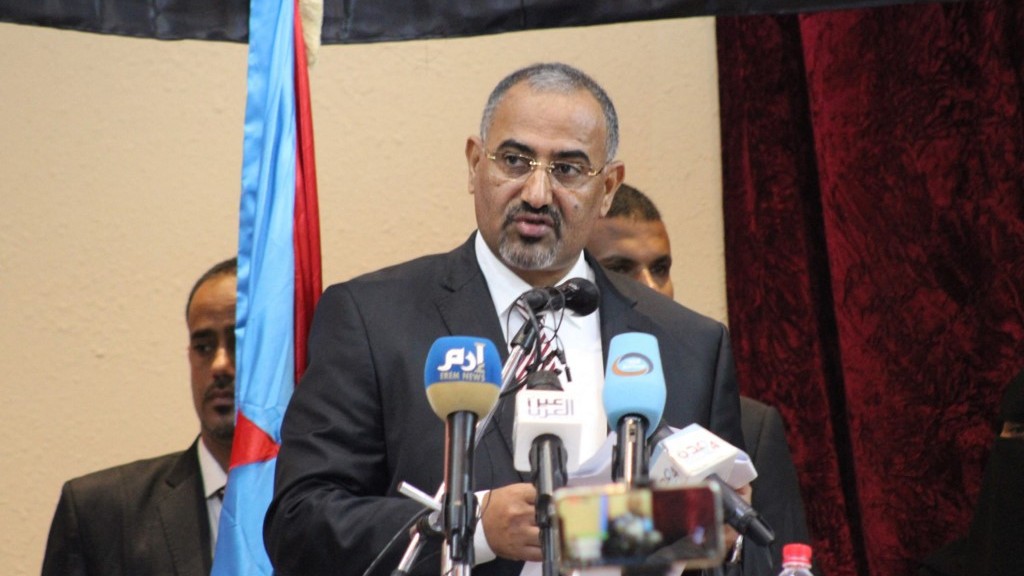
  • Saudi-led coalition accuses UAE of helping separatist leader flee Yemen

    Saudi-led coalition accuses UAE of helping separatist leader flee Yemen

    A significant diplomatic rift has emerged between key Gulf allies as Saudi Arabia’s coalition command has formally charged the United Arab Emirates with orchestrating an elaborate clandestine operation to extract separatist leader Aidarous al-Zubaidi from Yemen following treason allegations.

    Coalition spokesman Major General Turki al-Maliki disclosed in an official Thursday statement that intelligence confirmed Zubaidi, head of the UAE-backed Southern Transitional Council (STC), departed Aden via maritime route on January 7th. The operation reportedly involved the vessel Bamedhaf, which sailed from Port of Aden shortly after midnight with its identification systems disabled while navigating toward Somaliland.

    According to detailed coalition accounts, the ship docked at Berbera around midday where Zubaidi allegedly contacted Major General Awad Saeed bin Musleh Al-Hababi, identified as joint operations commander in the UAE Armed Forces. The group subsequently boarded an Ilyushin Il-76 transport aircraft—a type commonly utilized in conflict zones across Libya, Ethiopia and Somalia—which departed without declaring its intended destination.

    The aircraft made a brief stop at Mogadishu International Airport before proceeding toward the Arabian Gulf. Coalition tracking indicated the plane again disabled its transponder over the Gulf of Oman before reactivating systems prior to landing at Al Reef military airport in Abu Dhabi at 20:47 Saudi time.

    Maritime records reveal Bamedhaf sails under the flag of Saint Kitts and Nevis, matching the registry of another vessel previously implicated in transporting combat vehicles and weapons from Fujairah to Mukalla—a shipment destroyed by Saudi airstrikes on December 30th.

    The extraction operation occurred amid escalating tensions, with coalition officials noting Zubaidi had ignored direct instructions to travel to Saudi Arabia for urgent talks regarding STC-led violence in Hadhramaut and al-Mahra. This development follows Yemen’s Presidential Leadership Council charging Zubaidi with high treason for allegedly damaging Yemen’s political and military standing, forming illegal armed groups, and committing severe violations against civilians and military personnel.

    Coalition forces are currently tracking several figures believed to have facilitated Zubaidi’s escape, including former Aden governor Ahmed Hamid Lamlas and Security Belt Forces commander Mohsen al-Wali, both reportedly out of contact.

    This incident represents the latest manifestation of growing friction between nominal allies, following last week’s Saudi condemnation of UAE support for southern separatists and the subsequent UAE announcement withdrawing military personnel from Yemen citing ‘recent developments.’