标签: Asia

亚洲

  • Kidnapped, married off, robbed of hope: US aid cuts contribute to exploitation of Rohingya children

    Kidnapped, married off, robbed of hope: US aid cuts contribute to exploitation of Rohingya children

    In the sprawling refugee camps of Cox’s Bazar, Bangladesh, the abrupt termination of international aid has unleashed a cascade of suffering among Rohingya children, transforming sanctuaries of learning into landscapes of despair. The systematic dismantling of educational and protection programs has forced vulnerable minors into early marriages, hazardous labor, and human trafficking networks.

    The crisis stems from drastic funding reductions initiated by the U.S. government in January 2025, which eliminated vital support systems for approximately 600,000 Rohingya children. These cuts compelled the closure of thousands of schools and youth centers that previously provided refuge from the camp’s pervasive dangers. Without these safe havens, children have become increasingly exposed to predatory groups operating within the camps’ chaotic confines.

    UNICEF data reveals alarming spikes in violations against children since the funding cessation. Reported abductions have quadrupled to 560 cases, while recruitment by armed groups has increased eightfold, affecting 817 children. Verified cases of child marriage and labor have risen by 21% and 17% respectively, though aid workers caution these figures represent significant undercounts.

    The personal tragedies are numerous and heartbreaking. Sixteen-year-old Hasina (name withheld for protection) was forced into marriage after her school closed, now enduring daily abuse from her husband. “I dreamed of being something, of working for the community,” she whispers. “My life is destroyed.”

    Ten-year-old Mohammed Arfan now spends ten hours daily selling snacks on dangerous street corners after his education ended. “I feel shame working,” he says. “This is the time I should be studying.” Meanwhile, 13-year-old Rahamot Ullah wades through sewage-filled drainage ditches collecting plastic waste, risking infection and drowning to earn mere cents.

    The humanitarian situation continues deteriorating as aid agencies face critical funding shortfalls. The World Food Program warns food rations may end by March 2026, while Save the Children reports securing only one-third of necessary funding for 2026. This desperation has driven many Rohingya to attempt dangerous sea journeys, with nearly one-third of those who fled Bangladesh by boat in 2025 dying or disappearing en route.

    The United States, previously the largest donor to Rohingya assistance programs, has reduced its funding by nearly half compared to 2024 levels. While the State Department claims to have encouraged other nations to increase contributions, overall funding for the Rohingya emergency response remains at only 50% of required levels for 2025, with worse expected in 2026.

    As educational opportunities vanish and protection systems collapse, an entire generation of Rohingya children faces irrevocable loss—their childhoods sacrificed to political decisions made continents away from their bamboo-and-tarpaulin shelters.

  • South Africa coal exports to Israel soar amid Colombia ban

    South Africa coal exports to Israel soar amid Colombia ban

    In a significant shift in global energy trade dynamics, South Africa has substantially increased coal exports to Israel, effectively filling the void created by Colombia’s recent embargo. According to data from commodity analytics firms, South African coal shipments to Israel surged by 87% during the three-month period leading to November compared to the previous year. This development positions South Africa to achieve its highest monthly export volumes to Israel since February 2017, as confirmed by the South African Revenue Service.

    The export expansion comes directly in response to Colombian President Gustavo Petro’s June 2024 announcement suspending all coal shipments to Israel. President Petro implemented the ban contingent upon Israel’s compliance with International Court of Justice directives to cease military operations in Rafah, southern Gaza. Despite initially accounting for approximately 42% of Israel’s annual coal imports totaling two million tonnes, Colombia completely halted exports by late summer 2024, additionally blocking fulfillment of existing long-term supply agreements.

    This trade realignment occurs against the backdrop of ongoing conflict between Israel and Hamas that commenced following October 7, 2023 attacks. The hostilities have resulted in significant casualties, with international bodies including the United Nations characterizing Israel’s campaign as genocidal. Ironically, South Africa has been among the most vocal critics of Israel’s military actions, formally accusing the nation of genocide before the ICJ in December 2023.

    Market intelligence from Kpler indicates South Africa’s share of Israel’s seaborne coal market is projected to triple from 2024 levels, potentially reaching 55% market dominance. The phenomenon isn’t isolated—a November report from Oil Change International identified twenty-five nations continuing energy exports to Israel throughout the Gaza conflict. Notably, Azerbaijan remains a primary crude oil supplier, with Turkey facilitating transportation via the Baku-Tbilisi-Ceyhan pipeline despite its official condemnation of Israeli policies.

    The situation demonstrates the complex interplay between geopolitical principles, economic interests, and international humanitarian law, where nations maintain trade relationships despite overt political disagreements and humanitarian concerns.

  • Miss Finland’s viral ‘slanted-eyes’ photo stirs racism firestorm

    Miss Finland’s viral ‘slanted-eyes’ photo stirs racism firestorm

    A diplomatic and public relations crisis has engulfed Finland following a racially insensitive social media post by its recently dethroned Miss Universe delegate. Sarah Dzafce, 22, ignited international outrage after a photograph depicting her pulling the corners of her eyes to mimic slanted eyes went viral. The image was originally captioned ‘eating with a Chinese,’ a gesture widely condemned as a derogatory stereotype against East Asian communities.

    The controversy rapidly transcended borders, sparking significant backlash across Japan, South Korea, and China. The fallout extended beyond Dzafce to impact Finland’s national image, even triggering calls for a boycott of the country’s flag carrier, Finnair.

    In response to the escalating situation, the Miss Finland Organisation announced Dzafce’s dethronement, stating the move was ‘difficult but necessary.’ The organization emphasized that the titleholder’s role-model status demands respect for all people regardless of origin or appearance.

    Dzafce offered an apology on Instagram, claiming the gesture was an innocent reaction to a headache during dinner and that the offensive caption was added by a friend without her consent. She expressed regret for causing ‘ill will’ and affirmed her commitment to respecting diverse backgrounds. However, the apology, written primarily in Finnish, was criticized by many international observers as insufficient and insincere.

    The scandal took a further political turn when two right-wing Finnish MPs, Juho Eerola and Kaisa Garedew, posted photos mimicking Dzafce’s gesture in a show of support. Both posts were subsequently deleted following widespread condemnation. Prime Minister Petteri Orpo condemned the lawmakers’ actions as ‘childish’ and stated that elected officials should exemplify proper conduct. The Finns Party is now considering potential sanctions against the MPs.

    Finnair issued a formal statement on its Japanese social media account, distancing itself from the politicians’ actions and reaffirming its commitment to welcoming everyone with respect. The airline acknowledged that its diverse workforce and global customer base make inclusivity a core value.

    The incident has prompted serious discussions about racism in Finnish society. The Finnish embassy in Japan acknowledged receiving numerous inquiries and stated that ‘racism remains a challenge’ requiring continuous effort to resolve. Meanwhile, a Japanese resident in Finland launched a petition calling for an investigation into anti-Asian discrimination, which gathered over 7,000 signatures within days.

  • Fifa launches $60 ticket tier amid criticism of 2026 World Cup pricing

    Fifa launches $60 ticket tier amid criticism of 2026 World Cup pricing

    In response to mounting criticism over ticket affordability, FIFA has unveiled a new budget-friendly pricing tier for the 2026 World Cup. The global football governing body announced on Tuesday the creation of “Supporter Entry Tier” tickets priced at $60, designed to enhance accessibility for fans of qualified teams across all 104 matches—including the final showdown.

    The discounted tickets will constitute 10% of the allocation reserved for Participating Member Associations (PMAs), which represent competing national teams and administer dedicated fan ticket programs. These associations will establish specific criteria to prioritize “loyal fans” with demonstrated connections to their national teams.

    FIFA’s revised allocation structure now designates half of each PMA’s ticket inventory to affordable categories: 40% under the existing Supporter Value Tier and 10% under the new Entry Tier. The remaining tickets will be equally divided between Standard and Premier tiers.

    In a significant consumer-friendly move, FIFA will waive administrative fees for refund requests from fans who purchase through PMA programs if their national team fails to advance to the knockout stage.

    This initiative emerges amid intensified scrutiny of FIFA’s pricing strategy for the 2026 tournament, scheduled from June 11 to July 19 across 16 cities in Canada, Mexico, and the United States. The announcement follows recent accusations from Football Supporters Europe (FSE) characterizing FIFA’s initial pricing as “extortionate” and potentially exclusionary for average supporters.

    Despite the controversy, FIFA reports robust interest in the current third-phase ticket sales window, which opened December 11 and continues through January 13, buoyed by the recent release of match schedules, venues, and kick-off times.

  • Calls to expel Muslims spark backlash as US officials invoke Bondi Beach attack

    Calls to expel Muslims spark backlash as US officials invoke Bondi Beach attack

    A firestorm of controversy has engulfed American politics following calls from multiple Republican officials for the mass expulsion of Muslims from the United States. The inflammatory rhetoric emerged in response to a mass shooting at a Hanukkah celebration on Bondi Beach in Sydney, Australia, with lawmakers attempting to link the overseas incident to Muslim communities in America.

    Leading the charge, Florida Congressman Randy Fine declared on social media platform X that ‘mainstream Muslims have declared war on us’ and advocated for ‘radical deportations of all mainstream Muslim legal and illegal immigrants, and citizenship revocations wherever possible.’ His statements were echoed by Alabama Senator Tommy Tuberville, who controversially asserted that ‘Islam is not a religion’ but rather ‘a cult,’ adding that Muslims ‘aren’t here to assimilate. They’re here to conquer.’

    Texas Congressman Keith Self meanwhile claimed that Republican lawmakers possessed ‘critical pieces of legislation’ to protect the United States from what he described as the threat of Sharia law, which he alleged had ‘already taken over France and the UK.’ New York City Councilmember Vicki Paladino similarly called for Muslim expulsion in a since-deleted post, despite approximately one million Muslim residents constituting nearly a quarter of America’s Muslim population residing in her city.

    The remarks triggered immediate condemnation from officials across government levels. New York City Mayor-elect Zohran Mamdani, who is Muslim, directly addressed Paladino, stating: ‘We belong here, as does every other New Yorker. This is vile Islamophobia from the Councilwoman and it has no place in our city.’ Senator Chuck Schumer and Congresswoman Alexandria Ocasio-Cortez both emphasized that the antisemitic attack in Australia should not be weaponized to fuel Islamophobia.

    Legal experts and civil rights advocates sounded alarms about the normalization of such rhetoric. Jenin Younes, National Legal Director of the American-Arab Anti-Discrimination Committee, drew historical parallels, warning that the language echoes early Nazi rhetoric that preceded mass violence. Academic Yousef Munayyer noted that Muslim hatred enjoys unique normalization ‘at the highest levels of American government.’

    Critics highlighted the disparity in institutional response compared to previous disciplinary actions against Muslim lawmakers, accusing Congress of maintaining a ‘hierarchy’ in how speech is policed that leaves Muslim communities vulnerable to dehumanization without substantive protection.

  • Grief, tears and anger as funerals for people slain in Australian antisemitic mass shooting begin

    Grief, tears and anger as funerals for people slain in Australian antisemitic mass shooting begin

    SYDNEY — A somber atmosphere enveloped Sydney on Wednesday as hundreds gathered to mourn victims of Australia’s deadliest antisemitic attack in modern history. The funerals commenced for those killed in Sunday’s targeted shooting at a Hanukkah celebration on Bondi Beach, where assailants slaughtered 15 Jewish attendees and left more than 20 others hospitalized.

    The first service honored Eli Schlanger, 41, the assistant rabbi at Chabad-Lubavitch of Bondi who had organized the annual ‘Chanukah by the Sea’ event. A father of five and prison chaplain, Schlanger was remembered by his tearful father-in-law, Rabbi Yehoram Ulman, who expressed profound regret for not more frequently voicing his love and appreciation.

    Heavy police presence surrounded the funerals as Australia confronts difficult questions about security failures, rising antisemitism, and gun control. Among the victims were Boris and Sofia Gurman, a couple in their 60s who attempted to disarm one gunman, and Reuven Morrison, also in his 60s, who threw bricks at the attackers. The youngest victim, 10-year-old Matilda, was remembered at a vigil where her mother urged attendees to keep her memory alive.

    Authorials identified the perpetrators as a father-son duo—50-year-old Sajid Akram and his 24-year-old son—who carried out what federal police commissioner Krissy Barrett described as ‘a terrorist attack inspired by Islamic State.’ The elder Akram was killed during the attack, while his Australian-born son awoke from a coma and faces imminent charges.

    The investigation has expanded to examine the suspects’ November trip to the Philippines, where they listed Davao City as their destination—a region historically associated with Muslim separatist groups that once expressed support for IS.

    Prime Minister Anthony Albanese pledged decisive action to combat antisemitism and tighten Australia’s already strict gun laws, particularly after revelations that the older suspect had legally amassed six weapons. Proposed reforms include restricting gun ownership to citizens and limiting the number of firearms an individual can possess.

    Amid the tragedy, Australians have responded with solidarity. Long queues formed at blood donation centers, floral tributes multiplied at the attack site, and hundreds of swimmers held a minute’s silence at dawn before entering the ocean near the still-cordoned crime scene.

    Rabbi Ulman vowed that the Hanukkah celebration—a 31-year Bondi tradition that Schlanger had helped organize for 18 years—would continue despite the attack. ‘We’re going to show the world that the Jewish people are unbeatable,’ he declared, emphasizing resilience in the face of hatred.

  • Nickolay Mladenov: The Balkan diplomat who could be UAE’s man in Gaza

    Nickolay Mladenov: The Balkan diplomat who could be UAE’s man in Gaza

    While Bulgaria grappled with anti-government protests over corruption and economic hardship in November, former Bulgarian Foreign Minister Nickolay Mladenov was simultaneously facilitating high-level economic negotiations between the European Union and the United Arab Emirates in Abu Dhabi. This contrast highlights Mladenov’s remarkable transition from European politics to becoming a central figure in Middle Eastern diplomacy.

    Mladenov has now emerged as a leading candidate to oversee Gaza’s postwar reconstruction efforts on behalf of former President Donald Trump’s proposed ‘Board of Peace.’ His nomination represents a significant shift from earlier considerations of former UK Prime Minister Tony Blair, whose potential appointment faced substantial opposition.

    The Bulgarian diplomat’s journey from his communist-era family background to Middle East peacemaker reflects an unconventional career path. Born in 1972 to a family with ties to Bulgaria’s communist regime—his father served in the country’s KGB equivalent—Mladenov initially advocated for EU integration before serving as Bulgaria’s defense minister (2009-2010) and foreign minister (2010-2013).

    His diplomatic credentials were solidified during his nearly six-year tenure as UN Special Coordinator for the Middle East Peace Process, where he earned rare praise from all conflicting parties, including both the Palestinian Authority and Hamas. Senior Hamas official Khalil al-Hayya notably expressed pride in having known him, while Palestinian politicians described him as ‘a hell of a lot better than the alternative.’

    Mladenov’s effectiveness stems partly from his Balkan background. As he explained in a 2021 New York Times interview: ‘I come from the Balkans. We’ve changed borders. We’ve fought over holy places, languages, churches. When you carry that baggage, it does help you see things a bit differently.’

    The diplomat’s current considerations for the Gaza role follow his successful collaboration with Jared Kushner on the 2020 Abraham Accords, which normalized relations between Israel and several Arab states. Kushner confirmed that the Trump administration ‘confided in’ Mladenov during negotiations and valued his ‘constructive feedback.’

    However, Mladenov’s potential appointment comes amid complex regional dynamics. The UAE has emerged as Gaza’s largest donor among Gulf states, while Saudi Arabia and Qatar have expressed reservations about funding reconstruction without political solutions. The UN Security Council’s mandate for an international stabilization force faces challenges as Arab nations hesitate to deploy between Hamas and Israeli forces.

    Critics note that Mladenov’s strong ties to the UAE and Israel could influence his approach, with one Western official noting that ‘whoever is picked is going to get it on the neck, but Mladenov is very influenced by the UAE, and by extension Israel.’

    The postwar planning itself, currently managed from Tel Aviv by Kushner associates, proposes dividing Gaza into halves with screened Palestinians in Israeli-occupied zones—a controversial framework that would require delicate diplomatic navigation from any appointed envoy.

  • Lebanon says two dead, five injured in Israeli strikes

    Lebanon says two dead, five injured in Israeli strikes

    Israeli military operations in Lebanon resulted in two fatalities and five injuries on Tuesday, escalating tensions despite an ongoing ceasefire agreement. The Lebanese Health Ministry confirmed one individual perished near Beirut’s Shouf district, approximately 30 kilometers south of the capital, while another died in a separate strike in the border town of Odaisseh.

    According to official Israeli military statements, the strikes specifically targeted two Hezbollah operatives, though no further operational details were provided. An AFP correspondent documented emergency responders and Lebanese army personnel attending to a severely damaged goods truck at the Jadra-Siblin roadway incident site.

    These developments occur against the backdrop of the November 2024 ceasefire designed to conclude over a year of hostilities between Israel and the Iran-backed Hezbollah. Despite this agreement, Israeli forces have maintained their presence in five strategic southern Lebanese regions while continuing targeted operations. A recent AFP assessment of Lebanese health reports indicates approximately 340 casualties from Israeli strikes since the ceasefire implementation.

    The Israeli government consistently maintains that these operations focus exclusively on Hezbollah members and infrastructure, aiming to prevent the group’s rearmament capabilities. This persistent violence unfolds as the ceasefire monitoring committee—including representatives from France and the United States—prepares for a critical meeting later this week.

    Under the established ceasefire terms, Hezbollah was mandated to withdraw its forces north of the Litani River and dismantle military infrastructure in the vacated territory. Concurrently, the Lebanese government has approved a disarmament plan requiring the national army to neutralize Hezbollah’s military capabilities south of the Litani by year’s end before addressing remaining regions.

  • US job growth rebounds in November; unemployment rate distorted by shutdown

    US job growth rebounds in November; unemployment rate distorted by shutdown

    The U.S. labor market demonstrated unexpected resilience in November with nonfarm payrolls expanding by 64,000 positions, significantly outperforming economic forecasts. This rebound follows October’s substantial decline of 105,000 jobs, primarily attributed to federal workforce reductions through deferred buyout programs. The statistical landscape remains complicated by methodological adjustments necessitated by the recent 43-day government shutdown, which prevented normal data collection procedures.

    The unemployment rate reached 4.6% in November, representing a four-year peak, though Bureau of Labor Statistics officials caution that this figure requires careful interpretation due to statistical distortions. The shutdown compelled the BLS to implement unconventional methodological changes, including shifting previously-collected data forward one month and adjusting composite weighting formulas. Consequently, the standard errors exceeded typical thresholds, with the November unemployment rate requiring a 0.26 percentage point change to achieve statistical significance compared to September’s 0.21 percentage point benchmark.

    Private sector hiring patterns remained relatively stable since April, though economists note increasing caution among employers regarding President Trump’s aggressive trade policies and tariff implementations. The healthcare sector emerged as the strongest performer, adding 46,000 positions across various sub-sectors, while construction employment grew by 28,000 jobs. Conversely, transportation and warehousing sectors contracted by 18,000 positions, and federal government employment continued its downward trajectory with 6,000 additional job losses.

    Wage growth moderated to 3.5% year-over-year in November, down from October’s 3.7% increase, suggesting that slowing job expansion is beginning to temper compensation increases. This development presents both advantages for inflation control and potential challenges for consumer spending momentum.

    The Federal Reserve’s recent 25-basis-point rate cut brought the benchmark interest rate to 3.50%-3.75%, with officials indicating a likely pause in further reductions pending clearer labor market and inflation signals. Chairman Jerome Powell highlighted significant downside risks in labor market conditions, referencing preliminary benchmark revisions suggesting substantially lower job creation figures than previously reported.

    Consumer spending patterns reveal growing economic stratification, with higher-income households maintaining discretionary spending while lower- and middle-income families demonstrate increased selectivity in purchases. Retail sales remained stagnant in October, reflecting the broader impact of rising living costs on consumption patterns.

  • Saudi-backed forces shift positions amid STC push in Yemen

    Saudi-backed forces shift positions amid STC push in Yemen

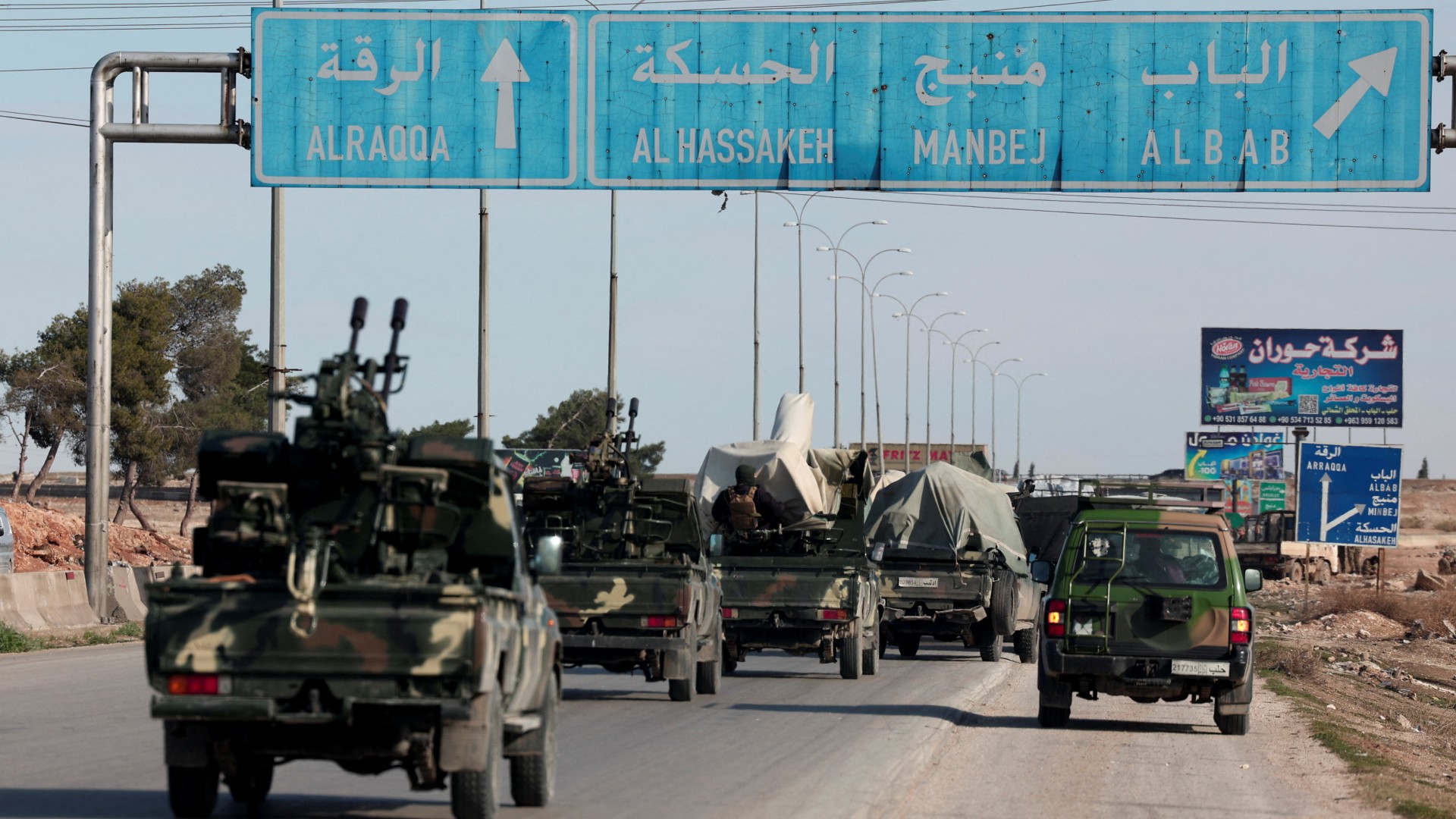
    A significant military redeployment is underway in Yemen’s complex civil war landscape as Saudi-backed forces withdraw from key positions, creating new geopolitical tensions between Gulf powers. The National Shield Forces (NSF), a pro-government military faction, have unexpectedly vacated their regular bases across southern governorates including Aden, Lahj, Abyan, and al-Dhali, repositioning to the strategic corridor between al-Wadiah and al-Abr—immediately west of the contested Hadramaut region.

    This development follows weeks of escalating tensions sparked by the Emirati-backed Southern Transitional Council (STC) asserting control over Hadramaut and al-Mahra governorates. The STC’s armed wing has refused to withdraw from these eastern territories despite pressure from Yemen’s internationally recognized Presidential Leadership Council (PLC).

    Notably, a WhatsApp voice recording circulated by NSF commander Bashir Seif congratulated troops on the redeployment while conspicuously omitting any mention of PLC president Rashad al-Alimi, instead expressing exclusive gratitude to Saudi Arabia’s defense ministry—a telling diplomatic snub that underscores shifting alliances.

    Local reports indicate this realignment follows closed-door negotiations between STC representatives and Saudi military officials, resulting in a tentative understanding: control of Hadramaut would transition to STC-aligned Hadrami Elite Forces, with the separatist group committing to withdraw its own combat units. As part of this arrangement, the STC would consolidate authority over Aden and Socotra while NSF forces establish presence near Saudi border regions.

    The STC justified its eastern expansion as a necessary campaign against corruption, smuggling networks, and extremist organizations including Islamic State and al-Qaeda in the Arabian Peninsula, claiming to restore stability to neglected regions. However, the group’s ultimate objective remains the secession and re-establishment of an independent Southern Yemen, reversing the 1990 unification.

    This power play has exposed growing friction between Saudi Arabia and the United Arab Emirates, both nominal allies in the coalition against Houthi rebels. Saudi Arabia has historically supported Hadrami tribes and the PLC, while the UAE openly backs and funds the separatist STC, with many STC leaders maintaining direct ties to Abu Dhabi.

    The tension manifested unusually publicly through critical coverage in Saudi news outlets—a rare display of diplomatic divergence reminiscent of their differing approaches to the Sudan conflict. Saudi Arabia subsequently closed Yemen’s airspace temporarily, a move analysts suggest facilitated the strategic withdrawal from STC-controlled territories including Aden’s Presidential Palace, facilities at Aden International Airport, and Mayun Island in the critical Bab al-Mandab Strait.

    Concurrently, the STC has been establishing parallel governance structures including the newly created Southern Fatwa Authority, extending its influence beyond military and administrative control to religious legitimacy—a significant step in consolidating state-like authority amid Yemen’s fractured political landscape.