While Switzerland’s Alpine landscapes draw millions annually, the country conceals remarkable cultural treasures beyond its famous peaks. With over 23 million visitors each year, most concentrate on mainstream destinations, yet these five lesser-known locations offer profound historical and architectural experiences.
Murten (Morat): This medieval jewel in the Fribourg region presents impeccably preserved fortifications dating to 515 AD. Visitors can walk ancient ramparts constructed from gravel, tuff, and sandstone, offering panoramic views of Lake Murten. The town features a meticulously restored 1816 tower clock, Gothic architecture, and picturesque lakeside settings. Nearby Vully vineyards provide additional old-world charm.
Saint-Ursanne: Nestled along the Doubs River in the Jura canton, this town legendarily founded by Irish monk Ursicinus features a central fountain monument to its patron saint. Designated the ‘Pearl of Jura,’ its heritage includes medieval churches, a dedicated hermitage, and the historically significant 1565 Tithing House with its remarkable staircase and updated 1788 interior features.
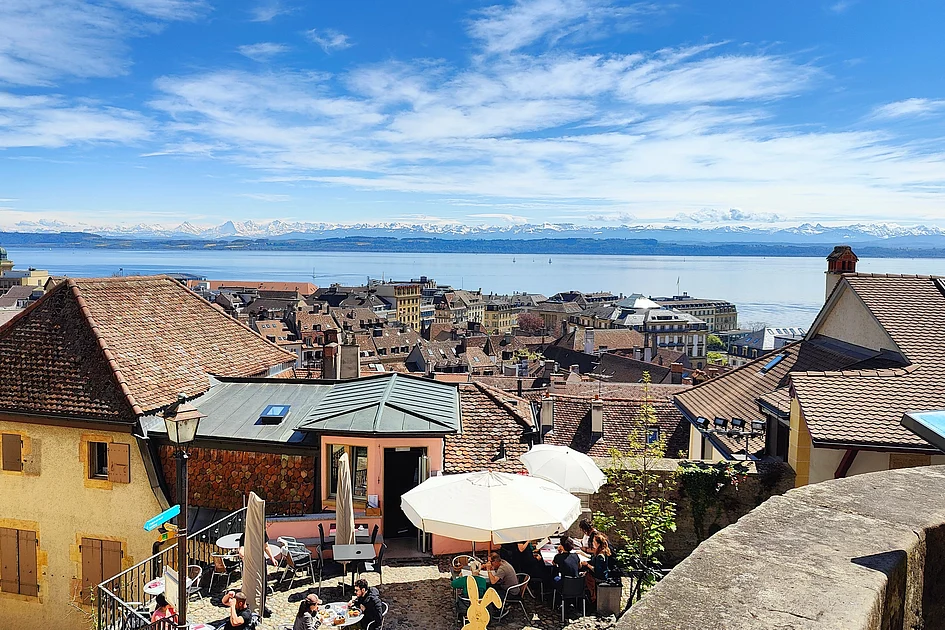
Neuchatel: As the epicenter of Swiss watchmaking, this western capital blends technological innovation with medieval architecture. The old town contains the 12th-century Neuenburg Castle (now cantonal offices), a collegiate church, and the distinctive late-19th-century Red Church (Basilica of Our Lady). Weekend farmers markets showcase regional produce and specialties.
Guarda: At 1,650 meters altitude in eastern Engadine, this unique village features decorative façade graffiti on well-preserved Engadine houses. With only 160 residents, its cobbled streets lead to the Schellen-Ursli Museum, inspired by Alois Carigiet’s 1945 children’s book, displaying period artifacts and vintage furnishings.
Olten: Located 75km from Zurich along the Aare River, this Renaissance architecture showcase features half-timbered houses and the reconstructed 1803 wooden bridge originally built in 1295. The Haus Der Museen complex presents natural history, local archaeology, and regional development exhibits, while the Aare Gorge offers spectacular geological formations with accessible pathways.