分类: tourism

  • China’s Xizang sees steady tourism growth in 2025

    China’s Xizang sees steady tourism growth in 2025

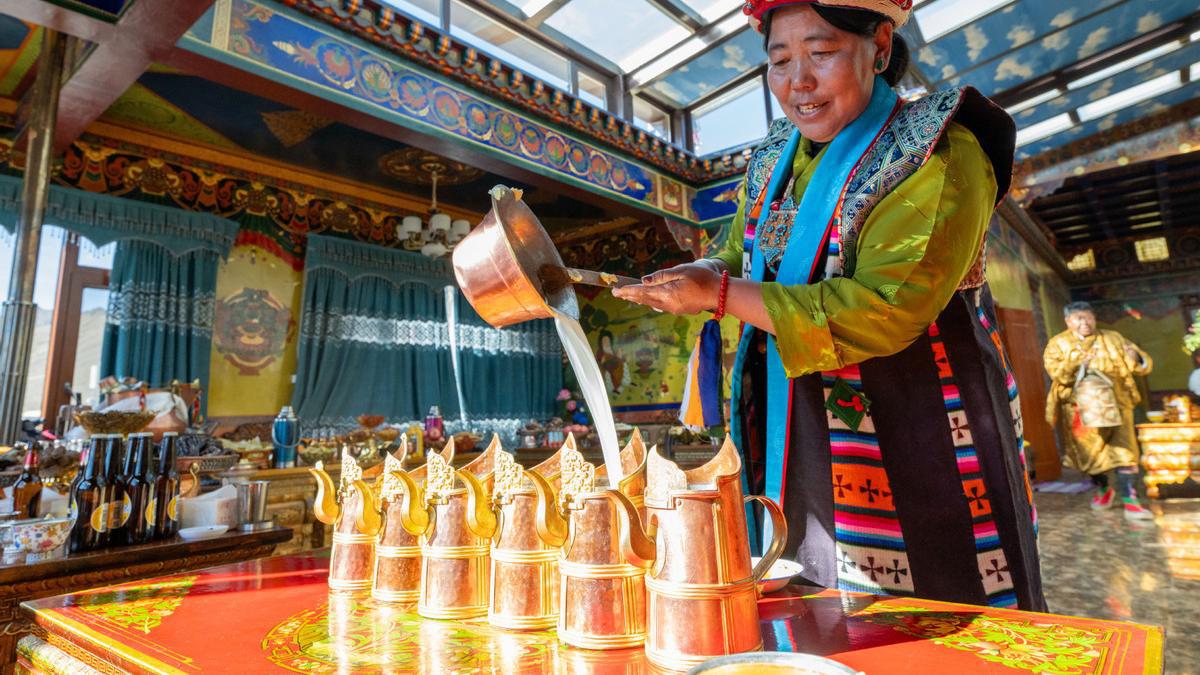
    The Xizang Autonomous Region in southwestern China has demonstrated remarkable tourism resilience, welcoming over 70.73 million visitors throughout 2025 according to official data released by the regional culture and tourism department. This represents a substantial 10.71 percent increase compared to the previous year’s figures, with international tourism showing particularly vigorous growth at 36.5 percent, totaling 437,400 inbound travelers.

    The region’s tourism sector has flourished through strategic development of diverse cultural offerings. The cultural industry achieved an output value of 15.01 billion yuan (approximately $2.15 billion), marking an impressive 35.29 percent year-on-year growth. Total tourism revenue reached 81.68 billion yuan, reflecting a healthy 9.51 percent increase.

    This sustainable growth trajectory stems from comprehensive preservation and innovative utilization of Xizang’s rich cultural heritage. The fourth national cultural relics census identified 3,346 newly documented heritage sites across the region, positioning Xizang among China’s top regions for archaeological discoveries.

    Since initiating a systematic tourism resource survey in 2023, authorities have cataloged more than 31,000 previously unregistered tourist attractions and experiences. Traditional cultural practices including the Guozhuang Tibetan dance and ancient bull-hide boat competitions have gained popularity as immersive cultural experiences for visitors.

    Regional authorities are implementing advanced digital preservation strategies to safeguard ancient architecture, cultural relics, and intangible cultural heritage. Digital platforms featuring iconic sites like the UNESCO World Heritage-listed Potala Palace have attracted over 2.5 million virtual visits, demonstrating successful integration of technology with cultural conservation efforts.

  • Macao to offer free bus tickets for intl visitors in Hong Kong

    Macao to offer free bus tickets for intl visitors in Hong Kong

    In a strategic move to boost international tourism, Macao’s Government Tourism Office (MGTO) has unveiled a complimentary coach service program for global visitors transiting through Hong Kong. The initiative, launched on January 20, 2026, will remain operational through December 31, 2026, representing a comprehensive year-long hospitality campaign.

    The program establishes a dedicated service counter at Hong Kong International Airport where eligible international passengers can obtain free one-way coach tickets. These coaches will transport visitors directly to Macao via the monumental Hong Kong-Zhuhai-Macao Bridge, creating a seamless travel experience between the two special administrative regions.

    MGTO officials stated this transportation incentive specifically targets the diversification of Macao’s visitor markets. By reducing transportation barriers, the program aims to stimulate international travelers’ interest in extending their stay to include Macao, traditionally overshadowed by Hong Kong’s transit hub status. The tourism office collaborated directly with cross-border bus service operators to ensure operational feasibility and passenger comfort.

    This initiative forms part of Macao’s broader strategy to position itself as more than a gaming destination, showcasing its cultural heritage and tourism attractions to a global audience. The program’s timing during a period of global travel recovery indicates Macao’s proactive approach to tourism market regeneration and competitive positioning in the Asian tourism landscape.

  • Sanya rises as magnet for Russian tourists

    Sanya rises as magnet for Russian tourists

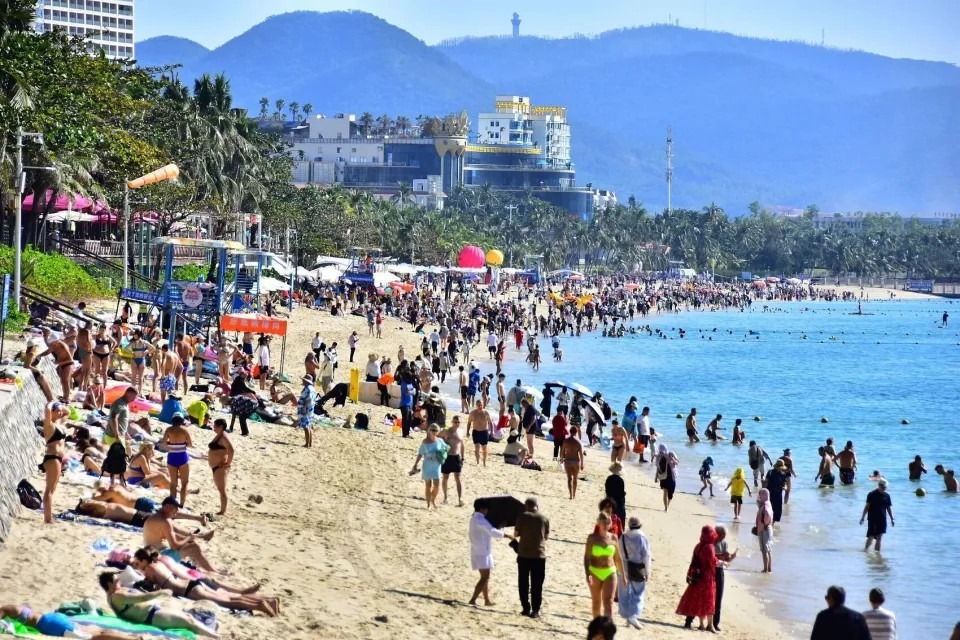
    As Siberian winters descend, thousands of Russian citizens are escaping the bitter cold by flocking to the tropical shores of Sanya in China’s Hainan province. This southern Chinese island has transformed into a warm-weather sanctuary for Russians, who now join domestic Chinese tourists from northeastern regions in seeking refuge on its sun-drenched beaches.

    The remarkable surge in Russian visitors directly results from the mutual visa-free policy implemented between China and Russia on September 15, 2025. This agreement permits Russian passport holders to enter China without visas for stays up to 30 days, with the policy currently set to expire in September 2026.

    Travel data reveals dramatic increases in Russian interest following the policy implementation. Aviasales, Russia’s leading flight booking platform, reports China has become one of the most-searched destinations among Russian travelers. Another prominent travel platform, Travelata, indicates Hainan accounted for 88% of its recent China-bound bookings.

    While air connections between Russian cities and Hainan date back to 1997 with the first chartered flight from Krasnoyarsk, transportation links have expanded significantly. Sanya Phoenix International Airport now operates 17 weekly flights connecting to various Russian cities including Vladivostok, Novosibirsk, and St. Petersburg.

    The cultural imprint of Russian tourism is visibly evident throughout Sanya. In the popular Dadonghai scenic area, street signs appear in trilingual format—Chinese, Russian, and English. This crescent-shaped bay attracts visitors with its golden sands, crystalline waters, palm trees, and vibrant atmosphere.

    Statistical evidence demonstrates the dramatic growth: Sanya hotels hosted approximately 170,000 Russian visitors in 2024, but this figure skyrocketed to over 400,000 in 2025, surpassing pre-pandemic levels.

    For Zakirova Amina, a Russian national who previously lived in China’s Anhui province for nine years, Sanya has become a regular winter destination. Her December trip with parents marked her sixth visit, facilitated by the visa-free policy and convenient direct flights.

    Amina attributes Sanya’s popularity among Russians to its inclusive atmosphere and linguistic accessibility. “Many service staff members in Sanya can speak some Russian, and they are exceptionally friendly,” she noted. “We often joke that Sanya resembles a second home for Russians.”

    Beyond beach relaxation, Russian visitors are exploring diverse aspects of Chinese culture. Many have developed significant interest in traditional Chinese medicine, with services like acupuncture and massage experiencing high demand. At local TCM facilities, appointments frequently book up over a week in advance.

    Yuan Ailin, vice-director of a Sanya traditional Chinese medicine hospital, confirms the trend: “We regularly receive patients from Russian-speaking countries who show particular interest in acupuncture and massage therapy.” In 2025, the hospital and its affiliated sanatoriums recorded 10,693 international visits, with 80% originating from Russian-speaking countries—prompting the hiring of Russian translators in several physiotherapy departments.

    Russian entrepreneur Dmitry Garifulin, who operates a grocery store in Dadonghai selling imported Russian staples, observes: “The increased flight connectivity has directly translated into more Russian tourists here.” Many visitors report that combining sun therapy with TCM treatments in Sanya surpasses their experiences at Black Sea resorts.

  • Macao sees tourism surge during New Year holiday

    Macao sees tourism surge during New Year holiday

    Macao’s tourism sector has demonstrated extraordinary resilience and appeal during the recent New Year holiday period, with official data revealing record-breaking visitor numbers that underscore the region’s growing popularity as a premier travel destination. According to statistics released by Macao’s Public Security Police Force, the special administrative region witnessed an extraordinary influx of travelers between December 31, 2025, and January 4, 2026. The border checkpoints processed a staggering 3,807,706 inbound and outbound movements during this five-day period, highlighting the massive scale of holiday travel activity. The data further revealed that inbound visitor arrivals reached 766,240, demonstrating robust travel demand despite global economic uncertainties. The most remarkable milestone occurred on January 1st, when Macao’s border crossings achieved an unprecedented single-day record of 866,603 inbound and outbound trips. That same day, visitor arrivals peaked at 188,036—the highest number ever recorded for New Year’s Day in Macao’s history. This exceptional holiday performance builds upon an already record-shattering year for Macao’s tourism industry. Preliminary annual figures for 2025 indicate total visitor arrivals reached 40.06 million, establishing a new benchmark for the region’s tourism sector and signaling a complete recovery from previous pandemic-related disruptions. The consistent growth trajectory positions Macao as one of Asia’s most dynamic and resilient tourism markets, with the New Year surge serving as a strong indicator of continued expansion in 2026.

  • More Americans choose China as destination amid travel rebound

    More Americans choose China as destination amid travel rebound

    China is experiencing a significant resurgence in American tourism as global travel patterns normalize, with industry leaders highlighting the country’s strategic initiatives to position itself as a premier destination. The recovery marks a notable turnaround from pandemic-era restrictions and geopolitical tensions that previously limited travel between the nations.

    At the recent United States Tour Operators Association Annual Conference in Maryland, Chinese tourism officials unveiled comprehensive measures designed to attract international visitors. These include an expanded visa-free transit program that now permits citizens from 55 countries, including the United States, to stay for up to 240 hours (10 days) when transiting through designated ports across more than 20 Chinese regions. The policy requires only valid travel documents and confirmed onward tickets.

    Tourism statistics reveal impressive recovery metrics, with China welcoming 132 million international visits in 2024 generating approximately $94.2 billion in tourism revenue—reaching nearly 97% of pre-pandemic levels. Industry professionals attribute this rebound to China’s multi-faceted approach combining streamlined entry procedures, enhanced digital payment infrastructure, and a renewed emphasis on experiential tourism.

    Terry Dale, President and CEO of USTOA, noted that American travelers increasingly view China as “a unique opportunity—an experience of a lifetime.” This sentiment is echoed by tour operators reporting measurable increases in bookings, particularly for cultural immersion experiences that extend beyond traditional destinations like Beijing and Shanghai.

    The tourism revival encompasses diverse attractions ranging from ancient cultural sites to contemporary technological showcases like the World Robot Contest and seasonal spectacles such as the Harbin Ice and Snow Festival. Educational travel has emerged as a particularly strong segment, with growing numbers of American students and adults seeking authentic cultural immersion experiences.

    Brian Hoyt of EF World Journeys observed that “China represents a massive opportunity for more North Americans” seeking meaningful educational exchanges. The industry-wide consensus indicates that recent policy adjustments have successfully reopened channels for people-to-people connections that transcend mere economic transactions, fostering deeper cross-cultural understanding between the two nations.

  • Americans are returning to China as tourism rebounds

    Americans are returning to China as tourism rebounds

    China’s tourism industry is experiencing a robust resurgence as American travelers return in significant numbers, with the sector approaching near-complete recovery to pre-COVID levels. The momentum was prominently showcased at the 2025 United States Tour Operators Association conference in National Harbor, Maryland, where industry leaders gathered under the theme “Courage” to champion renewed international exploration.

    According to the latest data from China’s Ministry of Culture and Tourism, the country welcomed 132 million international visits during 2024, generating approximately $94.2 billion in tourism revenue—representing a remarkable 97% recovery compared to pre-pandemic figures. This rebound comes despite previous challenges from both health crises and geopolitical tensions.

    China has implemented several strategic measures to facilitate this tourism revival, including expanding visa-free transit access to 240 hours, modernizing digital payment infrastructure, and fostering enhanced collaboration between local travel agencies. “We’re not merely selling trips anymore, but co-creating immersive experiences,” emphasized Ma Yunfei, Director of the China National Tourist Office, who directly addressed conference attendees with the message: “China is ready for your courage.”

    The visa facilitation program now permits citizens from 55 countries, including the United States, to transit through China for up to ten days without a visa when holding valid international travel documents and confirmed onward tickets. This policy applies across more than 20 designated provinces and cities, including major hubs like Beijing and Shanghai.

    Industry executives report growing optimism despite political differences between the nations. “US travelers increasingly recognize this as a unique, once-in-a-lifetime opportunity, and China remains high on that list,” noted Terry Dale, President and CEO of the United States Tour Operators Association. “Regardless of political discussions or tariff debates, there’s strong confidence in China’s welcome for American visitors.”

    Beyond economic benefits, tourism professionals emphasize the deeper significance of people-to-people connections. Contemporary attractions—from cutting-edge technology events like the World Robot Contest to iconic experiences such as the Harbin Ice and Snow Festival—complement traditional cultural sites in drawing international visitors.

    Educational travel is particularly rebounding, fueled by initiatives inviting 50,000 youth to China within five years. “China represents a massive opportunity for more North Americans,” observed Brian Hoyt, Vice-President of Education First World Journeys, noting that recent pro-tourism policies “are opening the door again for students through adults seeking authentic cultural immersion.”

    Tour operators confirm measurable increases in bookings, with Beijing and Shanghai remaining top destinations while travelers increasingly seek authentic local experiences. The industry consensus indicates that China’s comprehensive approach to tourism recovery is successfully repositioning the country as a premier global destination.

  • Influx of intl tourists helps illuminate the real Xinjiang

    Influx of intl tourists helps illuminate the real Xinjiang

    URUMQI, China — Northwest China’s Xinjiang Uygur Autonomous Region is experiencing an unprecedented surge in international tourism, with over 2.1 million overseas visitors recorded in the first ten months of 2025 alone. This represents a 6 percent year-on-year increase, positioning the region as an emerging global destination for winter sports and cultural exploration.

    The current winter season has attracted adventure seekers like Nicolas de Fermor, a French skiing enthusiast who chose Xinjiang over traditional European resorts. “We came specifically for the snow season,” Fermor remarked during his visit to the Silk Road Ski Resort near Urumqi. “The seamless experience—from passport-based bookings to mobile payments and English-speaking staff—exceeded our expectations. We’re already planning our return.”

    Xinjiang’s transformation into a international tourism hub stems from comprehensive policies facilitating visa processing, digital payment systems, and accommodation infrastructure. The region’s diverse attractions range from pristine snow-capped mountains and golden deserts to ancient cultural sites and vibrant marketplaces.

    Tour industry professionals report unprecedented demand. “During peak season between June and September, securing English-speaking tour guides becomes exceptionally challenging,” noted Chen Bianxia, a veteran guide with nearly twenty years of experience.

    Liang Changhong, General Manager of China CYTS Tours Holding Co., Ltd.’s Xinjiang branch, identified distinct travel preferences among visitor demographics: “While Southeast Asian tourists predominantly seek natural landscapes and increasingly favor independent travel arrangements, European and American visitors demonstrate stronger interest in the historical cultural heritage along the ancient Silk Road corridor.”

    The convergence of natural beauty, cultural richness, and modern convenience continues to redefine Xinjiang’s position in global tourism, demonstrating how strategic development and cultural accessibility can reshape travel patterns worldwide.

  • Russian tourist arrivals in Harbin surge following recent visa-free policy

    Russian tourist arrivals in Harbin surge following recent visa-free policy

    Harbin has experienced a dramatic influx of Russian visitors following China’s implementation of a visa-waiver program for ordinary Russian passport holders in mid-September. Official data and travel industry reports confirm this substantial shift in tourism dynamics, particularly evident in the northeastern Chinese city and its surrounding border regions.

    The policy, enacted by China’s Foreign Ministry and valid through September 14, 2026, permits Russian nationals to enter without visas for stays up to 30 days. The arrangement covers multiple purposes including tourism, business activities, family visits, cultural exchanges, and transit.

    This regulatory change has eliminated previous bureaucratic hurdles, replacing them with a streamlined electronic declaration system accessible via mobile application. The efficiency gain is remarkable—what was once a cumbersome visa application process has been reduced to a sub-five-minute customs clearance procedure.

    The practical impact is illustrated by travelers like Inna Klochko, a 53-year-old from Vladivostok who has visited Harbin twice since the policy took effect. She describes appreciating the city’s European-inspired architecture along Central Avenue while indulging in local culinary specialties like guobaorou (sweet-and-sour pork) at renowned establishments such as Laochujia Restaurant. For Klochko, the enhanced accessibility has made cultural exploration and relaxation—including leisurely hotel stays—significantly more attainable.

    According to statistics from leading online travel platform Ctrip, published by Harbin Daily, the city has witnessed a 136% year-on-year increase in Russian tourist arrivals. Accompanying this visitor surge is an even more substantial 150% growth in tourism-related spending, indicating both increased volume and enhanced economic impact from these cross-border travelers.

  • Moscow City Tourism Committee invites travellers to explore the ‘Moscow Winter Fairytale’

    Moscow City Tourism Committee invites travellers to explore the ‘Moscow Winter Fairytale’

    The Moscow City Tourism Committee has launched its ambitious seasonal initiative “Winter in Moscow,” positioning the Russian capital as a premier cold-weather destination for international travelers. This comprehensive program features over 800 events across 400 distinct venues throughout the city, creating an immersive seasonal experience that blends cultural traditions with contemporary entertainment.

    Moscow’s transformation into a winter wonderland includes spectacular illuminations, Christmas markets, and the flagship “Journey to Christmas” festival featuring theatrical performances, open-air fairs, and interactive workshops where visitors can craft traditional gifts and sample authentic Russian cuisine. From the historic Red Square to the expansive Gorky Park, the city becomes a tapestry of cultural celebration and seasonal cheer.

    Recreational opportunities abound with Europe’s largest ice rink at VDNH, set against architectural pavilions representing former Soviet republics. Adventure seekers can experience husky sled rides in Sokolniki Park just minutes from the city center, while families enjoy snowball games, sledding, and snowman building. Traditional Russian banyas (saunas) offer warming relaxation amidst the winter chill.

    Cultural programming highlights include performances of Tchaikovsky’s “Nutcracker” ballet at the legendary Bolshoi Theatre, Olympic-caliber ice shows, and the Moscow Estates festival where historic mansions host seasonal cultural activities. According to Natalya Molochkova, head of International Cooperation at the Moscow City Tourism Committee, “Winter in Moscow combines leisure, family activities, and cultural experiences throughout the city.”

    The city enhances the visitor experience with modern accommodations, halal-friendly dining options, Arabic-speaking staff, and average winter temperatures of -5°C creating manageable exploring conditions. This initiative comes as Moscow welcomes increasing winter tourism, with over 126,000 Middle Eastern visitors recorded in the first half of 2025 alone.