
A heart-stopping incident unfolded at a railway station in India, where a woman narrowly escaped a potentially fatal accident while attempting to board a moving train. The Southern Railways released a gripping video capturing the harrowing moment. As the train began to depart, the woman lost her footing and slipped perilously close to the gap between the train and the platform. Quick-thinking railway staff and bystanders sprang into action, pulling her to safety just in time. The incident highlights the dangers of boarding moving trains and underscores the importance of adhering to safety protocols at railway stations. Authorities have urged passengers to exercise caution and avoid such risky maneuvers to prevent similar occurrences in the future.
分类: society
-

NW China inland province harvests ‘seafood’ from saline-alkali lands
In a remarkable agricultural transformation, China’s arid and saline-alkali lands in Gansu province are now yielding bountiful ‘seafood’ harvests. Once deemed unsuitable for traditional farming, these lands have been repurposed into productive aquaculture ponds, thanks to innovative technological interventions. Farmers like Zhao Guohua, who once cultivated wheat, are now mastering the art of harvesting Pacific white shrimp and other aquatic species. This shift has not only revitalized the local economy but also restored ecological balance in the region. Jingtai county, a focal point of this initiative, has seen its aquatic product output exceed 2.1 million kilograms annually, generating over 50 million yuan in revenue and benefiting thousands of households. The success of this endeavor is attributed to advanced soil and water management techniques, supported by leading research institutions. Similar efforts are underway in Xinjiang, where desert saltwater resources are being harnessed to cultivate a diverse range of aquatic species, including crabs and rainbow trout. These inland aquaculture projects are rapidly gaining recognition, both domestically and internationally, under the banner of ‘desert seafood.’ Beyond economic gains, the initiative has brought environmental rejuvenation, with waterbirds returning and vegetation flourishing around the ponds. This pioneering approach exemplifies how technology and innovation can turn barren lands into thriving ecosystems and economic assets.
-

Deadly floods batter central Vietnam, killing at least 10
Central Vietnam has been struck by catastrophic floods following unprecedented rainfall, resulting in at least 10 fatalities and five individuals reported missing. The deluge has wreaked havoc on cities, agricultural lands, and transportation networks, leaving a trail of destruction in its wake. Danang, a coastal city regarded as a pivotal growth hub for Vietnam, bore the brunt of the disaster, with six deaths, four missing persons, and 19 injuries reported. Homes, crops, and thousands of livestock were swept away, amplifying concerns over the region’s recovery. In Hue, the historic former imperial capital, one person drowned, and a 5-year-old girl remains missing after being swept into floodwaters. The city remains largely submerged, with rivers overflowing after rainfall reached a staggering 1,085 millimeters (42 inches) in 24 hours—the highest ever recorded in Vietnam. Quang Ngai province also suffered significant losses, with three deaths and over 120 landslides blocking major highways. Some routes remain impassable, leaving 50 people stranded in 37 vehicles for three days. The disaster has isolated numerous rural neighborhoods, with breached river embankments and landslides cutting off access. Vietnam’s meteorological agency attributed the extreme weather to a collision of cool northern air with warm, moisture-laden sea winds, triggering relentless storms. Forecasters warn that the pattern will persist through Thursday night, heightening the risk of further floods and landslides. In response, police and military forces have been mobilized, and authorities in Quang Ngai are experimenting with drone deliveries to reach isolated residents. While central Vietnam is no stranger to heavy rains and tropical storms, experts emphasize that the scale and intensity of this week’s floods underscore the escalating risks associated with climate change. As one of the world’s most flood-prone nations, nearly half of Vietnam’s population resides in high-risk areas, highlighting the urgent need for adaptive measures.
-

Criminal penalties under tighter watch
Chinese procuratorates have intensified their supervision over the execution of criminal penalties, issuing 971,000 corrective recommendations between January 2021 and September 2025. This effort aims to ensure the consistent and proper implementation of national laws, as highlighted in a report by the Supreme People’s Procuratorate (SPP).
Ying Yong, the Procurator-General of the SPP, emphasized the importance of this oversight during a report to the Standing Committee of the 14th National People’s Congress. He described the execution of criminal punishment as the ‘last mile’ of criminal justice, crucial for achieving fairness and integrity in judicial outcomes.
Under Chinese law, procuratorial authorities are tasked with supervising the implementation of criminal judgments, monitoring prison operations, and overseeing community correction agencies. From 2021 to September 2025, these authorities received 25,000 complaints, reports, and appeals from offenders. Detailed reviews led to the correction of 3,312 erroneous judgments, including wrongful convictions, sentence calculation errors, and misidentified recidivism cases.
The report also highlighted the role of procuratorial investigations in combating judicial corruption. During the same period, 1,735 individuals were investigated for job-related offenses, such as favoritism in commutation, parole, or temporary prison releases, as well as abuse of power and illegal detainee releases.
Procuratorial authorities have also focused on improving supervision of noncustodial offenders and addressing deficiencies in community correction management. This included reincarcerating 17,000 offenders who violated community supervision rules or no longer met the conditions for serving sentences outside prison.
Regular inspections of prisons and detention centers identified risks such as contraband smuggling and ‘cell boss’ dominance. Investigations into crimes disrupting prison order led to the prosecution of 1,811 violent offenders, 803 individuals for disturbing prison order, and six for escape-related offenses.
Additionally, the SPP, in coordination with the Supreme People’s Court, Ministry of Public Security, and Ministry of Justice, resolved issues of delayed or refused prisoner admissions, ensuring the proper transfer of 96,000 convicts to correctional facilities. Authorities also addressed cases of unlawful detention beyond legal limits.
Since 2022, procuratorial authorities have issued 75,000 corrective opinions on inappropriate requests or decisions by public security and judicial administrative bodies, as well as on court rulings concerning commutation, parole, and temporary prison releases. Enhanced interagency cooperation has further ensured the lawful supervision of these measures.
The report concluded by emphasizing the importance of balancing punishment with rehabilitation to help former inmates reintegrate into society.
-

Migrant sex offender deported from UK after mistaken release
Hadush Kebatu, a migrant convicted of sexual assaults in Epping, Essex, has been deported to Ethiopia after being mistakenly released from prison. Kebatu, who was living in an asylum hotel, was found guilty of sexually assaulting a 14-year-old girl and a woman. Despite being scheduled for deportation under the Early Removals Scheme (ERS) for foreign national offenders, he was erroneously released from HMP Chelmsford on Friday. Following a two-day manhunt, Kebatu was re-arrested in North London and subsequently deported on Tuesday night, with no right to return to the UK. Home Secretary Shabana Mahmood expressed her anger over the incident, stating that she had taken every measure to ensure Kebatu’s removal from British soil. She emphasized that the streets are now safer as a result. The mistake, described as a ‘human error’ by Justice Secretary David Lammy, has prompted an independent inquiry led by former Metropolitan Police deputy commissioner Dame Lynne Owens. The investigation will examine the circumstances of Kebatu’s release and recommend measures to prevent similar incidents, which have increased in recent years. Immediate controls, including more stringent checks, have been implemented in prisons. A prison officer has been suspended, and no further removals under the ERS will occur this week. Kebatu’s deportation has brought relief to the Epping community, where local protests had erupted following his arrest in July. His crimes, which included sexually explicit comments and assaults, had sparked outrage. Kebatu arrived in the UK on a small boat in June 2023 after traveling through Sudan, Libya, Italy, and France. Under the UK Borders Act 2007, his 12-month custodial sentence mandated deportation.
-

Why Delhi’s experiment to fix toxic smog with artificial rain failed
Authorities in Delhi, India, conducted an unsuccessful cloud seeding trial on Tuesday in an effort to combat the city’s escalating air pollution crisis. The experiment, led by the Indian Institute of Technology (IIT) Kanpur and the Delhi government, aimed to induce rainfall by dispersing silver iodide and sodium chloride particles into the atmosphere using a Cessna aircraft. However, the attempt—the first in 50 years—was deemed “not completely successful” due to insufficient moisture in the air. Despite the lack of rain, IIT Kanpur reported a measurable reduction in particulate matter, suggesting that cloud seeding could still contribute to improved air quality under limited moisture conditions. Delhi’s Air Quality Index (AQI) has remained alarmingly high, ranging between 300 and 400—nearly 20 times the acceptable limit—over the past two weeks. Experts, including IIT Kanpur’s director Manindra Agarwal, have cautioned that cloud seeding is an emergency measure rather than a long-term solution. Delhi’s Environment Minister Manjinder Sirsa announced plans to repeat the trial in the coming weeks as moisture levels in the clouds are expected to increase. Historically, Delhi’s first cloud-seeding experiment dates back to 1957, with another attempt in 1972. The city had considered the technique in 2023 but faced delays due to pending court approvals. While cloud seeding has shown mixed results globally—with China claiming success during the Olympics and the UAE facing skepticism after floods in Dubai—its efficacy remains debated. Climate change expert Abinash Mohanty emphasized the lack of empirical evidence on its impact and the inherent limitations of altering natural processes.
-

Studying the wrong ancient Roman ruler gets Australian high school seniors out of a history exam
In a surprising turn of events, teachers at nine high schools in northeastern Australia discovered just days before an ancient history exam that they had mistakenly taught their students about Augustus Caesar instead of his predecessor, Julius Caesar. The error, uncovered on Monday, led to an exemption for students in Queensland from the statewide exam scheduled for Wednesday. Education Minister John-Paul Langbroek described the situation as “extremely traumatic” for the students and pledged to investigate the mix-up. The affected 140 seniors were granted an exemption from the exam, which constitutes 25% of their annual marks. Instead, their grades will be determined based on assessments covering the remaining 75% of their coursework. The Queensland Curriculum and Assessment Authority revealed that the exam topic had been Augustus Caesar for the past four years, but schools were informed two years ago that the focus would shift to Julius Caesar in 2025. The incident has sparked criticism from parents, who argue that the panic surrounding the exam disrupted their children’s preparation for other tests, including one held earlier on Wednesday. Langbroek assured that the students would not be disadvantaged and emphasized the need for accountability in the education system.
-

Angry Spaniards still demand answers a year after Valencia’s deadly floods
On 29 October 2024, eastern Spain was struck by catastrophic floods, known as the Dana, which claimed the lives of 237 people across the Valencia region and neighboring areas. The disaster, the worst of its kind in decades, left an indelible mark on communities such as Benetússer and Paiporta, where entire families were swept away by the torrential waters. Toñi García, a resident of Benetússer, tragically lost her husband, Miguel, and their 24-year-old daughter, Sara, when floodwaters engulfed their home’s basement. ‘They didn’t reach the garage door,’ she recalls, ‘because it was so much water, so many metres deep.’ A year later, the region continues to grieve, with a state memorial service attended by King Felipe VI and Prime Minister Pedro Sánchez. The emotional scars remain, particularly among children, with nearly a third still experiencing fear of rain and loud noises, according to Save the Children. Despite significant progress in reconstruction, questions linger about the handling of the crisis. The regional government’s delayed emergency alarm, issued after 20:00 on the day of the floods, has drawn widespread criticism. Regional President Carlos Mazón’s actions during the disaster, including a lengthy lunch with a journalist, have fueled public outrage. Tens of thousands protested in Valencia, demanding his resignation. Mazón, supported by the far-right Vox party, has defied calls to step down, blaming the central government for insufficient support. A judicial inquiry into possible negligence is ongoing, with Mazón set to face a parliamentary commission later this month. As Valencia rebuilds, the threat of future weather events looms large, prompting calls for improved preparedness and resilience.
-
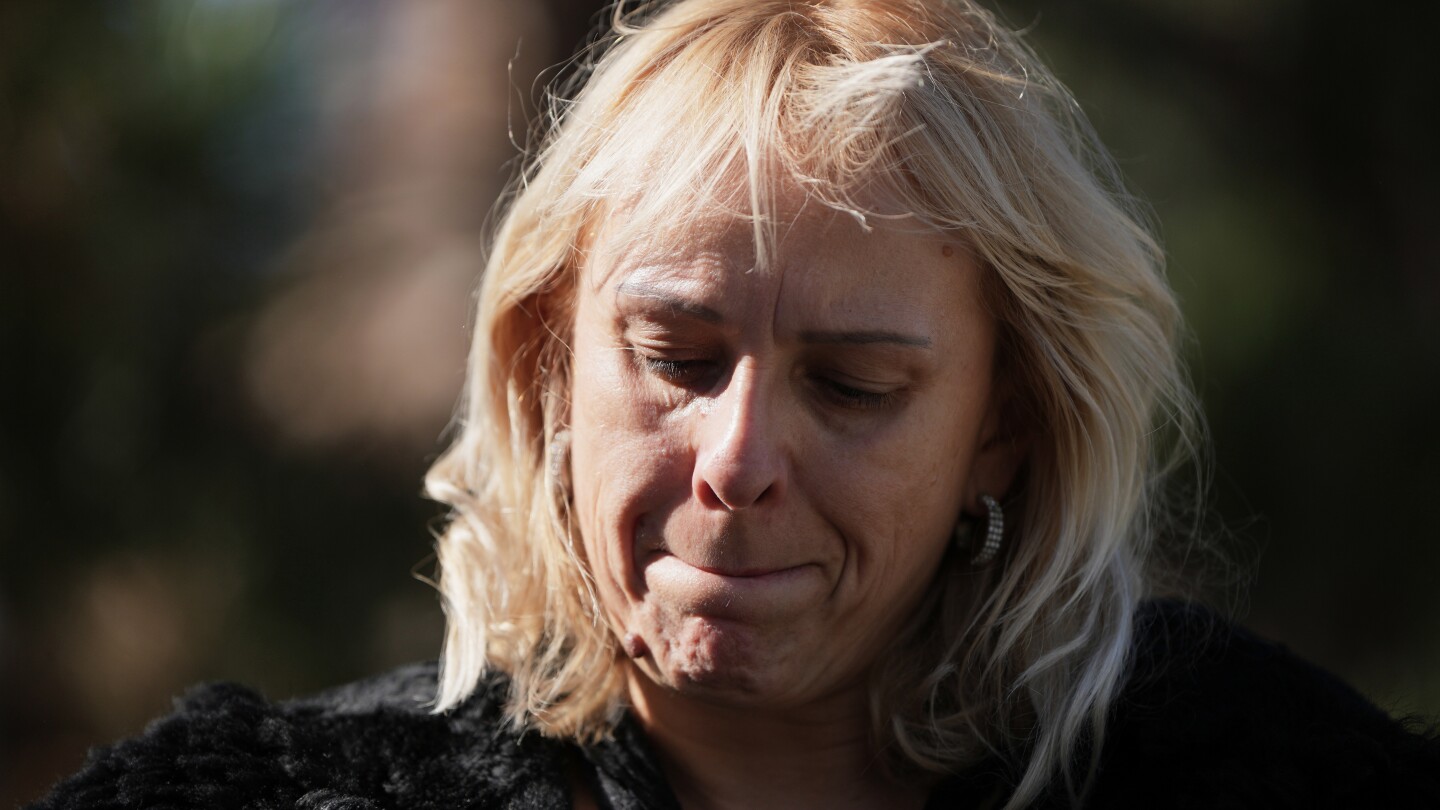
A defiant mother seeks justice for Serbian train station collapse that killed her son and 15 others
BELGRADE, Serbia — Dijana Hrka’s life was irrevocably altered on November 1 last year when a catastrophic partial building collapse at a train station in Serbia’s northern city of Novi Sad claimed the life of her 27-year-old son, Stefan, along with 15 others. The tragedy, which also left one woman severely injured, has since ignited widespread anti-government protests across the country, challenging the autocratic rule of President Aleksandar Vucic. Hrka, 47, has emerged as a vocal advocate for justice, joining tens of thousands of protesters demanding accountability for the lives lost and an end to systemic corruption in construction and governance. The protests, which have rattled Vucic’s administration, are set to intensify on the first anniversary of the disaster. Authorities have yet to address the underlying grievances, with discontent simmering over the government’s crackdown on dissent, including detentions and job losses. Hrka, who has faced threats for her activism, remains resolute, drawing strength from the youth-led movement. “Once you lose what is dearest to your heart, you lose fear,” she said. The anniversary protest aims to pressure Vucic to call for early parliamentary elections and ensure those responsible for the collapse face justice. While prosecutors have charged 13 individuals, including engineers and officials, skepticism remains about the transparency of the judicial process. The protest, though intended as a peaceful commemoration, carries the risk of violence, given previous clashes between police and demonstrators. Amid the tension, university students have embarked on a cross-country trek to Novi Sad, symbolizing unity and resilience. Hrka’s unwavering determination and the youth’s activism continue to challenge the status quo, keeping the memory of the victims alive and demanding systemic change.
-

Germany to give more than $1 billion for Holocaust survivors’ home care in 2026
In a landmark decision, Germany has pledged an additional $1.076 billion (923.9 million euros) to fund home care for Holocaust survivors globally in the coming year. This significant allocation, negotiated with Germany’s finance ministry, marks the largest budget ever dedicated to supporting frail and vulnerable Holocaust survivors through the New York-based Conference on Jewish Material Claims Against Germany, also known as the Claims Conference. Gideon Taylor, the organization’s president, emphasized that the funding addresses the increasingly complex needs of aging survivors, many of whom are now in their late 80s and facing severe health challenges. The average age of survivors receiving care has risen from 86 in 2018 to 88.5 in 2024, with a notable increase in disabilities such as Alzheimer’s, Parkinson’s, and dementia. Additionally, the Hardship Fund Supplemental payments, which provide €1,450 annually to eligible survivors, have been extended through 2028, benefiting over 127,000 individuals globally. The Claims Conference also announced that non-Jewish rescuers who saved Jewish lives during the Holocaust will now be eligible for similar home care services, ensuring they can live their final years with dignity. Colette Avital, a Holocaust survivor and member of the Claims Conference delegation, praised Germany’s continued commitment to survivors and rescuers, stating that it reflects a profound sense of responsibility. Furthermore, Holocaust education funding has been extended through 2029, with €175 million allocated to initiatives such as teacher training, academic research, and innovative mediums like film, gaming, and virtual reality. Greg Schneider, the Claims Conference’s executive vice president, stressed the urgency of investing in Holocaust education while survivors are still alive to share their testimonies, calling it a moral obligation to both survivors and the six million who perished.