分类: society

  • Watch: Rains cause flooding in Al Ain; authorities issue orange alert

    Watch: Rains cause flooding in Al Ain; authorities issue orange alert

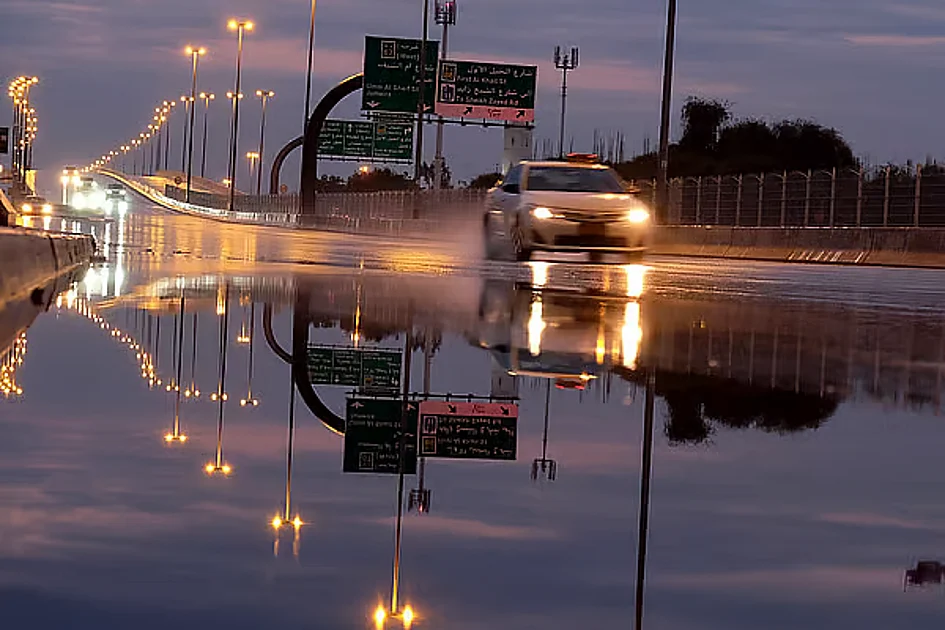
    Al Ain and its surrounding areas experienced severe rainfall on Thursday, leading to widespread flooding and hazardous driving conditions. The National Centre of Meteorology (NCM) had earlier forecasted a period of rainy weather due to a low-pressure system affecting the UAE. The downpour was particularly intense in desert and mountainous regions, creating mini waterfalls and transforming roads into streams. Videos circulating on social media captured cars navigating through waterlogged streets with windshield wipers working tirelessly against the relentless rain. The NCM issued orange and yellow alerts for the eastern parts of the country, urging residents and visitors to exercise caution and adhere to official guidance. Authorities have emphasized the importance of staying updated with the latest weather advisories to ensure safety during this challenging weather event.

  • World Padel Academy brings together global athletes for the Tooba Padel Cup in support of Al Jalila Foundation

    World Padel Academy brings together global athletes for the Tooba Padel Cup in support of Al Jalila Foundation

    In a groundbreaking initiative blending sportsmanship and philanthropy, the World Padel Academy (WPA) hosted the Tooba Padel Cup on October 4, 2025, in Dubai. The charity tournament brought together 14 doubles pairs of professional athletes, padel enthusiasts, and philanthropists for a day of competitive sport and social impact. The event, held in collaboration with the Al Jalila Foundation, aimed to raise awareness and funds for individuals and families in need across the UAE. The tournament followed a single-elimination format, featuring the Fast4 rules — one set to four games, a tiebreak to seven points at three-all, and no-ad scoring to maintain a dynamic pace. The day culminated in an awards ceremony and a charity auction, where exclusive signed memorabilia from participating athletes were auctioned off, with all proceeds channeled to the Al Jalila Foundation through Tooba’s innovative donation platform. Ali Al Arif, CEO of World Padel Academy, emphasized the event’s broader mission, stating, ‘Sport has always been more than competition; it is about connection, wellness, and creating lasting impact.’ Tooba, an international charitable platform, has revolutionized giving by enabling direct contributions to verified causes, ensuring transparency and accessibility. Since its inception, Tooba has facilitated over $40 million in donations, benefiting more than 700,000 people globally. Ramazan Medzhidov, founder of Tooba, expressed gratitude to the WPA, partners, and attendees, highlighting how the event transformed sport into tangible social impact. The collaboration showcased the power of sport to drive meaningful change, combining WPA’s world-class sporting infrastructure, Tooba’s cutting-edge donation technology, and Al Jalila Foundation’s humanitarian efforts. Together, they demonstrated how purpose-led initiatives can inspire communities and create a lasting legacy of compassion and support.

  • No crackers, only lights: Dubai homes sparkle as Indian families celebrate Diwali

    No crackers, only lights: Dubai homes sparkle as Indian families celebrate Diwali

    As the sun sets over Dubai, the city transforms into a radiant spectacle of lights and warmth, marking the celebration of Diwali, the festival of lights, by Indian families across the Emirates. From the bustling lanes of Karama and Bur Dubai to the serene villa communities of Arabian Ranches, homes are adorned with twinkling string lights, flickering LED lamps, and shimmering candles, creating a festive ambiance that bridges the distance from India to the UAE. Diwali, also known as Deepavali, holds profound significance for Indian communities worldwide, symbolizing the triumph of light over darkness and good over evil. In Dubai, the festival is not just about illumination but also about preserving cultural heritage and fostering a sense of community. Geetanjali Kumar, a long-time UAE resident, emphasizes the importance of giving during Diwali. Her family prepares hampers of essential items for community helpers, teaching their children empathy and the spirit of sharing. Similarly, Sheetal Sablepatil from Arabian Ranches revives childhood memories by preparing traditional Maharashtrian sweets and decorating her villa with lights, celebrating the festival with close friends. Yoga instructor Ritu Agarwal from The Springs balances her professional commitments with the five-day Diwali celebrations, highlighting the significance of integrating tradition into daily life. Across Dubai, Diwali serves as a reminder of cultural roots, bringing families together through prayers, feasts, and the warmth of shared traditions. The festival’s essence of spreading light and joy resonates deeply, making Dubai a home away from home for the Indian diaspora.

  • New festival at Expo City Dubai allows children to play with goats on rooftop

    New festival at Expo City Dubai allows children to play with goats on rooftop

    Expo City Dubai has introduced a delightful new attraction this October and November at Terra, its sustainability-themed building. The rooftop garden now hosts five pygmy goats, offering children and families a unique opportunity to interact with these playful animals. The Goat Festival, designed to be both educational and entertaining, will take place on October 25-26 and November 1-2. Visitors can enjoy guided walking tours every 30 minutes, where they can meet the goats up close and learn about their role in maintaining healthy gardens. Additionally, the festival features a Rescue Animal Encounter, allowing families to meet and learn about rehabilitated animals. Children can also participate in creative activities such as making bookmarks, goat masks, and footprint art, as well as planting their own mini gardens. A dedicated game zone, ‘Be The GOAT,’ will be available for kids to enjoy independently. The festival runs from 10am to 6pm on the scheduled days, offering an indoor-outdoor experience. Tickets are priced at Dh50 for individuals aged three and above, with free entry for younger children. Tickets can be purchased on the official website.

  • ‘Luxurising the sacred’: New Mecca mega project sparks debate

    ‘Luxurising the sacred’: New Mecca mega project sparks debate

    Saudi Arabia’s Crown Prince Mohammed bin Salman unveiled the ambitious King Salman Gate project on Wednesday, a massive development initiative adjacent to Mecca’s Grand Mosque. Designed to accommodate up to 900,000 worshippers during peak pilgrimage periods, the project aims to enhance the experience for Hajj and Umrah pilgrims while preserving the city’s historical and cultural heritage. The development includes the restoration of approximately 19,000 square meters of cultural and heritage areas, alongside the construction of mixed-use facilities, iconic architecture, and residences with views of the Kaaba, Islam’s holiest site. The project is also expected to create over 300,000 jobs by 2036, aligning with the goals of Saudi Vision 2030. However, the announcement has sparked a heated debate on social media. While some praised the initiative for addressing the growing needs of pilgrims, others criticized it for commercializing the sacred city, arguing that the glitzy architectural display detracts from the spiritual essence of Mecca. Critics also expressed concerns about the project’s accessibility to lower-income pilgrims, with some likening the development to a ‘Las Vegas’ or ‘Disneyland’ transformation. Supporters, on the other hand, emphasized the necessity of modernization and infrastructure improvements to maintain the city’s global significance. The project remains a polarizing topic, reflecting broader tensions between tradition and modernity in one of the world’s most revered religious sites.

  • Tunisia: Thousands protest in Gabes against chemical plant pollution

    Tunisia: Thousands protest in Gabes against chemical plant pollution

    Thousands of residents in Gabes, a southern Tunisian city, took to the streets on Wednesday in a massive demonstration demanding the shutdown of a local chemical complex. The protest follows a series of alarming health incidents, including numerous cases of intoxication and fainting spells, particularly among schoolchildren living near the Tunisian Chemical Group (GCT), a major producer of phosphate-based fertilizers. Social media footage captured harrowing scenes of unconscious individuals being carried by firefighters and treated with oxygen masks. A local official reported that 122 people required medical attention, with symptoms ranging from suffocation to leg pain and numbness. This marks the third such incident since early September, reigniting long-standing grievances over environmental pollution caused by the plant. Residents have long accused GCT of contaminating beaches, groundwater, and air, leading to respiratory illnesses and a spike in cancer rates in an already impoverished community. The protest, organized by the Stop Pollution collective, saw chants of ‘Gabes wants to breathe!’ and ‘We have the right to live in a clean city!’ Tunisians nationwide expressed solidarity online using the hashtag ‘We are all Gabes.’ However, the demonstration was met with heavy-handed police intervention, including the use of teargas, which caused additional injuries. The crackdown has drawn widespread condemnation, with activists decrying the disproportionate response to a peaceful movement. Environmental protests in Tunisia have increasingly faced repression, particularly since President Kais Saied’s 2021 power consolidation. While Saied has criticized the plant’s poor maintenance and pledged to promote a ‘green Tunisia,’ the government remains conflicted due to phosphate’s economic significance. Despite a 2017 commitment to phase out the Gabes plant, recent policy shifts have reclassified phosphogypsum, a hazardous byproduct, as exploitable under certain conditions. Saied has also ordered a significant increase in fertilizer production to capitalize on global market trends, further complicating the path to environmental justice.

  • Saudi Arabia launches huge Mecca expansion with tall towers overlooking Kaaba

    Saudi Arabia launches huge Mecca expansion with tall towers overlooking Kaaba

    Saudi Arabia has unveiled an ambitious expansion project near the Grand Mosque in Mecca, named ‘King Salman Gate’ in honor of the reigning monarch. Officially launched on Wednesday, the project spans an impressive 12 million square meters and aims to enhance the spiritual and logistical experience for pilgrims. The development will feature residential, hospitality, commercial, and cultural facilities, with capacity for approximately 900,000 indoor and outdoor prayer spaces. Renderings and a video released by the Public Investment Fund (PIF) depict towering skyscrapers overlooking the Grand Mosque, with pilgrims praying towards the Kaaba from various vantage points. The project, developed by RUA AlHaram AlMakki Co., a subsidiary of the PIF, is expected to generate over 300,000 jobs over the next decade, aligning with Saudi Arabia’s Vision 2030 economic diversification plan. While the project’s cost and construction timeline remain undisclosed, it underscores Riyadh’s commitment to expanding infrastructure in Mecca and Medina. The expansion aims to accommodate over 30 million foreign pilgrims annually by 2030, leveraging the cities’ religious significance for Hajj and Umrah pilgrimages. However, the project may face criticism due to the scale of the new buildings, reminiscent of the controversial Royal Clock Tower, which has been criticized for overshadowing the Kaaba and its opulent amenities. Despite potential backlash, Saudi Arabia continues to prioritize development in its holy cities, ensuring they remain central to global Islamic tourism.

  • India’s pollution refugees fleeing Delhi’s toxic air

    India’s pollution refugees fleeing Delhi’s toxic air

    In a growing trend, families in New Delhi are abandoning the city’s toxic air in search of healthier environments, prioritizing their children’s well-being over urban ties. Natasha Uppal, a 36-year-old maternal health advocate, and her husband made the life-altering decision to leave Delhi in 2022 after years of battling severe migraines and indoor confinement due to hazardous air quality. Their relocation to Bengaluru coincided with the discovery of her pregnancy, marking a pivotal moment in their lives. Uppal described the move as the ‘best decision,’ emphasizing that clean air is a ‘basic human right.’ While Bengaluru’s air quality occasionally exceeds World Health Organization (WHO) limits, it pales in comparison to Delhi’s months-long smog, allowing her son to play outdoors freely. Delhi, home to over 30 million people, consistently ranks among the world’s most polluted cities. Each winter, the capital is engulfed in a toxic haze fueled by crop burning, factory emissions, and vehicular pollution. PM2.5 levels, cancer-causing microparticles small enough to enter the bloodstream, have soared to 60 times WHO limits. Despite government measures like partial vehicle bans and cloud-seeding trials, the crisis persists. A 2022 study in The Lancet Planetary Health estimated that 3.8 million deaths in India between 2009 and 2019 were linked to air pollution. The UN children’s agency warns that polluted air heightens children’s risk of acute respiratory infections. Vidushi Malhotra, another Delhi expatriate, relocated to Goa in 2021 after her two-year-old son repeatedly fell ill. She now encourages others to follow suit, sparking what she calls a ‘mini-movement.’ Meanwhile, some families, like Roli Shrivastava’s, remain in Delhi but live in constant anxiety. Shrivastava, whose toddler suffers from worsening respiratory issues each winter, prepares for another season indoors, relying on air purifiers and nebulisers. She admits that relocation is a frequent consideration, stating, ‘Delhi is not a good place to raise kids when it comes to air pollution.’

  • Watch: Moment grain silo collapses in Illinois

    Watch: Moment grain silo collapses in Illinois

    A dramatic incident unfolded in Martinton, Illinois, approximately 80 miles south of Chicago, when a grain silo filled with soybeans unexpectedly collapsed. The event, captured on video, showed the structure giving way under the weight of its contents, sending debris and soybeans cascading to the ground. Fortunately, local authorities confirmed that there were no injuries reported in the aftermath of the collapse. The cause of the incident remains under investigation, with officials examining potential structural failures or other contributing factors. The collapse has raised concerns about the safety and maintenance of agricultural storage facilities in the region. Residents and workers in the area expressed relief that no one was harmed, but the incident serves as a stark reminder of the potential dangers associated with such structures. Authorities are now working to assess the damage and ensure that similar incidents are prevented in the future.

  • UAE emerges as Arab world’s most improved higher education system

    UAE emerges as Arab world’s most improved higher education system

    The United Arab Emirates (UAE) has solidified its position as the Arab world’s most improved higher education system, according to the recently released QS World University Rankings: Arab Region 2026. This year, 15 UAE universities were featured in the rankings, with nine institutions climbing the ladder, one maintaining its position, and four experiencing slight declines. Notably, the University of Fujairah made its debut in the 151–160 band, marking a significant milestone for the nation’s academic landscape. The UAE, alongside Saudi Arabia, continues to dominate the region’s higher education sector, with both countries boasting three universities in the top 10 and six in the top 20—double the number of any other nation. Khalifa University achieved its highest-ever ranking, securing third place, while United Arab Emirates University held steady at fifth. The American University of Sharjah rose to ninth, and the University of Sharjah entered the top 20 for the first time, ranking fourteenth. Dr. Ashwin Fernandes, QS Executive Director for AMESA, highlighted the UAE’s excellence in internationalisation, with institutions like Al Ain University and The British University in Dubai ranking among the region’s most international universities. QS data projects that international student enrollment in the UAE will surge to nearly 120,000 by 2030. The UAE also recorded the highest system-wide improvement rate among Arab nations at 33%, with significant gains in employer reputation, web impact, and international student ratios. Nine of the top 10 universities for international faculty and seven for international students are based in the UAE, underscoring its growing global appeal.