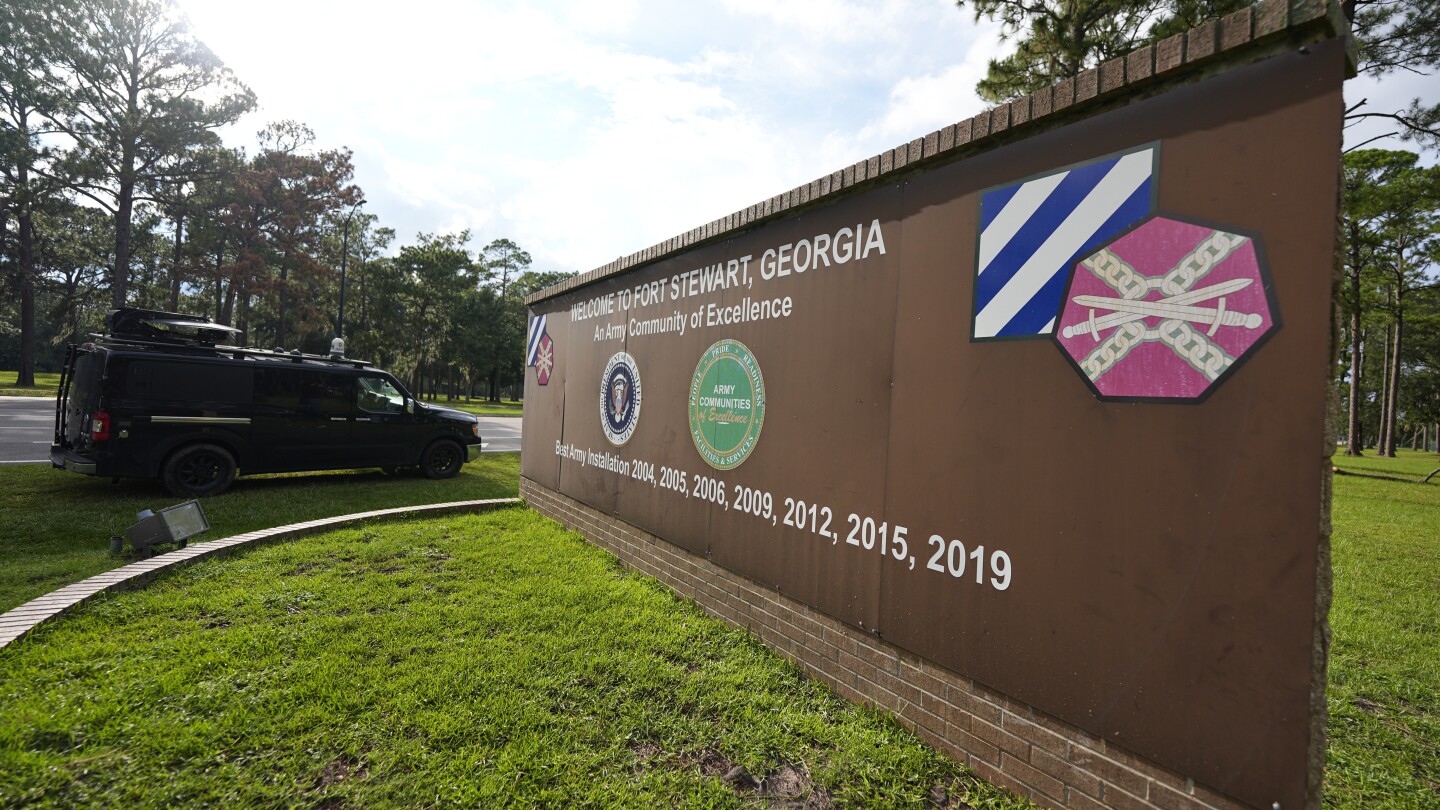
A recent shooting at Fort Stewart, one of the largest military bases in the United States, has reignited debates over longstanding policies that restrict service members from carrying personal weapons on military installations. The incident, which left five soldiers injured, occurred on Wednesday and was swiftly addressed by soldiers who subdued the shooter before law enforcement arrived. However, the absence of firearms among the responding soldiers has sparked widespread discussion. The shooter, identified as logistics Sgt. Quornelius Radford, used a personal weapon, highlighting the limitations of current regulations. Videos circulating on social media show service members running for safety during the lockdown, raising questions about the effectiveness of existing policies. This incident adds to a growing list of violent episodes at U.S. military bases, some of which have resulted in significant casualties. Experts argue that while the strict gun policies on military bases are designed to protect national security, they may not be sufficient to prevent such incidents. The Department of Defense’s regulations, which have been in place for decades, require military personnel to store their firearms securely and only use them in designated areas. These rules leave little room for local commanders to exercise discretion, even in states like Georgia, which has some of the most lenient gun laws in the country. Robert Capovilla, a military law expert, emphasized that the heightened security measures are necessary due to the sensitive nature of military installations. However, former military prosecutor Eric Carpenter noted that these regulations mirror broader debates on gun control and do not entirely prevent service members from bringing weapons onto bases. The incident underscores the complexities of balancing security with individual rights within the military context.
分类: society
-

China can’t buy its way to a baby boom
In a significant move to combat China’s declining birth rate, the central government announced a new childcare subsidy on July 28, 2025. Families will receive 3,000 yuan ($417.76) annually for each child under three years old. This initiative follows the recent unveiling of plans to provide free preschool education nationwide, marking a shift from previous years when local authorities primarily handled such policies. Despite various local efforts, including cash incentives and housing subsidies, the national birth rate has continued to decline, with China’s population shrinking for the third consecutive year in 2024. The aging population and shrinking workforce pose long-term challenges for economic growth, healthcare, and pension systems. While some regions have seen slight increases in birth rates due to local policies, the overall impact remains minimal. The high cost of raising children, gender inequality, and structural issues like expensive housing and childcare shortages continue to deter many from starting families. The new measures reflect Beijing’s recognition of the urgency of the situation, but reversing the fertility decline may prove difficult, as seen in other countries like South Korea. To truly address the issue, comprehensive cultural and structural changes are needed, alongside financial support.
-

China’s arrests of boys’ love authors hardly a gay crackdown
Recent reports in Western media have painted a dramatic picture of China’s alleged ‘crackdown’ on the ‘boys’ love’ (BL) genre, a popular form of online fiction. However, a closer examination reveals a more nuanced reality. While Western outlets have framed the issue as a nationwide suppression of ‘gay erotica,’ Chinese media, such as the respected Southern Weekly, have highlighted localized law enforcement actions, particularly in Lanzhou and Jixi county, targeting individuals accused of profiting from obscene material. The narrative of a sweeping crackdown appears exaggerated, as these incidents are not representative of a broader national policy. Instead, they reflect specific legal disputes and jurisdictional challenges. The BL genre, which features romantic or erotic relationships between men, is primarily written by and for heterosexual women, complicating the characterization of it as ‘gay erotica.’ Scholars argue that the genre often presents an idealized version of male homosexuality, distinct from the lived experiences of gay men. In China, the genre’s popularity has inadvertently increased visibility for the LGBTQ+ community, but its conflation with homosexuality has also led to misunderstandings. The arrests of BL writers are more likely tied to China’s strict obscenity laws and its efforts to regulate the lucrative online literature industry, which generates billions in revenue. While Western media often portrays such actions as homophobic, the reality is more complex, involving economic, ideological, and legal factors. The disappearance of high-profile cases from public discourse further underscores the challenges of understanding censorship in China.
-

To drink or not to drink – the Party decides in China
China is implementing a dual approach to transform its spirits sector, prohibiting civil servants from drinking at official events while encouraging the public to consume alcohol during family gatherings. This strategy aims to curb corruption and reduce public expenses while fostering a healthier drinking culture among citizens. The central government first introduced the alcohol ban for civil servants in 2012 to improve their public image and limit extravagant spending. However, many officials found loopholes, rescheduling drinking sessions to dinners or private gatherings, often funded by businesspeople offering expensive spirits as gifts. This practice led to corruption and disciplinary issues. A recent incident in Inner Mongolia highlighted the severity of the problem. Wei Shuanshi, a senior official, hosted a dinner where excessive drinking led to the death of a colleague from alcohol poisoning. The incident prompted stricter enforcement of the alcohol ban, with the State Council and the CCP Central Committee announcing new rules prohibiting civil servants from drinking or smoking during work-related events. Officials must now seek approval for meal receptions and avoid unnecessary private gatherings. The new regulations have impacted the spirits market, causing significant stock declines for major brands like Kweichow Moutai and Wuliangye Yibin. However, the rules have also been criticized for their overzealous implementation, with local governments penalizing even harmless social interactions, harming the catering industry. To address this, state media clarified the guidelines, distinguishing between corrupt practices and everyday social drinking. Analysts suggest that while the alcohol ban targets civil servants, younger consumers and the general public can sustain the spirits market. Brands are adapting by launching lower-alcohol products to appeal to younger drinkers. Despite a decline in spirits production, the industry has seen modest revenue growth, indicating resilience amid regulatory changes.
-

Alaska Native woman, ‘everybody’s helper,’ is Orthodox church’s first female North American saint
In the remote Alaskan village of Kwethluk, Olga Michael, a Yup’ik woman known for her quiet generosity and compassion, has been canonized as the first female Orthodox saint from North America. Officially titled “St. Olga of Kwethluk, Matushka of All Alaska,” her sainthood marks a historic moment for the Orthodox Church, which has traditionally been led by male clergy. Olga, who passed away in 1979 at the age of 63, was a midwife, mother of 13, and a spiritual guide to many, particularly women who had endured abuse, miscarriage, or other personal traumas. Her legacy of kindness and piety has resonated far beyond her village, inspiring devotees across Alaska and beyond. Her canonization ceremony, held in her hometown, drew hundreds of worshippers from across the globe, celebrating her life and contributions. Metropolitan Tikhon, head of the Orthodox Church in America, emphasized the significance of recognizing women like St. Olga, stating that holiness is accessible to all, regardless of gender or background. St. Olga’s sainthood is especially meaningful as it highlights the role of lay women and mothers in the church, a departure from the traditional focus on nuns or ancient martyrs. Her canonization also underscores the deep connection between Orthodoxy and Alaska’s Indigenous cultures, where the faith has flourished since its introduction by Russian missionaries in the 18th century. St. Olga’s remains, now enshrined in Kwethluk’s St. Nicholas Orthodox Church, will serve as a pilgrimage site, honoring her enduring legacy as a beacon of hope and healing.
-

How social media divided and broke America
The United States, once a symbol of unity and resilience, has been grappling with deep societal fractures since the early 2010s. While the economy has shown remarkable strength, with wealth surpassing pre-Great Recession levels and wages steadily rising, American society remains deeply unsettled. This paradox raises a critical question: Why is a nation with such economic prosperity so plagued by division and discontent? The answer, it seems, lies in the transformative impact of smartphones and social media. The 2010s marked the widespread adoption of these technologies, which fundamentally altered how Americans interact, perceive each other, and engage with societal issues. Social media platforms like Twitter, Facebook, and Instagram created a virtual space where geographic and ideological boundaries dissolved, forcing Americans into a constant, often contentious, dialogue. This digital revolution amplified existing fault lines—racial tensions, political polarization, and cultural divides—while introducing new challenges, such as declining mental health and institutional distrust. The rise of smartphone-enabled social media coincided with a sharp decline in perceptions of race relations, workplace sexism, and overall societal trust. Videos of police shootings, for instance, went viral, sparking nationwide protests and reigniting debates about systemic racism. Similarly, the MeToo movement gained momentum as social media provided a platform for marginalized voices. However, these platforms also fostered echo chambers, where extreme views were amplified, and constructive dialogue became increasingly rare. The result has been a society where anger and mistrust overshadow economic progress. Americans, once able to geographically sort themselves into like-minded communities, now find themselves in a digital town square, constantly exposed to opposing views and ideologies. This has led to a decline in happiness, particularly among educated liberals, who feel increasingly alienated in this new social landscape. The collapse of geographic sorting, once a release valve for societal tensions, has left Americans struggling to coexist in a hyperconnected world. As the nation navigates this digital age, the challenge remains: How can a society built on diversity and freedom adapt to a reality where everyone is constantly in each other’s virtual space?
-

Skier caught in an avalanche is the second person to die this season on Alaska’s Mount McKinley
A tragic incident unfolded on North America’s highest peak, Mount McKinley, as a skier lost his life in an avalanche, marking the second fatality of this year’s climbing season. Nicholas Vizzini, a 29-year-old from Washington state, and his snowboarding companion triggered the avalanche on Tuesday while descending the 20,310-foot (6,190-meter) mountain, according to a statement from Denali National Park and Preserve. The avalanche originated at approximately 16,600 feet (5,060 meters) and cascaded down to around 15,000 feet (4,572 meters).
Two mountaineering rangers swiftly responded after spotting Vizzini’s partner amidst the avalanche debris. Utilizing a beacon signal, they located Vizzini, who was largely buried under the wreckage. Despite immediate lifesaving efforts, he was pronounced dead later that evening. Vizzini’s body was subsequently recovered and transferred to the state medical examiner’s office, while his partner sustained minor injuries and was scheduled to leave the mountain on Wednesday.
This incident follows the death of Alex Chiu, a ski mountaineer from Seattle, who perished earlier this month after a 3,000-foot (about 900-meter) fall on the mountain’s West Buttress climbing route. The climbing season, which typically spans from early May to early July, currently hosts around 500 climbers on Mount McKinley. The park authorities continue to emphasize the inherent risks of high-altitude mountaineering.
-
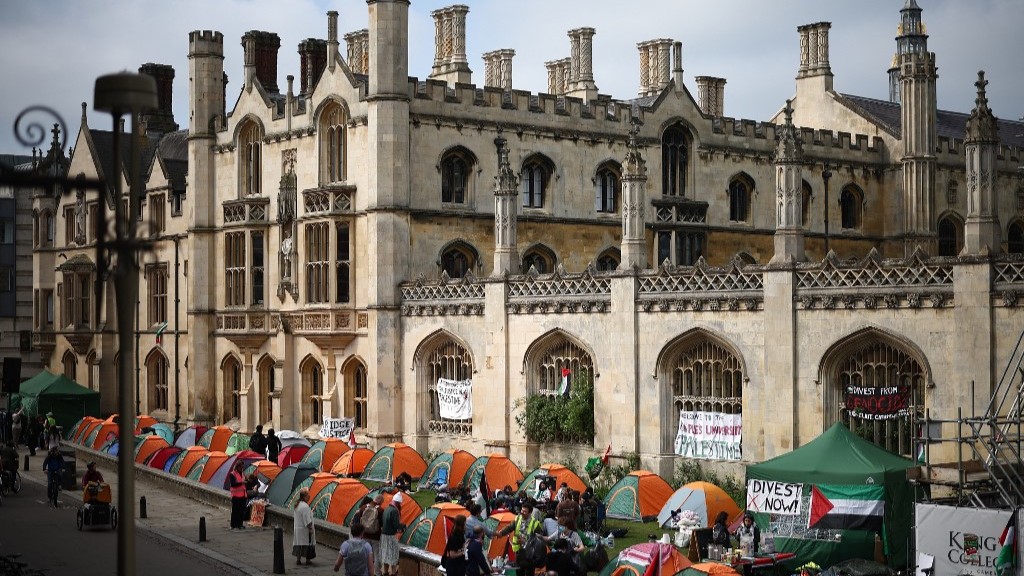
King’s College Cambridge to divest millions from ‘occupation’ and arms industry
In a landmark decision driven by sustained student activism, King’s College at the University of Cambridge has committed to divesting from the arms industry and companies implicated in occupations. The historic institution, established by Henry VI in 1441, announced this week that its governing body has approved adopting a comprehensive responsible investment policy by year’s end.
The college currently maintains £2.2 million ($2.94 million) in arms manufacturers including Lockheed Martin, Korea Aerospace, and BAE Systems as of March 2023. Under the new ethical framework, King’s will exclude companies engaged in activities ‘generally recognized as illegal or contravening global norms, such as occupation,’ specifically referencing Ukraine and Palestinian territories. The policy further prohibits investments in producers of military and nuclear weapons, internationally restricted weapons, and manufacturers of dedicated components for such weapons.
This decision makes King’s the first Oxford or Cambridge college to implement such measures, culminating months of organized protests by student groups. The college acknowledged the policy emerged from ‘wide-ranging discussions within the college about its investments and its values.’
Student organization King’s Cambridge 4 Palestine welcomed the move while criticizing its timing: ‘KC4P implore the university and other colleges to follow the example set by King’s, although the decision comes far too late for the thousands of Palestinians who have been starved, tortured and killed.’
The development occurs within a broader context of investment-related protests across Cambridge’s 31 autonomous colleges. Last May, student group Cambridge for Palestine established protest encampments demanding transparency and divestment from companies complicit in Israel’s Gaza operations. While the university committed in July to establishing Palestinian academic opportunities and an investment review working group, students resumed protests in November accusing the institution of ‘stalling.’
The controversy escalated in February when the university obtained a High Court order restricting Israel-Palestine protests on key sites until July’s end, prompting hundreds of students and staff to condemn the move as an ‘assault on freedom of expression.’
Separately, Middle East Eye revealed Trinity College, Cambridge’s wealthiest institution, maintained $78,089 in Elbit Systems, Israel’s largest arms company providing most drones and land equipment to the Israeli military. Despite student reports of intended divestment following months of protests, the college’s master insisted in November that Trinity had ‘no interest in divesting from arms companies,’ with recent freedom of information requests confirming continued weapons investments.
-
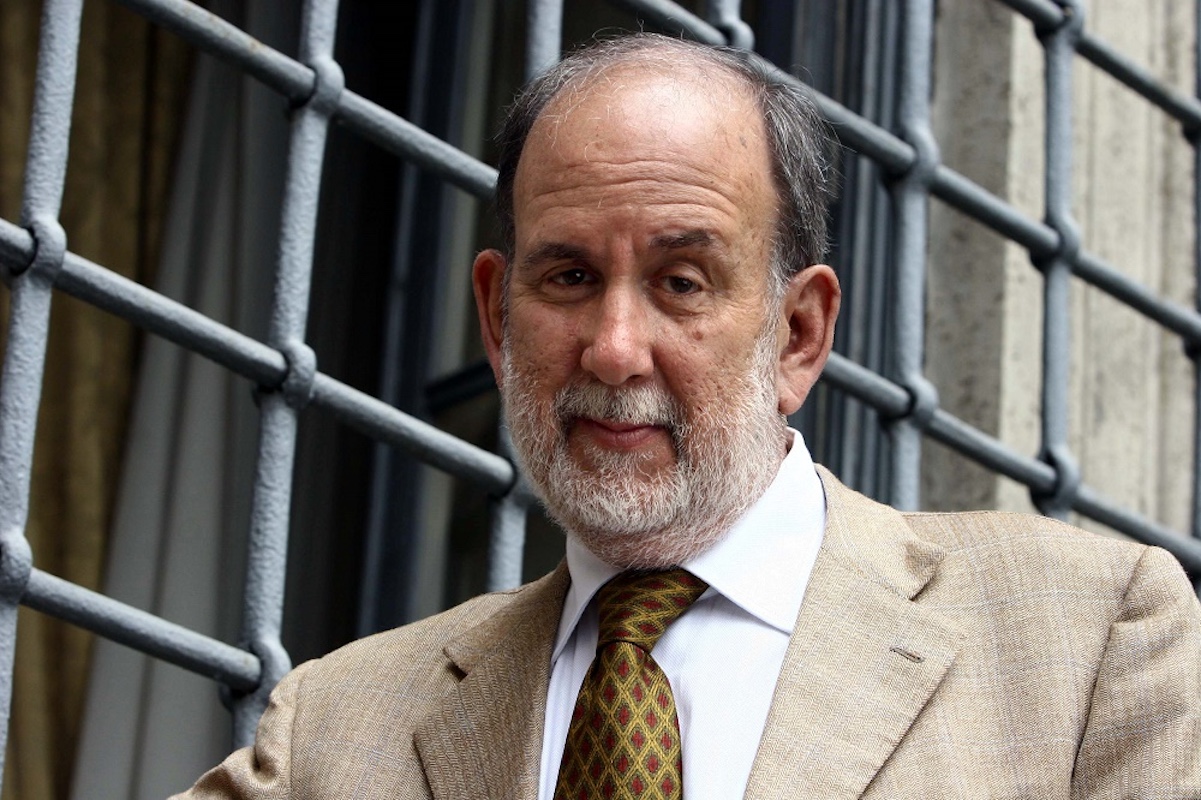
Michael Ledeen, a Reagan revolutionary, passes at 83
Michael Ledeen, a distinguished historian, cultural expert, and key figure in U.S. intelligence, passed away on May 17 at the age of 83 after a prolonged illness. His death marks the loss of one of the last Americans who approached intelligence with a profound understanding of history and culture, a trait increasingly rare in modern academia. Ledeen’s contributions to America’s Cold War victory were monumental, though often understated in public records. His unique blend of historical insight, cultural acumen, and decisive action set him apart as a pivotal figure in shaping America’s global dominance during the 20th century. A mentor and friend, Ledeen was celebrated for his generosity and wisdom. One of his lesser-known yet significant achievements was his role in persuading Italian Prime Minister Bettino Craxi to deploy Pershing II missiles in Western Europe during the Reagan administration, a move that countered Soviet military strategies. Ledeen’s deep understanding of Italian politics and culture, exemplified in his writings on Naples and Italian fascism, made him an invaluable asset in diplomatic and intelligence circles. Post-Reagan, he held the Freedom Chair at the American Enterprise Institute for two decades and later joined the Foundation for Defense of Democracy. Often mislabeled as a neoconservative, Ledeen’s revolutionary conservatism was rooted in a transformative vision of America, deeply influenced by his Jewish heritage. He is survived by his wife Barbara, a prominent Senate staffer, and his children Simone, Gabriel, and Daniel, who have all served in significant public roles. Ledeen’s legacy endures as a testament to the power of intellectual rigor and cultural understanding in shaping global politics.
-

US foreign student purge an exercise in economic self-destruction
In early April 2025, the Trump administration abruptly terminated the immigration statuses of thousands of international students listed in a government database, leaving them without legal permission to remain in the country. This decision prompted some students to self-deport rather than face formal deportation proceedings. However, following widespread legal challenges, the US Department of Homeland Security announced it would reverse these terminations after courts across the nation deemed them unjustified. This reversal comes as the White House continues to emphasize stricter vetting and screening of foreign nationals, including plans to use artificial intelligence to review international students’ social media accounts.
International students in the US have long been subjected to rigorous vetting, screening, and monitoring. Despite this, the introduction of additional bureaucratic measures risks making the US a less attractive destination for global talent. Such policies could undermine the Trump administration’s ‘America First’ agenda, which aims to bolster the economy, advance science and technology, and enhance national security.
The US remains a global leader in attracting international students, but its dominance is waning. According to the Institute of International Education, the US now hosts 16% of all students studying abroad, down from 22% in 2014 and 28% in 2001. During the 2023-2024 academic year, over 1 million international students were present in the US, with 54% hailing from China and India. Most international students pursue graduate degrees in STEM fields, and they contribute significantly to the US economy, generating $43.8 billion in tuition and living expenses while supporting nearly 378,000 jobs.
However, global competition for international students is intensifying. Countries like Germany and South Korea are implementing strategies to attract foreign talent, offering more flexible visa policies and post-study work opportunities. The US’s stringent immigration policies and increased monitoring could further deter international students, redirecting talent to other nations.
International students play a critical role in the US’s global leadership in STEM, with 45% of STEM workers holding doctoral degrees being foreign-born. They also contribute to the economy by launching startups at a rate eight to nine times higher than their domestic peers. Restricting their ability to study in the US could hinder the nation’s ability to maintain its competitive edge in science, technology, and innovation.
As the global landscape shifts, the US must balance security concerns with the need to attract and retain top international talent to sustain its economic and technological leadership.