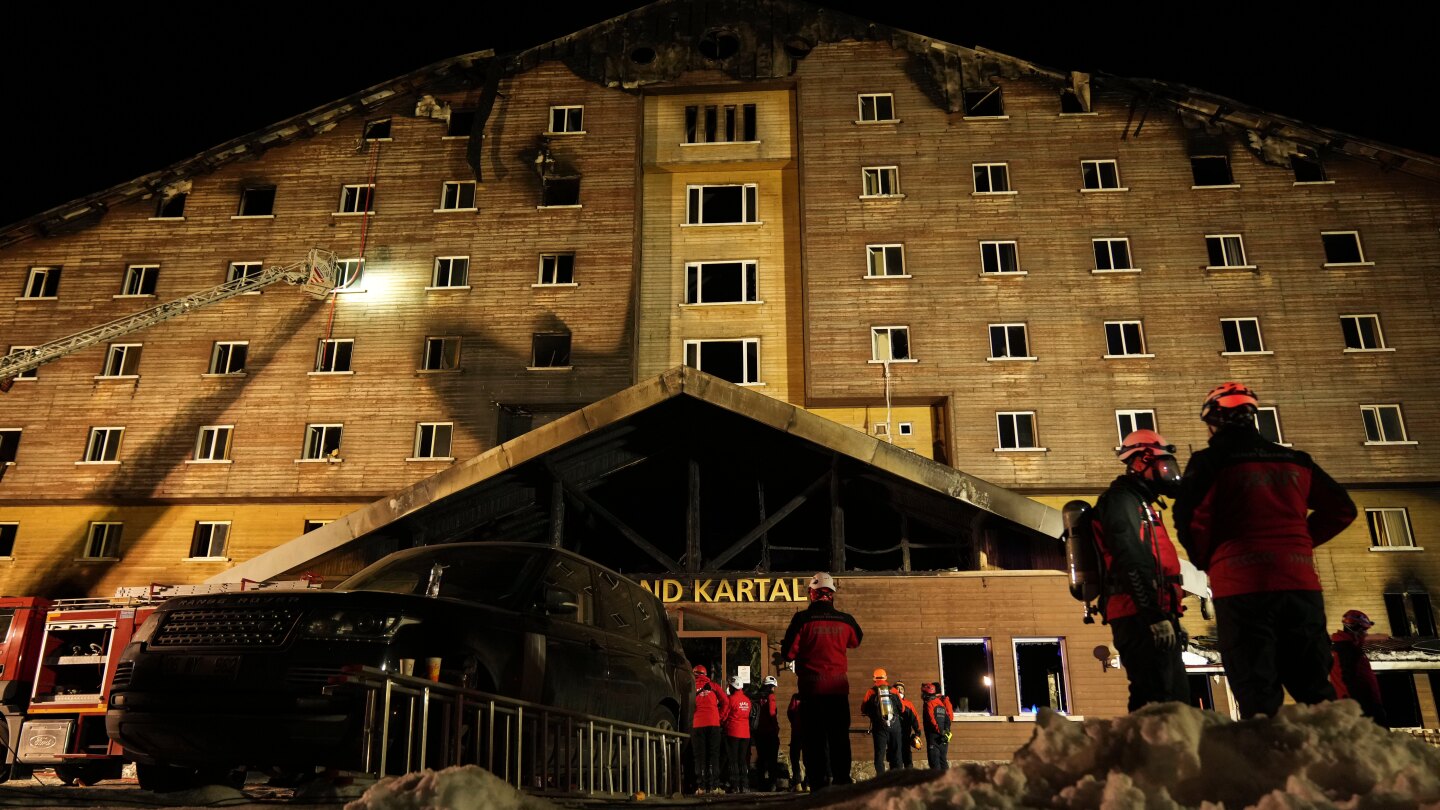
A Turkish court has delivered life sentences to the owner of the Grand Kartal Hotel and ten others following their conviction for severe negligence in a catastrophic fire that claimed 78 lives and injured 133 others. The tragic incident occurred on January 21 at the Kartalkaya ski resort in Bolu province during the winter school break, with 34 children among the victims. The court found hotel owner Halit Ergul, his family members, hotel managers, a deputy mayor, and a deputy fire chief guilty of ‘probable intent to kill’ due to their failure to ensure safety measures. In addition to life imprisonment for the deaths of the children, the defendants received an additional 25 years for the other fatalities. The defendants, who denied responsibility, are expected to appeal the verdict. The courtroom erupted in applause as families of the victims welcomed the sentencing. The fire, which began at 3:17 a.m. due to a spark from an electric grill, quickly spread due to poor safety measures, including a lack of smoke extraction systems, faulty alarms, and inadequate staff training. The disaster has sparked nationwide calls for accountability and stricter enforcement of safety regulations.
分类: society
-

Floods kill 13 in Central Vietnam as rescue operations push forward
HANOI, Vietnam — As floodwaters began to recede across central Vietnam on Friday, rescue operations ramped up in response to days of relentless rainfall and catastrophic landslides that have claimed at least 13 lives, left 11 people missing, and displaced tens of thousands. The subsiding waters enabled emergency teams to access previously isolated communities, with nearly 26,000 residents evacuated from flood-ravaged or landslide-prone areas. The Vietnamese government mobilized helicopters and military personnel to deliver essential supplies such as food and medicine, while also focusing on repairing homes, clearing debris, and preventing disease outbreaks. Infrastructure restoration efforts are underway, with roads, power lines, and schools being repaired, and emergency rice aid scheduled for distribution by Saturday. The North–South railway, a vital transport link connecting Hanoi and Ho Chi Minh City, resumed operations early Friday after a three-day closure, thanks to the tireless efforts of hundreds of workers who repaired damaged sections overnight. While flooding has eased in coastal cities like Hue and Danang, widespread inundation persists and is expected to continue for the next two days, according to state media. Since torrential rains began on October 26, the region has witnessed submerged homes, destroyed villages, and devastated infrastructure. Hue recorded an unprecedented 1,085 millimeters (42 inches) of rain in just 24 hours earlier this week, marking the highest daily rainfall ever measured in Vietnam. Prime Minister Pham Minh Chinh has issued urgent directives to accelerate recovery efforts and ensure no one goes hungry or without shelter. Disaster officials reported that approximately 120,000 homes were flooded, with 56 completely destroyed and 147 severely damaged. Temporary shelters are being established for displaced families. Meteorologists attributed the extreme weather to a collision of cool northern air with warm, moisture-laden sea winds, triggering a series of storms that have battered central provinces for days. The interaction forced rain clouds against mountainous terrain, exacerbating the downpours. Authorities have warned that heavy rain may persist in parts of central Vietnam through November 4, with some areas expected to receive over 700 millimeters of rain. While central Vietnam is no stranger to heavy rains and tropical storms, experts emphasize that the scale and intensity of this week’s floods underscore the escalating risks associated with shifting rainfall patterns in a warming climate. Vietnam ranks among the world’s most flood-prone countries, with nearly half its population residing in high-risk areas.
-
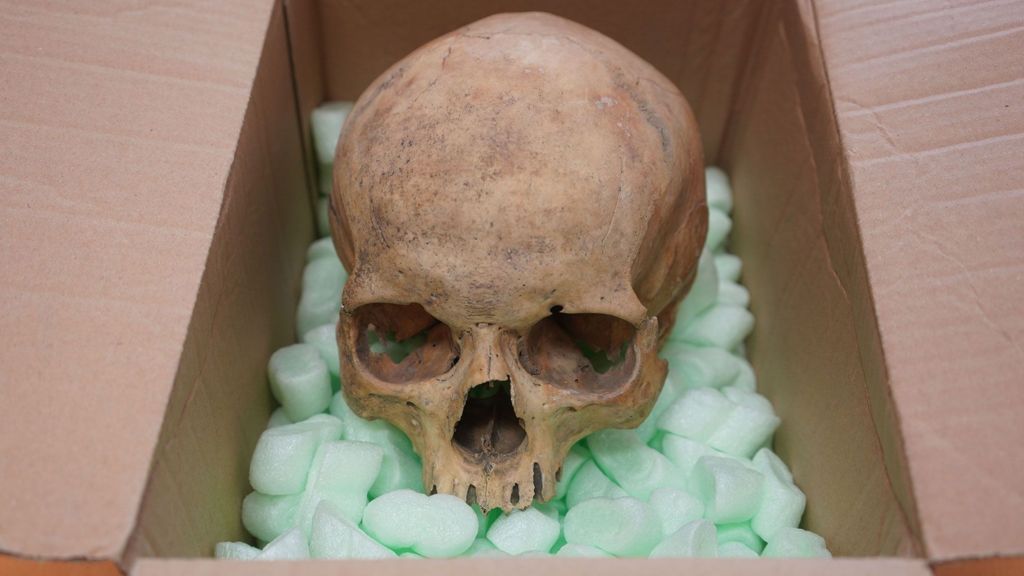
Sixty years after tourist stole skull from cathedral, he sends it back
In an unexpected turn of events, a skull was recently returned to Vienna’s St Stephen’s Cathedral, accompanied by a heartfelt letter. Franz Zehetner, the cathedral’s archivist, was astonished when he opened a parcel addressed to the cathedral and discovered the skull inside. The package also contained a letter from a man in northern Germany, who confessed to stealing the skull as a young tourist nearly six decades ago. The man explained that he had taken the skull during a guided tour of the catacombs beneath the cathedral, which house the remains of approximately 11,000 individuals from the 18th century. In his letter, the remorseful tourist expressed his desire to make amends for his youthful indiscretion as he approached the end of his life. Franz Zehetner remarked on the touching nature of the man’s wish to rectify his past mistake, noting that the skull had been carefully preserved over the years, despite the irregularity of its removal. The identity of the skull remains unknown, and it has since been re-interred in the cathedral’s catacombs. St Stephen’s Cathedral has long been a resting place for both the common people and members of Vienna’s elite families, with many of the remains dating back to the 18th century.
-
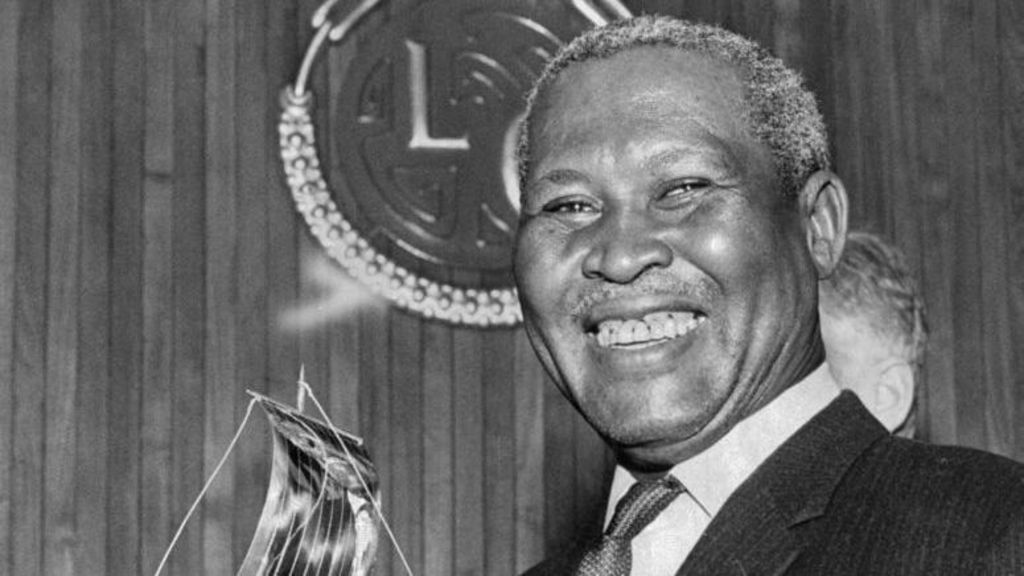
Apartheid police assault killed Nobel laureate Luthuli, South Africa court rules
A South African court has overturned decades of official claims, ruling that the 1967 death of Nobel Peace Prize laureate Albert Luthuli was the result of an assault by apartheid police. The original inquest, conducted under the apartheid government, concluded that Luthuli died after being struck by a freight train while walking along a railway line. However, activists and his family have long disputed this narrative, prompting the South African government to reopen the case earlier this year. On Thursday, Judge Nompumelelo Radebe ruled that Luthuli’s death was caused by a fractured skull, cerebral hemorrhage, and brain concussion resulting from an assault. The judge attributed the assault to members of the South African police’s security special branch, acting in collaboration with employees of the South African Railway Company. Seven men were named as perpetrators or accomplices, though their current whereabouts remain unknown. If located, they could face criminal charges. Luthuli, who led the then-banned African National Congress (ANC), won the Nobel Peace Prize in 1960 for his leadership in the fight against apartheid. His family and the ANC have welcomed the ruling, describing it as a correction of historical distortion and a step toward justice for apartheid-era crimes. This case is part of broader efforts by South African authorities to address unresolved apartheid-era crimes, including the recent reopening of the inquest into the death of anti-apartheid leader Steve Biko. President Cyril Ramaphosa has also established a judicial commission to investigate allegations of improper influence in delaying or hindering such cases.
-
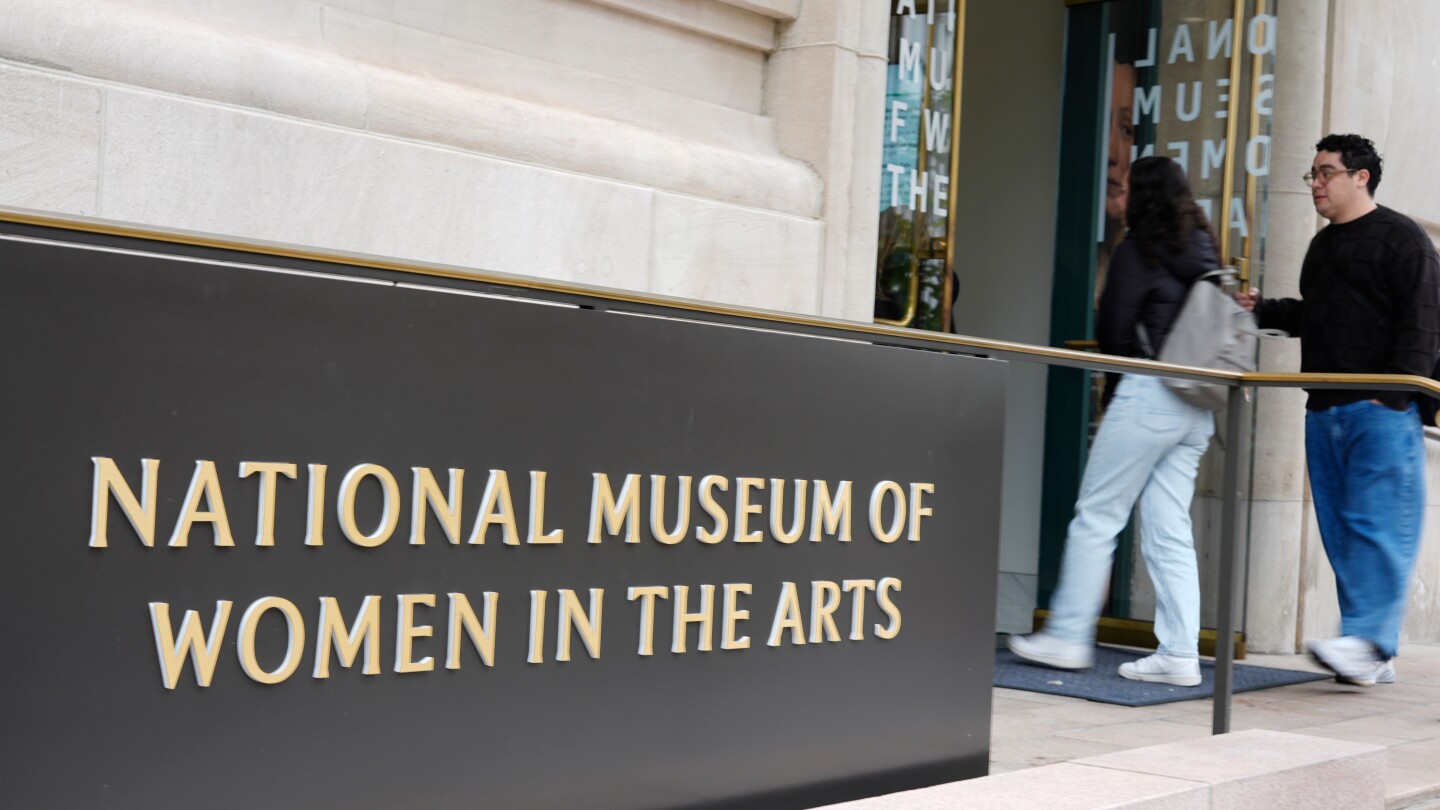
Louvre heist highlights thorny issue for museums: How to secure art without becoming fortresses
In the wake of a high-profile jewelry heist at the Louvre in Paris, museums worldwide are reassessing their security protocols. The incident has sparked urgent discussions among institutions, including Washington’s National Museum of Women in the Arts, the Smithsonian, and the National Gallery of Art. Doug Beaver, a security specialist, revealed that detailed reviews and strategic plans were swiftly implemented following the theft. Similar dialogues are unfolding globally as museums grapple with the dual challenge of safeguarding art while maintaining an open and welcoming environment for visitors. The Louvre’s director, Laurence des Cars, acknowledged significant security lapses, prompting French police and legislators to address vulnerabilities. A letter of support from 57 international museums, published in Le Monde, emphasized the importance of museums as accessible spaces of wonder, not fortresses. However, many museums, particularly those housed in historic buildings like the Louvre, face unique challenges in modernizing security without compromising their architectural integrity. Experts like François Chatillon, France’s chief architect of historical monuments, caution against hasty, invasive measures. Meanwhile, security professionals are focusing on balancing risk management with visitor experience. Doug Beaver highlighted the need for intelligent risk management, citing measures such as enhanced weapons detection and restricted visitor items. The incident has also reignited discussions about international cooperation and investment in advanced security technologies. Despite these efforts, the broader challenge remains: preserving the magic of museums while ensuring their safety.
-
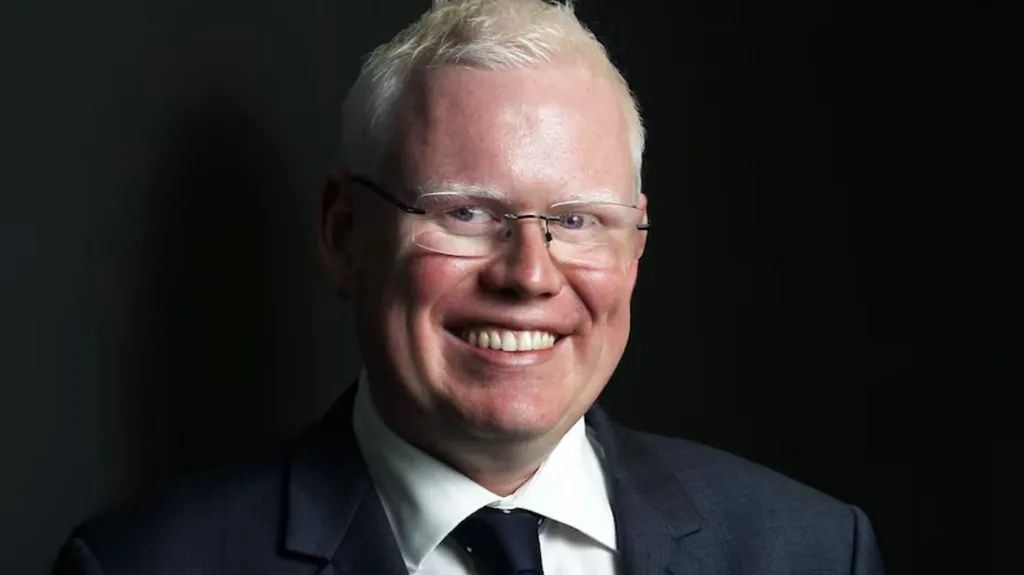
Former Australian politician jailed for more than five years for sex crimes
Gareth Ward, a former Australian politician, has been sentenced to five years and nine months in prison for the sexual abuse of two young men. The 44-year-old, who represented the coastal town of Kiama in the New South Wales (NSW) parliament from 2011, was found guilty in July of raping a 24-year-old political staffer in 2015 and indecently assaulting an 18-year-old man in 2013. Both incidents occurred after he met the victims through his work. Ward had been in custody since his conviction and appeared via video-link at Parramatta District Court for sentencing. Judge Kara Shead SC, who presided over the case, emphasized that imprisonment was the only appropriate penalty, despite Ward’s legal blindness. She described his actions as ‘callous and predatory’ and noted that he had ‘escaped justice for a decade.’ Ward will serve at least three years and nine months before being eligible for parole. The judge also stressed the need to send a ‘stern message’ to deter similar offenses. Ward’s resignation from parliament in July triggered a by-election in Kiama, which was won by a Labor candidate. His legal team has indicated plans to appeal the verdict, as Ward maintains his innocence. The trial revealed harrowing details of the assaults, with both victims describing long-term emotional and psychological impacts. The prosecution highlighted striking similarities in the accounts of the two men, who did not know each other, as evidence of their credibility. Despite Ward’s lack of remorse, the judge acknowledged his potential for rehabilitation.
-

‘Give your money away,’ Billie Eilish tells billionaires
During her address at the prestigious WSJ Awards, renowned singer Billie Eilish made a compelling appeal to the world’s billionaires, urging them to significantly increase their charitable donations. The event, which saw the presence of prominent figures such as Mark Zuckerberg and George Lucas, provided a platform for Eilish to voice her concerns about wealth disparity and the urgent need for philanthropic efforts. Eilish emphasized that the ultra-wealthy have a moral obligation to redistribute their fortunes to address pressing global issues, ranging from poverty to climate change. Her speech resonated with many, sparking a broader conversation about the role of wealth in societal betterment and the responsibilities of those who possess it. This call to action highlights the growing expectation for the affluent to contribute more substantially to charitable causes, reflecting a shift in public sentiment towards greater accountability and social responsibility.
-
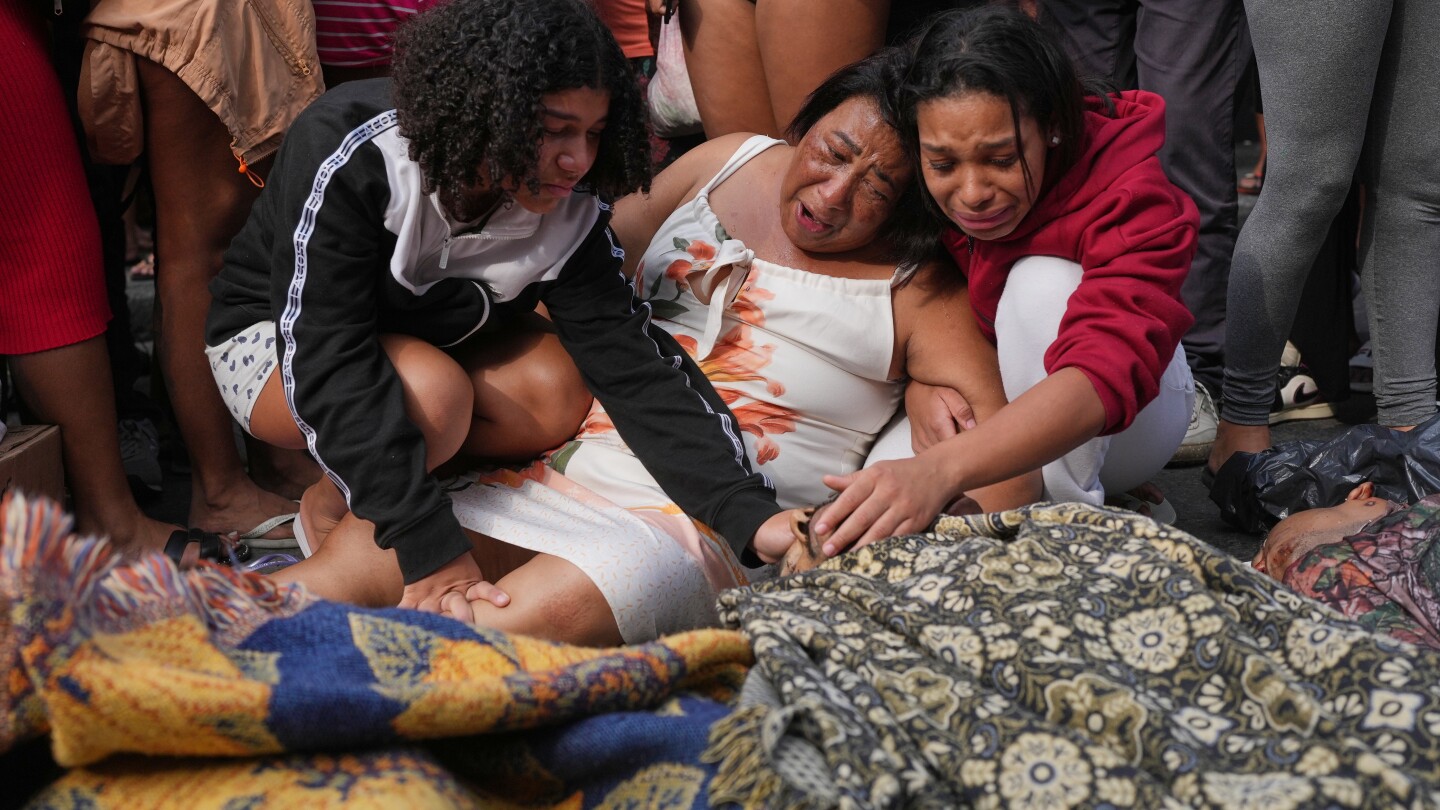
Rio favelas left reeling after lethal gang raid as families bury the dead
In the aftermath of a devastating police raid in Rio de Janeiro, families began burying their loved ones on Thursday, as the community grappled with the aftermath of what many are calling excessive and brutal law enforcement actions. The operation, which took place on Tuesday in the Vila Cruzeiro favela, resulted in the deaths of at least 132 people, including four police officers, according to Rio de Janeiro’s public defenders’ office. Residents of the low-income neighborhood expressed shock, grief, and anger, accusing the police of torture, extrajudicial killings, and excessive force. The raid, described by some as resembling a war zone, targeted the notorious Red Command gang in the Complexo de Alemao and Complexo da Penha favelas. Despite the return of some semblance of normalcy, with shops and restaurants reopening, the emotional toll on the community remains profound. Monique Santiliano, a local nail salon owner, voiced her distress, stating, ‘This wasn’t an operation, these were assassinations. They didn’t come to arrest, they came to kill.’ Conservative Rio state Governor Claudio Castro defended the operation, labeling it a success in the fight against ‘narco-terrorism,’ a term reminiscent of the Trump administration’s campaign against drug smuggling in Latin America. However, Human Rights Minister Macaé Evaristo criticized the raid, emphasizing that the fight against organized crime should target masterminds and financiers, not expose vulnerable populations to terror. The operation, which involved 2,500 police and soldiers, drew condemnation from human rights groups, the U.N., and Brazilian authorities, including the Supreme Court, which ordered Governor Castro to provide detailed information about the raid. While some right-wing politicians and voters supported the operation, others questioned its effectiveness, arguing that many of those killed were low-ranking gang members easily replaceable. The disparity between the number of police and suspect deaths raised further concerns, with conservative lawmaker Otoni de Paula suggesting the operation was an ambush with the sole objective of execution. Residents also decried the state of the bodies, with reports of decapitation, puncture wounds, and tied-up victims. Ana Tobossi, a local activist, warned against normalizing such brutality, stating, ‘If the country continues to applaud, it will happen elsewhere.’ The operation’s stated objectives were to capture gang leaders and limit the territorial expansion of the Red Command, which has increased its control over favelas and expanded its presence across Brazil, including in the Amazon rainforest. As families began burying their dead, the emotional toll on the community was evident. Grasiele, the sister of 22-year-old Cauan Fernandes do Carmo Soares, who was killed in the raid, expressed her family’s devastation, stating, ‘My family is destroyed.’ The incident has left the community in a state of fragility, with many questioning the long-term impact of such violent law enforcement actions.
-
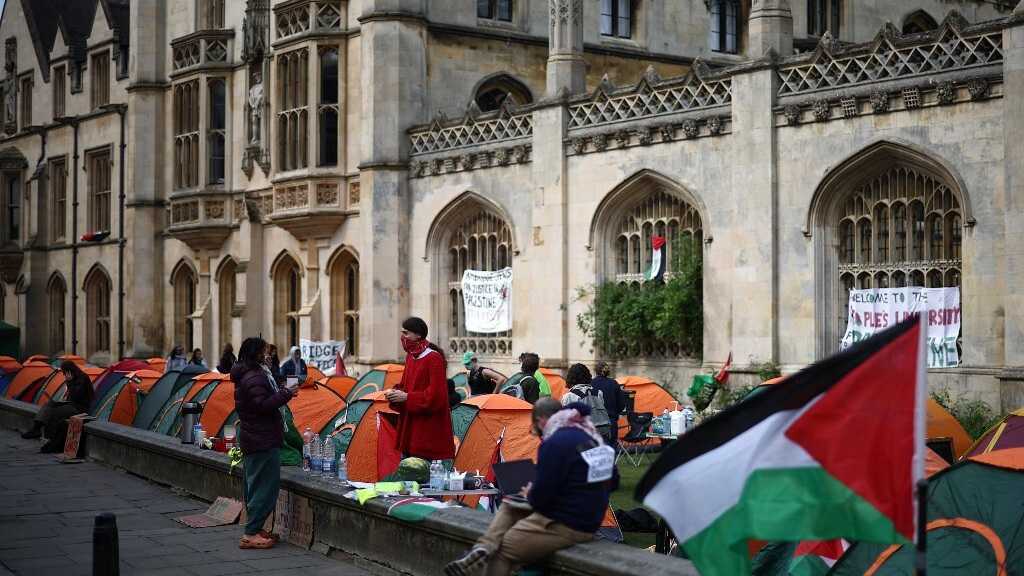
Cambridge Student Union splits from National Union of Students over Gaza
In a landmark decision, students at the University of Cambridge have voted to disaffiliate from the National Union of Students (NUS), citing its alleged failure to support pro-Palestinian protests and campaigns. The motion, passed by the Cambridge Student Union (SU) on Thursday night, garnered 1,772 votes in favor, with 1,284 against and 719 abstentions. The decision follows widespread criticism of the NUS for its perceived inaction on student-led pro-Palestinian movements and its lack of support for students facing disciplinary actions for protests. The SU trustee board initiated the motion, accusing the NUS of ignoring nationwide student calls to campaign for Palestine and prioritizing selective causes aligned with its internal agenda. Additionally, the NUS was criticized for offering ‘poor value for money,’ with annual fees estimated at £20,000 ($26,000). This move comes after 55 university student groups and union officers signed an open letter urging the NUS to take a stand on Gaza or face mass disaffiliation. In response, the NUS demanded that signatories remove their names or face bans from its events. Olivia Ledger, vice president of the Cambridge SU, highlighted the lack of NUS support during seven student encampments and five High Court injunctions. She also criticized the NUS for failing to address Islamophobia and its minimal national campaigning impact. Meanwhile, Cambridge students passed a motion for the SU to campaign against university investments in institutions involved in occupation and weapons manufacturing. This follows the university’s recent decision to divest from companies producing ‘controversial weapons’ and its upcoming vote on divesting from all arms manufacturers. The university council has already adopted a policy to divest from companies manufacturing weapons illegal under UK law, including chemical and biological weapons and cluster munitions. A final decision on divestment from all arms manufacturers is expected on November 20.
-
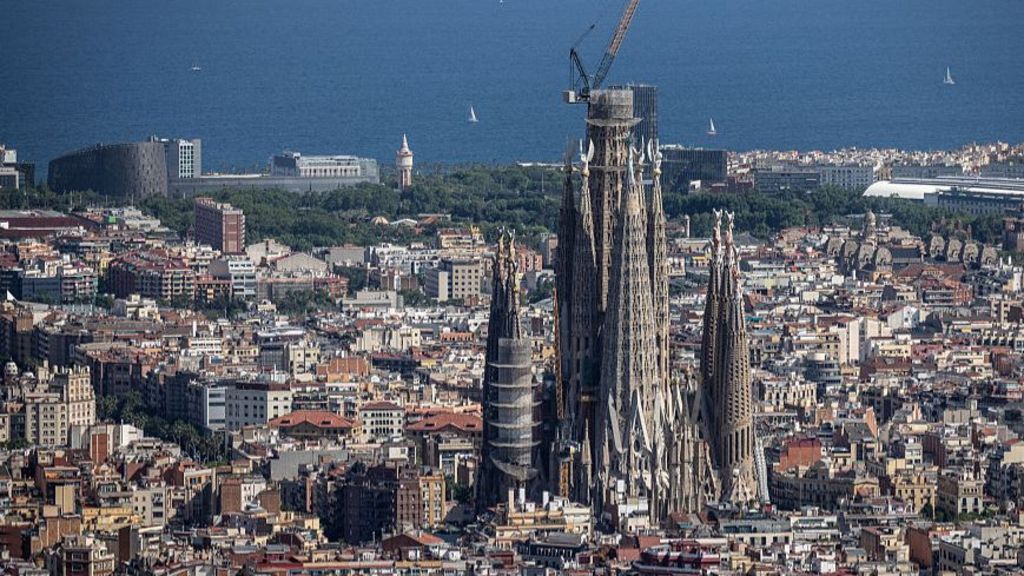
Barcelona’s Sagrada Família becomes world’s tallest church
In a historic moment for architecture and religious heritage, Barcelona’s iconic Sagrada Familia has officially been crowned the tallest church in the world. Workers recently placed the first section of a cross atop its central tower, bringing the structure’s height to 162.91 meters. This achievement surpasses the Ulm Minster in Germany, which had held the record since 1890. Designed by the legendary architect Antoni Gaudí, the basilica has been under construction for over a century, with its main building slated for completion next year. The central Tower of Jesus Christ will eventually reach 172 meters once the cross is fully installed in the coming months.
The Sagrada Familia’s journey began in 1882, with Gaudí taking over the project a year later. His visionary designs transformed the original plans into a grand architectural masterpiece, initially funded by donations from devout worshippers. However, the project faced numerous challenges, including Gaudí’s untimely death in 1926, when only one of the planned 18 towers had been built. The Spanish Civil War further disrupted progress, as Catalan anarchists destroyed Gaudí’s models and plans. More recently, the Covid-19 pandemic halted construction due to a sharp decline in tourism and funding.
Despite these setbacks, the Sagrada Familia Foundation has persevered, relying on contributions from visitors and private donors. General Director Xavier Martínez announced that the Tower of Jesus Christ will be completed by 2026, marking the centenary of Gaudí’s death. The foundation plans to host commemorative events to honor the architect, who is buried in the church’s crypt. Over the next decade, work will continue on decorative elements, sculptures, and a grand stairway leading to the main entrance, ensuring the basilica remains a symbol of resilience and artistic brilliance.