分类: society

  • Hubei’s intangible cultural heritage charts a course for global influence

    Hubei’s intangible cultural heritage charts a course for global influence

    Hubei Province is orchestrating a sophisticated campaign to elevate its diverse intangible cultural heritage to international prominence, transforming traditional art forms into powerful instruments for global cultural exchange. This strategic initiative leverages the region’s rich cultural portfolio to foster meaningful dialogue across international borders.

    Central to this global outreach are immersive cultural performances designed to build bridges of understanding. Acclaimed troupes specializing in Han Opera, Huangmei Opera, and indigenous folk traditions such as the Tujia Hand-Waving Dance have embarked on extensive international tours. These performances are complemented by interactive community workshops that facilitate direct engagement between artists and global audiences, creating dynamic cultural conversations.

    The movement extends beyond performance to tangible cultural products. Master artisans like Han Embroidery inheritor Wang Ziyi are gaining international recognition, with their exquisite artworks representing Hubei’s craftsmanship in global forums. These cultural assets, ranging from traditional operas to textile arts, are being systematically positioned as vehicles for sharing Hubei’s unique cultural narrative with the world.

    This comprehensive approach demonstrates how regional cultural heritage can transcend geographical boundaries when supported by strategic promotion and cultural diplomacy. The province’s methodical transformation of traditional art forms into exportable cultural commodities provides a replicable model for other regions seeking global cultural influence while preserving their distinctive heritage.

  • Snow and ice storm set to sweep US

    Snow and ice storm set to sweep US

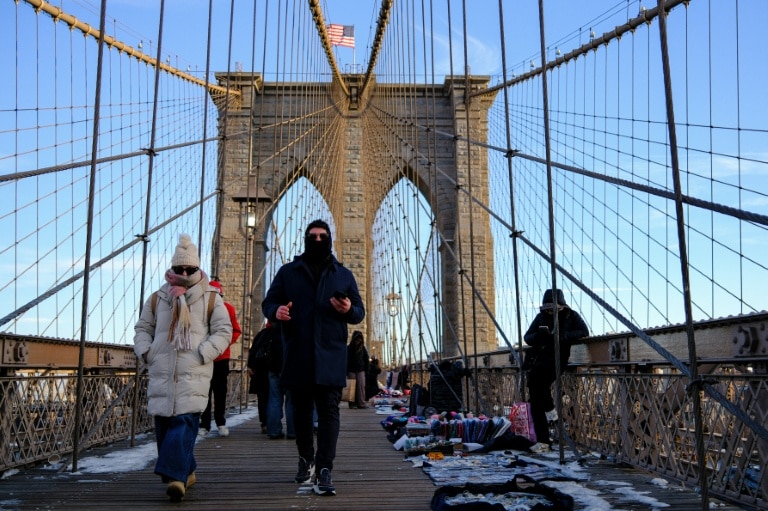
    A formidable winter storm system originating off the California coast is poised to unleash catastrophic winter conditions across approximately 160 million Americans beginning Friday. The massive weather event threatens to deliver a dangerous combination of freezing rain and heavy snowfall spanning from the Rockies through the Plains regions, ultimately progressing toward the densely populated mid-Atlantic and northeastern United States.

    The National Weather Service has issued grave warnings regarding potentially catastrophic ice accumulation that could trigger prolonged power outages, significant tree damage, and dangerously impassable travel conditions. Meteorological projections indicate the storm could persist for several days, disrupting daily life while introducing an Arctic air mass across extensive portions of the nation.

    Transportation networks are already experiencing disruptions, with Flightaware reporting over 1,500 cancelled weekend flights, particularly affecting Texas airports. Despite these challenges, Texas officials have assured residents that their power infrastructure—which failed catastrophically during a 2021 winter storm—remains fully prepared for this event. Republican Governor Greg Abbott asserted the state’s grid “has never been stronger, never been more prepared and is fully capable of handling this winter storm.”

    Meanwhile, New York Governor Kathy Hochul emphasized the life-threatening risks associated with extreme cold exposure, noting that merely “five or six minutes outside could literally be dangerous for your health.” The Democratic leader urged residents to stock essential supplies, avoid unnecessary travel, and implement safety measures including pipe protection and safe heater usage.

    Meteorological analysis indicates this severe weather pattern results from an elongated polar vortex—a typically compact Arctic low-pressure system that has stretched into an oval formation, releasing frigid air across North America. While scientific discussion continues regarding potential connections between polar vortex disruptions and climate change, former President Donald Trump utilized the event to question climate science via his Truth Social platform.

    Fourteen states from southern to northeastern regions plus Washington DC have preemptively declared states of emergency. Officials nationwide are advising citizens to prepare emergency kits, maintain vehicle fuel tanks, and implement comprehensive safety precautions as the system advances.

  • Taliban release female athlete, 22, after 13 days in jail

    Taliban release female athlete, 22, after 13 days in jail

    A 22-year-old Afghan woman detained for operating a taekwondo training facility for girls has been released following a 13-day imprisonment, according to confirmation from Taliban judicial authorities. Khadija Ahmadzada, residing near Herat in western Afghanistan, faced detention earlier this month after officials from the Ministry of Vice and Virtue identified multiple violations at her establishment.

    Taliban authorities cited three primary infractions: inadequate hijab compliance, the presence of musical elements, and gender mixing within the training facility. A ministry spokesperson indicated that Ahmadzada had received several prior warnings before enforcement action was taken.

    The case garnered significant international attention after United Nations Special Rapporteur on Human Rights in Afghanistan Richard Bennett amplified the situation through social media channels, simultaneously highlighting the ongoing detention of female journalist Nazira Rashidi in Kunduz. The Taliban government maintains that Rashidi’s detention is unrelated to her professional activities.

    Since regaining control in 2021, Taliban authorities have systematically closed women’s sports facilities nationwide, citing the need to establish environments compliant with their interpretation of Islamic law. No sports clubs for women have resumed operations as of January 2026, and female athletes remain barred from official competition.

    This incident represents another manifestation of the comprehensive restrictions imposed on Afghan women, including severe limitations on educational opportunities, employment access, and strict dress code enforcement. The Taliban’s supreme court ultimately ordered Ahmadzada’s release on January 22, though her current whereabouts remain undisclosed.

  • Mandela’s prison key, sunglasses and shirt can be sold after daughter wins court battle

    Mandela’s prison key, sunglasses and shirt can be sold after daughter wins court battle

    South Africa’s Supreme Court of Appeal has delivered a landmark ruling permitting Nelson Mandela’s eldest daughter to proceed with the sale of 70 personal items belonging to the anti-apartheid icon. The court dismissed an appeal by the South African Heritage Resources Agency (Sahra) which sought to block the export and auction of these historically significant artifacts.

    The collection includes profoundly symbolic items such as the original cell key from Robben Island where Mandela spent 18 years of his imprisonment, his signature floral shirt, Aviator sunglasses, a personally signed copy of the 1996 Constitution, and gifts from world leaders including former U.S. President Barack Obama and First Lady Michelle Obama. Other notable items comprise Mandela’s identification documents, charcoal drawings, and a tennis racquet used during his incarceration.

    Makaziwe Mandela, Mandela’s daughter from his first marriage, and Christo Brand, Mandela’s former prison warden who became his close friend, jointly own these artifacts. They had planned to export the collection to the United States for auction through Guernsey’s auction house.

    The court criticized Sahra for employing an ‘overly broad’ interpretation of the National Heritage Resources Act and noted the agency failed to provide substantive justification for classifying these personal items as protected national heritage. The ruling emphasized that while Sahra presented no detailed arguments, the owners provided comprehensive explanations why these objects shouldn’t be considered heritage artifacts.

    Makaziwe Mandela welcomed the decision, stating she intends to use proceeds to establish a memorial garden at her father’s gravesite in Qunu, Eastern Cape. She strongly criticized Sahra for presuming ‘to know my father’s last wishes better than those who were beside him at the end – his family.’

    The controversy has sparked national debate between those who believe Mandela’s artifacts should remain in South Africa as national treasures and those who argue his family should determine their disposition. It remains uncertain whether authorities will pursue additional legal avenues to prevent the sale.

  • KT must-reads: A community garden we can feel good about

    KT must-reads: A community garden we can feel good about

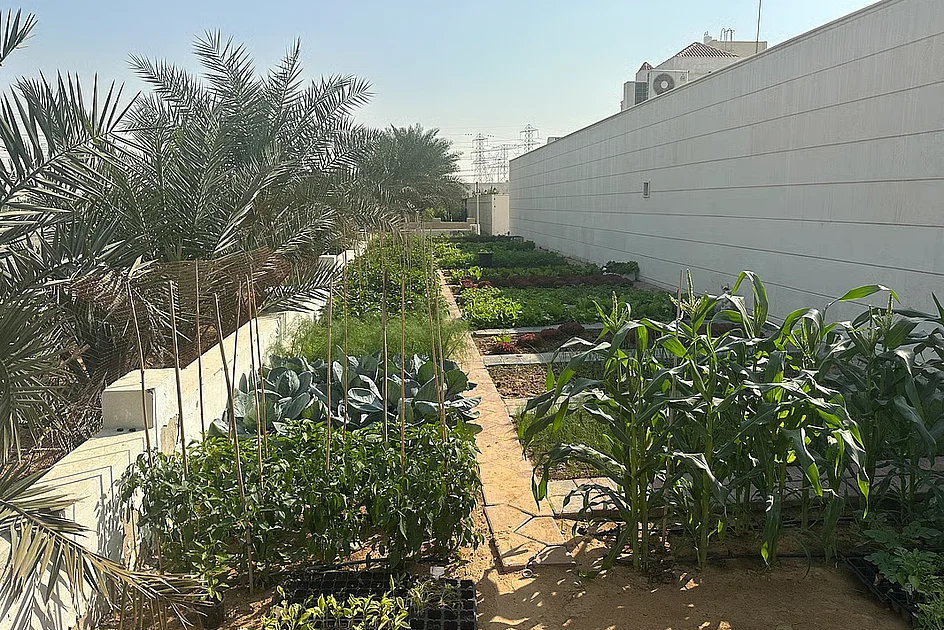
    In an era dominated by negative news cycles and attention-seeking media tactics, a heartwarming initiative in the United Arab Emirates demonstrates the power of community-focused storytelling. Emirati national Mohammed Al Hashemi has transformed his personal home farm into a thriving community garden that serves as both food source and educational hub for his neighborhood.

    Beginning his project in 2000, Al Hashemi gradually converted his property into an organic agricultural haven that now provides fresh vegetables, herbs, and essential produce to neighbors and those in need. The garden operates as an open pantry where community members, including domestic helpers, can freely harvest fresh cilantro, basil, peppers, parsley, and other crops.

    What makes this initiative particularly noteworthy is its sustainable approach. Al Hashemi deliberately avoids chemical fertilizers, relying instead on manure and occasional fish-based organic supplements to maintain soil health. His methods have proven so successful that he now conducts gardening workshops and shares his expertise through social media channels, reaching thousands of interested learners.

    The project gained significant attention after being featured in Khaleej Times, with journalist Ruqayya Al Qaydi documenting both the operational details and visual evidence of the garden’s bounty. The positive response to this story highlights audience appreciation for constructive, community-oriented journalism that focuses on solutions rather than problems.

    This initiative represents a growing trend in media organizations prioritizing meaningful content that reflects the authentic experiences of UAE residents—both Emiratis and expatriates. Rather than employing fear-based or anger-driven tactics to capture audience attention, this approach demonstrates how media can highlight inspirational stories that strengthen community bonds and promote sustainable living practices.

  • Chongqing railway attendants undergo training ahead of travel rush

    Chongqing railway attendants undergo training ahead of travel rush

    In preparation for the massive passenger influx expected during the 2026 Spring Festival travel period, railway attendants from the Chongqing Passenger Transport Section have commenced comprehensive professional training programs. These intensive sessions, organized by China Railway Chengdu Group, focus on elevating service standards through refined etiquette protocols and enhanced passenger interaction techniques.

    The training curriculum encompasses multiple dimensions of customer service excellence, including standardized communication procedures, emergency response protocols, and cultural sensitivity awareness. Participants engage in practical simulations replicating high-pressure scenarios commonly encountered during peak travel seasons, ensuring readiness for the anticipated surge in passenger volume.

    Visual documentation from the January 22nd training session reveals attendants practicing precise movement coordination, formal greeting ceremonies, and efficient baggage assistance techniques. The program emphasizes both technical proficiency and emotional intelligence development, recognizing that quality service during China’s largest annual human migration event requires exceptional interpersonal skills alongside operational expertise.

    Railway authorities indicate this preparatory initiative reflects China’s ongoing modernization of transportation services, particularly crucial for the Chongqing hub which serves as critical infrastructure connecting southwestern China. With Spring Festival travel representing both operational challenge and cultural tradition, these training measures aim to transform necessary transportation into comfortable travel experiences for millions of journeying citizens.

  • Pakistan mall fire death toll jumps to 67

    Pakistan mall fire death toll jumps to 67

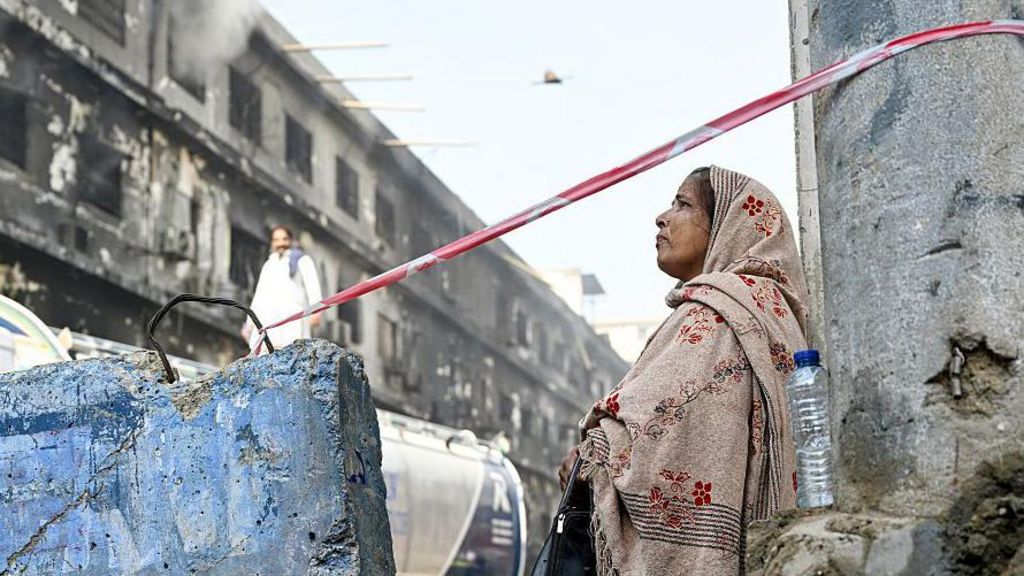
    A devastating fire that erupted at Gul Plaza shopping center in Karachi has resulted in a catastrophic death toll of 67 confirmed fatalities, with rescue operations continuing amid the complex’s smoldering ruins. The inferno, which began on Saturday evening in Pakistan’s largest metropolitan center, required more than 24 hours of intensive firefighting efforts before being fully extinguished.

    The scale of destruction has significantly hampered rescue operations across the 6,500-square-meter commercial complex. Authorities report that 77 individuals remain officially missing according to family submissions, while the identification process proceeds painstakingly slowly with only 15 victims formally identified thus far. The deputy commissioner of police confirmed the fatality count was based on the recovery of 67 skulls, with many remains too fragmented for immediate recognition.

    Gul Plaza, housing approximately 1,200 retail establishments across multiple levels, was experiencing peak seasonal activity due to concurrent wedding celebrations and festival preparations. Witness accounts reveal that nearly all of the center’s 16 emergency exits were secured when the blaze initiated, with only three access points remaining operational during the evening incident. Shop proprietor Rehan Faisal described the rapid escalation, noting the entire complex became engulfed within ‘five to seven minutes’ as flames consumed the structure before horrified onlookers.

    While the specific ignition source remains under investigation, preliminary reports indicate that non-functional fire safety systems, excessive occupant density, and obstructed egress routes dramatically amplified the tragedy. The shopping center was preparing for nightly closure when the fire broke out, resulting in most security gates being already locked. Emergency response teams continue sifting through the debris as Pakistan mourns one of its worst commercial fire disasters in recent history.

  • China’s railway gears up for Spring Festival travel rush

    China’s railway gears up for Spring Festival travel rush

    China’s extensive railway network is making comprehensive preparations for the upcoming Spring Festival travel period, known as Chunyun, which represents the world’s largest annual human migration. The 2026 travel rush is scheduled to commence on February 2 and conclude on March 13, spanning a total of 40 days of intensified transportation activity.

    In anticipation of the massive passenger flow, railway maintenance crews across the country are implementing rigorous safety protocols. At the Taiyuan Electric Multiple Unit Depot in Shanxi province, mechanics conducted thorough inspections on EMU trains during the evening of January 22. These meticulous examinations ensure that all rolling stock meets the highest safety standards for the demanding travel period ahead.

    The Spring Festival tradition, deeply rooted in Chinese culture, sees hundreds of millions of citizens journeying to reunite with family members for Lunar New Year celebrations. This mass migration presents extraordinary logistical challenges for transportation authorities, who must coordinate additional services while maintaining regular operations.

    Railway authorities have developed sophisticated contingency plans to manage the anticipated surge in passenger numbers. These measures include deploying reserve trains, optimizing scheduling efficiency, and enhancing station management procedures. Technological advancements in ticketing systems and real-time monitoring will further support the smooth operation of transportation networks during this critical period.

    The preparation efforts extend beyond mechanical maintenance to encompass comprehensive staff training, emergency response drills, and coordinated planning with local authorities to ensure passenger safety and comfort throughout the travel rush.

  • Indian state investigates killings of hundreds of stray dogs

    Indian state investigates killings of hundreds of stray dogs

    A widespread and systematic culling of stray dogs across multiple villages in India’s southern state of Telangana has triggered criminal investigations and national debate about animal welfare practices. Police authorities have confirmed at least 354 canine deaths through poisoning or lethal injections since late December, resulting in nine arrests including village council officials.

    The killings, which occurred across six villages in three districts, appear connected to political promises made during recent local elections to remove stray animals. While villagers cite legitimate concerns about rabies, traffic accidents, and crop damage from stray animals, the scale and methods of these killings have drawn condemnation from animal rights groups and government officials alike.

    Telangana State Minister Danasari Anasuya Seethakka characterized the actions as ‘illegal and inhumane,’ vowing strict consequences for those responsible. The controversy emerges amid ongoing Supreme Court deliberations regarding India’s stray animal management, particularly in urban areas like Delhi where removal programs have faced legal challenges and public protests.

    Forensic analysis remains ongoing to determine exact causes of death, with activists alleging the actual death toll significantly exceeds official numbers. The incident highlights India’s complex relationship with stray animals—seen both as community companions and public nuisances—while exposing deficiencies in sterilization programs, waste management, and animal protection laws.

    Simultaneously, reports of similar treatment toward monkeys in Kamareddy district suggest broader patterns of unauthorized animal control measures, despite Telangana recording no rabies deaths among its 122,000 documented dog bite cases in 2024.

  • How Dubai’s vanished landmarks still live on in directions

    How Dubai’s vanished landmarks still live on in directions

    In the ever-evolving urban landscape of Dubai, a fascinating cultural phenomenon persists: the enduring legacy of vanished landmarks in everyday navigation. Long before digital mapping systems and Makani codes defined wayfinding, residents relied on physical structures—cinemas, roundabouts, and distinctive buildings—as directional anchors.

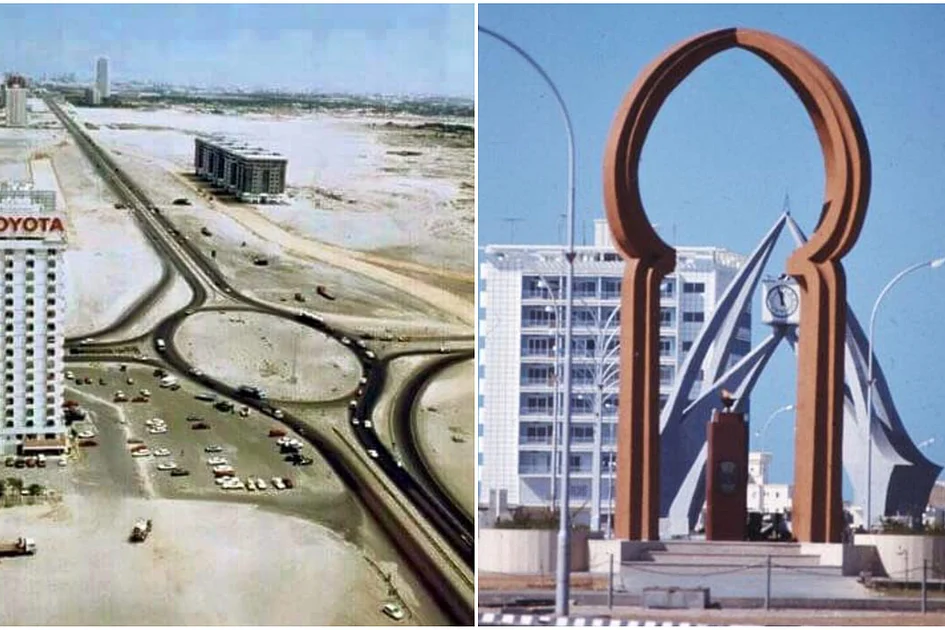
    This persistence of historical reference points reveals much about urban memory and adaptation. The ongoing reconfiguration of Trade Centre Roundabout exemplifies this trend. Despite the Roads and Transport Authority’s conversion of this junction into a surface intersection to alleviate congestion, many residents and taxi drivers continue referring to it as ‘Defence Roundabout,’ preserving a name that predates the current layout.

    Emirati cultural consultant Mohammad Kazim explains this phenomenon through Dubai’s transient population dynamics: ‘Landmarks mattered. They were how you explained the city to someone who didn’t know it yet.’ This oral tradition has created a parallel navigation system where demolished structures maintain their directional utility.

    Examples abound throughout the city: Strand Cinema, demolished in the 1990s, still surfaces in Bur Dubai directions; Deira’s ‘Clock Roundabout’ remains a common reference despite traffic lights replacing the circular junction; and Garhoud’s Falcon Roundabout persists verbally long after the sculpture’s relocation to Mirdif Park.

    British expat Josephine Finzi recalls pre-digital navigation: ‘We got around by visual clues—past Spinneys on the beach road, left at the zoo, right at the clock tower.’ These references created a shared geographical language that transcended physical changes.

    The pattern extends beyond roundabouts. Peter Halliday, resident since 1982, remembers when the World Trade Centre served as a visible beacon: ‘You could see it from tens of kilometres away.’ Len Chapman, who arrived in 1971, traces roundabout culture to British architect John Harris’s 1959 town plan, which introduced these ‘punctuation marks’ to Dubai’s urban grammar.

    Even commercial establishments like the Sana Signal clothing store, closed since 2018, continue as directional markers in Bur Dubai and Karama. Online communities like ‘Dubai — The Good Old Days’ actively preserve this collective memory through photographs and discussions, creating digital archives of the city’s changing physical identity.

    This navigation-by-memory system demonstrates how urban consciousness adapts to rapid development, maintaining continuity through language even as physical landscapes transform beyond recognition.