分类: society

  • Dazzling Guangzhou lantern display begins countdown to Spring Festival

    Dazzling Guangzhou lantern display begins countdown to Spring Festival

    Guangzhou launched its spectacular 2026 Spring Festival Lantern Show on January 30, transforming the southern Chinese metropolis into a radiant celebration of cultural heritage and technological innovation. The annual event, set against the backdrop of Guangzhou’s historic status as a “millennium commercial capital,” officially commenced with simultaneous displays across eight locations throughout the city.

    The central exhibition at Yuexiu Park showcases 85 elaborate lantern installations that masterfully blend traditional intangible cultural heritage techniques with cutting-edge modern technology. These illuminated artworks create an immersive visual experience that will remain accessible to visitors throughout the entire Spring Festival period, which begins on February 17.

    Under the unifying theme “Cantonese Rhythm Millennia · One Heart Across the Four Seas,” the festival extends beyond mere visual spectacle. Organizers have prepared an extensive program of over 1,200 diverse cultural activities designed to offer both daytime and evening entertainment. These events will feature processional performances and interactive experiences that collectively embody Guangzhou’s distinctive urban character—a harmonious fusion of ancient traditions and contemporary innovation, marked by openness and cultural inclusiveness.

    City officials anticipate that the multifaceted festival will significantly boost tourism, attracting both domestic travelers and international visitors seeking authentic cultural experiences during the Lunar New Year celebrations. The municipal government’s statement emphasized the event’s role in promoting cultural exchange while maintaining and revitalizing traditional craftsmanship through modern presentation methods.

    The lantern show represents one of southern China’s most anticipated seasonal attractions, combining artistic excellence with technological sophistication to create a memorable experience that honors tradition while embracing innovation.

  • Traffic alert: Heavy vehicles collide on E311 causing massive tailback

    Traffic alert: Heavy vehicles collide on E311 causing massive tailback

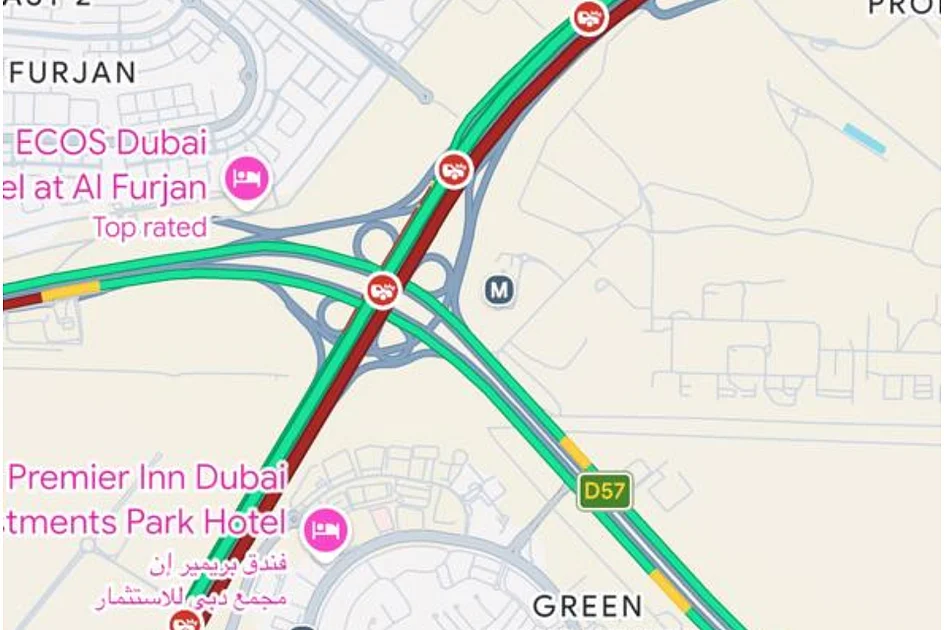
    A significant traffic incident involving multiple heavy vehicles on Sheikh Mohammed bin Zayed Road (E311) caused extensive delays for motorists heading toward Sharjah on Friday afternoon. The collision, which occurred near Exit 24 in the direction of Al Khail, resulted in the complete closure of the two rightmost lanes and created a massive traffic backlog stretching for kilometers.

    According to eyewitness accounts, the accident involved three substantial commercial vehicles, including a cement mixer truck and another heavy transport truck. Additionally, a car carrier trailer transporting four to five vehicles came to a complete stop in the farthest lane, further complicating the situation. Dubai Police promptly issued official alerts warning drivers to approach the area with extreme caution and remain vigilant.

    The aftermath of the collision created severe congestion, with motorists reporting travel delays exceeding 40 minutes as vehicles progressed at barely perceptible speeds. Digital signage along the highway actively displayed warning messages reading ‘Accident, drive slow’ to alert approaching drivers. Multiple police units were deployed to manage the scene and assist with traffic flow restoration.

    This incident marks the second major traffic disruption on Sheikh Mohammed bin Zayed Road within a 48-hour period, following another accident reported on Wednesday morning near the Airport Road exit heading toward Jebel Ali. The recurrence highlights ongoing traffic safety concerns along this critical transportation artery connecting key emirates.

  • ’60 isn’t old anymore’: How UAE club helps senior citizens play pickleball, learn gardening

    ’60 isn’t old anymore’: How UAE club helps senior citizens play pickleball, learn gardening

    In a pioneering approach to social connectivity, Dubai’s innovative multi-generational club The Nadi is transforming how older adults experience community life in the United Arab Emirates. Founded by long-term Palestinian resident Shaden Abdellatif, the establishment has been gaining significant momentum over the past eighteen months by offering flexible, pay-as-you-go experiences that deliberately bridge generational divides.

    Unlike traditional age-segregated senior programs, The Nadi operates on a philosophy that meaningful relationships transcend age brackets. The club’s curated calendar features diverse activities including pickleball matches, gardening workshops, cultural discussions, and creative sessions designed to foster intergenerational connections. This approach intentionally positions older adults at the center of social engagement rather than as peripheral participants.

    Abdellatif’s vision emerged from personal observation of Dubai’s evolution from a transient hub to a permanent home for many families. Noting the social limitations experienced by older residents like her mother who has lived in Dubai for nearly forty years, she recognized the need for spaces where seniors could engage in activities specifically designed for their enjoyment rather than merely accompanying younger family members.

    The club’s foundation rests on four core principles: curiosity, continuous learning, holistic wellbeing, and agelessness. These principles manifest in programming that addresses physical, social, and mental wellness through adaptable activities suitable for varying energy levels and abilities. Monthly schedules introduce fresh experiences while maintaining weekly anchor activities that provide rhythm and routine.

    Perhaps most significantly, The Nadi challenges conventional perceptions of aging by framing later life as a period worthy of investment, creativity, and joy. The intergenerational model naturally dissolves stereotypes as participants work side-by-side in activities like gardening workshops, where shared stories and laughter create organic connections across age groups.

    Early indicators suggest profound impact, with participants reporting increased social confidence, expanded networks, and renewed sense of purpose. Some international visitors now plan extended Dubai stays knowing they can maintain active social lives while visiting working family members. The model has proven so successful that expansion plans include neighborhood residency programs and retreat-style experiences focused on intergenerational learning and connection.

  • Prominent Indian businessman Dr CJ Roy has passed away: Source

    Prominent Indian businessman Dr CJ Roy has passed away: Source

    Dubai-based Indian entrepreneur Dr CJ Roy, Chairman of Confident Group, has died under tragic circumstances during ongoing Income Tax department operations, according to confirmation from close family sources. The incident occurred on Friday, January 30, 2026, with preliminary reports indicating the businessman succumbed to a self-inflicted gunshot wound following intense interrogation sessions.

    Family representatives revealed that Dr Roy faced relentless questioning and perceived intimidation during the tax raids before retreating to his private office. A single gunshot was subsequently heard, prompting immediate medical response. Despite being rushed to a nearby medical facility, medical professionals were unable to revive the prominent business leader.

    Dr Roy leaves behind his wife, daughter, and son, along with a substantial business legacy spanning multiple sectors. Established in 2006, Confident Group pioneered a zero-debt financing model before expanding into Dubai’s real estate market in 2024 with the Confident Lancaster project, followed by Confident Preston in 2025. The conglomerate had diversified into hospitality, education, entertainment, and building materials under Dr Roy’s leadership.

    Beyond his corporate achievements, Dr Roy served as Honorary Consul of the Slovak Republic, fostering bilateral trade and cultural exchanges. The Emirates Hills resident maintained an active social media presence and was recognized for his philanthropic initiatives, including a recent Dh20 million charitable partnership with Kerala Muslim Cultural Center to provide clean water access in remote Indian villages.

    The business magnate was also known for his automotive passion, maintaining an extensive collection of luxury vehicles, and regularly hosting community gatherings at his Dubai residence. The incident has raised questions about enforcement methodologies during financial investigations, though official statements from Indian authorities remain pending at this time.

  • A language course is reviving Moroccan Jewish culture and bridging Middle East divide

    A language course is reviving Moroccan Jewish culture and bridging Middle East divide

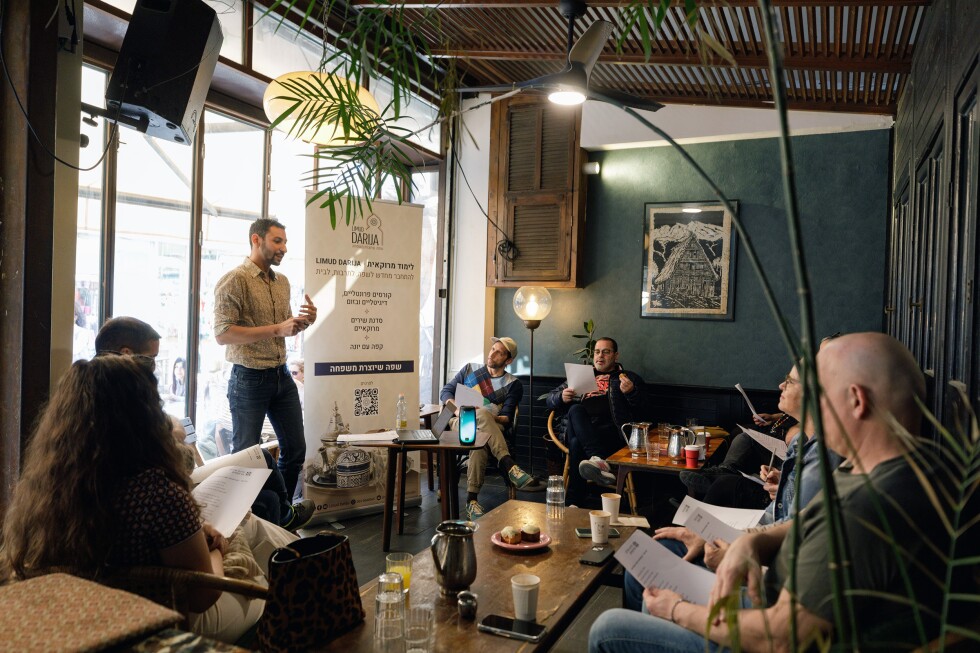
    Fez, Morocco — Dr. Yona Elfassi, a 37-year-old sociologist and anthropologist of Moroccan Jewish heritage, has transformed his academic research into a groundbreaking cultural preservation movement. Growing up in the historically rich city of Fez—a ninth-century center of learning that produced intellectual giants like philosopher Ibn Rushd and physician Maimonides—Elfassi was immersed in a multicultural tapestry of Jewish, Arab, Amazigh, Spanish, and French influences.

    This diverse background, where multiple languages and musical traditions coexisted, shaped Elfassi’s worldview. Despite Morocco’s Jewish population dwindling from 5% to approximately 2,500 today (with most of the diaspora in France, Canada, the United States, and Israel), Elfassi returned to his roots through academic pursuit. He earned dual doctorates from Sciences Po Bordeaux and Ben-Gurion University, writing his dissertation on Jewish identity among Moroccan Jews.

    His research evolved into Limud Darija, an innovative educational platform launched post-pandemic that teaches the Moroccan Arabic dialect to diaspora communities. The hybrid program combines Zoom classes with in-person gatherings in Israel, supplemented by music workshops featuring Sephardic liturgical poems and Moroccan pop classics. The initiative has rapidly grown to over 500 active members reconnecting with their heritage through language, stories, and cultural practices.

    Unexpectedly, Elfassi’s work has also attracted Moroccan Muslims through social media outreach, leading to reciprocal language exchange. A dedicated WhatsApp group now teaches Hebrew to Muslim Darija speakers, fostering connections that transcend political divisions. Participants report building relationships based on shared cultural heritage rather than geopolitical debates, effectively humanizing individuals across divides.

    Testimonials from students like Yehudit Levy, a retired Israeli teacher, highlight the profound personal impact: ‘Since learning with Yona, everything comes up—songs, music, food, poetry. I smell Morocco when I am in class.’ Another alumnus, neuroscience researcher Noam Sibony, notes how language learning builds relationships that transcend regional conflicts.

    Academic experts like Dr. Habiba Boumlik of LaGuardia University see parallel preservation efforts in Elfassi’s work and her own advocacy for Tamazight language. Boumlik emphasizes how Darija’s relationship to Judeo-Arabic dialects can enrich modern Moroccan vernacular while creating living connections to heritage beyond grandparents’ generation.

    Elfassi envisions this people-to-people approach as fundamental peacebuilding: ‘Peace will start with people, not decision-makers. It’s two people talking, showing respect for each other’s humanity, even when they disagree.’

  • Hunan’s smoked fish and meat arrive in time for Spring Festival

    Hunan’s smoked fish and meat arrive in time for Spring Festival

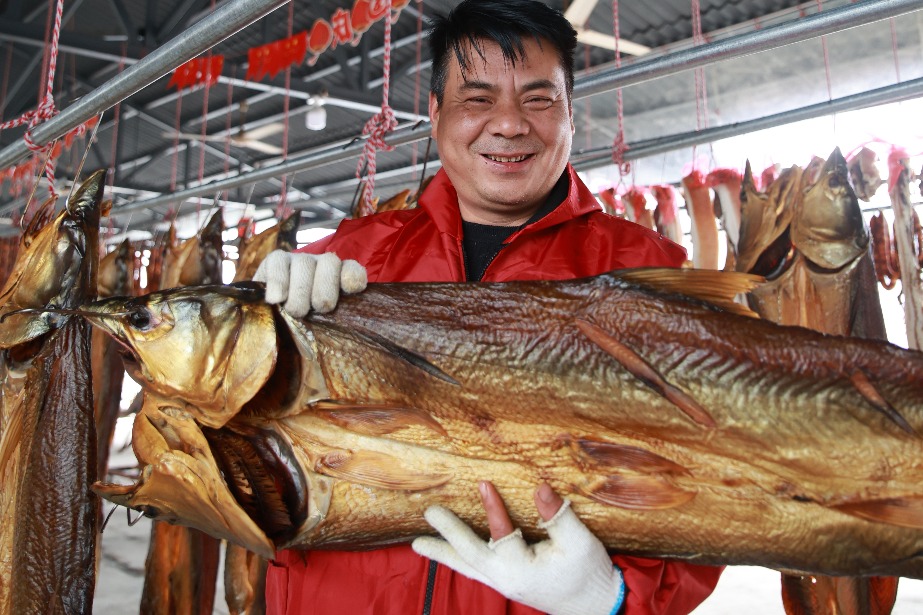
    As the Lunar New Year approaches, the air in Helonghu township of Yueyang, Hunan province becomes infused with the distinctive aroma of traditionally smoked fish and meat. In a region celebrated for its culinary heritage, artisans like 46-year-old Tan Wang are preserving generations-old techniques while meeting contemporary demand.

    For fifteen years, Tan has maintained her family’s craft in a workshop where rows of glistening smoked fish and golden-brown cured meats hang meticulously under natural light. These delicacies, prepared exclusively for Spring Festival consumption, represent both cultural tradition and economic livelihood for this Dongting Lake-adjacent community.

    The production process follows strict seasonal and methodological protocols. Commencing only after the winter solstice, artisans leverage the region’s cold, dry winds to create ideal curing conditions. Each batch undergoes a meticulous 20-day process involving precise salting, air-drying, and smoking with natural ingredients.

    “We exclusively use locally farmed fish, cured immediately after catching to preserve freshness,” Tan explained to regional media. The purification process employs only salt and baijiu (traditional Chinese liquor), deliberately avoiding modern additives or preservatives.

    Her husband Kuai Chao emphasizes the unchanging nature of their recipe: “Our smoking technique has remained identical across generations. This consistency produces the authentic color and flavor that defines our products.”

    The tradition has evolved into a significant local industry, with Helonghu township hosting nearly a thousand specialized smokehouses. Collective annual output surpasses two million kilograms, generating approximately 200 million yuan ($28.8 million) in economic value.

    Despite deep roots in tradition, producers like Tan are looking toward modernization. She expresses ambition to expand product varieties and develop online sales channels, hoping to share this cultural taste with broader audiences while maintaining artisanal integrity.

  • This tiny Australian town is up for sale – but the locals don’t want to leave

    This tiny Australian town is up for sale – but the locals don’t want to leave

    Nestled within Victoria’s rugged bushland, the microscopic settlement of Licola – with a permanent population of just five residents – has become the center of a brewing controversy as the entire township hits the real estate market. This remote outpost, located approximately three hours from Melbourne, represents one of Australia’s smallest incorporated communities, comprising a general store, caravan park, petrol station, and several weatherboard structures clustered around a modest main thoroughfare.

    The town’s private ownership by the local Lions Club chapter has suddenly become its greatest vulnerability. After decades serving as a crucial waystation for travelers en route to Alpine National Park and operating youth outreach programs for half a century, the organization claims financial sustainability has become impossible. The club quietly listed the entire village for sale online late last year with an asking price between A$6-10 million (£3-5.3m; $4.3-7.2m), catching residents and fellow Lions members completely off guard.

    At the emotional heart of this story stands Leanne O’Donnell, the general store proprietor and one of Licola’s few full-time inhabitants. She resides in the town with one of her children, alongside her best friend and her two children, creating the nucleus of Licola’s tiny community. O’Donnell purchased the business in 2022 under what she believed would become a 15-year lease arrangement, only to discover the board intended to terminate her tenure entirely.

    “They told me unless you get a couple of million dollars, there’s nothing much you can do,” O’Donnell recounted to the BBC regarding her attempts to negotiate with the Lions Village Licola board. When she proposed fundraising initiatives, the response was reportedly unequivocal: “No, we’re just going to take your business because we own the land and we own the buildings.”

    The sale has triggered substantial backlash across regional Victoria. An online petition demanding O’Donnell’s lease renewal has gathered over 8,000 signatures, while social media channels overflow with criticism toward the board’s decision-making process. Many commentators express concerns about commercial development destroying Licola’s character or the complete disappearance of essential services for travelers and campers.

    Even within the Lions organization itself, dissent has emerged. Other Victorian Lions members have formally accused the board of acting without proper consultation or due process, suggesting the move betrays the community-service ethos the organization represents.

    In defense of their position, the Lions Village Licola board cites an operational review indicating the town had been running at a loss for five to six years. Rising operational costs, skyrocketing insurance premiums, aging infrastructure, and declining attendance at their youth camps created an unsustainable financial model. Chairman Denis Carruthers emphasized that the board’s primary responsibility lies with protecting the mission of supporting disadvantaged youth rather than maintaining physical assets.

    All proceeds from the sale will be redirected into a new foundation funding professionally operated camps across Victoria, though whether Licola itself will continue hosting such programs remains uncertain. With O’Donnell facing eviction by January 31st and prospective buyers showing “considerable interest,” the future of this unique Australian community hangs precariously in the balance.

  • Panda Health Train delivers free care to remote Sichuan prefecture

    Panda Health Train delivers free care to remote Sichuan prefecture

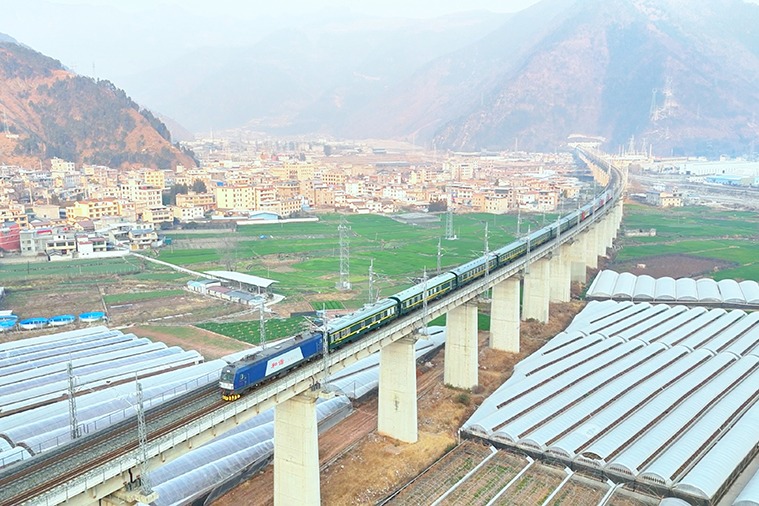
    In an innovative approach to healthcare delivery, a specially designed panda-themed medical train has successfully completed a three-day humanitarian mission to the remote Liangshan Yi Autonomous Prefecture in Sichuan Province. The initiative, which concluded on January 30, 2026, brought essential medical services to underserved populations in one of China’s most mountainous regions.

    The Panda Health Train departed from Chengdu carrying a comprehensive medical team of over 70 volunteer healthcare professionals from West China Hospital of Sichuan University. Led by hospital president Luo Fengming, the team established temporary medical stations at multiple railway locations, providing free consultations, treatments, and health education to local residents and railway workers alike.

    Beyond the mobile clinics, senior medical specialists conducted knowledge-transfer sessions at the First People’s Hospital of Liangshan, sharing advanced medical techniques and contemporary healthcare methodologies through hands-on training and professional development workshops.

    Railway worker Mr. Li expressed appreciation for the initiative: “The doctors thoroughly addressed my health concerns and provided practical advice tailored to our working conditions. This personalized attention truly demonstrates care for frontline workers.”

    President Luo emphasized the strategic importance of the collaboration with China Railway Chengdu Group: “Utilizing rail infrastructure to deliver quality medical resources to remote mountainous areas represents a cornerstone of our commitment to grassroots healthcare and rural revitalization efforts. We’re pioneering a sustainable model for mobile medical services that bridges urban medical excellence with rural healthcare needs.”

    Since its inaugural journey in 2021, the Panda Health Train program has significantly expanded its impact, now having provided free medical services to more than 18,000 beneficiaries throughout the Liangshan region. Both institutions have committed to further developing this collaborative framework, with plans to establish a regularized mobile medical service mechanism for long-term healthcare improvement in remote communities.

  • Palestinians in Israel amongst poorest amid increasing poverty rates, report says

    Palestinians in Israel amongst poorest amid increasing poverty rates, report says

    A stark socioeconomic divide is widening within Israel, with Palestinian citizens experiencing the most severe impacts of escalating poverty rates, according to a recent governmental assessment. The National Insurance Institute’s annual evaluation, released Thursday, reveals that approximately two million individuals—including 880,000 children representing over one-quarter of Israel’s youth—currently subsist below the poverty threshold in 2024.

    This comprehensive analysis positions Israel with the second-highest child poverty rate among OECD member nations, surpassed only by Costa Rica, with 28% of Israeli children classified as impoverished. The report further documents intensifying social inequality, indicating that 65.1% of impoverished individuals originate from marginalized communities, predominantly the Palestinian demographic.

    Statistical findings demonstrate that 37.6% of Palestinian households fell beneath the minimum income requirement in 2024, followed by Haredi Jewish families at 32.8%. Institutional experts identified Israel’s military operations in Gaza alongside the nation’s escalating cost of living as primary catalysts exacerbating poverty among families, children, and elderly populations.

    Zvika Cohen, Deputy Director General of the Institute, emphasized that these factors have ‘amplified pre-existing structural issues rather than creating new ones.’ Cohen warned that ‘without targeted investment in children, young families, and social services, intergenerational poverty transmission will persist unabated.’

    Nitza Kassir, Deputy Director of Research and Planning, advocated for enhanced social safety nets to address declining income levels, particularly following recent conflicts. Kassir highlighted the unequal economic burden, noting that financial pressures are ‘more profound and severe within populations already experiencing economic hardship,’ stressing the necessity of workforce integration and equitable wage distribution.

    The annual assessment indicates 27.8% of Israeli households struggle to meet basic financial obligations, with Palestinian communities consistently ranking as most disadvantaged—approximately half cannot cover monthly expenses including medical treatments, prescription medications, and nutritional requirements.

    Historical context reveals that Palestinian citizens of Israel descend from native populations displaced during Israel’s establishment in 1948. Currently numbering over two million people (21% of Israel’s 9.8 million population), this community has endured decades of discriminatory legislation and institutional practices, reporting persistent challenges in accessing housing and public services.

    A November report by legal center Adalah documented that Israel enacted over 30 laws between October 2023 and July 2025 that reinforce systems of apartheid and repression against Palestinians. These legislative measures target fundamental rights including freedom of expression, protest rights, citizenship provisions, family unification, and detainee protections.

  • Dubai Metro to extend operating hours on February 1, RTA announces

    Dubai Metro to extend operating hours on February 1, RTA announces

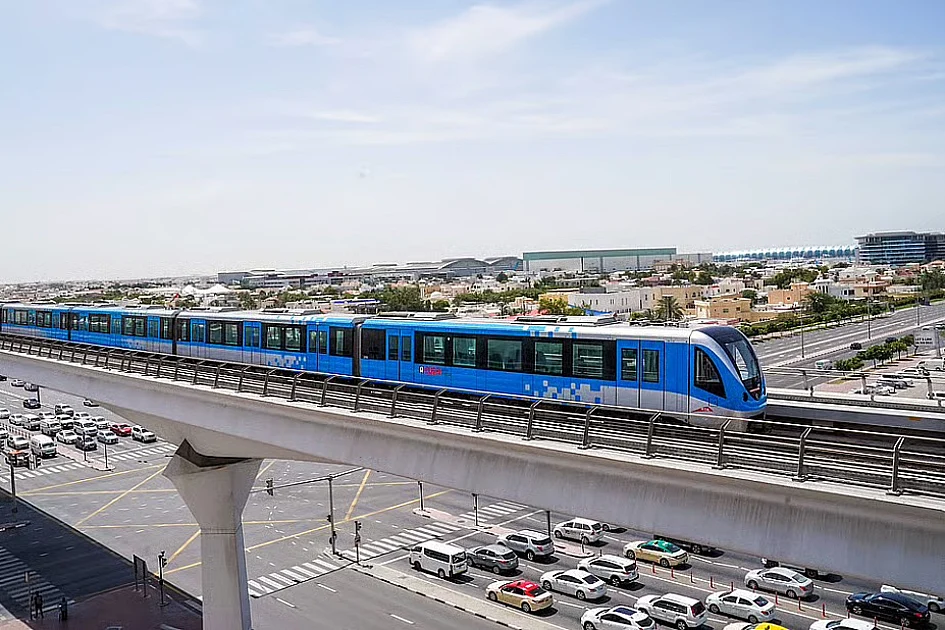
    Dubai’s Roads and Transport Authority (RTA) has announced a significant adjustment to metro operating hours in preparation for the upcoming Dubai Marathon 2026. Instead of the standard Sunday opening time of 8:00 AM, metro services will commence operations at 5:00 AM on February 1, 2026, maintaining service until midnight to accommodate the anticipated influx of participants and spectators.

    The temporary schedule modification represents a strategic response to the transportation demands created by one of Dubai’s premier sporting events. The extended hours will provide enhanced accessibility for marathon attendees while demonstrating the RTA’s commitment to supporting major city events through flexible public transportation solutions.

    This operational adjustment follows the authority’s ongoing efforts to optimize Dubai’s transit network, which recently included public awareness campaigns promoting metro etiquette and the development of station infrastructure projects. The early morning start time particularly addresses the logistical needs of marathon participants requiring transportation to event starting points before dawn.

    Regular Sunday metro service typically begins at 8:00 AM and continues until midnight. The RTA’s proactive announcement allows residents and visitors to plan their travel arrangements accordingly for the event day, ensuring smooth transit operations throughout the marathon proceedings.