分类: society

  • ‘Village’s protector’: How former Ajman Ruler saved Masfout from bandit raids, set up a school

    ‘Village’s protector’: How former Ajman Ruler saved Masfout from bandit raids, set up a school

    Nestled within the rugged terrain of the Hajar Mountains, the remote village of Masfout has undergone a remarkable metamorphosis from an isolated agricultural settlement into an internationally acclaimed tourist destination, recently honored as the ‘best tourist village in the world’ for 2025 by the UN World Tourism Organisation.

    This extraordinary transformation finds its roots in the mid-20th century when Masfout faced existential threats from bandit raids and economic hardship. According to Dr. Saif bin Aboud Al-Badwawi, a native heritage researcher born in 1960, the community’s peaceful existence was repeatedly disrupted by tribal conflicts and resource scarcity exacerbated by the decline of pearl diving and WWII-era hardships.

    The turning point arrived in 1947 when a desperate delegation approached Sheikh Rashid bin Humaid Al Nuaimi, the former Ruler of Ajman. Responding to their plea, Sheikh Rashid formally incorporated Masfout as an Ajman enclave, earning the title ‘village’s protector’ through his direct interventions against banditry, including the rescue of abducted women through negotiation or force.

    Beyond providing security, Sheikh Rashid initiated comprehensive development programs that laid the foundation for modern Masfout. His visionary leadership manifested in the 1950 restoration of the defensive Masfout Tower, the issuance of the Trucial States’ first passports in 1952, and critical infrastructure projects including well drilling and falaj irrigation system rehabilitation.

    The Sheikh’s educational and healthcare initiatives—establishing the first regular school in 1964 and the inaugural clinic in 1963—represented groundbreaking social investments. His administration further constructed thirty concrete houses for villagers in 1968, substantially improving living conditions.

    Contemporary Masfout thrives under the ‘Masfout 2030’ vision, building upon Sheikh Rashid’s foundational work. The destination now boasts diverse attractions including the monumental Masfout Gate, historical Masfout Museum and Castle, the ancient Bin Sultan Mosque (dating to 1815), extensive hiking trails, an equestrian and shooting club, alongside numerous parks and cultural festivals that celebrate its rich heritage while embracing sustainable tourism development.


  • UAE weather: Red alert issued as fog reduces visibility; Dubai temp to dip to 15ºC

    UAE weather: Red alert issued as fog reduces visibility; Dubai temp to dip to 15ºC

    The United Arab Emirates experienced significant weather disruptions on Tuesday, February 3rd, as dense fog enveloped multiple regions, prompting the National Centre of Meteorology (NCM) to issue critical safety alerts. Meteorological authorities activated both red and yellow alerts across various parts of the country, warning residents of severely reduced visibility conditions during early morning hours.

    According to the NCM’s comprehensive weather briefing, Tuesday’s conditions featured fair to partly cloudy skies overall, with low cloud formations particularly affecting eastern areas. Temperature readings dipped notably across urban centers, with Dubai recording minimum temperatures of 15°C while Abu Dhabi experienced slightly warmer lows of 16°C.

    The weather system brought light to moderate winds blowing from southeasterly to northeasterly directions across the Emirates, maintaining gentle speeds between 10-20 km/h with occasional gusts potentially reaching 30 km/h. Maritime conditions remained calm with slight seas reported in both the Arabian Gulf and Oman Sea.

    Meteorologists projected increasing humidity levels overnight into Wednesday morning, particularly across western interior regions, with probable mist formation expected. Authorities reiterated safety precautions for motorists and those undertaking early morning travel, emphasizing extreme caution during reduced visibility periods.

    The NCM continues to monitor atmospheric conditions closely, providing real-time updates through official channels to ensure public safety during this period of unusual weather activity.

  • 13-year-old swims for hours to save family swept out to sea

    13-year-old swims for hours to save family swept out to sea

    MELBOURNE, Australia — A 13-year-old Australian boy has been hailed as a hero after undertaking a perilous four-hour swim through treacherous ocean conditions to rescue his mother and two younger siblings who were being swept out to sea. The dramatic rescue operation unfolded off the Western Australian coast near Quindalup, where the Appelbee family found themselves in a life-threatening situation during what was supposed to be a leisurely vacation.

    Austin Appelbee demonstrated extraordinary courage and resilience when he embarked on a solo mission to seek help after the family’s recreational equipment began failing in unexpectedly rough seas. The teenager initially attempted to use an inflatable kayak that was taking on water, but abandoned it when it proved ineffective. In a critical decision that heightened the danger but improved his mobility, Austin removed his life jacket to facilitate his swimming through the massive waves.

    For approximately four hours, the determined youth battled challenging ocean conditions while maintaining positive mental focus. “The waves are massive and I have no life jacket on,” Austin recalled during a Tuesday press conference. “I just kept thinking ‘just keep swimming, just keep swimming.’ And then I finally made it to shore and I hit the bottom of the beach and I just collapsed.”

    The family’s ordeal began around noon when they were using hired kayaks and paddleboards from their hotel. Suddenly changing ocean and wind conditions began dragging them progressively further from shore. Joanne Appelbee, 47, made the heart-wrenching decision to send her eldest child for help, recognizing the rapidly deteriorating situation.

    “One of the hardest decisions I ever had to make was to say to Austin: ‘Try and get to shore and get some help. This could get really serious really quickly,’” the mother told Australian Broadcasting Corp.

    While Austin fought his way to shore, his mother and siblings—12-year-old Beau and 8-year-old Grace—remained in the water wearing life jackets and clinging to a paddleboard. They maintained positivity through song and humor as conditions worsened with the approaching darkness.

    Police Inspector James Bradley praised the teenager’s heroic actions, stating: “The actions of the 13-year-old boy cannot be praised highly enough — his determination and courage ultimately saved the lives of his mother and siblings.”

    A search helicopter located the remaining family members at 8:30 p.m., approximately 14 kilometers from their original position. By the time of rescue, the three had spent up to ten hours in the water, with Beau experiencing loss of sensation in his legs due to hypothermia.

    All four family members received medical assessment but none required hospital admission. Joanne Appelbee expressed overwhelming relief, stating: “I have three babies. All three made it. That was all that mattered.”

  • SPP drive helps protect Grand Canal’s heritage

    SPP drive helps protect Grand Canal’s heritage

    China’s Supreme People’s Procuratorate (SPP) has reported significant achievements in protecting cultural heritage along the Grand Canal through an extensive public interest litigation campaign throughout 2025. The initiative resulted in the resolution of 1,578 cases involving physical damage to cultural relics and the rectification of 832 violations that compromised historic landscapes along the world’s longest artificial waterway.

    The comprehensive operation, launched in February 2025, addressed critical challenges including structural deterioration of ancient structures, unauthorized construction projects, inadequate fire safety measures, and improper waste disposal within protected zones. Prosecutorial investigations revealed systemic vulnerabilities in the heritage protection framework, particularly noting weak enforcement at grassroots levels and insufficient interdepartmental coordination.

    Beyond immediate remediation, the campaign uncovered deeper structural issues in conservation approaches, including a predominant ‘rescue over prevention’ mentality, incomplete relic registries, and flawed mechanisms for intangible cultural heritage transmission. Several national-level intangible cultural heritage projects faced extinction risks due to successor shortages and inadequate intellectual property protections.

    The procuratorial organs implemented a multifaceted strategy that combined legal interventions with developmental approaches. This included establishing cultural industry parks, improving local legislation, and creating sustainable economic models around heritage assets. Notably, one revitalized intangible cultural heritage event generated over 500,000 yuan in additional annual income for local residents while preserving cultural traditions.

    The initiative secured 699 million yuan in specialized conservation funding and facilitated the conversion of 48 protected sites into cultural-educational venues. Additionally, 68 cultural tourism projects were launched, establishing a virtuous cycle between heritage preservation and sustainable regional development.

    Moving forward, the SPP has committed to strengthening preventive conservation measures and establishing permanent working mechanisms with relevant departments to ensure ongoing protection for the Grand Canal’s 2,500-year-old cultural legacy.

  • Banknote bouquets could land you in jail, Kenya’s central bank warns

    Banknote bouquets could land you in jail, Kenya’s central bank warns

    The Central Bank of Kenya has issued a formal warning against the increasingly popular practice of transforming banknotes into floral-style bouquets, a trend that has gained significant traction through social media influencers and celebrity endorsements. These monetary arrangements, particularly popular during Valentine’s Day celebrations, involve meticulously rolling and fastening currency notes of various denominations to resemble traditional flower bouquets.

    In an official statement released Monday, the banking authority clarified that such creative manipulations constitute defacement of national currency, an offense punishable by up to seven years imprisonment under Kenyan law. The bank detailed how the practice involves folding, rolling, gluing, stapling, and pinning notes together using adhesives and fastening materials, ultimately compromising their structural integrity.

    The technical consequences have proven substantial, with damaged notes causing operational disruptions across automated teller machines (ATMs) and cash-counting equipment. This has resulted in increased currency rejection rates and generated unnecessary replacement costs for both financial institutions and the public.

    Despite these restrictions, the central bank emphasized it does not oppose monetary gifting traditions, instead encouraging alternative presentation methods that preserve note quality. The timing of this announcement proves particularly significant given Kenya’s status as a leading global flower producer, with many citizens noting the irony of choosing currency manipulations over fresh floral arrangements.

    Social media reactions have ranged from amused to supportive, with some commentators praising the regulation as a welcome relief from expensive and wasteful gifting practices. The announcement has sparked broader discussions about cultural traditions, economic practicality, and appropriate Valentine’s Day celebrations in the East African nation.

  • The green gems of Yunnan

    The green gems of Yunnan

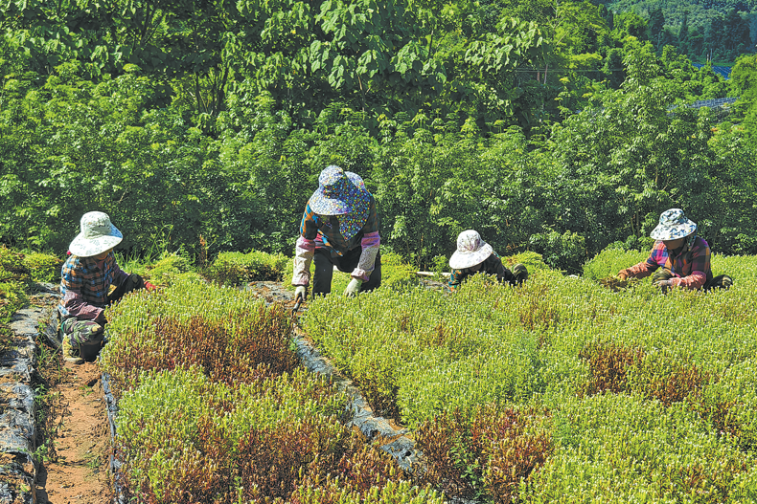
    In the biodiverse landscapes of Yunnan province, a previously overlooked herb has transformed into an economic powerhouse for local communities. Adenosma bracteosa, commonly known as flea grass, has made a remarkable journey from near disappearance to becoming a cornerstone of rural prosperity.

    The plant’s microscopic seeds—so tiny that a dozen can occupy just one square millimeter of soil—once threatened its very existence. This botanical challenge was overcome through dedicated agricultural research, leading to a conservation success story that has revitalized local economies.

    For generations, the Aini people of the Hani ethnic group have valued flea grass for its natural insect-repelling properties and distinctive fragrance. Today, this traditional knowledge has merged with modern agricultural practices to create sustainable economic opportunities.

    In Daka village, Mengla county, the flea grass planting cooperative has emerged as a model of success. Under the leadership of Liu Zhifang, 51 households have cultivated over 33 hectares of the herb, producing 270 kilograms of premium essential oil in 2025 alone. This oil has been developed into popular consumer products including mosquito repellents and anti-itch formulations.

    The innovation extends beyond essential oil production. Local women have mastered the art of weaving dried flea grass into embroidered sachets, creating authentic ethnic accessories that celebrate cultural heritage while generating income. Liu describes this development as providing ’employment right on their doorstep.’

    County-wide statistics reveal the scale of this agricultural transformation: more than 90 households cultivated approximately 80 hectares of flea grass in 2025, yielding 300 metric tons of harvest and increasing local incomes by over 1 million yuan ($140,000). This initiative represents a perfect synergy of ecological conservation, cultural preservation, and economic development, demonstrating how traditional plants can drive modern prosperity in rural China.

  • Spring Festival travel rush kicks off

    Spring Festival travel rush kicks off

    China initiated its monumental annual Spring Festival travel period on Monday, marking the beginning of a 40-day mass migration phenomenon known as chunyun. The transportation network across railways, highways, airports, and seaports witnessed unprecedented activity as millions embarked on journeys to reunite with families for the Lunar New Year celebrations.

    At Beijing West Railway Station, construction worker Liu experienced a moment of profound emotion as his train, K4069, departed precisely at 12:40 am. This special temporary service connecting the capital with Nanchang, Jiangxi province, represented the inaugural chunyun departure from Beijing. ‘After working tirelessly throughout the year, I’m finally returning home,’ Liu expressed. ‘The knowledge that this is Beijing’s first chunyun train makes the journey exceptionally meaningful.’

    Transportation authorities reported staggering statistics for the travel rush’s commencement day, with approximately 188 million cross-regional trips recorded nationwide—a notable 13% increase compared to the previous year. Rail systems managed roughly 12 million passenger journeys, while civil aviation facilitated about 2.19 million trips. Road transportation dominated the travel patterns, reflecting the growing preference among Chinese citizens for private vehicle travel during the holiday period.

    The 2026 Spring Festival travel period, which commenced on February 3rd, will continue through March 13th, with the actual Lunar New Year falling on February 17th. This annual migration represents the largest human movement globally, demonstrating both the enduring cultural significance of family reunions and China’s continuously evolving transportation infrastructure capabilities.

  • Son of Norway’s crown princess goes on trial in tense moment for royal family

    Son of Norway’s crown princess goes on trial in tense moment for royal family

    Oslo’s district court has commenced a landmark seven-week trial against Marius Borg Høiby, the son of Norway’s Crown Princess Mette-Marit, marking one of the most significant criminal proceedings in recent Norwegian history. The 29-year-old faces 38 serious charges including multiple counts of rape, sexual assault, threats with a weapon, domestic violence, drug transportation, and violation of restraining orders.

    The trial begins under extraordinary circumstances, with Høiby having been recently detained again on similar charges to those that initially led to his arrest eighteen months ago. He will participate in the proceedings from custody after police secured a four-week remand order, a decision his defense team intends to challenge.

    Simultaneously, Crown Princess Mette-Marit faces mounting scrutiny following revelations of her extensive communication with convicted sex offender Jeffrey Epstein. Recently published correspondence from the U.S. Department of Justice indicates hundreds of email exchanges between the future queen and Epstein, including evidence of her four-day stay at his Florida residence while he was absent. The crown princess has acknowledged demonstrating ‘poor judgment’ in these interactions.

    The convergence of these scandals has triggered substantial repercussions. The Sex and Society foundation has terminated Mette-Marit’s patronage of their annual Shameless Prize, stating her association with Epstein contradicts their organizational values. Prime Minister Jonas Gahr Støre has publicly urged the crown princess to provide comprehensive clarification regarding the nature and extent of her contacts with Epstein.

    Royal experts suggest these developments will have enduring consequences for the monarchy’s reputation. Caroline Vagle, royal correspondent for See and Hear magazine, noted widespread public disappointment, while historian Ole-Jørgen Schulsrud-Hansen criticized the royal court’s apparent failure to monitor and prevent these inappropriate communications.

    The trial itself operates under strict reporting restrictions, including bans on identifying the four alleged rape victims and prohibiting photographs of the defendant. Despite the royal family’s absence from proceedings—coinciding with the king and queen’s scheduled attendance at the Winter Olympics in Italy—the case has captured national and international attention.

    Høiby, who maintains his innocence regarding the most serious charges while admitting to some lesser offenses, is expected to testify during the proceedings. If convicted, he potentially faces a minimum ten-year prison sentence.

  • Watch: Why is no-one being prosecuted over the Epstein files?

    Watch: Why is no-one being prosecuted over the Epstein files?

    The comprehensive release of millions of documents from the Jeffrey Epstein case has generated widespread public anticipation for new criminal prosecutions, yet legal experts identify multiple structural barriers preventing immediate judicial action. Despite containing names of powerful associates and detailed accounts, these documents primarily constitute civil case records rather than new criminal evidence.

    Legal analysts emphasize that most documents unveiled through recent court orders represent depositions and discovery materials from Virginia Giuffre’s settled civil lawsuit against Ghislaine Maxwell. These materials lack the evidentiary standards required for criminal convictions, with many accounts representing hearsay or uncorroborated testimony rather than direct proof of criminal activity.

    Prosecutorial challenges include statutes of limitations that have expired for many potential offenses, the death of key figures Epstein and Maxwell, and witness credibility issues. Former federal prosecutors note that while the documents provide contextual information about Epstein’s network, they largely contain allegations already examined by investigators during previous criminal cases.

    The documents’ release through civil litigation mechanisms means they underwent less rigorous verification than criminal evidence would require. Many individuals named maintain their innocence and claim inclusion resulted from Epstein’s manipulation rather than their own wrongdoing. Legal authorities continue reviewing the materials, but experts caution that expectations of imminent prosecutions may be legally unrealistic given existing jurisdictional and evidentiary constraints.

  • Shanties in a Lagos lagoon: Bulldozed and burnt

    Shanties in a Lagos lagoon: Bulldozed and burnt

    In the heart of Lagos, Nigeria’s sprawling metropolis, a humanitarian crisis unfolds as thousands of residents face forced evictions from their waterfront homes in Makoko, the country’s largest informal settlement. The Lagos State government maintains these demolitions target structures built dangerously close to high-voltage power lines, citing critical health and safety concerns. However, community members and advocacy groups allege these actions represent systematic land appropriation for elite urban development projects.

    Anna Sobie, a mother of five, exemplifies the human toll of this operation. Her family now sleeps on the fractured wooden platform that once supported their home, exposed to the elements without adequate shelter. “We’re sleeping in an open space under the rain,” Sobie recounts, describing how excavators arrived with minimal warning while her family was inside their home.

    The demolitions, which began two days before Christmas, have reportedly displaced over 10,000 residents and destroyed more than 3,000 structures including homes, schools, clinics, and churches according to a coalition of ten non-governmental organizations. These groups document alarming tactics including the use of armed security personnel, bulldozers, and alleged arson attacks on occupied dwellings.

    Historical context reveals Makoko was established in the 19th century by fishing communities, with residents claiming customary land rights predating modern Lagos. The settlement’s population estimates range from 80,000 to 200,000 people, many of whom are low-income families and migrants seeking economic opportunities in Nigeria’s commercial capital.

    Governor Babajide Sanwo-Olu’s administration defends the actions as necessary urban management, emphasizing the proximity of structures to electrical infrastructure that poses lethal risks. Special Adviser on Urban Development Olajide Abiodun Babatunde stated: “No responsible government anywhere in the world can allow people to live directly under high-tension cables or obstruct vital waterways.”

    The government has promised financial compensation to affected families but has not provided alternative accommodation. This response has failed to satisfy residents like Elizabeth Kakisiwe, who returned from market to find her home demolished and possessions destroyed. “When rain fell days later, we were drenched,” she describes. “At night, we sit in the cold.”

    Tensions escalated recently when police deployed tear gas against more than 1,000 protesters marching toward the state legislature, resulting in injuries and alleged fatalities. Community leaders report five deaths, including children, from tear gas exposure during earlier demolition operations—claims the government says it will investigate.

    Urban development experts note this conflict occurs against Lagos’s severe housing deficit, which has grown from 2.95 million units in 2016 to 3.4 million in 2025 despite increased construction. The city’s rapid population growth and escalating costs have pushed more residents into informal settlements, creating recurring clashes between urban development goals and community rights.

    As excavators continue their work along the lagoon, displaced residents salvage firewood from debris while children repair fishing nets amid the destruction. The remaining structures stand as fragile testaments to a community fighting to preserve its existence against the pressures of modern urban development.