分类: society

  • A construction crane falls on a passenger train in northeastern Thailand, killing at least 12 people

    A construction crane falls on a passenger train in northeastern Thailand, killing at least 12 people

    A catastrophic construction accident in northeastern Thailand resulted in significant casualties on Wednesday when a massive crane collapsed onto a moving passenger train. The incident, which occurred in the Nakhon Ratchasima province, involved a crane that was part of an elevated high-speed railway construction project plummeting onto an active train traveling from Bangkok to Ubon Ratchathani province.

    The impact caused immediate derailment of the train cars followed by a serious fire outbreak. Emergency response teams from the Nakhon Ratchasima Public Relations Department quickly mobilized to the scene, working to contain the blaze and initiate rescue operations for passengers potentially trapped within the wreckage.

    According to official statements from Transport Minister Piphat Ratchakitprakan, the tragedy claimed the lives of at least 12 individuals among the 195 passengers and crew aboard the train at the time of the accident. Minister Ratchakitprakan has immediately ordered a comprehensive investigation into the circumstances leading to the crane failure and subsequent derailment, focusing on construction safety protocols and regulatory compliance within the infrastructure project.

  • US Supreme Court appears likely to uphold restrictions on transgender athletes

    US Supreme Court appears likely to uphold restrictions on transgender athletes

    The United States Supreme Court appears poised to uphold state-level prohibitions preventing transgender women and girls from competing on female sports teams in educational institutions. During extensive oral arguments spanning over three hours on Tuesday, a majority of justices demonstrated inclination toward validating athletic bans enacted across multiple states.

    The court examined consolidated cases originating from Idaho and West Virginia, where plaintiffs challenge statutes mandating sports team designation based on biological sex recorded at birth. In Idaho, a transgender college student contends the prohibition violates constitutional equal protection guarantees, while a West Virginia high school student asserts the ban contravenes federal civil rights legislation.

    Idaho Solicitor General Alan Hurst defended the state’s pioneering 2020 legislation, arguing before the court that ‘Idaho’s law classifies on the basis of sex, because sex is what matters in sports. It correlates strongly with countless athletic advantages, like size, muscle mass, bone mass and heart and lung capacity.’

    Justice Brett Kavanaugh highlighted the national divide in approaches, questioning judicial intervention ‘when half the states are allowing transgender athletes to participate, half are not’ amid ongoing societal debate. With the court’s 6-3 conservative majority, the three liberal justices and plaintiffs’ counsel advocated for narrow adjudication or complete dismissal of the cases.

    Notably, Idaho plaintiff Lindsay Hecox has withdrawn from university sports and attempted to retract her lawsuit, while West Virginia’s case involves a single student, Becky Pepper-Jackson, who sought to join her school’s track team at age 11.

    The proceedings revealed complex legal considerations regarding historical discrimination comparisons and physiological competitive advantages. Lawyers for the athletes suggested distinguishing between transgender athletes using testosterone-suppressing medication and others, emphasizing that mitigated ‘sex-based advantages’ might permit competition without undermining women’s sports.

    This judicial review occurs against a political backdrop where recent polling indicates bipartisan opposition to transgender participation in women’s sports, and follows the court’s previous conservative alignment in upholding restrictions on youth gender transition treatments. A final decision is anticipated in June, potentially establishing nationwide precedent for one of America’s most contentious social policy debates.

  • ‘Brother, lifelong companion’: UAE President gifts Sheikh Mohammed photo album

    ‘Brother, lifelong companion’: UAE President gifts Sheikh Mohammed photo album

    In a significant gesture marking two decades of transformative leadership, UAE President Sheikh Mohamed bin Zayed Al Nahyan presented a specially curated photo album to Sheikh Mohammed bin Rashid Al Maktoum during their meeting at Qasr Al Bahr in Abu Dhabi on Tuesday. The commemorative gift celebrates Sheikh Mohammed’s twenty-year tenure leading the federal government, highlighting pivotal moments from their shared journey in service to the nation’s development. The album contains carefully selected photographs documenting key achievements and milestones during this period of unprecedented national progress. President Sheikh Mohamed personally inscribed the album with a heartfelt message addressing his counterpart as “my brother and lifelong companion,” expressing profound pride in their collaborative work. The inscription further praised Sheikh Mohammed’s exceptional and inspirational leadership while offering prayers for his continued health and wellbeing to further serve the UAE and its citizens. This symbolic presentation underscores the strong partnership between the nation’s leadership and reflects on the remarkable transformation Dubai has undergone since Sheikh Mohammed assumed leadership of the emirate on January 4, twenty years ago. Under his visionary guidance, Dubai has evolved into a global benchmark for innovation, infrastructure development, and ambitious urban transformation, routinely achieving what was once considered impossible.

  • Former Victoria Police Chief Commissioner Shane Patton subpoenaed in CFMEU organiser’s threats case

    Former Victoria Police Chief Commissioner Shane Patton subpoenaed in CFMEU organiser’s threats case

    Melbourne Magistrates Court has become the stage for a significant legal confrontation involving former Victoria Police Chief Commissioner Shane Patton. The proceedings center on Joel Shackleton, a 42-year-old Indigenous organizer for the Construction, Forestry, Maritime, Mining and Energy Union (CFMEU), who is vigorously contesting allegations of making death threats against an Indigenous builder in March 2022.

    During Wednesday’s special mention hearing, defense lawyer David Waters revealed that subpoenas had been issued to several Victoria Police members, including the former chief commissioner. The defense team seeks Mr. Patton’s testimony regarding “certain materials that have come to light in disclosure” and suggestions that he “gave certain directions to police members involved” in the case.

    Prosecutor Melissa Mahady acknowledged that Victoria Police had formally refused service of the subpoena directed at Mr. Patton, citing his departure from the organization last February after nearly five years as chief commissioner. However, she indicated that behind-the-scenes efforts were underway to facilitate proper legal service.

    The case has been adjourned until January 27, with Magistrate John O’Callaghan presiding. Mr. Shackleton is scheduled to undergo a two-day contested hearing beginning January 29, where he will formally challenge the charges of making threats to kill and seriously injure.

  • ‘Welcome to 2976’ – North Africa’s Amazigh people ring in the new year

    ‘Welcome to 2976’ – North Africa’s Amazigh people ring in the new year

    Communities across North Africa are currently immersed in vibrant celebrations marking the arrival of the Amazigh year 2976, a calendar system that predates the Gregorian calendar by nearly a millennium. This ancient chronology commences from 950 BC, coinciding with the ascension of King Sheshonq to the Egyptian throne.

    The Yennayer new year festivities, occurring between January 12-14 across Algeria, Morocco, Tunisia, and Libya, feature elaborate family feasts, ceremonial bonfires, and traditional musical performances. The greeting ‘aseggas ameggaz’ (happy new year) echoes through both rural villages and urban centers, with celebrants adorned in intricately embroidered traditional attire.

    The Amazigh people, whose name translates to ‘free people’ or ‘noble people,’ represent North Africa’s indigenous inhabitants with a historical presence dating to antiquity. While precise demographic data remains scarce due to insufficient official statistics, estimates suggest tens of millions of Amazigh individuals reside throughout the region, comprising approximately 40% of Morocco’s population.

    Yennayer celebrations emphasize familial unity, cultural renewal, and the community’s profound connection to nature. Culinary traditions vary significantly across regions, featuring specialties like Morocco’s ‘ourkemen’ (a savory blend of legumes, spices, and whole grains) and Algeria’s ‘trèze’ (a symbolic mix of sweets, dried fruits, and nuts traditionally showered upon the youngest family member to invoke prosperity).

    Beyond private gatherings, the festivities extend to public manifestations including parades, concerts, and carnivals that transform city streets into vibrant displays of cultural heritage. These celebrations hold particular significance given the Amazigh community’s historical marginalization following the 7th-century Arab conquests that imposed Arabic language and Islamic religion across North Africa.

    Recent decades have witnessed substantial progress in cultural recognition, with Morocco granting official language status to Tamazight in 2011. Both Algeria (2017) and Morocco (2023) have established Yennayer as an official public holiday, marking a hard-won victory for Amazigh activists after periods of severe repression, including Libya’s ban on Tamazight education under Gaddafi’s regime.

    The contemporary observance of Yennayer thus represents not merely a new year celebration but a testament to cultural resilience and the ongoing reclamation of indigenous identity across North Africa.

  • A crumbling system is depriving India’s young offenders of a ‘second chance’

    A crumbling system is depriving India’s young offenders of a ‘second chance’

    India’s juvenile justice system, established to protect young offenders, is systematically failing thousands of children across the nation despite comprehensive legislation. The case of Pooja (name changed), who spent six years in adult prison for alleged murder despite being a minor at the time of arrest, exemplifies the system’s critical implementation gaps.

    Arrested in 2018 from Uttar Pradesh’s impoverished neighborhood, Pooja should have been presented before a Juvenile Justice Board (JJB) within 24 hours as mandated by law. Instead, she remained in adult incarceration for six years until her case was finally transferred to a JJB in 2024, which confirmed her minor status and ordered her immediate release.

    This case represents broader systemic failures documented in the India Justice Report, which reveals that over half of cases before 362 JJBs remained pending in 2023. Critically, one in four JJBs lacks a full bench despite legal requirements, while approximately 745 districts nationwide share only 707 JJBs.

    The system’s weaknesses extend beyond judicial panels to rehabilitation facilities. Child care institutions, observation homes, and special homes frequently suffer from overcrowding, inadequate counseling services, and insufficient educational or vocational programs. Many facilities fail to maintain mandated age-based segregation, creating environments where violence, sexual abuse, and gang culture replication occur.

    Experts attribute these failures to multiple factors: poor governmental oversight, insufficient data transparency, and widespread apathy among officials. Maja Daruwala of IJR emphasizes that data deficiencies indicate inadequate oversight and accountability mechanisms. Meanwhile, frontline workers like Fr Antony Sebastian of Echo NGO note that many authorities believe children in the system are ‘beyond help,’ contradicting the law’s rehabilitative spirit.

    Successful rehabilitation models do exist. Organizations like Echo demonstrate that vocational training in dairy farming, poultry management, and hotel operations, combined with consistent counseling, can effectively reintegrate even those convicted of serious offenses like murder and rape. Their success stories prove that with appropriate intervention, meaningful transformation is possible.

    The 2012 Delhi gang rape case prompted significant juvenile justice reforms, including provisions trying children 16-18 as adults for heinous crimes. However, implementation failures continue undermining these legislative advances, leaving thousands of children like Pooja without proper legal protection or rehabilitation opportunities.

  • Pakistani expat arrested for harassing minor in Saudi Arabia

    Pakistani expat arrested for harassing minor in Saudi Arabia

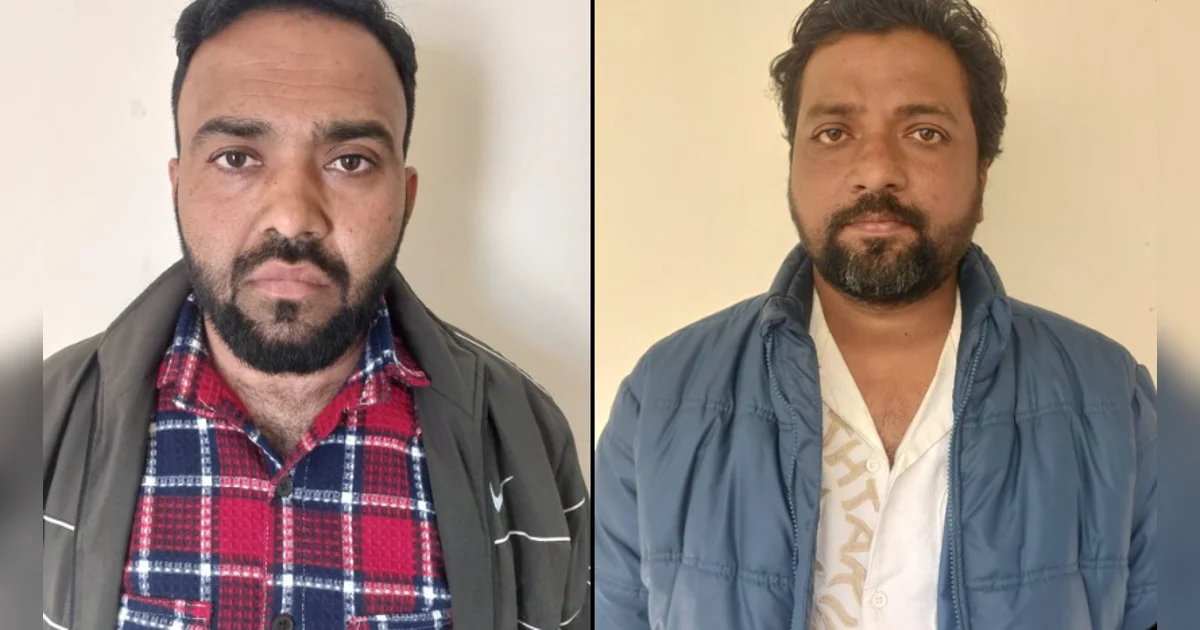
    Saudi Arabian authorities have apprehended a Pakistani expatriate on serious charges involving the harassment of a minor, marking another enforcement of the Kingdom’s stringent anti-harassment legislation. The arrest of Khursheed Muhammad Nazir was executed through a coordinated operation between Najran Region Police and the General Directorate of Community Security and Combating Human Trafficking.

    The Ministry of Interior confirmed that formal legal proceedings have been initiated against the suspect, who has been formally transferred to the Public Prosecution for further judicial processing. This case highlights Saudi Arabia’s rigorous application of its 2018 Anti-Harassment Law (Royal Decree No. M/96), which mandates severe punishments for such offenses.

    Under Saudi jurisprudence, standard harassment violations carry penalties of up to two years imprisonment and/or fines reaching 100,000 riyals. However, the legal framework imposes significantly heightened sanctions when the victim is a child, with potential sentences extending to five years incarceration and financial penalties up to 300,000 riyals.

    The enhanced penalty structure also applies under multiple aggravating circumstances, including cases involving repeat offenses, victims with special needs, perpetrators in positions of authority, incidents occurring in educational or workplace environments, same-sex harassment, crimes committed against unconscious victims, and offenses during times of crisis or disaster.

  • Palestine Action trial: Jury retires to consider verdict in Elbit Systems case

    Palestine Action trial: Jury retires to consider verdict in Elbit Systems case

    A British jury has commenced deliberations in the contentious trial of six Palestine Action activists accused of orchestrating a raid on an Israeli-owned arms manufacturing facility. The defendants—Leona Kamio (30), Samuel Corner (23), Fatema Rajwani (21), Zoe Rogers (22), Jordan Devlin (31), and Charlotte Head (29)—face multiple charges including aggravated burglary, criminal damage, and violent disorder for their alleged roles in the 6 August 2024 incident at Elbit Systems’ plant near Bristol.

    During the proceedings at Woolwich Crown Court, Justice Johnson provided critical guidance to jurors, emphasizing that the prosecution’s case hinges on establishing ‘contingent or conditional intention’ regarding weapon use. While acknowledging the undisputed fact that defendants entered the facility armed with sledgehammers, the judge clarified that conviction requires proof of willingness to use these tools against security personnel if confronted.

    The trial revealed dramatic contradictions in testimony, particularly concerning security guard Angelo Volante’s account. Defense attorneys challenged Volante’s credibility, noting discrepancies in his statements about whether protesters’ sledgehammers made physical contact. CCTV evidence emerged as a pivotal point of contention, with defense counsel Mira Hammad characterizing missing footage from multiple security cameras as ‘suspicious’ and potentially exculpatory.

    Notably, PC Sarah Grant, the officer responsible for retrieving surveillance footage, testified that Elbit’s camera system operated with inconsistent frame rates as low as 17 seconds, describing the security infrastructure as ‘not fit for purpose.’ This technical deficiency has complicated the reconstruction of events, particularly regarding an alleged altercation in a factory alcove.

    The case has drawn significant attention due to the UK government’s July 2025 proscription of Palestine Action and the broader context of arms trade controversies. All defendants maintain their innocence, with Rogers’ attorney Audrey Mogan dismissing injury allegations as ‘a joke’ contrary to evidence of her client’s character and physical capabilities.

    The jury’s verdict, when delivered, will determine the legal consequences for the activists and potentially establish important precedents regarding protest rights, property damage, and conditional intent in British jurisprudence.

  • Claudette Colvin, US civil rights pioneer, dies at 86

    Claudette Colvin, US civil rights pioneer, dies at 86

    Claudette Colvin, the trailblazing civil rights activist whose courageous refusal to relinquish her bus seat preceded the more famous Rosa Parks incident, has passed away at age 86. Her death was confirmed by the Claudette Colvin Legacy Foundation, which honored her “legacy of courage that helped change the course of American history.

    Nearly a decade before the widespread Montgomery bus boycotts, a 15-year-old Colvin was arrested in March 1955 for challenging Montgomery, Alabama’s segregation policies—becoming the first person arrested for such defiance. Her act of resistance occurred nine months before Rosa Parks’ similar protest, yet Colvin’s story remained largely unrecognized for decades until detailed accounts emerged in 2009.

    In a 2018 BBC interview, Colvin recalled her mindset during the historic confrontation: “I was not frightened, but disappointed and angry because I knew I was sitting in the right seat.” She described feeling spiritually supported by abolitionist heroes Harriet Tubman and Sojourner Truth, whose symbolic hands she felt pressing on her shoulders, preventing her from surrendering her seat.

    Colvin’s legal standing proved historically significant when she became one of four plaintiffs whose testimony led to the landmark 1956 Supreme Court ruling that declared bus segregation unconstitutional. Despite her pivotal role, historical recognition primarily favored Parks, who became the iconic face of the bus segregation protests.

    After her pioneering activism, Colvin relocated to New York where she built a career in nursing. According to her foundation, she spent her final years in Texas, where she passed away. Her story now receives renewed examination as historians reassess the full spectrum of contributors to the Civil Rights Movement.

  • Rio de Janeiro zoo animals are treated to popsicles as the city faces scorching summer weather

    Rio de Janeiro zoo animals are treated to popsicles as the city faces scorching summer weather

    As Rio de Janeiro grapples with an intense summer heatwave, the city’s BioParque zoo has implemented innovative cooling measures for its animal residents. Zoo keepers distributed specially formulated frozen treats to various species on Tuesday, tailoring the iced delicacies to each animal’s dietary requirements and preferences.

    Primates received refreshing watermelon popsicles, while jaguars were presented with frozen ground chicken treats floating in their water tanks. The zoo’s biological team designed these frozen offerings not merely as temporary refreshments but as strategic hydration tools. According to zoo biologist Letizia Feitoza, the floating chicken popsicles serve a dual purpose: “When she attempts to retrieve the frozen food, she inevitably consumes water simultaneously, significantly aiding her hydration levels.”

    This initiative represents part of the zoo’s comprehensive animal welfare protocol during extreme weather conditions. Similar measures were activated during previous summer seasons when southeastern Brazil experienced comparable temperature spikes. Despite temperatures exceeding 40°C (104°F) over the weekend—prompting city officials to issue a Level 3 heat alert—visitors continued to flock to the zoo, expressing appreciation for the innovative animal care approaches.

    Lorena Carvalho, an educator visiting the facility, observed: “The implementation of these cooling methods appears significantly beneficial. It undoubtedly enhances their comfort during such challenging weather conditions.” The zoo maintains that these thermal comfort strategies are integrated within standard animal care practices, ensuring species-specific needs are met during climate extremes.