分类: society

  • Xinjiang through my eyes: Maierdan’s cafe of memory

    Xinjiang through my eyes: Maierdan’s cafe of memory

    In the heart of Kashgar’s Ancient City, a unique establishment stands as a living archive of cultural heritage. Maierdan, the visionary proprietor of a distinctive cafe, has dedicated himself to preserving the intangible spirit of this historic Xinjiang region through physical artifacts and atmospheric storytelling.

    His establishment represents more than mere commerce—it serves as a curated repository of collective memory. Through carefully preserved chimney carvings, antique windows, and weathered tableware, Maierdan has woven fragments of Kashgar’s past into an immersive experience where visitors can connect with the town’s enduring soul.

    “While Urumqi’s modernity might be immediately apparent,” Maierdan reflects, “the true essence of Kashgar reveals itself gradually through its mysterious eyes—the layers of history, craftsmanship, and human stories that define this place.”

    With patient dedication and profound commitment to cultural preservation, the cafe owner believes in the resilient charm of Kashgar’s heritage. His project demonstrates how individual initiative can contribute to safeguarding regional identity in an era of rapid modernization. The cafe has become a quiet hub where traditional aesthetics meet contemporary appreciation, creating a space for both local residents and visitors to engage with Xinjiang’s rich cultural tapestry.

    This endeavor highlights the growing movement of cultural entrepreneurship across China’s western regions, where traditional preservation methods are being complemented by innovative approaches to maintaining regional identities.


  • UAE weather: Red, yellow alerts issued for fog as visibility decreases

    UAE weather: Red, yellow alerts issued for fog as visibility decreases

    The United Arab Emirates experienced significant fog conditions for the third consecutive day on Thursday, February 12, 2026, prompting meteorological authorities to issue safety alerts. The National Centre of Meteorology (NCM) implemented both red and yellow fog alerts effective until 10:00 AM as visibility dramatically decreased across the nation.

    According to the NCM’s forecast, UAE skies remained generally fair to partly cloudy throughout Thursday, with mist formation anticipated over certain coastal regions. Temperature readings varied between 15°C and 33°C, with Dubai reaching a high of 32°C while Abu Dhabi recorded 31°C.

    Meteorological conditions included the appearance of low clouds eastward on Thursday morning, with forecasts indicating increasing humidity levels overnight and into Friday morning. Winds remained light to moderate, blowing from southeasterly to northeasterly directions at speeds of 10-20 km/h, occasionally reaching 30 km/h. Maritime conditions remained calm with slight seas reported in both the Arabian Gulf and Oman Sea.

    Abu Dhabi Police issued warnings to motorists, emphasizing the importance of adhering to reduced speed limits displayed on electronic road signboards. The advisory specifically highlighted the need for heightened attention during low-visibility conditions caused by the dense fog.

    The persistent fog conditions represent a recurring weather pattern during this period, requiring continued public awareness and precautionary measures for transportation safety.

  • Who were the victims of the shootings in Tumbler Ridge, Canada?

    Who were the victims of the shootings in Tumbler Ridge, Canada?

    The remote community of Tumbler Ridge, British Columbia, with a population of merely 3,000 residents, is reeling from a devastating dual shooting incident that occurred on Tuesday. The tragedy unfolded at two separate locations—a local residence and Tumbler Ridge Secondary School—resulting in eight fatalities and 27 individuals sustaining injuries.

    Among the deceased is 39-year-old Jennifer Strang, mother of the 18-year-old suspect, Jesse van Rootselaar. According to CBC News reports, Strang was discovered deceased at a residential property alongside another family member. Court documents from 2015 reveal that Strang and her children had previously led what was described by a judge as ‘an almost nomadic life,’ traveling extensively across Canada before being legally restricted from leaving British Columbia.

    The school shooting claimed the lives of four students and one educator. Victims include 12-year-old Kylie Smith, remembered by her family as a vibrant soul passionate about art and anime. ‘She was the light of her family,’ her loved ones expressed to CTV News. Her father, Lance Young, emotionally added, ‘She was just a beautiful soul. We just loved her so much.’

    Additional victims at the educational facility included two 12-year-old girls, two boys aged 12 and 13, and a 39-year-old female teacher. At the residential crime scene, police confirmed the death of van Rootselaar’s 11-year-old step-brother alongside Strang.

    The consecutive violent episodes have created profound shockwaves through the tightly-knit community, where nearly every resident is expected to personally know affected individuals given the scale of casualties relative to the town’s small population.

  • Ramadan 2026: Experience Mughlai-inspired community Iftar in Old Delhi

    Ramadan 2026: Experience Mughlai-inspired community Iftar in Old Delhi

    In the historic lanes of Old Delhi, a unique cultural initiative is transforming Ramadan traditions beyond conventional culinary tourism. Since 2017, cultural curator Abu Sufiyan Khan has orchestrated Dastarkhwan-e-Jahaanuma—an intimate community iftar experience that emphasizes authentic home-style cooking over commercial food offerings.

    Through his platform Tales of City, Khan collaborates with local bawarchis (cooks) and families to present dishes actually prepared in Muslim households during Ramadan, complete with their cultural and emotional significance. “While most visitors explore crowded markets and restaurant-style Mughlai offerings,” Khan explains, “our focus remains on the food traditions of homes and their deeper meaning during the fasting month.”

    The initiative represents a deliberate shift from monument-based tourism to immersive cultural engagement. Tales of City specializes in creating participatory experiences where attendees interact directly with historians, artists, home cooks, and community knowledge keepers. The platform’s vision centers on making cultural heritage accessible, relevant, and rooted in lived experience.

    Dastarkhwan-e-Jahaanuma—meaning “a shared table that offers a view of the world”—has evolved into a community platform for dialogue and shared understanding. Unlike typical food festivals, it functions as a cultural space where guests experience Ramadan through food, prayer, hospitality, and togetherness. The format emphasizes story exchange, memory sharing, and tradition preservation alongside the culinary experience.

    This year’s edition highlights Mughlai and Purani Dilli food traditions, particularly dishes associated with fasting. The event has attracted diverse participants, including Arab visitors and NRIs from Gulf countries seeking cultural reconnection. For many, the experience becomes emotional—a return to community roots rather than mere dining.

    Regarding expansion, Khan maintains that current efforts focus on strengthening the Delhi edition, though future collaborations in Lucknow, Mumbai, Agra, and Jaipur are under consideration. The organizer stresses the importance of keeping the initiative community-rooted rather than commercially replicated, preserving its authenticity as a space where food, conversation, and culture converge naturally.

  • Nine dead, including gunman, in school shooting in Canada

    Nine dead, including gunman, in school shooting in Canada

    The remote town of Tumbler Ridge, British Columbia, is grappling with profound grief following a devastating school shooting that resulted in nine fatalities, including the 18-year-old perpetrator. The incident at Tumbler Ridge Secondary School on Tuesday represents Canada’s deadliest school shooting in over three decades, sending shockwaves through the nation.

    According to the Royal Canadian Mounted Police, the shooter has been identified as Jesse Van Rootselaar, a local resident who identified as female both socially and publicly. The investigation revealed Van Rootselaar was found deceased inside the school with an apparently self-inflicted injury, alongside two recovered firearms—a long gun and a modified handgun.

    The victims include a 39-year-old female educator, three 12-year-old female students, and two male students aged 12 and 13. In a tragic development, police subsequently discovered two additional victims at a residential location—identified as the shooter’s 39-year-old mother and 11-year-old stepbrother.

    The violence left twenty-seven individuals injured, with two female victims aged 12 and 19 requiring airlift transportation to hospital and remaining in serious condition. Authorities noted that after medical evaluation, no discernible physical injuries were identified among others transported to local medical facilities.

    Law enforcement officials emphasized the rapid evolution of the crisis, with Superintendent Ken Floyd acknowledging the critical cooperation from school officials, first responders, and the community. Deputy Commissioner Dwayne McDonald confirmed investigators believe the suspect acted alone and are working to determine the motive behind the attack.

    Canadian Prime Minister Mark Carney expressed devastation over the tragedy, extending prayers and deepest condolences to affected families while affirming the federal government’s support for British Columbians confronting this horrific event.

  • Around 90% of Dubai traffic caused by work, business travel, expert says

    Around 90% of Dubai traffic caused by work, business travel, expert says

    Dubai’s notorious traffic congestion is overwhelmingly fueled by economic activity rather than leisure travel, according to a comprehensive analysis by UAE traffic expert Dr. Mustafa Aldah. The specialist reveals that approximately 90% of vehicular movement stems directly from workplace commutes, commercial operations, and educational transportation needs.

    The urban planning phenomenon demonstrates how Dubai’s evolution into multiple population centers has created significant distance between residential areas and employment hubs. With most companies not providing onsite accommodation, thousands of residents undertake lengthy daily journeys across the metropolis.

    Dr. Aldah presented a compelling case study highlighting how transportation choices dramatically impact road capacity. A school with 1,000 students requires approximately 20 buses if using organized transport, but generates 1,000 individual vehicles when parents provide transportation – creating a 50-fold increase in road space consumption.

    Infrastructure limitations compound the problem, with roads designed for specific hourly vehicle capacities. Once these thresholds are exceeded, traffic flow deteriorates rapidly. The expert also identified discrepancies between projected traffic impact studies for new developments and actual congestion levels post-completion.

    As Dubai continues its expansion, understanding these core congestion drivers becomes crucial for developing effective transportation strategies. The findings suggest that solutions must address fundamental patterns of work-related mobility rather than peripheral leisure travel to achieve meaningful traffic reduction.

  • More seniors grow addicted to the internet

    More seniors grow addicted to the internet

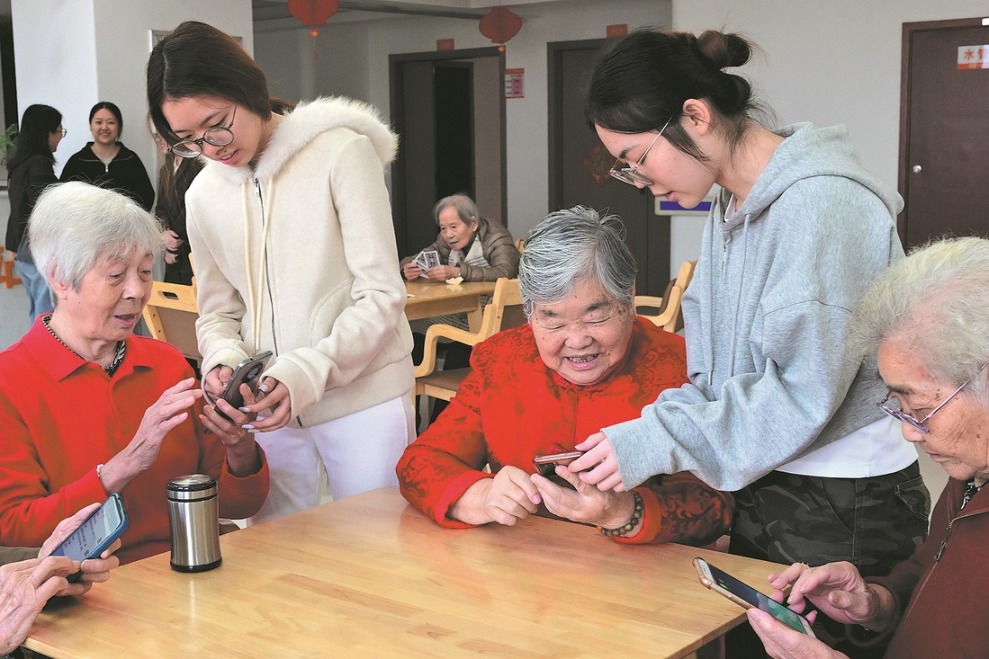
    China’s rapidly aging demographic is experiencing a concerning surge in internet addiction, driven primarily by loneliness and diminished social engagement. This emerging trend has prompted mental health experts and aging researchers to call for enhanced family support systems and robust fraud protection measures to safeguard vulnerable seniors from online exploitation.

    Case studies reveal the depth of this growing problem. Wang Qingfeng, a 46-year-old resident of Shaoxing in Zhejiang province, describes his 70-year-old father’s compulsive behavior: “He’s become obsessed with Douyin livestreams, tipping female performers excessively. He begins watching at dawn and sometimes continues late into the night, spending approximately 10,000 yuan in December alone.” This pattern emerged after Wang’s father relocated from rural Anhui province following his wife’s passing in 2023, leaving him socially isolated with digital entertainment as his primary outlet.

    The phenomenon extends beyond livestreaming addiction. Numerous families report elderly parents developing compulsive behaviors including binge-watching paid minidramas, purchasing questionable health products online, and engaging excessively with computer games. Many adult children have turned to online forums seeking guidance, drawing parallels between their parents’ current digital obsessions and their own teenage internet behaviors.

    Recent data from the China Internet Network Information Center reveals the scale of senior internet adoption. As of December 2025, approximately 54% of Chinese citizens aged 60 and above were active internet users within a total national user base of 1.125 billion.

    Psychological experts attribute this trend to fundamental social changes. “Elderly individuals often experience reduced social significance in both familial and professional contexts as they age, creating a void that digital platforms fill,” explains Wang Wenda, Director of Psychological Health Education at Xinhua College of Ningxia University. “The internet provides an escape mechanism and offers perceived respect and control through activities like tipping streamers or online shopping.”

    Clinical indicators of internet addiction among seniors include disrupted daily routines, uncontrollable spending behaviors, credence given to unreliable online information, and irritability when separated from digital devices.

    Yang Xiaoqi, researcher at the China Research Center on Aging, identifies loneliness combined with the internet’s intense stimulation as primary catalysts for this dependency. With advancing artificial intelligence further blurring digital authenticity, experts warn that addicted seniors face heightened vulnerability to sophisticated online fraud schemes.

    Comprehensive solutions require multifaceted approaches. Mental health professionals recommend helping seniors rediscover personal value through real-world activities like grandchild care, pet ownership, and community engagement. Practical measures include family-negotiated screen time limits and payment platform restrictions. Simultaneously, government initiatives utilizing big data analytics and targeted push notifications could significantly enhance anti-fraud education among elderly demographics.

  • Volunteer passes on torch of guardianship

    Volunteer passes on torch of guardianship

    For over four decades, 81-year-old Mei Jingtian has been the unwavering guardian of an unrestored section of the Great Wall in Shixia village, Beijing’s Yanqing district. Despite his advanced age, Mei continues to navigate the steep slopes with remarkable agility, having dedicated his life to preserving this national treasure since returning to his village in the 1980s.

    Upon his return, Mei was devastated to discover the historical structure had been systematically dismantled, with villagers repurposing ancient bricks for construction projects. “The Great Wall in my childhood stood intact in its original grandeur,” Mei recalled. “Witnessing its deterioration compelled me to act. This monumental achievement of our ancestors, built with extraordinary hardship and wisdom, demanded protection.”

    Armed only with a sickle and boundless determination, Mei single-handedly carved out kilometers of mountain paths to access remote wall sections. His weekly patrols involved clearing invasive vegetation, removing litter, and educating adventurous tourists about the wall’s historical significance. In one particularly grueling endeavor, he spent over two days manually transporting a 34.5-kilogram inscribed stone tablet down the mountain to deliver it to preservation authorities.

    Mei’s initially solitary mission gradually transformed into a community movement. He pioneered innovative conservation approaches, even trading cement with villagers to recover embedded Great Wall bricks from their properties. This grassroots effort culminated in 2007 with the establishment of the Shixia Village Great Wall Protection Association, formalizing what began as one man’s passionate crusade.

    The conservation movement achieved another milestone in 2019 when the government officially incorporated Great Wall protectors into its budgetary framework. This institutional recognition coincided with Mei’s niece, Liu Hongyan, passing rigorous examinations to become one of Shixia’s first six officially recognized protectors—marking the formal transition of guardianship to the next generation.

    Now 45, Liu patrols the same challenging terrain her uncle once protected, monitoring structural integrity while sharing the wall’s rich history with visitors. “This transcends mere employment,” Liu explained. “It represents the custodianship of our cultural heritage and homeland. My uncle demonstrated that genuine commitment stems from love rather than expectation of reward.”

    Despite confronting physical dangers including treacherous topography, extreme weather, and encounters with wildlife such as snakes and wild boars, Liu finds profound purpose in her conservation work. However, she acknowledges concerning demographic challenges: most current protectors are aged 60-70, while many younger villagers have migrated to urban areas.

    “Upon my retirement, I remain confident that successors will emerge to continue this vital work,” Liu stated. “We urgently need more youth to join our protection teams. Ultimately, we are all guardians of the Great Wall—collaborating to preserve our shared heritage and home.”

  • What to know about a mass shooter’s bid to undo his guilty pleas for the Christchurch mosque murders

    What to know about a mass shooter’s bid to undo his guilty pleas for the Christchurch mosque murders

    WELLINGTON, New Zealand — Six years after admitting to New Zealand’s deadliest mass shooting, white supremacist Brenton Tarrant has launched a controversial legal bid to withdraw his guilty pleas, claiming severe prison conditions induced a mental breakdown that compromised his judgment.

    The Australian national, who murdered 51 Muslim worshippers during coordinated attacks on two Christchurch mosques in 2019, unexpectedly pleaded guilty in 2020 to all terrorism, murder, and attempted murder charges. His admission spared victims and the justice system from a high-profile trial that many feared would become a platform for his racist ideology.

    Now, Tarrant’s legal team argues before New Zealand’s Court of Appeal that their client was experiencing psychological deterioration from ‘oppressive’ incarceration conditions when he admitted guilt. They claim isolation and sensory deprivation measures made him ‘temporarily doubt his identity and ideology,’ rendering him incapable of rational legal decisions.

    Appearing via video conference from prison, the shaven-headed Tarrant told the court he had been ‘irrational’ during his 2020 confession. His current lawyers contend he originally intended to represent himself at trial to promote his white supremacist views—a defense strategy New Zealand courts would have invalidated.

    Crown prosecutors challenged these claims, noting Tarrant had multiple opportunities to raise mental health concerns or request trial postponements. Mental health experts, prison staff, and his former lawyers have not supported his claims of severe psychological distress.

    Survivors of the massacre expressed outrage at the appeal attempt. Temel Ataçocuğu, who was shot nine times during the attacks, stated outside the courthouse: ‘He got what he deserved. He has to deal with it as a man.’

    The three-judge panel will issue a ruling later. If unsuccessful in discarding his guilty pleas, Tarrant is expected to pursue an appeal against his life sentence without parole—the most severe punishment in New Zealand’s modern history.

  • Paris wine show reflects surging demand for zero- and low-alcohol drinks

    Paris wine show reflects surging demand for zero- and low-alcohol drinks

    PARIS — In a nation historically synonymous with viniculture, a quiet revolution is transforming French social traditions. Justine Bobin, a Muslim teetotaler from Burgundy, represents a growing demographic challenging France’s deep-seated drinking culture. Her recent visit to the Wine Paris trade show highlighted the expanding market of sophisticated zero- and low-alcohol beverages that are redefining social interactions.

    The emerging no/low alcohol sector, featuring products from across Europe, South Africa, Australia and New Zealand, is strategically positioning itself with mantras like ‘no alcohol, no regrets, no consequences.’ This movement capitalizes on shifting consumer preferences, particularly among younger generations increasingly conscious of alcohol’s health implications and social consequences.

    Global trends support this transformation. The United States reports declining alcohol consumption, while international markets witness the gradual erosion of traditional alcohol dominance. France’s government now offers financial incentives for vintners to remove vineyards in response to decreasing demand. Even industry giant Heineken announced plans to eliminate 6,000 jobs globally by 2028 following reduced beer sales, while simultaneously experiencing double-digit growth in its no/low alcohol portfolio across 18 markets.

    Bobin, who operates a delicatessen in France’s renowned Burgundy wine region, sees these beverages as tools for social inclusion. ‘It allows us to share moments with people without alcohol. Everyone can toast together—it creates alternatives that bring people together,’ she explained.

    Statistical evidence confirms this cultural shift: French alcohol consumption has dramatically decreased over the past fifty years. Adults have largely abandoned the tradition of wine with meals, while younger generations demonstrate fundamentally different drinking patterns than their parents.

    Austrian producer Katja Bernegger, who developed alcohol-free wines during pregnancy, emphasizes this is no temporary trend. ‘People are more mindful of their bodies. With responsibilities like children and careers, they cannot afford the consequences of alcohol consumption,’ she noted. Bernegger identified the social isolation felt by non-drinkers—’standing with orange juice while others enjoy wine’—and recognized the need for sophisticated non-alcoholic alternatives that preserve social participation without compromising lifestyle choices.