分类: society

  • Death toll in South Africa school bus crash rises to 14 as the driver is charged with murder

    Death toll in South Africa school bus crash rises to 14 as the driver is charged with murder

    JOHANNESBURG — The death toll from Monday’s catastrophic school bus collision in Gauteng province has risen to 14 after two teenage girls succumbed to their injuries on Thursday, according to South African authorities. The devastating incident has prompted prosecutors to upgrade charges against the 22-year-old driver to multiple counts of murder.

    The tragic accident occurred during morning rush hour on Monday at approximately 7 a.m. when a privately-operated minibus transporting 16 students to various educational institutions in southern Johannesburg collided with a truck. The immediate impact claimed 12 young lives at the scene, creating one of the most severe school transportation disasters in recent memory.

    Medical authorities confirmed that seven individuals, including five students, the bus driver, and a truck passenger, sustained various injuries and were transported to medical facilities. Three of these patients have since been discharged following treatment. However, the Gauteng health department reported one teenage girl passed away Thursday morning while receiving intensive care at Sebokeng Hospital. Simultaneously, police Lieutenant Colonel Mavela Masondo confirmed another female student died at a private medical facility.

    With these latest fatalities, two children remain hospitalized as the community grapples with the overwhelming loss. The legal proceedings have taken a significant turn as National Prosecuting Authority spokesperson Lumka Mahanjana announced the driver’s charges have been elevated from culpable homicide to 14 counts of murder, three counts of attempted murder, and operating a vehicle without the required professional license.

    The accused, Ayanda Dludla, appeared before the Vanderbijlpark Magistrate’s Court on Thursday where he voluntarily declined to seek bail. The case has been formally adjourned until March 5 to allow for comprehensive investigation into the circumstances surrounding this heartbreaking incident.

  • Indus Hospital gala dinner unites community in Dubai to support free healthcare in Pakistan

    Indus Hospital gala dinner unites community in Dubai to support free healthcare in Pakistan

    DUBAI – The Indus Hospital & Health Network (IHHN) achieved a remarkable philanthropic milestone during its UAE Gala Dinner 2026, held on January 10th. This prestigious gathering transformed into a powerful demonstration of cross-border solidarity as over 400 members of the Pakistani diaspora community convened to support free medical services for underserved populations in Pakistan.

    As one of Pakistan’s most extensive free healthcare providers, IHHN delivers critical medical treatment to approximately six million patients annually without financial burden. The gala served dual purposes: celebrating these monumental achievements while mobilizing resources to expand the network’s humanitarian mission.

    Celebrity engagement reached exceptional levels with acclaimed actors Nauman Ijaz and Mahira Khan lending their star power to the fundraising initiatives. Ms. Khan personally orchestrated a dynamic auction featuring items from her private collection, including an authentic sari and a cricket bat autographed by twelve national team players. The auction generated substantial contributions through enthusiastic participant engagement.

    Dr. Zafar Zaidi, Chief Executive Officer of IHHN, delivered a keynote address outlining the organization’s strategic vision. His presentation detailed ambitious plans to enhance medical education programs, broaden primary care accessibility, and develop sustainable healthcare models for grassroots communities.

    Proceeds from the event were specifically allocated to IHHN’s Emergency Department, which functions as a critical entry point for thousands requiring immediate lifesaving intervention. Beyond financial metrics, the evening highlighted profound human impact stories – narratives of families preserved from medical debt and patients receiving dignified emergency care.

    The gathering reinforced a fundamental principle echoed throughout the night: that healthcare accessibility represents not merely charity but fundamental human dignity. This successful event strengthened the enduring partnership between IHHN and its Gulf-based supporters, demonstrating how collective action can transform compassion into tangible healing outcomes across Pakistan.

  • Ministry to optimize the structure and scale of university enrollment

    Ministry to optimize the structure and scale of university enrollment

    China’s Ministry of Education has unveiled a comprehensive strategy to reshape the nation’s higher education enrollment system, prioritizing disciplines critical to technological advancement and national security while strengthening exam integrity measures. The 2026 gaokao reforms will channel resources toward undergraduate programs in foundational sciences, cutting-edge interdisciplinary fields, and high-demand specialties directly aligned with China’s innovation and industrial modernization goals.

    The policy directive requires universities to develop enrollment plans through multidimensional assessment of economic needs, industry requirements, institutional capacity, and graduate employment outcomes. This systematic approach aims to bridge the gap between academic preparation and labor market demands while supporting national objectives in technological self-reliance.

    Concurrently, education authorities will implement enhanced security protocols for China’s high-stakes college entrance examination. Provincial departments must safeguard all exam phases—from question development to grading—through advanced surveillance technology and inspection equipment designed to prevent sophisticated cheating methods. The ministry also pledged to intensify crackdowns on exam-related fraud and tighten supervision of preparatory institutions.

    The reforms maintain commitment to regional educational equity through specialized enrollment initiatives for rural and underdeveloped areas. Authorities will simultaneously combat ‘gaokao migration’ practices where students attempt to gain unfair advantages by falsifying registration locations to test in less competitive regions.

  • After fatal rail accident, a missing dog that captivated Spain is found

    After fatal rail accident, a missing dog that captivated Spain is found

    In a heartening development amid national tragedy, Spanish forest firefighters successfully located and returned Boro, a dog who went missing following Sunday’s catastrophic train collision in southern Spain. The black-and-white pet’s disappearance had captured national attention after his owner, Ana García, made an emotional public appeal while visibly injured from the accident that claimed 43 lives.

    The breakthrough came Thursday morning when emergency personnel announced the successful rescue operation via social media platform X. “At this time of the morning, we share some good news: Boro, the missing dog, has been found,” officials announced, triggering nationwide celebration.

    Boro’s story emerged as an unexpected symbol of resilience for a nation grappling with consecutive rail disasters. For days, Spanish citizens had mobilized through digital channels, amplifying García’s plea and circulating photographs of the medium-sized dog with distinctive white eyebrows. The collective effort saw viral sharing of contact information and interview footage showing García’s desperate search for her companion.

    Social media erupted with relief as users shared images of the reunited owner and pet. One commentator described the moment as “A picture of hope in Adamuz. Boro is returning home to his family.”

    The 26-year-old García and her pregnant sister had been traveling with Boro via high-speed train from their hometown of Malaga to Madrid when their carriage derailed under circumstances still under investigation. The catastrophic collision resulted in dozens of fatalities and over 150 injuries, with rescue teams extracting the sisters from the wreckage. It was during this chaotic evacuation that Boro reportedly escaped in panic.

    In her initial tearful statement to reporters, García had pleaded: “Please, if you can help, look for the animals. We were coming back from a family weekend with the little dog, who’s family, too.”

    Family representatives confirmed the successful reunion via text message to The Associated Press, noting that while Boro was safely recovered, García’s sister remains hospitalized receiving medical treatment.

  • Indian woman arrested after suicide of man she accused of sexual misconduct

    Indian woman arrested after suicide of man she accused of sexual misconduct

    A tragic case in Kerala, India, has ignited intense national discourse on social media justice, public shaming, and gender dynamics after a man died by suicide following sexual harassment allegations. Deepak U, a 42-year-old textile sales representative, took his own life on January 18, just two days after a video accusing him of inappropriate physical contact on a public bus went viral across social platforms.

    The accuser, 35-year-old Shimjitha Musthafa—a content creator affiliated with the Indian Union Muslim League political party—recorded and published footage alleging Deepak deliberately elbowed her breast while traveling on a crowded bus last Friday. In a nation where public sexual harassment remains prevalent, the video initially drew widespread support for Musthafa and condemnation toward Deepak.

    However, the situation escalated dramatically when Deepak’s family filed a formal police complaint alleging online harassment and ‘social media trial’ led to his suicide. Authorities subsequently arrested Musthafa under non-bailable charges related to abetment to suicide, and she has been remanded to 14 days judicial custody. The Kerala Human Rights Commission has directed Kozhikode police to submit an investigation report within one week.

    The case has revealed sharply divided public perspectives. Men’s rights activists and Deepak’s supporters argue the video evidence was inconclusive and created unbearable public shaming that cost an innocent man his life. Conversely, many women’s rights advocates maintain Musthafa acted appropriately to document what she perceived as sexual assault, highlighting India’s ongoing struggle with public harassment.

    Deepak’s friends describe him as a decent person who denied all allegations, claiming exhaustion from work made him unaware of his surroundings on the bus. Meanwhile, Musthafa maintains in follow-up videos that she recorded the incident to protect other women and that Deepak’s actions were intentional. The case continues to spark conversations about digital ethics, gender relations, and justice mechanisms in the social media age.

  • Xinjiang ensures vegetable, fruit supply amid cold wave

    Xinjiang ensures vegetable, fruit supply amid cold wave

    Northwest China’s Xinjiang Uygur Autonomous Region has activated comprehensive emergency measures to maintain stable vegetable and fruit supplies amid an severe cold wave that has brought dramatically low temperatures to the region. Local authorities have coordinated cross-sector efforts to ensure continuous market availability of fresh produce despite challenging weather conditions.

    At Urumqi’s Jiuding Agricultural Products Wholesale Market, logistical operations continue uninterrupted as workers efficiently unload fresh vegetable shipments from transport vehicles. The market has implemented around-the-clock monitoring systems to track inventory levels and distribution patterns across the region.

    Regional supply chain networks have been reinforced with additional transportation resources and optimized distribution routes. Emergency response teams are maintaining critical infrastructure including heating systems in storage facilities and ensuring clear access roads for delivery vehicles.

    Agricultural authorities have established real-time communication channels with major producers and distributors to quickly address any supply chain disruptions. The coordinated effort involves transportation departments, market regulators, and meteorological services working in synchronization to anticipate and respond to weather-related challenges.

    Consumption patterns are being closely monitored to adjust supply allocations accordingly, with particular attention to maintaining diverse produce selections and quality standards. The comprehensive response demonstrates the region’s capability to maintain essential food supply systems during extreme weather events.

  • China expects record-breaking inter-regional trips in Spring Festival travel rush

    China expects record-breaking inter-regional trips in Spring Festival travel rush

    China is preparing for an unprecedented transportation challenge as officials project record-breaking passenger volumes during the upcoming 2026 Spring Festival travel period. The massive annual migration, known locally as chunyun, will span 40 days from February 2 to March 13, testing the nation’s transportation infrastructure at an unprecedented scale.

    According to data released by China State Railway Group Co., Ltd., the national railway network is anticipated to handle approximately 539 million passenger trips during this period, marking a 5% increase compared to the 2025 Spring Festival travel rush. This substantial growth reflects both recovering travel enthusiasm and expanding transportation capacity across China’s rapidly developing rail network.

    Simultaneously, the civil aviation sector is poised to achieve its own milestone, with the Civil Aviation Administration of China forecasting a record 95 million air passenger journeys. This dual surge in both rail and air travel demonstrates the massive scale of China’s internal migration patterns during traditional holiday periods.

    Transportation authorities have identified road travel as the dominant mode of transportation for the upcoming chunyun season. Officials emphasized the implementation of comprehensive measures to ensure traffic fluidity, maintain safety protocols, and address potential disruptions caused by extreme weather conditions. The coordinated approach across multiple transportation sectors highlights China’s systematic preparation for one of the world’s largest periodic human migrations.

    The Spring Festival travel rush represents not only a transportation challenge but also a cultural phenomenon deeply rooted in Chinese tradition, where families reunite across vast distances to celebrate the Lunar New Year together.

  • People celebrate farmers’ New Year in Shigatse, China’s Xizang

    People celebrate farmers’ New Year in Shigatse, China’s Xizang

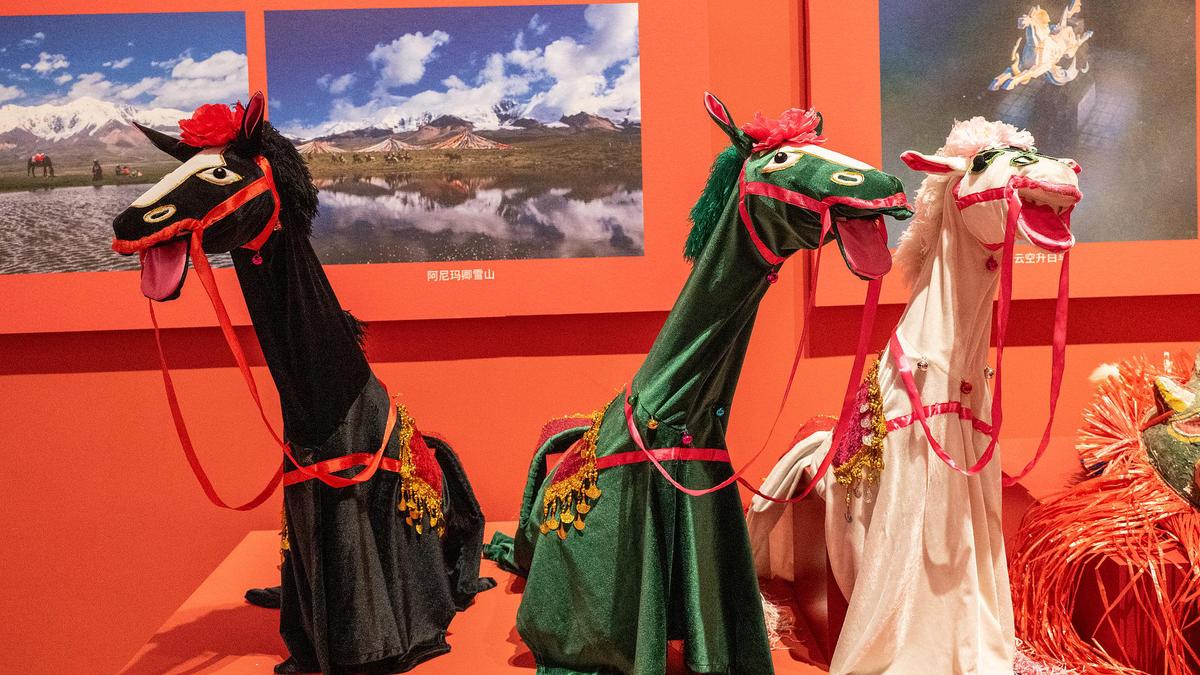
    The ancient agricultural communities of Tibet’s Shigatse region erupted in colorful festivities on January 20, 2026, as residents celebrated the traditional Farmers’ New Year. This significant cultural event, observed on the first day of the twelfth month according to the Tibetan calendar, transforms Chusong village in Nyarixung township into a vibrant tapestry of traditional customs and communal joy.

    Amidst the breathtaking Himalayan backdrop, villagers gathered in traditional attire to honor their agricultural heritage and welcome the upcoming planting season. The celebrations featured time-honored rituals that have been passed down through generations, reflecting the deep connection between Tibetan farmers and their land. Elaborate ceremonies expressed gratitude for past harvests while invoking blessings for agricultural prosperity in the coming year.

    The Farmers’ New Year represents more than mere festivity—it embodies the preservation of Tibet’s rich cultural identity and agricultural traditions. As modernization continues across China, such celebrations demonstrate the enduring vitality of regional customs and the importance of maintaining cultural heritage. The event provided a captivating glimpse into the unique seasonal rhythms that continue to shape rural life in Xizang Autonomous Region.

    Photographic documentation captured villagers participating in traditional dances, sharing ceremonial meals, and engaging in rituals that symbolize the harmonious relationship between humanity and nature. These observances highlight how Tibetan agricultural communities maintain their distinctive cultural practices while being part of China’s diverse ethnic tapestry.

  • Camping carnival brings warmth to frigid NE China

    Camping carnival brings warmth to frigid NE China

    In a remarkable display of outdoor enthusiasm overcoming extreme weather, thousands of camping devotees converged on the frozen landscapes of Northeast China for the fourth annual Northeast Camping Carnival. The event, held from January 12-18 in Hala village within Qiqihar’s Meilisi Daur ethnic district, transformed the typically dormant winter scene into a vibrant hub of activity.

    Among the participants was Zhu Yongyu, who embarked on an extraordinary 3,000-kilometer journey from Guangdong province in southern China. After six days of driving through dramatically changing climates, Zhu achieved his goal of experiencing sub-zero camping at -30°C—a stark contrast to the temperate conditions of his home region.

    “I’ve exhausted all camping scenarios in Guangdong, but snow camping represents an entirely new frontier of challenge,” Zhu explained while maintaining his tent’s interior warmth with a gas stove. “This unique experience justified the extensive travel.”

    The festival reached a milestone this year with over 1,000 tents pitched across the snow-blanketed grasslands, marking the first time the event has surpassed this threshold. The spectacle of colorful shelters dotting the silver plains symbolized a significant evolution in China’s winter tourism patterns.

    Local authorities note that the traditional concept of winter hibernation has been replaced by growing economic vitality driven by integrated ice-and-snow sports, cultural activities, and outdoor leisure pursuits. The camping carnival demonstrates how extreme weather conditions, once seen as a limitation, have been reimagined as a unique attraction drawing visitors from across China.

    The event’s success highlights how specialized tourism initiatives can stimulate regional economies during traditionally slow seasons while providing urban dwellers with unprecedented access to winter wilderness experiences.

  • South African police not yet able to defeat gangs, minister says

    South African police not yet able to defeat gangs, minister says

    South Africa’s Police Minister Firoz Cachalia has delivered a sobering assessment of the nation’s security capabilities, acknowledging that law enforcement lacks adequate resources to combat increasingly sophisticated criminal gangs. This admission comes amid escalating violence that has plagued multiple provinces, particularly the Eastern Cape and Western Cape regions.

    Minister Cachalia characterized gang violence as a ‘grave problem throughout the country’ during a press conference Wednesday, noting that criminal cartels ‘wield significant wealth and power’ that continues to undermine public safety. His comments followed a visit to Nelson Mandela Bay in Eastern Cape, where he described gangs as being on a ‘killing spree’ that has persisted into the new year.

    Statistical evidence underscores the severity of the crisis. Official police data reveals an average of 63 daily homicides between April and September last year, while local prevention groups documented 118 deaths in Nelson Mandela Bay alone from August to December. The violence has continued unabated in 2026, with approximately 40 fatalities reported across the region in January.

    The proliferation of illegal firearms exacerbates the situation. According to statistics cited by Gideon Joubert of the South African Gunowners’ Association, the country’s 63 million citizens possess approximately 3 million legally registered firearms—matched by an equal number of unlicensed weapons in circulation.

    Recent months have witnessed several high-profile incidents highlighting the crisis. These include a mass shooting near Johannesburg that claimed 11 lives in connection with illegal mining turf wars, a hostel attack in Pretoria that killed 11 people including a three-year-old child, and a tavern shooting in Durban that left eight patrons dead.

    Despite the establishment of a specialized anti-gang unit in 2019, Minister Cachalia indicated that traditional policing approaches have proven insufficient. He criticized ad hoc responses to the growing problem, emphasizing that ‘establishing gang units from time to time’ represents an inadequate solution to deeply entrenched organized crime.

    President Cyril Ramaphosa has pledged strengthened law enforcement measures and increased police deployments to address the violence. However, Minister Cachalia’s assessment suggests that without significant resource allocation and strategic overhaul, South Africa’s security forces remain outmatched by well-funded criminal networks.