分类: society

  • China solicits public opinion on standards for pre-cooked dishes

    China solicits public opinion on standards for pre-cooked dishes

    The Chinese government has launched a significant public consultation initiative regarding national food safety standards for pre-cooked dishes. The National Health Commission announced the move on Friday, marking a crucial step in regulating the rapidly expanding prepared foods sector.

    This standardization effort addresses growing consumer concerns about quality control, ingredient transparency, and production safety within the pre-cooked food industry. The proposed standards will establish comprehensive guidelines covering production processes, packaging requirements, storage conditions, and labeling specifications for prepared meals.

    The consultation period allows industry stakeholders, food safety experts, and general citizens to contribute insights and recommendations before final implementation. This participatory approach demonstrates regulatory authorities’ commitment to developing balanced standards that protect public health while supporting industry innovation.

    The initiative comes amid increasing consumer demand for convenience foods and corresponding concerns about nutritional quality and food safety. Pre-cooked dishes have gained substantial popularity in urban centers, particularly among working professionals and young families seeking time-efficient meal solutions.

    Food safety regulations have received heightened attention in China following previous incidents that undermined consumer confidence. The new standards aim to establish clear quality benchmarks that manufacturers must meet, potentially reshaping competitive dynamics within the food processing sector.

    Industry analysts suggest the standardization could accelerate market consolidation while improving overall product quality. The move aligns with broader governmental efforts to enhance food safety systems and modernize China’s food processing infrastructure.

  • Shanghai sets stage for 48th WorldSkills Competition

    Shanghai sets stage for 48th WorldSkills Competition

    Shanghai has successfully concluded the preparatory phase for the 48th WorldSkills Competition, finalizing arrangements for the global event scheduled for September 2026. The preparation week culminated in comprehensive planning sessions that established the framework for what promises to be one of the most significant skills showcases in the competition’s history.

    The upcoming competition, set for September 22-27, will assemble approximately 1,400 exceptional young competitors representing 70 nations and regions. The event will feature an extensive program including 64 distinct skill competitions, the WorldSkills Expo, and the WorldSkills Conference 2026, creating a comprehensive platform for international vocational excellence.

    A pioneering initiative launched during the preparation week, the “one school one member” program, has strategically partnered 62 educational institutions throughout the Yangtze River Delta with international teams. This innovative approach will facilitate meaningful cultural exchanges and skills demonstrations between visiting competitors and Shanghai students. Each international delegation will receive welcoming ceremonies at their designated schools, while representatives from these educational institutions will gain privileged access to observe the competition events.

    Shanghai Information Management School Vice-Principal Zhao Hongsheng emphasized the program’s significance: “Bringing world champions into our classrooms provides students with unprecedented access to elite talent. This exposure demonstrates how professional dedication combined with a global outlook can fundamentally shape future career trajectories.”

    The preparation activities included an extensive tour and city promotion event at the WorldSkills Museum, where Shanghai’s urban appeal was showcased through six interactive exhibition booths. The museum introduced twelve specially curated tourism routes designed specifically for the competition period.

    Museum Deputy Director Pan Yu revealed plans for deeper integration with the event: “As the competition approaches, we will incorporate specific event elements into our exhibitions, enabling international visitors to appreciate the cultural significance embedded within traditional Chinese craftsmanship.”

    WorldSkills International CEO David Hoey acknowledged Shanghai’s longstanding commitment, noting that the city’s “WorldSkills journey began in 2017, with China’s dedication remaining steadfast despite global challenges.” Hoey highlighted China’s position as home to the world’s largest vocational education system and emphasized how hosting the competition would further advance the nation’s skills development agenda.

    WorldSkills International Director of Event Operations Mark Callaghan expressed complete confidence in Shanghai’s preparations, stating: “The momentum has grown tremendously over the past twelve months. We have every expectation that Shanghai will deliver an exceptional experience.” Callaghan noted that China’s hosting responsibilities underscore its commitment to addressing global labor market challenges and attracting youth to skilled professions.

    The competition’s legacy is expected to extend beyond Shanghai, with plans already underway to develop traveling exhibitions featuring elements from the WorldSkills Museum for presentation at future international competitions.

  • ‘Feeling I will never forget’: Expat reacts to becoming millionaire in Big Ticket draw

    ‘Feeling I will never forget’: Expat reacts to becoming millionaire in Big Ticket draw

    In a remarkable display of fortune, five expatriates residing across the Gulf region have been transformed into instant millionaires through the latest Big Ticket draw in Abu Dhabi. The event distributed a combined prize pool of Dh5 million, equally divided among winners from Bangladesh, India, and Sri Lanka, each receiving Dh1 million.

    The diverse group of winners includes Santosh Kumar, a 51-year-old Indian general manager who has called Abu Dhabi home since 1999. After more than five years of consistent participation, Kumar initially dismissed the winning notification as a prank. ‘I asked my daughter to verify it online, and that’s when the excitement truly hit me,’ he recounted. The seasoned expat now plans to explore property opportunities and long-term investments with his windfall.

    From Qatar, Dasan Kunchu, a 43-year-old irrigation engineer from Kerala, participated through a collective approach with two separate groups of ten people. His winning moment required multiple verification attempts before reality set in. ‘The Big Ticket team kept trying to convince me, and it was only after I received the confirmation email that it finally sank in,’ Kunchu shared. He intends to distribute the prize among his group members while maintaining their collective pursuit of the grand prize.

    The winners’ circle also includes Jency Ruba, an Indian national who secured her fortune with ticket number 148955 purchased on January 8, and Mohammed Alwar Uddin Hajee, a Bangladeshi business owner who persisted for six years with monthly group purchases. ‘After so many years of trying, I never imagined this would happen,’ Hajee expressed, describing the victory as validation of his persistence.

    Completing the quintet is Dulan Mayura, a 29-year-old Sri Lankan professional at Magnolia Bakery in Dubai, who began participating just last year following friends’ encouragement. ‘I can’t explain the happiness I felt; it’s a feeling I’ll never forget,’ Mayura said, characterizing the win as a special milestone despite not having concrete plans for the funds.

    All winners have expressed their intention to continue participating in future draws, with several emphasizing the transformative potential of taking calculated chances. The Big Ticket draw continues to serve as a life-altering opportunity for the Gulf’s diverse expatriate community, reinforcing its reputation as a catalyst for financial transformation.

  • More Indian couples choose UAE as their wedding destination

    More Indian couples choose UAE as their wedding destination

    The landscape of Indian matrimonial celebrations is undergoing a significant transformation as increasing numbers of couples opt for international destinations, with the United Arab Emirates consolidating its status as a premier choice for luxury weddings. According to comprehensive data analysis by Policybazaar covering travel insurance patterns from 2023 to 2025, destination weddings have demonstrated consistent growth, reflecting a fundamental shift in Indian travel behavior.

    The UAE’s appeal lies in its world-class luxury venues and exceptional international connectivity, making it particularly attractive for multi-generational wedding parties. Meanwhile, Vietnam and Sri Lanka are emerging as popular cost-effective alternatives for budget-conscious families seeking overseas celebrations.

    European destinations including Italy, Spain, and Greece are attracting smaller wedding groups with higher per-capita spending, while Oman and the Maldives remain favored for intimate family ceremonies. Thailand maintains its position as the most preferred destination overall, benefiting from geographical proximity, streamlined visa processes, and well-established wedding infrastructure specifically catering to Indian ceremonial traditions.

    The research reveals that wedding-related travel insurance demand closely follows India’s traditional marriage calendar rather than conventional holiday seasons. The most substantial increase occurred between November 1 and December 15, with purchases surging 30% from 2023 to 2024, followed by an 8% increase from 2024 to 2025. Similar seasonal patterns were observed during January-March and July-August wedding periods.

    Demographic analysis shows that travelers aged 25-34 accounted for 40% of insurance policies, followed by those aged 45-60 at 35%. Senior travelers above 60 years constituted 25% of buyers, driving increased demand for comprehensive medical coverage and pre-existing condition protection. This multi-generational travel pattern underscores the inclusive nature of Indian destination weddings, which increasingly involve entire families rather than just the marrying couple.

  • Stranded Chinese serow rescued and released back into the wild in Yunnan

    Stranded Chinese serow rescued and released back into the wild in Yunnan

    In a delicate wildlife rescue operation, conservation authorities at Yunnan’s Daxueshan National Nature Reserve have successfully saved a stranded Chinese serow from imminent danger and returned the vulnerable species to its natural habitat. The incident unfolded when routine patrol staff received urgent reports of a trapped animal within the reserve’s boundaries.

    Responding promptly to the alert, the rescue team discovered the distressed serow marooned on a narrow sandbar in the middle of a rapidly flowing river as daylight began to fade. Facing critically low temperatures and powerful river currents, the bovine species faced severe risks of hypothermia and complete exhaustion.

    The conservation team immediately established a secure perimeter to minimize additional stress to the animal while coordinating with the reserve’s management bureau. Specialized rescue personnel were dispatched to the location equipped with appropriate equipment for the sensitive operation.

    Using specially designed soft ropes to avoid injury, the experienced team carefully secured the struggling serow and executed a precise extraction from the watercourse. The animal was safely transported to a secure riverbank location where veterinary professionals conducted a thorough medical examination.

    The assessment revealed a minor injury on the serow’s left hind limb, which received immediate treatment. Following comprehensive evaluation of its physical condition and behavioral indicators, the rescue team determined the animal had fully recovered from the ordeal and was suitable for release.

    The successfully rehabilitated serow was subsequently released into an adjacent protected forest area, demonstrating the effectiveness of coordinated wildlife conservation efforts. The Chinese serow (Capricornis milneedwardsii) holds vulnerable status on the International Union for Conservation of Nature’s Red List and primarily inhabits specific regions of southwestern China including Yunnan, Tibet, and Qinghai provinces.

  • China’s natural heritage sites thrive, boost local economies through tourism

    China’s natural heritage sites thrive, boost local economies through tourism

    China’s globally recognized natural heritage sites have demonstrated remarkable success in both ecological preservation and economic contribution, according to a comprehensive assessment report released by the National Forestry and Grassland Administration. The report, covering four decades of conservation efforts from 1985 to 2025, reveals that China’s 15 world natural heritage sites and 4 mixed cultural-natural sites have maintained impeccable conservation standards while simultaneously generating substantial socioeconomic benefits for local communities.

    These protected areas, spanning approximately 80,000 square kilometers across 20 provincial regions, represent some of China’s most diverse ecosystems including mountain ranges, forest systems, grassland expanses, lake networks, wetland habitats, desert landscapes, and coastal environments. The assessment confirms that none of these sites have experienced significant human-induced degradation, with their outstanding universal value remaining fully intact.

    Yuan Jiming, Director of the Nature Reserve Management Department, emphasized that international evaluations consistently validate China’s conservation achievements. Four successive World Heritage Outlook reports published by the International Union for Conservation of Nature between 2014 and 2025 consistently ranked China’s natural and mixed heritage sites above global conservation averages.

    Beyond environmental protection, China has pioneered innovative approaches to transform ecological assets into sustainable economic opportunities. Through carefully managed ecotourism development, nature education programs, study tours, and non-timber forest economies, these heritage sites have become engines of regional prosperity. Notably, over 90% of preservation positions are prioritized for local residents, while tourism has emerged as a foundational industry in many heritage regions.

    In 2024 alone, these heritage destinations welcomed over 180 million visitors, generating approximately 184.3 billion yuan ($26.6 billion) in tourism-related expenditure. In prominent sites including Jiuzhaigou, Huangshan, and Wulingyuan, tourism revenue constitutes more than 50% of local GDP, demonstrating how environmental stewardship and economic development can progress in harmonious synergy.

  • Millions of documents – but Epstein’s victims say they are no closer to justice

    Millions of documents – but Epstein’s victims say they are no closer to justice

    The U.S. Department of Justice faces severe criticism following a catastrophic failure in its mandated release of millions of documents related to convicted sex offender Jeffrey Epstein. While the disclosure was intended to provide closure for victims under the 2023 legislation, the January 30th release of approximately three million documents instead exposed sensitive information including victim identities, personal emails, bank details, and intimate photographs due to what officials described as ‘technical or human error’ in redaction processes.

    The privacy violation has drawn furious responses from Epstein survivors and advocacy groups. Ashley Rubright, one of Epstein’s victims, expressed her devastation to the BBC: ‘I’m heartbroken for the girls whose information was released. It’s such a huge violation of one of the most terrible moments of their lives.’ Other survivors including Annie Farmer and Lisa Phillips echoed concerns that the breach demonstrates systemic disregard for victim protection and could deter future reporting of sexual crimes.

    Kim Villanueva, president of the National Organization for Women, warned of broader implications: ‘It creates a sense that if you come forward you will not be protected.’ Her organization had actively lobbied Congress to compel the files’ release but now questions whether accountability will extend beyond the high-profile figures named in the documents.

    The disclosure has indeed triggered consequences for several prominent individuals. Prince Andrew was stripped of his royal titles following renewed scrutiny of his Epstein connections, while Lord Mandelson was dismissed as U.S. ambassador and subsequently left the House of Lords over his association with the financier. Microsoft founder Bill Gates also appeared in the files, though without allegations of wrongdoing.

    Beyond the political fallout, the documents reveal deeply disturbing patterns of misogynistic language and objectification. Epstein’s communications with powerful associates—including foreign officials, business leaders, and celebrities—contain crude descriptions of women reduced to their age, nationality, or physical attributes. In one exchange with then-Slovakian Foreign Minister Miroslav Lajčák, Epstein casually offered women with the comment, ‘You can have them both, I am not possessive. And their sisters.’

    TV doctor Peter Attia has apologized for his ‘tasteless and indefensible’ comments about female anatomy in emails with Epstein. Numerous other communications show women being evaluated for their appearance rather than qualifications, with one 2017 email describing candidates for an unspecified position as ‘not as pretty as other applicants’ or ‘not very young but beautiful.’

    Despite the volume of material released—with the Justice Department warning that some content may be fabricated or misattributed—victims and advocates emphasize that true accountability remains elusive. With the government’s review concluded and no new prosecutions anticipated, survivors continue their exhausting pursuit of justice. As Jess Michaels told BBC Newsnight, ‘It can be really hard to keep going, but we know we’re trying to change things for the next generation.’

    The Epstein files disclosure, rather than providing resolution, has exposed fundamental flaws in how institutions handle sexual violence cases and protect victims. As Villanueva concluded, the failure to safeguard survivors’ identities and the lack of meaningful accountability ‘shows that misogyny still reigns in our society.’

  • Railway couple helps serve the Spring Festival travel rush

    Railway couple helps serve the Spring Festival travel rush

    As millions of Chinese travelers embark on their annual pilgrimage home for Spring Festival reunions, a dedicated railway couple continues their unsung mission to ensure safe journeys for all. Yang Jun and Li Yanzheng, both employed at Chongqing North EMU Depot under China Railway Chengdu Group Co., Ltd., have stood guard over the world’s largest annual human migration for five consecutive years.

    While passengers hurry home for family gatherings, this professional partnership maintains rigorous safety protocols at their respective posts. Li serves as a ground service mechanic, performing critical maintenance on electric multiple unit trains, while her husband Yang works as a passenger train inspector, examining rolling stock with meticulous attention to detail.

    Their synchronized efforts represent countless railway workers who sacrifice personal holiday time to maintain China’s transportation backbone during the 40-day Chunyun period. The couple’s story, captured in a February 5, 2026 photograph at their Chongqing workplace, exemplifies the quiet dedication of transportation professionals nationwide.

    Railway authorities estimate over 400 million passenger trips during this year’s travel rush, creating unprecedented demands on infrastructure and personnel. The couple’s dual commitment to both their marriage and professional duties highlights the human infrastructure supporting China’s massive transportation network during its most challenging operational period.

  • Late Beijing security official honored as ‘Role Model of the Times’

    Late Beijing security official honored as ‘Role Model of the Times’

    The Publicity Department of the Communist Party of China Central Committee has posthumously conferred the prestigious title of “Role Model of the Times” upon Dong Yijun, the former deputy director of Beijing Municipal Public Security Bureau and head of its traffic management bureau. The recognition was announced on Friday, honoring Dong’s exceptional decades-long service in public security.

    Dong passed away suddenly while on active duty on October 21, 2025, at the age of 58. A native Beijinger who joined both the Party and public security force in 1989, Dong dedicated his entire career to serving the capital’s residents through various leadership positions.

    Beginning his service at a police station in Xicheng district amid challenging public security conditions, Dong immersed himself in community policing, building remarkable rapport with local residents. His career trajectory demonstrated consistent commitment to grassroots engagement, whether serving as frontline officer or senior administrator.

    Dong operationalized a people-centered philosophy throughout his tenure, frequently emphasizing that matters significant to citizens should be treated as priorities by law enforcement. He reminded colleagues that issues seemingly routine to police could represent critical concerns for ordinary residents.

    During his leadership at Tongzhou public security sub-bureau, Dong pioneered significant administrative reforms, consolidating 87 government service items into centralized service centers and implementing 110 specific measures to enhance public convenience. He consistently advocated for reforms that would maximize accessibility and citizen satisfaction.

    As head of Beijing’s traffic management bureau, Dong personally addressed persistent traffic bottlenecks through repeated site inspections. He developed targeted solutions for high-pressure zones including Fuxingmen Bridge and Beijing Children’s Hospital—areas significantly affected by school, hospital, tourist, and commercial traffic.

    Dong advocated for sustained, detailed approaches to traffic management, overseeing the implementation of comprehensive governance measures including location-specific solutions and intelligent traffic signal control systems. His previous honors included first-class and second-class heroic model recognitions within the national public security system, along with multiple individual commendations.

  • Chinese courts provide judicial aid to over 128,600 people over past three years

    Chinese courts provide judicial aid to over 128,600 people over past three years

    China’s judicial authorities have demonstrated significant commitment to social welfare through extensive financial assistance programs for vulnerable citizens involved in legal proceedings. Between 2023 and 2025, Chinese courts provided comprehensive judicial aid to 128,600 individuals across 90,400 separate cases, according to official statistics released by the Supreme People’s Court.

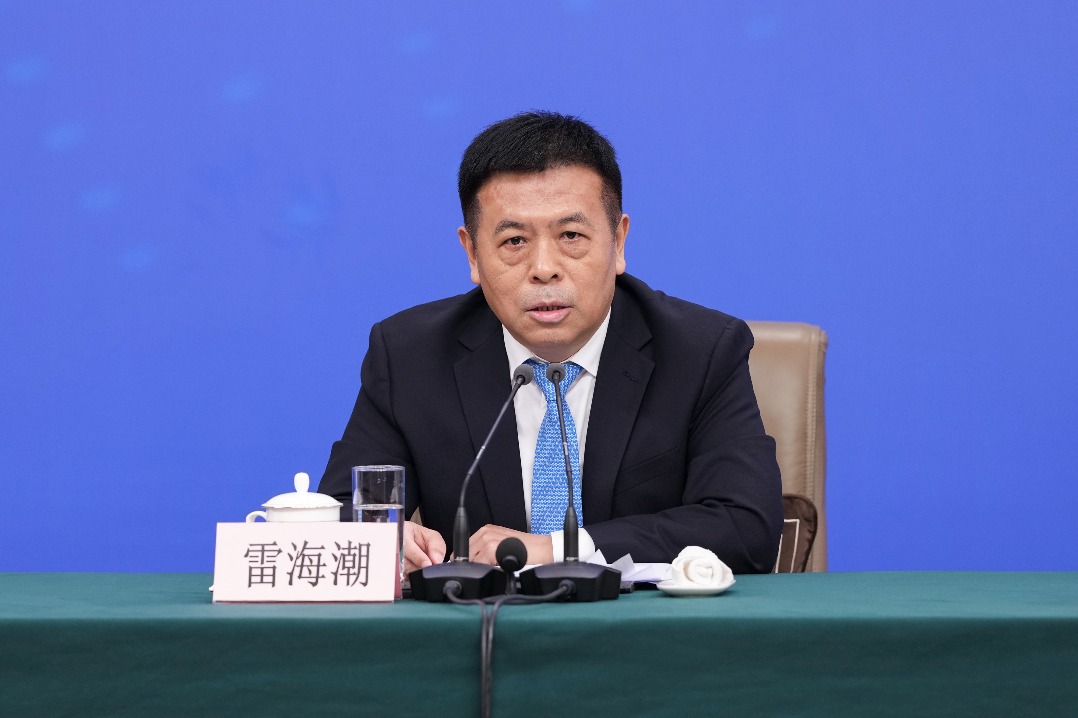
    Wang Zhenyu, head of the State Compensation Division at China’s top judicial body, disclosed at a Friday press conference that the total allocation for judicial assistance during this three-year period surpassed 2.56 billion yuan (approximately $369 million). This substantial financial support has played a crucial role in alleviating economic hardships for numerous families navigating the legal system.

    The initiative represents a fundamental component of China’s socialist judicial framework, specifically designed to support litigants experiencing severe financial distress. The program particularly prioritizes assistance for society’s most vulnerable members, including minors, elderly citizens, and individuals with severe disabilities. Official data reveals that courts nationwide provided support to 107,700 people from these demographic groups over the three-year timeframe.

    Wang cited a poignant example from Sichuan province where six children, left without their primary caregiver after their father was murdered, received crucial judicial aid delivered across 2,000 kilometers. This intervention provided not only financial relief but also renewed hope for the children’s future.

    Beyond financial distributions, judicial authorities are implementing innovative measures to enhance support mechanisms. These include establishing expedited channels for emergency medical treatment of criminal case victims, providing psychological counseling for those experiencing severe trauma, and facilitating social assistance for victims with mobility challenges. These comprehensive approaches significantly amplify the positive impact of judicial assistance programs throughout China’s legal system.