
In a landmark recognition of automotive subculture, the United States Postal Service (USPS) has officially elevated lowrider vehicles to a new status of national prominence. A commemorative stamp series, unveiled on March 13th, celebrates these iconic custom cars renowned for their unique hydraulic systems that enable them to bounce and hop. The collection features vibrant, stylized illustrations of five distinct lowrider models, each meticulously detailed to capture the artistry and mechanical innovation inherent to the community. This issuance represents a significant moment of cultural validation for a movement that originated in Mexican-American communities in the mid-20th century, particularly across the American Southwest. Historically, lowriders were often subject to scrutiny and restrictive legislation. Their transformation from a niche, sometimes-misunderstood passion to a federally endorsed art form underscores a broader shift in the appreciation of folk art and community-based expression. The stamps serve not merely as postage but as miniature canvases, acknowledging the intricate craftsmanship, vibrant paint jobs, and custom modifications that define the lowriding ethos. This initiative by the USPS is part of its ongoing ‘Forever’ stamp series, which aims to honor diverse aspects of American life and history, ensuring these rolling works of art are forever stamped into the nation’s cultural consciousness.
分类: society
-

Sheriff in Nancy Guthrie case believes they know kidnapper’s motive
Law enforcement officials in Arizona have disclosed they have established a probable motive in the ongoing investigation into the abduction of Nancy Guthrie, the 84-year-old mother of prominent television host Savannah Guthrie. The kidnapping occurred on February 1st when Guthrie was taken from her residence in the affluent Catalina Foothills area of Tucson, Arizona.
Pima County Sheriff Chris Nanos, in an exclusive interview with NBC News, confirmed that investigators are operating on the theory that this was a targeted incident. “We believe we know why he did this,” Sheriff Nanos stated, while simultaneously cautioning that authorities are “not 100% sure of that” assessment. The sheriff explicitly declined to elaborate on the specific nature of the suspected motive, emphasizing that public disclosure could potentially jeopardize the integrity of the active investigation.
Despite uncovering critical evidence—including forensic DNA samples, multiple ransom communications, and doorbell camera footage depicting a masked individual—authorities have yet to identify a primary suspect. The investigation has involved nationwide search efforts and has led to several detentions. Notably, a California man faces federal charges for allegedly sending fraudulent ransom demands, though he appears unrelated to the actual disappearance. A delivery person was also briefly questioned and subsequently released after being cleared of involvement.
With the perpetrator remaining unidentified 41 days after the crime, Sheriff Nanos issued a sobering warning to local residents, dismissing any notion that this was an isolated incident. “It’d be silly to tell people, ‘Yeah, don’t worry about it. You’re not his target,’” he remarked, urging community members to maintain heightened awareness.
Savannah Guthrie has maintained a public campaign for her mother’s safe return, posting emotional video appeals directly addressing the captor and offering a $1 million reward for information leading to Nancy’s location. In one February recording, she acknowledged the painful possibility that her mother “may be lost, she may already be gone.”
-

Michigan synagogue attack was ‘hate, plain and simple’, says governor
A violent incident at Temple Israel synagogue in Bloomfield Hills, Michigan, has left the local Jewish community on high alert after a driver deliberately rammed a vehicle into the building on Thursday. Michigan Governor Gretchen Whitmer condemned the act as blatant antisemitism, characterizing it as “hate, plain and simple.”
The FBI is currently investigating the event as a targeted assault against Jewish community members, though the precise motive remains undetermined. Law enforcement officials confirmed that no staff or children from the synagogue and its adjacent school sustained injuries during the attack. However, one security guard received medical treatment for non-life-threatening injuries and is anticipated to make a full recovery.
Authorities identified the suspect as Ayman Mohamad Ghazali, a 41-year-old naturalized U.S. citizen originally from Lebanon who entered the country in 2011. According to police reports, Ghazali drove with deliberate intent through the synagogue’s hallway before being neutralized by security personnel. The vehicle subsequently caught fire, complicating initial investigations.
Governor Whitmer addressed the rising tide of antisemitism in the United States during a Friday press conference, emphasizing the need to combat this “ancient and rampant evil” through unity and reduced inflammatory rhetoric. She highlighted the particular vulnerability of the Bloomfield Hills Jewish community following the attack.
Michigan Senator Elisa Slotkin, who attended the same press conference, reinforced these concerns, noting that antisemitic hate crimes disproportionately affect Jewish communities nationwide. She urged public accountability across political spectrums to prevent such ideologies from escalating into violence.
The attack specifically targeted young children, with Temple Israel—one of America’s largest reform Jewish synagogues—evacuating over 100 preschoolers aged zero to five during the incident. Additionally, approximately 30 law enforcement officers required treatment for smoke inhalation, according to Oakland County Sheriff Michael Bouchard.
Investigation complications arose due to the vehicle fire, which authorities stated has made determining the suspect’s exact cause of death challenging. The case continues to develop as federal and local agencies collaborate to uncover the full circumstances surrounding this antisemitic attack.
-

Games with loot boxes to get minimum 16 age rating across Europe
A sweeping regulatory shift is poised to transform the European gaming landscape as the Pan-European Game Information (PEGI) system announces stringent new age classifications targeting games with loot box mechanics. Effective June 2026, titles incorporating paid random item systems will automatically receive a minimum PEGI 16 rating across 38 participating nations, including the United Kingdom.
The decision marks a formal recognition of loot boxes—virtual containers purchasable with real or virtual currency that yield randomized rewards—as potential risk factors in game design. This classification overhaul responds to mounting research indicating these mechanics blur boundaries between gaming and gambling behaviors. Prominent franchises utilizing such systems, including EA Sports FC, face significant rating escalations under the new framework.
PEGI Director Dirk Bosmans affirmed the changes will deliver “more useful and transparent advice” for consumers, particularly parents making informed purchasing decisions. The sentiment finds support from education advocates like Emily Tofield of the Young Gamers & Gamblers Education Trust, who acknowledged the reforms as “a step in the right direction” while advocating for retrospective application to existing games.
The regulatory adjustment extends beyond loot boxes. Time-limited systems like paid battle passes will now trigger PEGI 12 ratings, while games incorporating non-fungible tokens (NFTs) face automatic PEGI 18 classifications. Titles employing punitive “play-by-appointment” mechanics that penalize player absence will receive PEGI 12 ratings versus PEGI 7 for non-punitive systems. Notably, games lacking player reporting or blocking features will receive the maximum PEGI 18 designation.
This industry-led initiative emerges against a complex regulatory backdrop. While the UK government declined to amend the Gambling Act 2005 to encompass loot boxes in 2022, citing insufficient evidence of “causative links” to harm, trade body Ukie subsequently issued guidance restricting underage loot box purchases without parental consent. The Advertising Standards Authority concurrently enforces disclosure requirements for loot box presence in game advertisements.
Academic perspectives underscore the significance of these changes. Dr. Ruijie Wang of Bournemouth University, whose January 2025 study examined gambling risks for youth, noted loot boxes represent “one of the most studied examples of gambling-like mechanics in games.” She emphasized that recognizing them in age ratings helps “reflect the realities of modern game design” and provides parents clearer harm indicators.
Despite regulatory progress, implementation challenges persist. Games journalist Vic Hood observed that ultimate protection relies on parental engagement with rating systems, noting effectiveness hinges on parents “educating themselves on why these changes were brought in.” The policy currently applies solely to new releases post-June, leaving existing games with loot boxes unaffected—a gap advocates argue diminishes protection for children already engaged with such titles.
-

Nine honored as ‘most beautiful natural guardians’ in China
In a prestigious ceremony held in Beijing, nine distinguished individuals have been accorded the title of ‘Most Beautiful Natural Guardians’ for their exceptional dedication to environmental preservation and sustainable development initiatives. This annual recognition program, jointly established in 2022 by the Publicity Department of the Communist Party of China Central Committee and the Ministry of Natural Resources, celebrates those who exemplify the nation’s commitment to ecological civilization and the principle that ‘lucid waters and lush mountains are invaluable assets.’
Among the honorees is Dr. Wang Guiling, a pioneering researcher at the Institute of Hydrogeology and Environmental Geology of the Chinese Academy of Geological Sciences. Since commencing his geothermal research in 1987, Dr. Wang has made groundbreaking contributions through systematic mapping of China’s geothermal resources, advancing theoretical understanding of geothermal systems, and developing innovative exploration technologies. His work aligns strategically with China’s clean energy development objectives, driven by what he describes as ‘deep passion for China’s mountains and rivers.’
Geological expert Ding Zhengjiang from the Shandong Provincial Bureau of Geology and Mineral Resources received recognition after decades of field exploration. Having dedicated over one-third of each year to fieldwork, Ding has led more than 100 geological projects resulting in significant discoveries including a super-large offshore gold deposit in Laizhou and various rare mineral deposits in the Jiaodong region. His team has revolutionized traditional methods by establishing an intelligent geological database for Shandong’s gold deposits, integrating spectroscopic scanning technologies for rapid metallogenic identification.
Marine conservation specialist Shi Xiaojun, a senior engineer at the South China Sea Ecological Center, was honored for his innovative work in coral reef protection. Shi established China’s first comprehensive coral reef ecological database and national monitoring system, combining remote sensing, drone surveillance, and field survey data. His team’s development of an environmental DNA detection kit using gene-editing technology represents a major advancement—capable of identifying crown-of-thorns starfish gene fragments within three hours, dramatically improving monitoring efficiency while reducing costs.
All recipients emphasized the growing integration of technological innovation with environmental conservation work. They expressed commitment to continuing their efforts while promoting international academic exchanges and knowledge sharing. The ceremony highlighted how these guardians bridge scientific advancement with hands-on conservation, demonstrating that effective environmental protection requires both scientific intellect and physical endurance in confronting natural challenges.
-
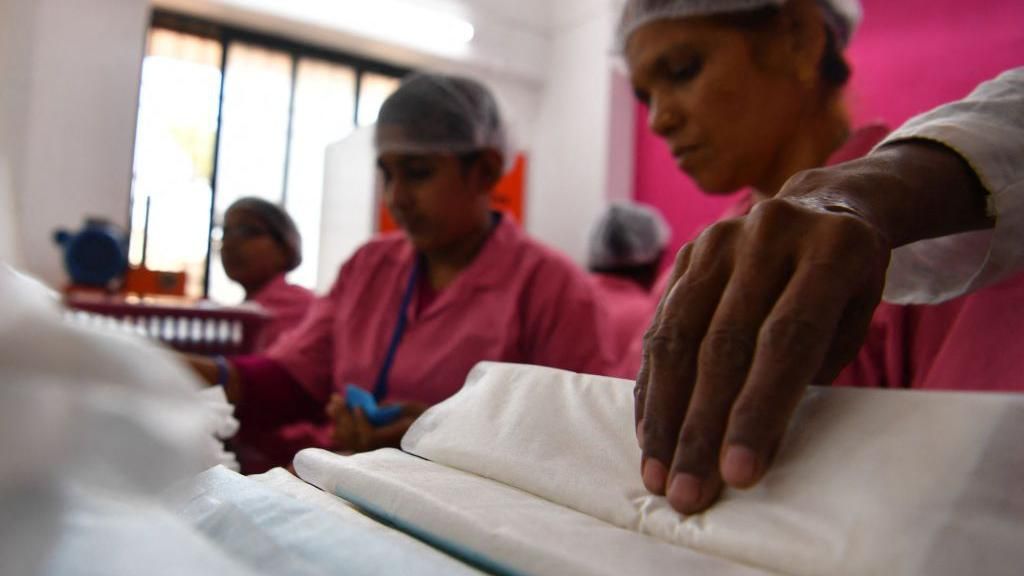
‘No-one will hire women’ – India’s top court rejects menstrual leave petition
India’s Supreme Court has delivered a landmark ruling rejecting the implementation of a nationwide menstrual leave policy for working women and female students. The judicial bench, presided over by Chief Justice Surya Kant, expressed concern that mandated time off for menstrual discomfort could potentially disadvantage women in the workforce by making them less attractive to employers.
The court articulated that such policies might inadvertently reinforce gender stereotypes by suggesting women are not equal to their male counterparts in professional settings. Instead of benefiting female employees, the justices warned that menstrual leave requirements could ultimately harm women’s career advancement and economic participation.
This decision emerges amid ongoing national debates regarding menstrual rights and workplace equality. While some Indian states including Bihar, Odisha, and Kerala have implemented regional menstrual leave provisions for government employees and educational staff, the Supreme Court has declined to establish a federal mandate. The ruling came in response to a petition filed by attorney Shailendra Mani Tripathi, who advocated for a standardized policy granting two to three days of menstrual leave monthly.
Public health expert and legal professional Sukriti Chauhan criticized the verdict, stating that the court’s position perpetuates menstrual taboos rather than addressing fundamental issues of workplace dignity and gender equality. Chauhan emphasized that denying appropriate leave forces women to work in potentially uncomfortable or undignified conditions during menstruation.
Globally, several nations including Spain, Japan, South Korea, and Indonesia have successfully implemented menstrual leave policies. Within India’s private sector, progressive companies such as the RPG Group, Larsen & Toubro, and Zomato have independently instituted menstrual leave provisions, recognizing both employee welfare and productivity benefits.
The court suggested that any future menstrual leave policy should emerge from comprehensive stakeholder consultations rather than judicial mandate, leaving the door open for legislative action while maintaining that such decisions belong to the democratic process rather than the judiciary.
-

‘Chinamaxxing’ piques curiosity of Gen Z in US
A remarkable cultural phenomenon dubbed ‘Chinamaxxing’ is captivating American Gen Z audiences through social media platforms, representing a significant shift in how younger generations engage with Chinese culture. This digital movement involves Western youth adopting various aspects of Chinese daily life, wellness practices, and aesthetics as a form of personal optimization and lifestyle enhancement.
The trend has gained substantial traction on TikTok and Instagram, where videos tagged #Chinamaxxing have accumulated millions of views. Content creators showcase routines featuring traditional Chinese elements—from drinking honey-infused hot water to the accompaniment of guzheng music to practicing Chinese-style aerobics and enjoying authentic dim sum. Many participants humorously refer to themselves as ‘Chinese baddies’ while documenting their cultural exploration.
This cultural curiosity aligns with recent Pew Research Center data revealing a generational divide in American perceptions of China. Among adults under 30, only 21% hold strongly unfavorable views, compared to 37% of those aged 50-64. Analysts attribute this divergence to younger generations encountering China primarily through algorithm-driven social content rather than traditional news media or political discourse.
Shaoyu Yuan of NYU’s Center for Global Affairs identifies Chinamaxxing as evidence of China’s growing ‘cultural cachet,’ noting that engagement increasingly occurs through lifestyle and aesthetic appreciation rather than geopolitical framing. Jing Gao, founder of Chinese food brand Fly By Jing, emphasizes that this represents more than a passing trend—it’s a meaningful recalibration of cultural perception driven by genuine curiosity and daily practice.
The movement finds embodiment in figures like Matt Soren, an American who has lived in Chongqing for nearly 17 years. Through his platform Baimanzhi, Soren shares his deep cultural immersion, suggesting that Chinamaxxing reflects a broader search for alternatives to Western cultural norms. He emphasizes that truly understanding Chinese culture requires looking beyond superficial habits to embrace underlying values like family connection and tradition.
This organic, youth-driven cultural exchange demonstrates how digital platforms can facilitate cross-cultural understanding through shared daily experiences rather than political narratives, potentially signaling a new era of Sino-American cultural relations.
-

Trusting thought to be its own light
In the quiet confines of a Wuchang district residence in Wuhan, an extraordinary academic pursuit unfolds daily. Zhou Shun, who lost his vision during childhood, has transformed his modest living space into an intellectual sanctuary where advanced mathematics and physics concepts come alive through auditory learning and tactile imagination.
Initially attributed to congenital retinal atrophy, Zhou’s condition was later accurately diagnosed as retinitis pigmentosa – a cluster of inherited retinal disorders that progressively diminish eyesight. Rather than retreating from scientific exploration, Zhou developed innovative cognitive approaches utilizing sound, logical reasoning, and mental visualization to comprehend complex scientific principles.
For over three decades, Zhou has collaborated with volunteer readers from Wuhan University who patiently articulate mathematical formulas and scientific diagrams. This sustained academic partnership has enabled him to construct what he describes as an intricate ‘universe of knowledge’ within his mind.
His intellectual achievements culminated in December with the publication of his third scholarly work, ‘Mathematics in Physics,’ an expanded edition building upon his 2017 original publication. The treatise demonstrates remarkable breadth, spanning from fundamental undergraduate concepts like calculus and linear algebra to advanced graduate-level topics including spectral theory on infinite-dimensional vector spaces and tensor analysis.
Professor Zhou Bin of Beijing Normal University, specializing in field theory and general relativity, noted in the book’s preface that the work presents substantial challenges even for mathematically trained master’s degree candidates.
Those who work closely with Zhou emphasize his unique cognitive abilities. Chai Chengye, a third-year physics undergraduate at Wuhan University who began reading for Zhou in 2023, observed: ‘While we rely on blackboards for visualization, Zhou utilizes darkness as his canvas – projecting equations, formulas, and theoretical conjectures through a mind sharpened to extraordinary precision.’
Zhou’s story transcends individual achievement, serving as powerful testament to human perseverance and the transformative potential of adaptive learning methodologies. His journey continues to inspire both disabled learners and academic professionals, demonstrating that intellectual boundaries can be redefined through determination and innovative thinking.
-

South African soldiers dismantle illegal mining operations near Johannesburg as miners flee
In a significant escalation of its anti-crime operations, South African military forces have conducted targeted raids against illicit gold mining operations in the Randfontein area near Johannesburg. The coordinated operation resulted in the dismantling of extensive illegal mining infrastructure and the seizure of specialized equipment including industrial generators and drilling machinery.
The military intervention, documented by Associated Press photographers, revealed sophisticated makeshift mining camps complete with food supplies, utensils, and abandoned personal belongings as miners fled the advancing security forces. This operation represents part of a broader governmental strategy deploying army personnel to high-crime regions including Western Cape province and Gauteng, the nation’s economic center.
Illegal mining has proliferated across South Africa’s mining regions, particularly around Johannesburg where approximately 6,000 abandoned mine shafts provide opportunities for criminal enterprises. An estimated 30,000 illegal miners, locally known as “zama zamas” (those who try their luck), operate in dangerous conditions while extracting precious minerals without government authorization.
The scale of this illicit industry is substantial, with government estimates indicating over $4 billion in gold alone is lost annually to criminal networks. The trade is reportedly dominated by transnational syndicates with connections to neighboring Lesotho, Zimbabwe, and Mozambique, fueling both criminal violence and anti-immigrant sentiment in host communities.
President Cyril Ramaphosa addressed parliament regarding the comprehensive approach, stating: “The police will also be working with the National Prosecuting Authority on multi-disciplinary task teams to target the leadership, finances, firearms and logistics of these criminal networks.” The strategy combines military deployment with enhanced anti-gang units and specialized task forces focused on illegal mining operations.
The dangerous nature of illegal mining has previously resulted in multiple tragedies, with provinces including North West and Mpumalanga experiencing similar challenges with abandoned mine shafts and unauthorized mineral extraction activities.
-

China intensifies efforts to combat domestic violence
China’s judicial authorities have significantly intensified their nationwide campaign against domestic violence through a multi-faceted approach emphasizing prevention, intervention, and comprehensive victim protection. According to Supreme People’s Procuratorate officials speaking during the recent Two Sessions, this enhanced judicial focus has produced measurable declines in domestic violence cases across the country.
Hou Yahui, head of the Supreme People’s Procuratorate’s general crimes department, revealed that domestic violence prosecutions have dropped below 1,000 cases annually since 2022, representing a substantial decrease from the 1,200+ cases prosecuted in 2021. This downward trend demonstrates the increasing effectiveness of China’s legal framework and enforcement mechanisms against household violence.
The judicial strategy has evolved beyond traditional criminal prosecution to incorporate integrated functions including civil litigation support, administrative oversight, and public interest litigation. Prosecutors now actively identify cases where victims cannot pursue legal action independently due to intimidation, coercion, or limited capacity, converting these into public prosecutions to ensure accountability.
Notably, China’s legal recognition of domestic violence has expanded significantly beyond physical harm to encompass psychological abuse, emotional manipulation, and sustained verbal humiliation. This broader understanding reflects evolving social conditions and more comprehensive legal interpretations. In one landmark case from Shandong province, a perpetrator received a three-year prison sentence for psychological abuse that led to his partner’s suicide, establishing important precedent for prosecuting non-physical violence.
Judicial authorities have strengthened coordination across multiple institutions including public security agencies, women’s federations, and community organizations. This collaborative approach has improved information sharing, rapid response protocols, and victim assistance mechanisms. Additionally, nationwide legal education campaigns are reshaping public perception that domestic violence constitutes a criminal offense rather than a private family matter.
The procuratorate’s work report approved by the National People’s Congress documented 43,000 prosecutions for crimes against women’s personal rights and dignity, alongside 2,259 public interest litigations. These efforts form part of a broader integration of China’s Anti-Domestic Violence Law, Civil Code, and Law on the Protection of Women’s Rights and Interests into a cohesive protection framework that addresses both visible and concealed forms of abuse.