分类: society

  • Hong Kong’s population up by 10,200 in 2025

    Hong Kong’s population up by 10,200 in 2025

    Hong Kong’s demographic landscape showed measured growth in 2025, with official statistics revealing a population increase of 10,200 residents. According to provisional data released by the Census and Statistics Department of the Hong Kong Special Administrative Region (HKSAR) government, the territory’s total population reached 7,510,800 by year’s end, representing a 0.1 percent uptick from the previous year.

    The demographic shift emerged from contrasting trends: a substantial net inflow of 29,100 residents through various migration channels offset a natural population decrease of 18,900. The natural decline resulted from 31,100 births being surpassed by 50,000 deaths throughout the year, continuing a pattern of negative natural growth.

    Detailed breakdowns show that 7,242,400 individuals were classified as usual residents, while 268,400 were categorized as mobile residents—a distinction reflecting Hong Kong’s status as a dynamic international hub.

    A government spokesperson attributed the positive demographic trajectory to strategic initiatives, noting that “various talent attraction and labor importation schemes have helped offset the impact of the natural population decrease.” These programs appear to have effectively counterbalanced the territory’s aging population trends and low birth rates, maintaining Hong Kong’s position as a competitive global center.

    The data provides crucial insights for urban planning and resource allocation, suggesting that targeted immigration policies are yielding measurable results in sustaining Hong Kong’s workforce and economic vitality amid broader demographic challenges.

  • Senior official extends Spring Festival greetings to religious groups

    Senior official extends Spring Festival greetings to religious groups

    In a significant pre-Spring Festival engagement, Wang Huning, Chairman of the Chinese People’s Political Consultative Conference National Committee and member of the CPC Central Committee Politburo Standing Committee, convened with leaders of China’s major religious organizations on February 12, 2026. The high-level meeting served as a platform for extending festive greetings while outlining the government’s vision for religious development aligned with national modernization goals.

    During the cordial gathering, Wang acknowledged the constructive work undertaken by religious groups throughout 2025, emphasizing the necessity of systematic approaches to ensure religions in China maintain distinctly Chinese characteristics. The discussion highlighted the importance of law-based governance in religious affairs, positioning religious communities as contributors to China’s modernization trajectory.

    Representatives from five major religious bodies—the Buddhist Association of China, Taoist Association of China, China Islamic Association, Chinese Catholic Patriotic Association, and the National Committee of the Three-Self Patriotic Movement of the Protestant Churches—participated actively in the dialogue, delivering addresses that reflected their respective community perspectives.

    The senior official urged religious organizations to guide their followers toward developing accurate understandings of national identity, historical context, ethnic relations, cultural heritage, and religious practice. This guidance framework aims to foster closer unity around the Communist Party and government institutions while facilitating the integration of religious practices with China’s fine traditional culture and socialist society adaptation.

  • Epstein’s files reveal ‘rotten culture’ in US

    Epstein’s files reveal ‘rotten culture’ in US

    The recent disclosure of over three million pages from the FBI’s Jeffrey Epstein investigation has unveiled what experts describe as a deeply entrenched ‘rotten culture’ within elite American circles. Despite the monumental scale of evidence released in late January—comprising thousands of videos and images alongside extensive documentation—legal analysts note minimal consequences for the wealthy and powerful individuals implicated.

    Epstein, a financier with a $600 million estate who died in August 2019 while facing sex trafficking charges, operated a sophisticated social engineering scheme rather than merely a criminal enterprise. The released files, though representing just half of the total evidence gathered (with another three million pages withheld due to sensitivity concerns), reveal how Epstein systematically leveraged proximity to power to secure both wealth and legal impunity.

    His trajectory from modest beginnings—born to a homemaker and a city landscaper—to Wall Street prominence illustrates a pattern of manipulation that characterized his entire career. After gaining employment at Bear Stearns through student family connections in 1976, Epstein was discovered to have fabricated academic credentials from two California universities. Remarkably, he retained his position despite admitting the deception, becoming a limited partner by age 27.

    Epstein’s modus operandi involved endearing himself to corporate leadership while abusing financial privileges and cultivating an aura of luxury. Over five years at Bear Stearns, he developed the connections and manipulative techniques that would later enable his extensive sex trafficking operation. This network ultimately served dual purposes: facilitating financial scams and betrayals while offering access to young women and minors as currency to secure powerful alliances.

    The documents confirm that Epstein’s operation functioned as a mechanism for procuring influence through the exploitation of vulnerable individuals, with analysts emphasizing how the system protected those with wealth and connections even as evidence of widespread criminality emerges.

  • Longer Spring Festival break fuels travel boom

    Longer Spring Festival break fuels travel boom

    China’s extended nine-day Spring Festival holiday has catalyzed an extraordinary surge in domestic and international travel, marking the longest break in recent years and significantly altering travel patterns nationwide. According to comprehensive data from the China Association of Travel Services and leading travel agency Tuniu, the prolonged vacation period has directly correlated with increased travel duration, with tourists now averaging 5.9 travel days—a substantial 1.1-day increase compared to previous years.

    The travel phenomenon manifests in distinct waves, with initial departures commencing mid-week and reaching peak intensity during the holiday’s opening days. Qi Chunguang, Vice-President of Tuniu, indicates that sightseeing and entertainment travel will climax on February 18th, following traditional family reunion activities.

    Domestically, destinations offering authentic cultural experiences have gained remarkable popularity. Fuzhou in Fujian province emerged as a top-five hotel booking destination for the first time, largely driven by its centuries-old ‘youshen’ (Parade of the Gods) ritual. This cultural spectacle, featuring elaborate deity processions to ward off evil spirits, has propelled hotel bookings by over 80% compared to last year’s holiday period.

    Similarly, Huangshan in Anhui province has witnessed a 150% surge in accommodations reservations, attributed to its captivating fish-shaped lantern exhibitions and interactive lantern-making activities. The destination’s appeal is exemplified by travelers like Wang Lixin from Zhengzhou, who booked a four-day family excursion after discovering the city’s visual charms through social media platform Xiaohongshu.

    Climate-based travel preferences reveal intriguing regional patterns: northern residents seek warmer southern climates in provinces like Hainan and Guangdong, while southern tourists increasingly venture northward for winter experiences in ice and snow destinations.

    Internationally, the extended holiday has dramatically boosted overseas travel. Traditional favorites Thailand, South Korea, and Malaysia remain popular for their perceived value, while previously niche destinations like Türkiye and Uzbekistan have experienced exponential growth following visa-free policies for Chinese passport holders. Türkiye’s 90-day visa-free access, announced in January, has resulted in a 150% increase in holiday bookings, while Uzbekistan witnessed a fourfold surge in Chinese tourist reservations.

    The National Immigration Administration projects daily cross-border movements exceeding 2.05 million during the holiday period, representing a 14.1% year-over-year increase, with outbound traffic peaking on the holiday’s commencement and inbound peaks anticipated during the concluding days.

  • Festive visit to Beijing’s Longfusi highlights traditions, renewal

    Festive visit to Beijing’s Longfusi highlights traditions, renewal

    The ancient stone-paved lanes of Beijing’s Longfusi commercial district came alive with festive energy days before Spring Festival, adorned with swaying red lanterns and filled with the aromatic blend of traditional pastries, pickles, and freshly prepared snacks. This historic neighborhood became the focus of national attention when President Xi Jinping conducted an inspection tour through its bustling holiday market, highlighting the significance of preserving cultural heritage while embracing innovation.

    At Beijing Daoxiangcun’s flagship store, manager Cao Siyuan recounted the President’s engagement with traditional pastry artisans. “He shared childhood memories of purchasing pastries here and showed genuine interest in our culturally-inspired new developments,” Cao noted. President Xi observed master bakers creating traditional confections, examined festive gift selections, and purchased several New Year snacks while encouraging the preservation and strengthening of Beijing’s time-honored brands.

    The visit triggered a remarkable surge in visitor numbers, with many customers seeking to experience the festive specialties firsthand. Certain products gained immediate popularity, requiring increased production to meet holiday demand. The brand has successfully merged tradition with innovation, creating pastries shaped like musical instruments, ancient clothing, and Beijing landmarks that allow tourists to take home edible souvenirs of the city’s scenery.

    At Liubiju’s pickle booth, a 590-year-old establishment, senior technician Chen Jie described the President’s detailed inquiry into their heritage products. Xi, who revealed he also consumes Liubiju pickles, examined intangible cultural heritage items including sweet sauce cucumbers and handcrafted sugar garlic—a delicacy requiring approximately 150 days and eight manual procedures to complete. His description of their products as ‘premium pickles’ represented significant recognition for the brand.

    The Fengnian Guanchang store demonstrated how traditional Beijing snacks evolve while maintaining authenticity. Manager Shi Huanping explained how their signature dish—a sweet potato starch creation with crispy exterior and tender interior—has been complemented with handmade desserts like almond tofu and pea flour cakes to attract younger demographics. “Being time-honored doesn’t mean standing still. It means adapting while preserving what matters most,” Shi emphasized.

    Traditional paper handicraft inheritor Li Mei experienced a breakthrough moment demonstrating her revitalized paper flipping flowers craft. Through material and design innovations, she has expanded playable variations from few to nearly twenty, making the tradition more colorful and appealing to children. “Tradition survives when it evolves,” Li stated, reflecting the district’s overarching philosophy.

    Beijing Enamel Factory’s general manager Dong Yanna discussed balancing handcrafted cloisonné traditions with creative products for younger audiences, such as Year of the Horse refrigerator magnets that have become bestsellers. This approach aligns with the transformation witnessed by Gao Tianliang of Beijing Xinlongfu Cultural Investment Co, who has seen Longfusi evolve from a quiet area into a vibrant cultural-commercial hub since 2014.

    The presidential visit emphasized the successful integration of traditional culture with modern urban life, creating a model for cultural preservation that maintains warmth of tradition while embracing contemporary commercial vitality.

  • Vital role of family virtues in governance

    Vital role of family virtues in governance

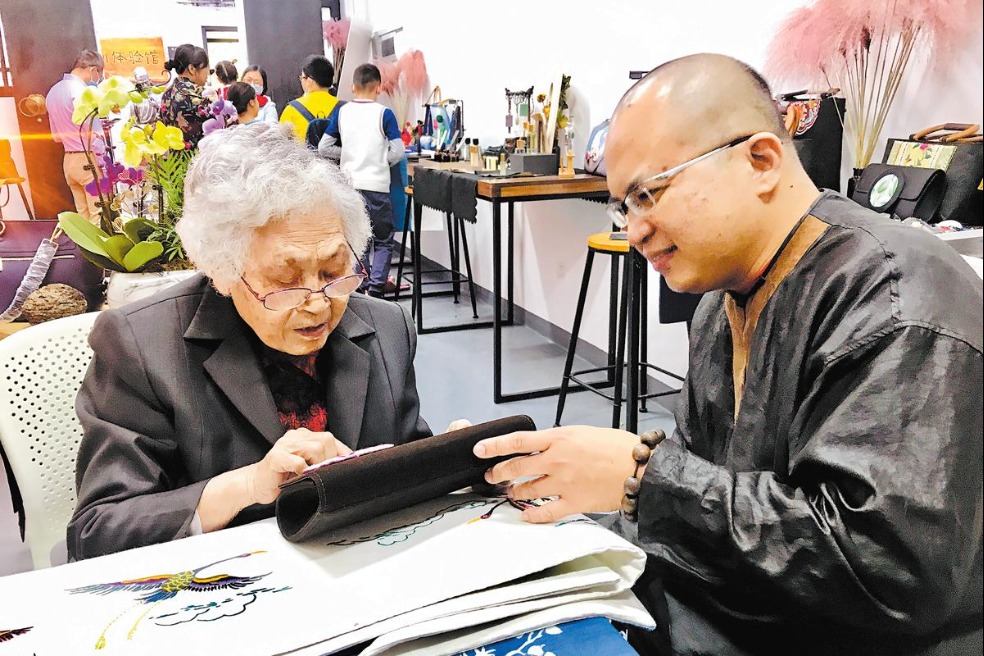
    President Xi Jinping’s personal narrative of a hand-stitched mattress, meticulously patched by his mother, serves as a powerful symbol of frugality and familial devotion that continues to inform China’s governance philosophy. This humble bedding artifact, preserved since his youth in rural Shaanxi, represents more than material practicality—it embodies the intergenerational transmission of core values that shape leadership character.

    The philosophical connection between household governance and national stability finds deep roots in Chinese tradition, exemplified by Xi’s reference to Tang Dynasty poetry depicting maternal devotion through needlework. This historical continuum underscores what scholars identify as China’s unique social structure where kinship forms the foundational layer of national governance. Professor Wang Fang of Shanghai Academy of Social Sciences notes that family education operates as a moral instruction process where values become institutionalized through conduct and intergenerational transmission.

    This principle manifests concretely in initiatives like the National Model Families recognition program, which has honored approximately 1,600 families over the past decade. The 2016 designation of family values as both moral strength and intergenerational legacy coincided with legislative action through the Family Education Promotion Law, creating policy frameworks for virtue cultivation.

    The historical precedent of Liuchi Alley in Anhui province demonstrates practical application. For three centuries, this Qing Dynasty corridor has memorialized how neighboring families resolved boundary disputes through mutual concession—each retreating their walls by one meter. President Xi’s October 2024 visit emphasized translating this historical model of humility into contemporary conflict resolution mechanisms, now promoted nationwide as the “Liuchi Mediation Method.”

    Academic perspectives from Shandong University’s Professor Yang Chaoming conceptualize family-national governance as an organic whole: harmonious families produce virtuous citizens, reducing public governance costs while sound national policies reciprocally support household stability through social services.

    The anti-corruption dimension reveals particular significance. President Xi frequently references the 1963 incident involving Jiao Yulu, who disciplined his son for exploiting official privilege and established the “Ten Don’ts” integrity code. This contrasts sharply with corruption cases where familial collusion enables systemic abuse. Peking University’s Professor Zhou Liangshu identifies eroded family values as a primary cause of disciplinary violations, while robust family culture serves as a critical “firewall” against corruption.

    The institutionalization of this philosophy reached its apex in October 2022 when strengthening family ties, values and traditions was incorporated into the 20th National Congress report—elevating family governance from private matter to national strategy.

  • Cross-Strait New Year vibes: Shared traditions, shared celebrations

    Cross-Strait New Year vibes: Shared traditions, shared celebrations

    In a vibrant display of cultural unity, residents from both sides of the Taiwan Strait recently converged in Fuzhou for a special Chinese New Year bazaar, demonstrating how traditional celebrations continue to bridge geographical and political divides. The event showcased the deep-rooted connections maintained through shared customs and festive practices that transcend boundaries.

    The gathering featured heartfelt exchanges of family stories and joyful celebratory moments, creating an atmosphere of warmth and mutual understanding. Participants engaged in various traditional activities that highlighted the common cultural heritage enjoyed across the Strait, emphasizing that the spirit of reunion remains powerful enough to overcome any physical distance.

    This cross-strait cultural exchange occurs alongside numerous other Spring Festival celebrations throughout China, including Beijing’s Dongcheng district decorations, the debut of 30 panda cubs born in 2025, and illuminated lantern festivals in Datong. These simultaneous celebrations demonstrate the widespread cultural significance of the Lunar New Year period throughout Chinese communities worldwide.

    The event in Fuzhou represents ongoing people-to-people connections that continue to flourish despite political complexities, serving as a reminder of the enduring cultural bonds that unite communities across the Strait through shared traditions and celebrations.

  • Mosque gunman wanted online fame. A muted court hearing shows how New Zealand has tried to curb that

    Mosque gunman wanted online fame. A muted court hearing shows how New Zealand has tried to curb that

    WELLINGTON, New Zealand — New Zealand’s judicial system conducted a deliberately subdued hearing this week for the nation’s most notorious criminal, Brenton Tarrant, who sought to retract his guilty pleas for the 2019 Christchurch mosque massacres that claimed 51 Muslim worshippers’ lives.

    The Australian white supremacist’s appeal proceedings unfolded with remarkable restraint at the Court of Appeal in Wellington. Only nine journalists, nine lawyers, and essential court staff were present in the near-empty courtroom, with the public gallery deliberately kept vacant. This calculated minimalism reflects New Zealand’s systematic approach to denying Tarrant the platform and notoriety he previously sought through his racially motivated violence.

    Tarrant, 35, currently serving life imprisonment without parole, claimed through video conference from Auckland Prison that his 2020 guilty pleas to charges of terrorism, murder, and attempted murder were “irrational” admissions made during a “nervous breakdown” induced by his solitary confinement conditions.

    Crown lawyers Barnaby Hawes and Madeleine Laracy presented compelling counterarguments, emphasizing that multiple mental health experts had previously determined Tarrant fit to enter pleas. They characterized the defendant as “an unreliable witness” whose narrative should be “treated with caution.” The prosecution highlighted the overwhelming evidence against Tarrant, including his own livestreamed recording of the attacks, which made a guilty verdict inevitable regardless of trial proceedings.

    Notably absent from the weeklong hearing was any substantive discussion of Tarrant’s white supremacist ideology or the detailed motivations behind his attacks. This omission reflects New Zealand’s broader strategy of suppressing the dissemination of his hateful manifesto and violent imagery, which remain legally prohibited throughout the country.

    The judicial approach stands in stark contrast to other high-profile trials of racist murderers, such as Norway’s extensive coverage of Anders Breivik, whom Tarrant cited as an inspiration. New Zealand’s justice system has implemented measures to minimize public exposure to the shooter, with even news organizations practicing restrained reporting by limiting mentions of his name.

    Crown lawyers emphasized that continuing legal proceedings cause “immense distress” to survivors and victims’ families, hindering their healing process. A three-judge panel will deliver its decision within the coming months, with 90% of appeals court judgments typically issued within three months of hearing conclusion.

    If unsuccessful in revoking his guilty pleas, Tarrant’s case will return to the appeals court for a separate hearing challenging his life sentence without parole.

  • French coin found near Culloden may have been used to pay Jacobite

    French coin found near Culloden may have been used to pay Jacobite

    A significant historical artifact has been discovered by metal detectorist Ian Deveney on lands between Inverness and the Culloden Battlefield. The find—a French 4 sols coin dating back to the 1670s—potentially served as payment for soldiers who fought in the pivotal Battle of Culloden 280 years ago.

    Deveney, a Scottish history tour guide and member of the North Detectorists group, made the discovery earlier this month while surveying areas rich in Highland heritage. “I was near the end of the day and quite tired when I received this strong signal,” Deveney recounted. “Upon digging, I uncovered what I initially believed to be a medieval hammered coin, but after careful cleaning, I realized it was French currency from the 17th century.”

    The coin’s presence in the Scottish Highlands reveals fascinating historical connections. France provided financial support to the Jacobite cause during the 1745 uprising led by Charles Edward Stuart, better known as Bonnie Prince Charlie. This backing was partly strategic, intended to divert British military resources from continental conflicts.

    Historical records confirm that Jacobite fighters, particularly the Irish Piquets, Royal Ecossais, and FitzJames’s regiments, received payment in French currency. The Battle of Culloden, fought on April 16, 1746, marked the final pitched battle on British soil and resulted in the devastating defeat of the Jacobite forces, with approximately 1,600 casualties.

    The discovery has been reported to Treasure Trove Scotland, the organization responsible for determining whether archaeological finds should be allocated to museums. This finding adds to a series of recent historical discoveries at Culloden, including musket balls uncovered last October that archaeologists believe relate to the battle’s final actions.

    Deveney’s expertise in Scottish history provided crucial context for understanding the significance of the coin, offering tangible evidence of the international dimensions of the Jacobite uprising and its connections to European power dynamics of the period.

  • Investigation brings closure for long-lost family after WW2 Nazi kidnap

    Investigation brings closure for long-lost family after WW2 Nazi kidnap

    A seven-decade family mystery has been resolved through an extraordinary international investigation that pieced together the life of a Polish teenager kidnapped by Nazi forces during World War II. Jozef Domanski was just 14 years old when forcibly removed from his family in 1941 to work on a German farm under the Nazi occupation regime.

    Despite surviving the war, Domanski never returned to his homeland, creating a permanent separation from his mother and sister. For years following the conflict, he maintained sporadic correspondence from his new life in England, where he had settled across various locations including Worcestershire, Wolverhampton, and Essex. Domanski worked diligently for decades in a textiles factory, documenting his experiences through letters that became increasingly melancholic about his distance from family and homeland.

    The communication ceased abruptly in the 1980s, leaving relatives to assume his permanent disappearance. The truth remained hidden until 2012, when Domanski’s death in Wolverhampton triggered an investigation by the City Council, which enlisted professional heir hunters from Finders International to trace potential beneficiaries after no will was discovered.

    What followed was an unprecedented decade-long genealogical investigation spanning three countries. Benjamin Ratz of GEN SPZOO in Poland led the intricate research as chief probate researcher, working closely with Domanski’s sister before her passing. The breakthrough revealed that Domanski had suffered a workplace accident that left him unable to write, explaining the sudden communication halt. Researchers also discovered that Domanski had consciously remained unmarried and childless throughout his life.

    The investigation uncovered that Domanski never attempted to return to Poland due to legitimate fears of endangering his family’s safety—concerned that his wartime experiences might lead to accusations of espionage during the Communist era. The emotional resolution came when researchers successfully delivered Domanski’s estate, valued at over £100,000, to his surviving relatives. His nephew Krzysztof Sadowski emphasized the profound emotional significance of this closure, noting that his grandmother had died heartbroken over her son’s disappearance. The family plans to place Domanski’s photograph on his parents’ graves, finally providing the connection that was lost for generations.