分类: society

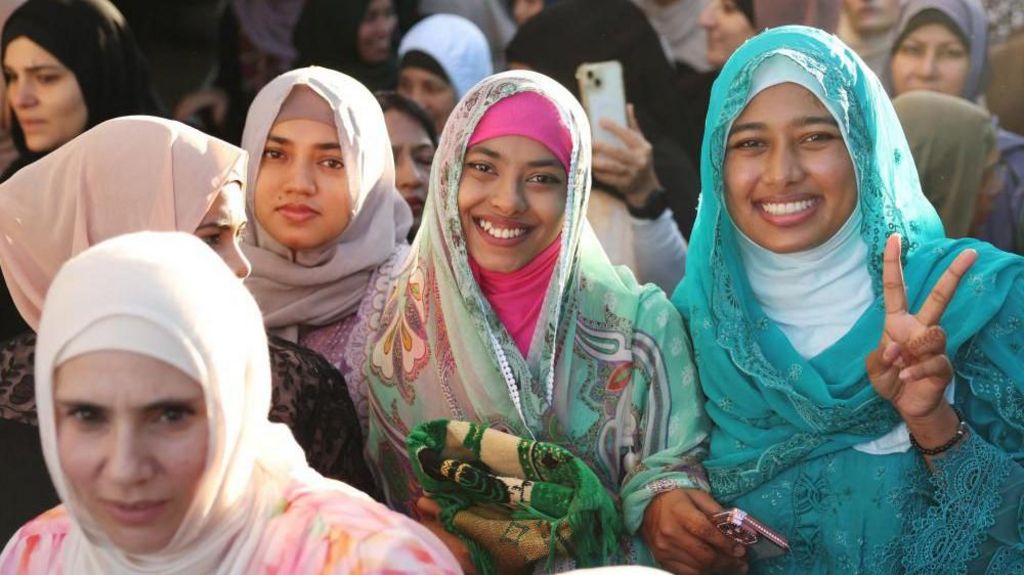
  • UAE considers phased rules to protect children on social media

    UAE considers phased rules to protect children on social media

    The United Arab Emirates is developing a comprehensive, phased regulatory approach to safeguard children’s digital wellbeing, positioning itself at the forefront of online child protection initiatives. This strategic move comes as global concerns mount regarding children’s exposure to harmful digital content and practices.

    Authorities are implementing a risk-based methodology that will initially focus on social media platforms before expanding to encompass broader digital services. The initiative establishes clear operational guidelines for service providers while creating robust compliance mechanisms to ensure age-appropriate content accessibility. This progressive framework represents a fundamental shift from reactive measures to proactive prevention, fundamentally redesigning how digital platforms operate for younger users.

    The Education, Human Development and Community Development Council has identified the regulation of children’s social media usage as a critical priority. During recent deliberations, the Council emphasized the necessity of a unified national framework addressing both social media and digital services comprehensively. Officials examined the substantial impact of digital platforms on family dynamics, communication quality, and children’s cognitive development—including attention span, time management capabilities, and language acquisition.

    To address these challenges, the UAE will provide families with practical tools for digital supervision and guidance, promoting healthier technology usage habits. Child development experts and mental health professionals will contribute specialized guidance, while coordinated public awareness campaigns will encourage responsible digital engagement. Multiple government sectors—including education, health, security, and media—will collaborate to ensure effective implementation.

    Educational policies and school programs are being harmonized under the national framework, incorporating standardized assessments including Arabic language evaluations to identify children requiring additional support. Updates to Arabic language and Islamic studies curricula will simultaneously strengthen fundamental skills while reinforcing national values and identity.

    This initiative builds upon the Child Digital Safety Law enacted in December 2025, which mandates protection from digital content adversely affecting children’s physical, psychological, and moral development. The legislation applies to internet service providers and digital platforms operating within or targeting UAE users, encompassing websites, search engines, applications, messaging services, forums, gaming platforms, social media, streaming services, and e-commerce platforms.

    The law fundamentally transforms digital environments by requiring platforms to recognize age differences and adjust content, features, and protections accordingly. It prohibits children under 18 from accessing features involving betting, gambling, or monetary game mechanics while imposing strict limitations on how children’s data can be utilized. This approach embeds safety directly into platform architecture rather than relying solely on parental supervision or post-incident intervention.

  • China predicts over 285 million inter-regional trips on first day of Spring Festival holiday

    China predicts over 285 million inter-regional trips on first day of Spring Festival holiday

    China’s transportation networks witnessed an unprecedented surge in passenger volume as the nation commenced its extended Spring Festival holiday period. Official data from the Ministry of Transport indicates that Sunday, February 15th, 2026, marked the beginning of what authorities project to be the busiest travel period in recent history.

    Transport authorities reported an estimated 285 million inter-regional passenger journeys occurred on the holiday’s opening day, representing a substantial 10.5 percent increase compared to the same timeframe in the previous year. This massive movement of people reflects the enduring cultural significance of family reunions during China’s most important traditional festival.

    Road transportation bore the brunt of this travel explosion, with approximately 268.75 million trips recorded—a 10.8 percent year-on-year increase. Railway and air travel also experienced significant growth, rising by 4.3 percent and 6.4 percent respectively. The most dramatic surge was observed in waterway transportation, which saw an extraordinary 28.1 percent increase in passenger journeys.

    The Spring Festival, traditionally known as Chinese New Year, officially falls on February 17th this year. While the national holiday spans nine days, the annual travel rush—recognized as the world’s largest human migration—commenced earlier on February 2nd and will continue through March 13th. This extended period allows millions of Chinese workers and students to return to their hometowns for family celebrations, despite the logistical challenges posed by such massive population movement.

    The Ministry of Transport has implemented comprehensive measures to ensure transportation safety and efficiency during this period, including enhanced scheduling, increased capacity across all transport modes, and strengthened safety protocols. This coordinated approach aims to manage the unprecedented passenger flow while maintaining service quality and security standards throughout the holiday travel season.

  • ‘Erasing history’: British Museum criticised for removing references to ‘Palestine’ from exhibits

    ‘Erasing history’: British Museum criticised for removing references to ‘Palestine’ from exhibits

    The British Museum has ignited a firestorm of academic criticism after eliminating all references to Palestine within its ancient Middle Eastern galleries. This controversial decision, implemented following pressure from the pro-Israel advocacy group UK Lawyers for Israel (UKLFI), has been denounced by scholars as a politically-motivated assault on Palestinian cultural heritage.

    The institution altered exhibit labels dating from 1700–1500BC, replacing the term ‘Palestine’ with ‘Canaan’ and modifying descriptions of the Hyksos people from ‘Palestinian descent’ to ‘Canaanite descent’. Museum representatives justified the changes by asserting the term Palestine lacked historical relevance for that specific chronological context, claiming it only became appropriate for the southern Levant region in the later second millennium BC.

    This rationale has been vehemently contested by leading academics. Marchella Ward, a Classical Studies lecturer at the UK’s Open University, stated, ‘I use the term ancient Palestine frequently in my own research and will continue to do so.’ She characterized claims of the term’s illegitimacy as a ‘lie’ facilitating ‘the erasure of Palestinians.’

    The incident represents merely the latest in a series of successful campaigns by UKLFI targeting British public institutions. Recent targets include Encyclopaedia Britannica, which amended content in its children’s edition, and London’s Chelsea and Westminster Hospital, which removed artwork created by Gazan schoolchildren. The Open University similarly acquiesced to demands to purge ‘ancient Palestine’ from future educational materials.

    According to data compiled by the European Legal Support Centre (ELSC), UKLFI has been involved in 128 of approximately 900 documented cases of anti-Palestinian repression in the UK between 2019-2025. ELSC Director Giovanni Fassina described the pattern as ‘not surprising,’ noting institutions frequently comply with the group’s ‘misleading legal arguments’ despite their questionable foundation.

    The controversy intersects with broader concerns about cultural destruction in Gaza, where Israeli forces have damaged over 316 archaeological sites according to reports. Scholars argue that the revision of historical narratives in Western institutions complements physical destruction in conflict zones, collectively undermining Palestinian historical claims.

  • DNA found on glove appearing to match those in Nancy Guthrie suspect video

    DNA found on glove appearing to match those in Nancy Guthrie suspect video

    Federal investigators have made a significant breakthrough in the disappearance of 84-year-old Nancy Guthrie, mother of NBC News anchor Savannah Guthrie, who vanished from her Tucson, Arizona home two weeks ago. The FBI announced Sunday that investigators recovered a glove containing DNA evidence that appears to match those worn by a suspect captured on doorbell surveillance footage.

    The critical evidence was discovered in a field approximately two miles from Guthrie’s residence, with preliminary DNA testing revealing an unknown male profile. While awaiting final quality control confirmation, the agency emphasized this particular glove differs from approximately 16 others collected near the property, most discarded by search volunteers.

    The investigation centers on surveillance footage showing a masked individual wearing gloves and a distinctive 25-liter Ozark Trail Hiker Pack approaching Guthrie’s front door on February 1st. The suspect attempted to obstruct the camera’s view using vegetation from the yard before presumably entering the property. Forensic analysis indicates the person stands between 5’9″ and 5’10” with an average build.

    Authorities have escalated search efforts involving helicopters, K-9 units, and hundreds of officers while doubling the reward for information to $100,000. Concerns mount for Guthrie’s welfare as she requires medication and was described as being in poor physical health despite having no cognitive impairments.

    Additional DNA evidence not belonging to Guthrie or known associates was previously recovered from her home, though investigators maintain they are not ruling out any possibilities despite the suspect description remaining a key focus.

  • Look: From ancient forts to desert rock art, 5 UAE sites added to Islamic heritage list

    Look: From ancient forts to desert rock art, 5 UAE sites added to Islamic heritage list

    In a significant achievement for cultural preservation, the United Arab Emirates has secured international recognition for five historically significant sites through their inscription on the Islamic World Educational, Scientific and Cultural Organization’s (ICESCO) List of Islamic World Tangible Heritage. The announcement came during the 13th session of the Islamic World Heritage Committee convened in Uzbekistan.

    The newly designated locations span the emirates of Dubai and Sharjah, representing diverse aspects of the region’s rich historical tapestry. The recognition underscores the UAE’s commitment to safeguarding its cultural legacy while promoting global awareness of its archaeological wealth.

    Among the honored sites is Saruq Al Hadid, an archaeological marvel located approximately 95 kilometers from Dubai. Discovered in 2002 following aerial observations by His Highness Sheikh Mohammed bin Rashid Al Maktoum, Ruler of Dubai, the site features distinctive dark patches subsequently identified as metallurgical slag from ancient smelting operations. Research indicates continuous human activity from the Early Bronze Age (2600 BCE) through the Late Iron Age (550 BCE), with excavations yielding bronze artifacts, pottery, stone tools, weaponry, and exquisite gold and silver ornaments.

    The historic defensive structures of Khor Fakkan, including the Portuguese Fort and Al Adwani Tower, received recognition for their role in coastal protection from the 14th to the 20th centuries. The Portuguese Fort stands as the sole surviving triangular-shaped fortification in the eastern Arabian Peninsula.

    Al Nahwa, situated south of Khor Fakkan, earned inclusion for its remarkable collection of rock carvings spanning from the Bronze Age to contemporary times. Preservation efforts have employed advanced three-dimensional digital technologies to document these artistic expressions.

    Sharjah’s Faya Palaeolandscape gained recognition as a critical record of early human settlement patterns, containing archaeological evidence that documents human presence across multiple historical epochs.

    Wadi Al Helo in the Eastern Region was honored for its evidence of copper mining activities during the Neolithic transition period. The valley features remnants of copper extraction technological development, Bronze Age rock art, and historic village remains, illustrating the enduring relationship between inhabitants and their environment.

    Sheikh Salem bin Khalid Al Qassimi, Minister of Culture and Chairperson of the National Commission for Education, Culture and Science, described the inscriptions as “a significant milestone that reflects the depth and richness of the UAE’s cultural heritage.” The minister further emphasized the nation’s ongoing commitment to “strengthening the presence of Emirati heritage on international heritage lists” through comprehensive documentation and sustainable preservation initiatives for future generations.

  • Off-trail avalanche kills 2 skiers and injures 1 in northern Italy

    Off-trail avalanche kills 2 skiers and injures 1 in northern Italy

    A deadly off-piste avalanche struck the Mont Blanc massif near the Italy-France-Switzerland border on Sunday, resulting in two fatalities and one critical injury. The incident occurred in the renowned Couloir Vesses freeride zone within Courmayeur’s upper Val Veny region, according to official reports from Italy’s Alpine Rescue service.

    Emergency responders mobilized fifteen rescue specialists, three dog units, and two helicopter teams in a comprehensive search operation. Despite being transported to a medical facility in serious condition, one of the initially injured skiers succumbed to injuries sustained in the avalanche.

    This tragedy coincides with a separate avalanche event in Trentino where another skier experienced partial burial but was successfully extricated by fellow group members. These incidents follow a disturbing pattern of mountain accidents, with Alpine Rescue reporting thirteen fatalities among backcountry enthusiasts during the first week of February alone.

    Meteorological conditions have created particularly hazardous circumstances across the Alpine region. Recent storm systems have deposited fresh snow atop weak foundational layers, while powerful winds have formed unstable snowcaps along the mountain crescent spanning France, Switzerland, and Austria. Courmayeur, the picturesque Olympic venue town of approximately 2,900 residents located 200 kilometers northwest of Milan, now faces renewed scrutiny regarding mountain safety protocols during high-risk periods.

  • Saudi Arabia suspends Umrah agency over accommodation lapse for pilgrims

    Saudi Arabia suspends Umrah agency over accommodation lapse for pilgrims

    Saudi authorities have imposed regulatory sanctions against an Umrah travel agency following confirmed failures in providing mandatory accommodation services to Egyptian pilgrims. The Makkah Region Governorate confirmed the suspension on February 14, 2026, noting that immediate alternative lodging arrangements were secured for affected pilgrims.

    This enforcement action represents the latest development in Saudi Arabia’s comprehensive quality control campaign within the religious tourism sector. The Kingdom recently suspended approximately 1,800 foreign travel agencies for service quality violations, granting a 10-day remediation window exclusively addressing new visa issuance limitations.

    The Saudi government maintains rigorous oversight of pilgrim activities through integrated monitoring systems tracking all aspects of religious travel—from visa processing and transportation logistics to accommodation standards. This holistic approach ensures operational efficiency, crowd management optimization, and enhanced pilgrim safety throughout their spiritual journey.

    Industry professionals from the UAE have observed increasing regulatory scrutiny targeting agencies that offer visa processing without comprehensive service packages including approved hotel accommodations and transportation. Saudi regulations explicitly require pilgrims to utilize government-approved hotels specifically designated for Umrah travelers, with strict compliance enforcement mechanisms.

    This regulatory environment reflects Saudi Arabia’s commitment to elevating service quality standards within its multi-billion dollar religious tourism industry, which hosts millions of pilgrims annually undertaking the Islamic pilgrimage to Mecca.

  • ‘Adopt a Statue’ program for Milan’s iconic Duomo restores centuries-old marbles

    ‘Adopt a Statue’ program for Milan’s iconic Duomo restores centuries-old marbles

    MILAN — A remarkable cultural preservation initiative has brought a 15th-century marble sculpture from storage into public view through an innovative adoption scheme. The ‘Bearded Saint with Book,’ originally crafted for Milan’s iconic Duomo cathedral, now stands proudly displayed behind protective glass at Piazzale Cadorna, headquarters of Lombardy transport company FNM.

    The sculpture’s restoration and relocation mark the success of the ‘Adopt a Statue’ program launched in 2020 by Veneranda Fabbrica del Duomo, the centuries-old institution overseeing the cathedral’s conservation. This visionary program connects corporate and individual donors with historical artworks requiring restoration, creating a sustainable model for cultural preservation.

    Elisa Mantia, the program’s project manager, explained the significance: ‘This project’s uniqueness lies in restoring statues that would otherwise remain in our deposits, bringing them back to their original beauty. They can continue telling the Duomo’s story even in locations distant from the monument itself.’

    The adoption process involves formal loan agreements, typically beginning with one-year terms that may be renewed. Each restoration requires authorization from Italy’s cultural heritage authorities, with strict adherence to conservation, insurance, and transport regulations.

    The Duomo’s construction history reveals why such programs are necessary. Beginning in 1386 under Gian Galeazzo Visconti’s rule, the cathedral took over five centuries to complete, with artists from different regions and periods contributing statues that now represent a timeline of evolving artistic styles.

    FNM President Andrea Gibelli emphasized the broader mission during the February 13 unveiling: ‘Culture can save the world. We want to spread the cultural riches we are fortunate to have, which are often overlooked or not fully appreciated.’

    Other successfully adopted sculptures include a 16th-century David, a depiction of Samson and the Lion, and a statue of Saint Matthew the Apostle. The program has preselected approximately thirty additional sculptures eligible for restoration, each chosen for both artistic merit and structural integrity.

    The ‘Bearded Saint with Book’ required primarily surface cleaning to remove pollution-based black crust, having sustained no structural damage during its centuries outdoors. All Duomo sculptures originate from Candoglia quarries in Piedmont, with the same marble used consistently since the late 14th century.

    As Mantia reflects, ‘Beyond being Milan’s symbol, the Duomo represents its history—a monument that grew with the city, telling its entire story through statues and decorative styles.’

  • Classic vehicles in Sharjah to get new licence plates starting February 16

    Classic vehicles in Sharjah to get new licence plates starting February 16

    Sharjah authorities have unveiled a specialized licensing initiative for vintage automobiles and motorcycles, with implementation commencing February 16, 2026. The Sharjah Police Force confirmed that designated venues across the emirate will facilitate the transition from conventional plates to newly designed registrations exclusively created for classic vehicles.

    The innovative licensing category, initially announced on December 23, 2025, encompasses First Category and private registration plates for historic automobiles alongside First Category designations for classic motorcycles. Vehicle enthusiasts can complete the plate replacement process at three authorized locations: Sharjah Registration Village, the Sharjah Classic Car Club, and Khor Fakkan Registration Village.

    This premium service initiative emerged through collaborative efforts between transportation authorities and Emirates Auction, which previously conducted exclusive sales of these distinctive plates. The program aims to deliver enhanced and specialized services for collectors and owners of vintage transportation, recognizing the unique cultural and historical value of these vehicles.

    The introduction of specialized licensing reflects Sharjah’s growing emphasis on preserving automotive heritage while implementing modern regulatory frameworks. This approach aligns with similar premium registration services recently introduced in other UAE emirates, including Dubai’s luxury plate auctions and Abu Dhabi’s special identity cards for distinctive number plates.

  • Can teenagers get summer jobs in UAE? What law says

    Can teenagers get summer jobs in UAE? What law says

    The United Arab Emirates maintains a structured legal framework governing juvenile employment, providing clear pathways for teenagers seeking temporary work during summer breaks while prioritizing their welfare and development. Federal legislation establishes comprehensive safeguards for minors between 15 and 18 years old who wish to enter the workforce under regulated conditions.

    According to Federal Decree Law No. 33 of 2021 and its implementing regulations, employment of individuals under 15 remains strictly prohibited. Eligible juveniles must obtain written parental consent and present a medical fitness certificate from authorized institutions before commencing employment. The law imposes specific protective measures including a maximum six-hour daily work period with mandatory breaks, prohibiting work between 7 PM and 7 AM, and banning hazardous occupations that might compromise health, safety, or moral development.

    The regulatory framework offers exemptions for recognized charitable, educational, and training institutions conducting professional development programs. These entities may be exempted from certain provisions when providing vocational training or volunteer opportunities, provided they maintain proper registration with relevant authorities.

    Employers must secure a Juvenile Work Permit from the Ministry of Human Resources and Emiratisation before engaging minor workers. This permit specifically applies to individuals aged 15-18 employed at establishments registered with the Ministry. The combination of parental authorization, medical clearance, and ministerial oversight creates a protective ecosystem for young workers.

    For families considering summer employment, these regulations mean that 16-year-olds may legally work provided all requirements are met, while 14-year-olds remain ineligible until reaching the minimum age threshold. The system balances workforce participation opportunities with robust protections for juvenile development, reflecting the UAE’s commitment to responsible youth employment practices.