分类: society

  • China records over 845m passenger trips during Qingming Festival holiday

    China records over 845m passenger trips during Qingming Festival holiday

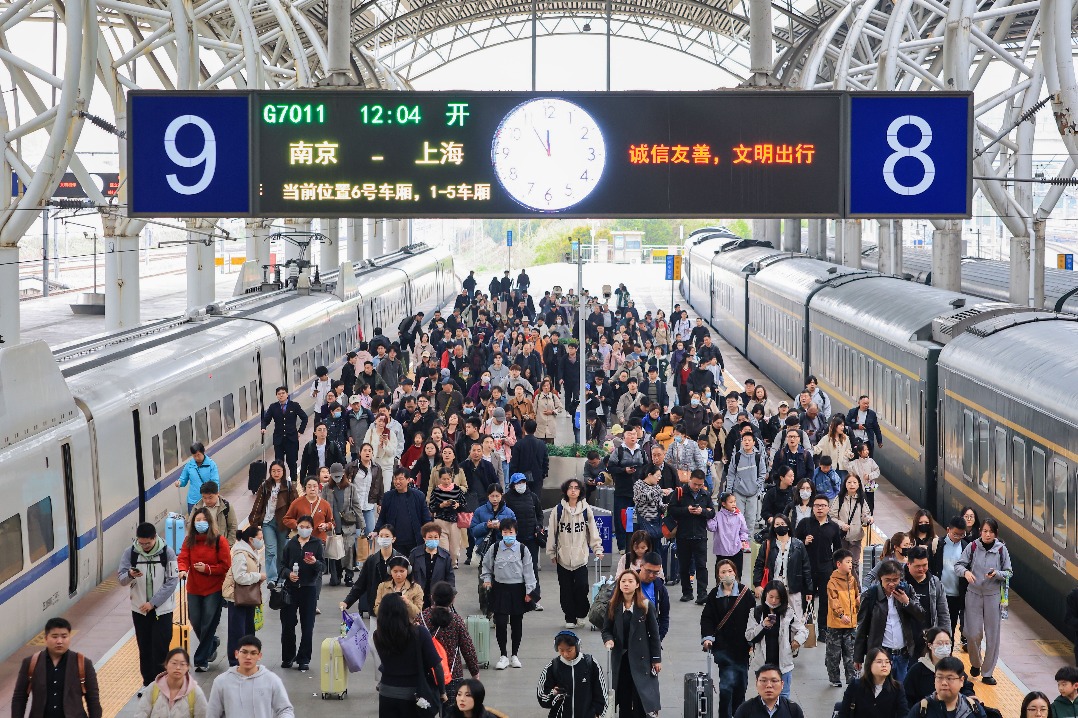
    BEIJING, April 6 (Xinhua) — China’s domestic travel sector continued its upward momentum during the 2026 Qingming Festival three-day holiday, with total passenger trips nationwide surpassing 845 million, a 6% increase compared to the same holiday period last year, China’s Ministry of Transport announced Monday.

    The official data puts the average daily passenger trip volume at 281.79 million across all transport modes. Breaking down the figures by sector, road travel remained the dominant choice for holiday travelers, accounting for 778.45 million trips, a 5.8% annual rise. Rail travel saw stronger growth of 8.2% year-on-year, hitting 57.68 million total trips. Waterway transport recorded a nearly 10% annual jump, handling approximately 3.7 million passenger journeys, while civil aviation was the only outlier, reporting a slight 1.3% dip to 5.5 million trips.

    Industry analysts attribute this robust travel boom to a unique overlapping scheduling factor: the three-day Qingming Festival coincided with spring break for primary and secondary school students in most Chinese regions, creating ideal conditions for multi-day family and parent-child leisure trips.

    On the first day of the holiday Saturday, national expressway vehicle traffic volume crossed the 62.67 million mark, with more than 14 million of those vehicles being new energy cars. This surge in self-drive travel has translated into double-digit spending growth across tourism-related sectors including scenic area tickets, accommodation and car rentals.

    Beyond leisure travel, the two core travel motives for the Qingming Festival — a traditional Chinese occasion for ancestor veneration — also contributed to widespread economic activity across the country. Many travelers returned to their hometowns to conduct tomb-sweeping rituals, while growing popularity of rural spring getaways drove consumer activity in less developed rural regions, helping extend holiday consumption outward from major urban centers to small towns and villages across China.

    To support the high travel flow and ensure a safe, seamless experience for all travelers, national transportation authorities retained the longstanding policy of exempting expressway tolls for passenger vehicles with seven seats or fewer throughout the holiday. Regulators also rolled out targeted adjustment measures to reduce congestion on high-traffic highway sections, and expanded EV charging capacity and services at expressway service areas to meet the growing demand from new energy vehicle owners.

    Local transportation departments across the country supplemented national measures by adding extra transport capacity on key routes, and extended operating hours for public transport services surrounding major travel hubs, including popular scenic destinations and public cemeteries.
  • Veteran Jin Donghui salutes fallen volunteers in Shenyang

    Veteran Jin Donghui salutes fallen volunteers in Shenyang

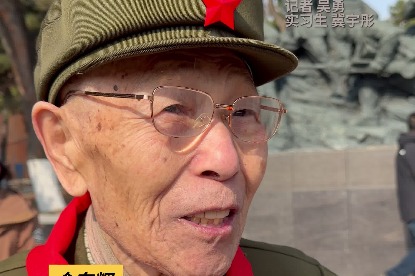
    As the annual Qingming Festival, China’s traditional occasion for honoring deceased loved ones and fallen heroes, approaches, a 92-year-old veteran of the Chinese People’s Volunteer Army (CPVA) has moved the nation with a solemn visit to a martyr’s cemetery in Shenyang, Liaoning province.

    Dressed in his well-preserved original military uniform, every medal pinned to Jin Donghui’s chest tells a silent story of decades-old sacrifice and service. The aged veteran walked slowly through the rows of tombstones at the CPVA Martyrs’ Cemetery, his unsteady steps still carrying the rigid, upright discipline of a lifelong soldier.

    Seventy-plus years ago, when the War to Resist US Aggression and Aid Korea broke out in 1950, Jin was just a young man when he crossed the Yalu River into Korea to serve alongside his comrades as an military translator. For two years and nine months, he survived brutal frontline combat that claimed the lives of many of the brothers-in-arms he fought alongside. Now, decades later, he has returned to the memorial that holds the legacy of those who never came home.

    Standing among the silent tombstones, Jin reaffirmed the enduring legacy of the CPVA’s sacrifice: “The heroic spirit of the volunteer army is immortal. Heroes have never truly left, and their spirit is passed down from generation to generation.” His visit serves as a poignant reminder of the cost of peace and the responsibility of current generations to carry forward the courage and patriotism of those who gave their lives for their country.

  • Thirteen monks earn top Tibetan Buddhist degree in Lhasa

    Thirteen monks earn top Tibetan Buddhist degree in Lhasa

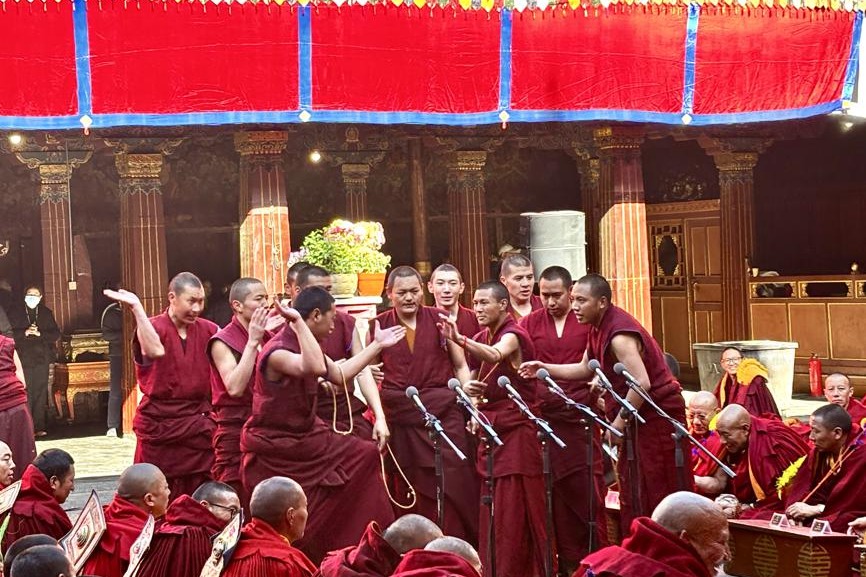
    On a Sunday in early April 2026, 13 Buddhist monks successfully completed the rigorous annual sutra debate ceremony held at Lhasa’s iconic Jokhang Temple, walking away with the Geshe Lharampa degree—the highest academic honor conferred by the Geluk School of Tibetan Buddhism. Widely recognized as equivalent to a doctoral degree in modern academic systems, the Geshe Lharampa title represents the pinnacle of scholarly achievement for Tibetan Buddhist monastics, requiring decades of rigorous study, deep doctrinal understanding, and advanced skill in the traditional practice of dialectical debate. Each year, candidates gather at Jokhang Temple to defend their interpretations of core Buddhist scriptures through structured, dynamic debates, demonstrating their mastery of centuries-old religious teachings to a panel of senior examiners. The 13 newly accredited degree holders hail from Geluk School monasteries across five regions of the Xizang Autonomous Region: Shigatse, Lhokha, Chamdo, Nagchu, and Lhasa itself. This centuries-old tradition of recognizing advanced religious scholarship has been sustained in modern times, with the total number of monks awarded the prestigious Geshe Lharampa degree now reaching 215. The annual ceremony not only upholds the longstanding academic and religious traditions of Tibetan Buddhism but also reflects the ongoing preservation of regional cultural and religious heritage in the Xizang Autonomous Region.

  • Living history in the heart of Beijing

    Living history in the heart of Beijing

    Beneath the soft glow of Beijing’s morning sun, the weathered gray walls of Dajixiang’s traditional courtyards glow with quiet warmth. Tucked into the core of the city’s historic Xuannan district — a neighborhood that has carried the traces of Beijing’s cultural evolution for more than 800 years — this newly revitalized multifunctional complex stands as a living bridge between China’s distant past and its dynamic present.

    Wandering through the neighborhood’s winding narrow lanes, visitors encounter snapshots of everyday life that feel both timeless and utterly contemporary. In one shaded quiet corner, an elderly resident hunches over a hand-carved wooden chessboard, his brow furrowed as he plots his next move, while his opponent lets out a low, amused chuckle after a particularly clever gambit. A few steps away, doting grandparents walk slowly beside a wobbly toddler, guiding her as she takes her first unsteady steps into the world. Further along the lane, a local resident strolls at a relaxed pace, his golden retriever pulling eagerly at the leash, nose working overtime to sniff out every interesting scent along the path. Each small, unscripted moment weaves together to form a vibrant, living tapestry, proving that history here is not locked away in glass museum cases — it is part of daily life, where the past and present coexist without friction.

    At the heart of the complex, one carefully restored courtyard holds the former residence of Kang Youwei, the prominent reformer from China’s late Qing Dynasty (1644–1912). Kang was one of the masterminds behind the Hundred Days’ Reform of 1898, a landmark movement that sought to modernize China through political and institutional change. Standing surrounded by sleek, contemporary office buildings, the traditional Qing-era residence is a striking visual contrast, and a permanent reminder of Xuannan’s extraordinary layered history. Long before modern development reached central Beijing, Xuannan earned a reputation as a thriving cultural gathering hub, home to leading scholars, radical intellectuals, and revolutionary thinkers who shaped the course of modern Chinese history. Today, that centuries-old legacy endures, giving locals and tourists alike a tangible connection to the profound transformations that built the China we know.

  • XMU at 105: Honoring the past, inspiring the future

    XMU at 105: Honoring the past, inspiring the future

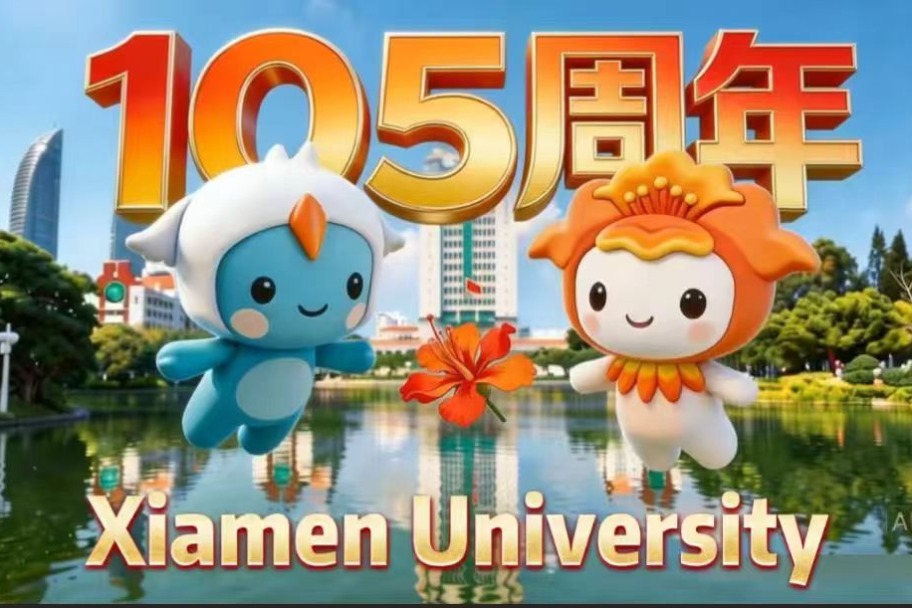
    In 1921, a visionary patriotic overseas Chinese leader, Tan Kah Kee, made history by establishing Xiamen University (XMU) – the first institution of modern higher education in China founded by an overseas Chinese philanthropist. One hundred and five years later, in 2026, the prestigious institution is marking its historic milestone, reflecting on a century of progress while pushing forward with its ambitious goal of rising as a leading world-class university.

    To honor this landmark occasion, the university has launched a series of celebratory activities centered on connecting its past, present, and global community. XMU’s beloved official mascots, Xiao Bai and Xiao Xia, embarked on a nostalgic and celebratory tour that spanned the university’s three domestic campuses in Xiamen and extended all the way to its overseas campus in Malaysia. Along the journey, the mascots revisited iconic locations that hold decades of institutional memory, bringing together generations of students, faculty, and alumni around shared experiences and institutional pride.

    A companion video released for the anniversary captures heartfelt moments from the global XMU community, where graduates gathered beneath the sprawling branches of blooming royal poinciana trees – a botanical symbol long tied to XMU’s identity, representing youthful vitality and the joy of reunion after years apart. In these moments, alumni from across the globe shared their warm well-wishes for the university’s next chapter, reflecting on the foundational impact their time at XMU had on their personal and professional lives.

    Throughout its 105-year history, Xiamen University has stayed rooted in the patriotic spirit of its founder, expanding its academic influence, global outreach, and research capacity to become one of China’s most respected comprehensive higher education institutions. As it enters its 106th year of operation, the anniversary celebration serves as both a tribute to the legacy that built the institution and a source of inspiration for the next generation of scholars and leaders who will carry its mission forward.

  • Cross-Strait ferry routes see thousands of Taiwan compatriots return to ancestral homes

    Cross-Strait ferry routes see thousands of Taiwan compatriots return to ancestral homes

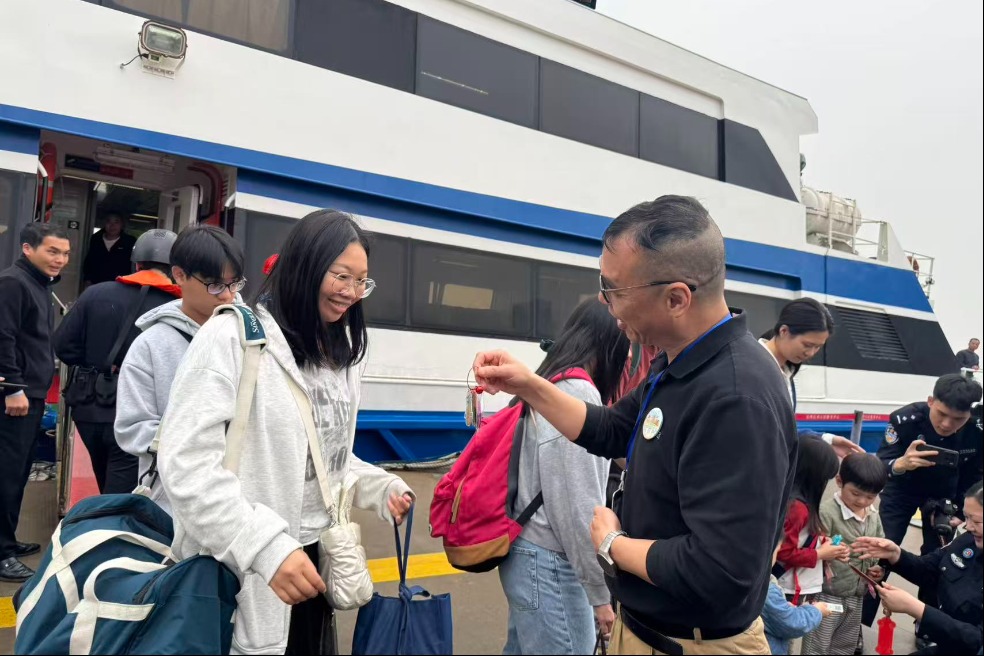
    As the Qingming Festival, a traditional Chinese occasion for ancestor veneration and family reunion, approaches this year, cross-Strait ferry routes have recorded a sharp uptick in passenger traffic, with thousands of Taiwan compatriots journeying back to their ancestral hometowns on the Chinese mainland to pay respects at ancestral tombs and reconnect with their family roots.

    Official data from the Fujian Maritime Safety Administration shows that on April 4, the four established “Mini Three Links” routes — which deliver direct maritime connectivity between Fujian province’s coastal regions on the mainland and Taiwan-held Kinmen and Matsu islands — handled 6,655 passenger trips, marking a 22.5% year-on-year increase.

    The busiest of these routes, the Xiamen-Kinmen corridor, which is widely favored for its short travel times, frequent sailings and affordable fares, accommodated nearly 6,000 cross-Strait travelers on that single Saturday, with Taiwan compatriots making up more than 70% of that total. Local border inspection authorities project that the total passenger volume for the Xiamen-Kinmen route across the three-day Qingming holiday will climb to almost 20,000.

    For many Taiwan families, this annual journey is far more than a seasonal trip: it is a centuries-old tradition meant to pass down collective identity to younger generations. Li Yung-hung, a Taiwan compatriot who traveled to Xiamen via the ferry route this holiday, emphasized that her family has upheld this practice for generations, noting that the trip teaches younger family members that their cultural and ancestral roots are firmly planted on the mainland.

    Chen Chin-lai, deputy head of Xiamen’s Gaoqi Border Inspection Station, pointed out that more than 80% of Taiwan compatriots can trace their ancestral origins back to Fujian. This annual wave of ancestral homecoming during Qingming, he explained, serves as a vivid, tangible reminder that people on both sides of the Taiwan Strait share the same cultural lineage and belong to one Chinese family.

    To support Taiwan compatriots in tracing their family histories, local institutions rolled out targeted support ahead of the holiday. On April 3, the China Museum for Fujian-Taiwan Kinship, in partnership with the Quanzhou Border Inspection Station, launched free genealogy matching services at a port in Nan’an, Quanzhou. Through a simple QR code scan, visiting Taiwan compatriots can register their requests for assistance to trace their family trees and locate ancestral villages.

    Since opening to the public in 2006, the museum has built a decades-long track record of supporting root-seeking efforts, having helped more than 300 Taiwan compatriots successfully identify and reconnect with their ancestral clans on the mainland over the past 20 years.

  • Taiwan youth surnamed Huang traces roots in Jiangxia

    Taiwan youth surnamed Huang traces roots in Jiangxia

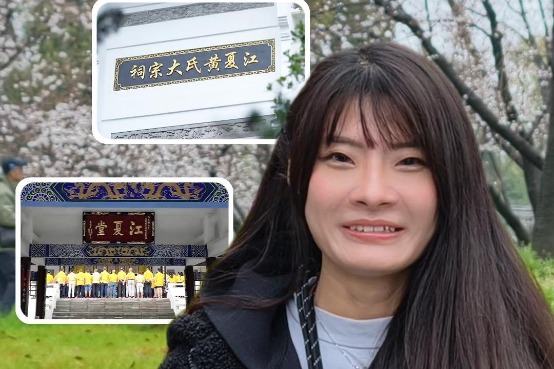
    Cross-Strait people-to-people exchanges continue to strengthen bonds across the Taiwan Strait, as one young Taiwanese visitor recently discovered his deep ancestral connection to mainland China during a cultural trip to Hubei province. Twenty-year-old Huang Chao-jung, a young man from Taiwan with the family name Huang, joined a recent cross-Strait exchange gathering hosted in Wuhan, the capital of central China’s Hubei province, where he traveled to Jiangxia District — the historic ancestral homeland widely recognized as the original origin of all Chinese people with the Huang surname.

    For years, Huang had grown up hearing the well-known traditional saying that all individuals with the surname Huang trace their lineage back to Jiangxia. But the saying remained an abstract piece of family lore until he stepped onto the soil of Jiangxia District himself. Standing in the region that has held this ancestral significance for countless Huang families across generations, Huang said he finally felt the tangible meaning of the tradition. He described an overwhelming sense of belonging and connection that he had not experienced before, saying the trip allowed him to complete a meaningful journey to trace his family’s roots.

    This root-tracing trip is part of a broader wave of cross-Strait cultural exchanges that have brought growing numbers of young people from Taiwan to the Chinese mainland to explore their family histories, connect with long-distant relatives, and build personal ties with communities on the other side of the Taiwan Strait. For many young Taiwanese participants, these trips do more than teach them about family history: they create personal, emotional connections that reinforce the shared cultural and ancestral heritage that unites people across the Strait.

  • Woman dies after being knocked down by lorry

    Woman dies after being knocked down by lorry

    A tragic road traffic incident in Letterkenny, County Donegal, has claimed the life of a middle-aged woman, leaving local communities in mourning following a collision between a pedestrian and a heavy goods vehicle on Friday.

    Authorities confirmed that Gardaí, the Republic of Ireland’s national police service, was immediately dispatched to the scene of the crash at the Station Roundabout on Port Road after emergency calls alerted officers to the accident. The female casualty, who was reported to be in her 40s, sustained life-threatening injuries in the impact and was rushed by emergency responders to Letterkenny University Hospital for urgent medical intervention. Despite the efforts of clinical teams to treat her wounds, the woman succumbed to her injuries on Sunday, two days after the collision occurred.

    In the wake of the fatal incident, investigating officers have issued a public appeal for any witnesses or road users who were in the area at the time of the collision to come forward with information. Authorities are particularly keen to review any dashcam footage that members of the public may have captured while travelling along Port Road near the Station Roundabout on Friday, as this evidence could prove critical to building a full picture of how the incident unfolded. Anyone with relevant details has been asked to contact the investigating Garda team through official channels to assist with the inquiry.

  • Airport seeking public’s help to reunite parrot with owner

    Airport seeking public’s help to reunite parrot with owner

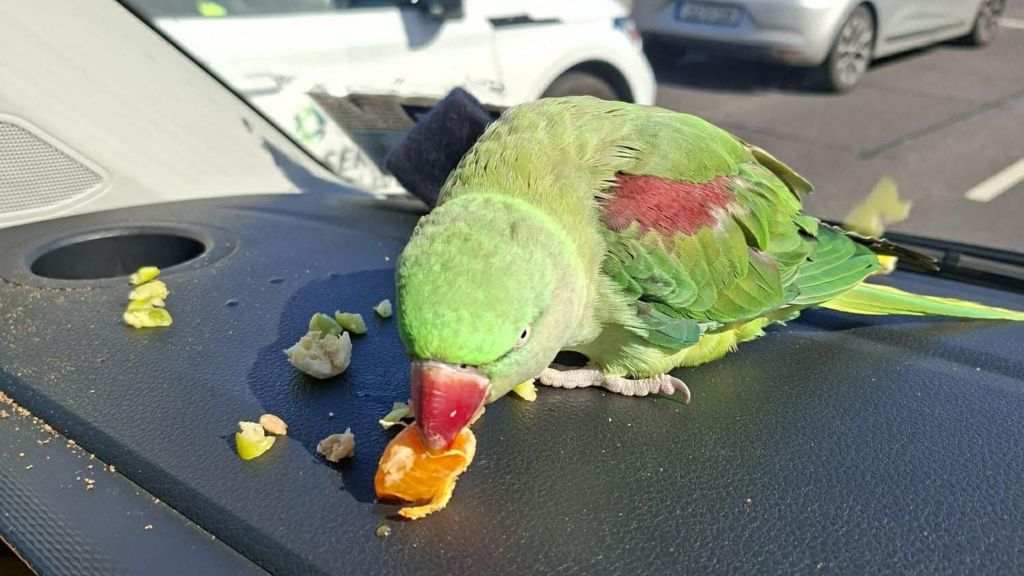
    Dublin Airport has launched a public appeal to track down the owner of a stray parrot discovered on its grounds on Easter Sunday, marking the third unexpected avian visitor the airport has handled in less than a decade.

    The bright-feathered bird was first spotted perched on a public rubbish bin near the airport’s Terminal 1, before airport police were alerted to the unusual sighting. Responding officers used gentle tactics and food to coax the parrot into their care, and the animal quickly warmed to its rescuers, even comfortably perching on the officers’ hands and shoulders, the airport authority explained in an official statement.

    After being safely secured, the parrot was transferred to a nearby airport patrol van, where it settled into the warm interior as officers finished their scheduled patrol rounds. It was then brought back to the airport police station, where staff prepared a cozy temporary enclosure using an existing dog crate and brush handle, and provided the bird with fresh fruit, clean water and engaging toys to keep it comfortable during its unexpected stay. The airport confirmed the parrot received consistent, high-quality care overnight while teams worked to trace its owner.

    So far, airport management has notified Ireland’s national police service An Garda Síochána, a local pet retailer and a nearby animal sanctuary to help connect the parrot with its rightful caretaker. Details of the stray bird have also been widely shared across the airport’s social media channels to broaden the search. While the outreach effort has already drawn dozens of public enquiries, including multiple submissions of leg ring identification numbers, none of the submitted details have matched the markings on the found parrot to date.

    Efforts to reconnect the parrot with its owner remain ongoing, and the airport says it is committed to seeing the operation through to a successful outcome. “We look forward to helping this unexpected visitor get safely home,” the statement added.

    This is far from the first time an unplanned parrot has turned up at Dublin Airport. In 2019, an African grey parrot named Hugo made headlines after she was spotted “taxiing for takeoff” on the airport’s main runway by a firefighter conducting a routine safety check. That stray parrot was ultimately successfully reunited with her owner. Most recently, in August 2025, the airport welcomed another unbooked chatty parrot that turned up on its grounds. The facility has also had lighthearted fun with parrot-related notoriety: after Irish international striker Troy Parrott scored a memorable hat-trick against Portugal, the airport’s social media team jokingly suggested changing its name to “Troy Parrott Airport”, a gag they have revived in posts following more recent Irish national team matches.

  • Savannah Guthrie returns to NBC’s Today show, as search for mother goes on

    Savannah Guthrie returns to NBC’s Today show, as search for mother goes on

    One of the most high-profile figures in American morning television, Savannah Guthrie is set to resume her anchoring role on NBC’s iconic *Today* show this Monday, more than two months after her 84-year-old mother Nancy was first reported missing under suspicious circumstances.

    Guthrie first stepped away from her on-air duties in late January, just two days after her mother disappeared from her home in the outskirts of Tucson, Arizona. She also canceled her planned participation in NBC’s broadcast of the 2026 Winter Olympics to focus on coordinating the search for Nancy. This upcoming Monday marks her first return to the *Today* studio since her 30 January departure.

    The timeline of Nancy’s disappearance leaves few clues for investigators: relatives dropped her off at her residence on the evening of 31 January, but she never arrived at a friend’s home the next morning to join a virtual church service, and she left behind all of her necessary prescription medications. In February, Savannah and her family publicly announced a $1 million reward for any information that leads to Nancy’s safe return, a gesture that has drawn widespread public attention to the case.

    Law enforcement officials have confirmed they believe Nancy was taken against her will from her home, but as of yet, no potential motive has been released to the public, and no suspects have been taken into custody. Savannah has previously opened up about the heavy weight of the case, sharing that she has grappled with the possibility that her own national fame as a leading television journalist could be connected to her mother’s abduction, a thought she described as almost unbearable to process.

    Despite the ongoing uncertainty and grief of the past two months, Guthrie has framed her return to work as a necessary step. Last month, she told *Today* that returning to the show is part of her current purpose, even as she acknowledged she was unsure how she would navigate returning to her professional role. “I can’t not come back. This is my family,” she said of her colleagues at NBC.

    Most recently, on Easter Sunday, Guthrie made a public appearance at New York’s Good Shepherd Church, where she reaffirmed her unshakable Christian faith in a closing video address to the congregation. “I still believe. And so I say with conviction, ‘Happy Easter,’” she stated, offering a message of quiet resilience amid the ongoing search that has gripped national attention.