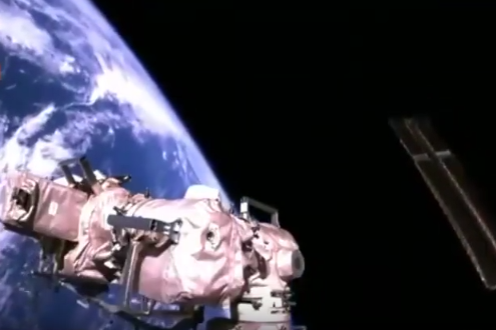
China has initiated preparations for the launch of the unmanned Shenzhou XXII spacecraft, which will deliver essential supplies and equipment to the Tiangong space station. Zhou Yaqiang, a senior engineer at the China Manned Space Agency, confirmed that all systems involved in the mission are undergoing rigorous testing and preparation. The spacecraft, originally intended to transport the Shenzhou XXII crew in April 2026, has been repurposed as a standby crew ship following the unexpected use of the Shenzhou XXI spacecraft for the return of the Shenzhou XX astronauts. The Shenzhou XX crew, who spent a record-breaking 204 days in orbit, returned safely to Earth despite minor damage to their capsule’s viewport window, likely caused by space debris. The astronauts are now in medical quarantine and will undergo comprehensive health evaluations before meeting the media. Additionally, four mice that accompanied the Shenzhou XXI mission to Tiangong have returned to Earth and are being studied by researchers at the Chinese Academy of Sciences. These studies aim to provide insights into the effects of space environments on living organisms. Other biological and scientific samples from the mission are also being analyzed to advance space research.
分类: science
-
Chinese scientists discover lunar rust, revealing new oxidation process on the moon
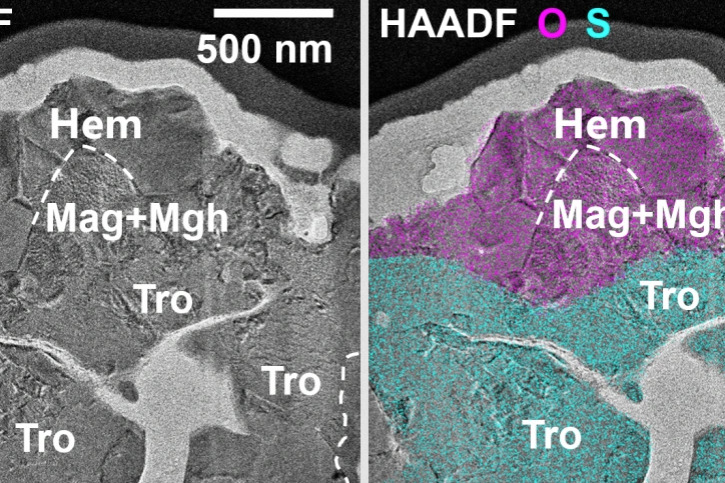
In a groundbreaking discovery, Chinese scientists have identified micrometer-sized crystals of hematite and maghemite in lunar soil samples retrieved by the Chang’e 6 mission from the moon’s far side. Published in the journal Science Advances, this finding unveils a previously unknown oxidation process on the moon, challenging the long-held belief that the lunar surface is entirely in a reduced state with minimal oxidation. The research, conducted by Shandong University, the Institute of Geochemistry of the Chinese Academy of Sciences, and Yunnan University, analyzed samples from the South Pole-Aitken Basin, the largest and oldest known impact basin in the solar system. Using advanced techniques such as micro-area electron microscopy, electron energy loss spectroscopy, and Raman spectroscopy, the team confirmed the native origin of these iron oxides, ruling out contamination from Earth. Unlike Earth, where rust forms through water and oxygen interactions, the moon’s ‘rust’ originates from violent asteroid impacts. These impacts created transient high-oxygen-fugacity gas environments, oxidizing iron in troilite minerals and forming hematite through vapor-phase deposition at 700 to 1,000 degrees Celsius. This process also produced magnetic minerals like magnetite and maghemite, which may explain the magnetic anomalies observed around the SPA Basin. The findings not only enrich our understanding of the moon’s evolutionary history but also provide a scientific basis for future lunar studies. The Chang’e 6 mission, launched in May 2024, successfully retrieved 1,935.3 grams of samples from the moon’s far side, marking a significant milestone in lunar exploration.
-
Crew of Shenzhou XX returns
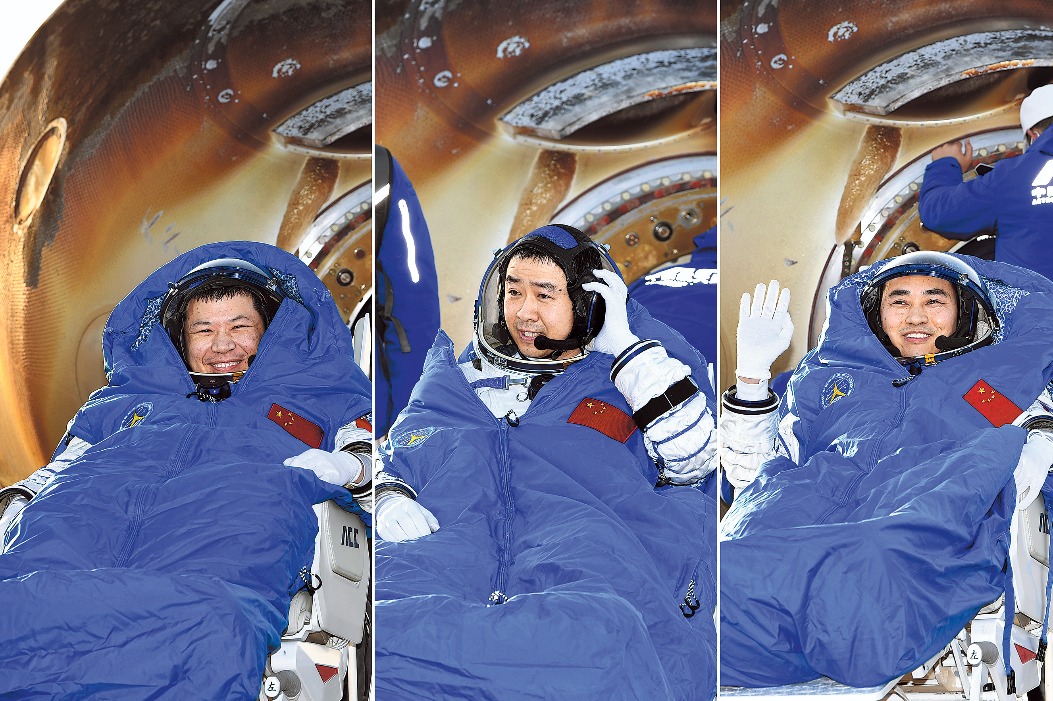
The Shenzhou XX mission crew, consisting of Senior Colonel Chen Dong, Colonel Chen Zhongrui, and Colonel Wang Jie, successfully returned to Earth on Friday afternoon after an extended stay aboard the Tiangong space station. The astronauts landed at the Dongfeng Landing Site in Inner Mongolia at 4:40 pm, following a five-hour journey from space. Their return was delayed by nine days due to suspected space debris damage to the Shenzhou XX spaceship’s viewport window. Upon landing, ground recovery personnel from the Jiuquan Satellite Launch Center conducted safety checks and a preliminary health assessment before assisting the crew out of the capsule. The astronauts shared their experiences in a live broadcast with China Central Television, expressing pride in their mission and gratitude for the support that ensured their safe return. Chen Dong emphasized the challenges of space exploration, while Wang Jie highlighted the importance of continued dedication to this endeavor. The Shenzhou XX crew, representing China’s 15th manned spaceflight, spent 204 days in space, completing four spacewalks and numerous scientific tasks. Their return was rescheduled after engineers conducted thorough safety assessments, ultimately deciding to use the Shenzhou XXI spaceship’s reentry capsule for their journey back. The China Manned Space Agency announced plans to launch the Shenzhou XXII spaceship to dock with the Tiangong space station in the near future.
-

Should Hitler’s DNA have been studied – or just left alone?
A groundbreaking DNA analysis of Adolf Hitler’s blood has unveiled remarkable insights into the dictator’s ancestry and potential genetic predispositions. Conducted by a team of international experts, the study utilized an 80-year-old blood-stained fabric swatch from Hitler’s bunker sofa, where he ended his life in 1945. The findings, now under peer review, debunked long-standing rumors of Jewish ancestry and revealed that Hitler had Kallmann syndrome, a genetic disorder affecting sexual organ development. Additionally, his DNA showed a high predisposition for autism, schizophrenia, and bipolar disorder, though experts emphasize these are not diagnoses but indicators of genetic risk. The research has sparked ethical debates about stigmatization and the appropriateness of studying Hitler’s DNA. Prof Turi King, a leading geneticist involved in the project, stressed the importance of academic rigor and the inclusion of caveats to avoid sensationalism. The documentary ‘Hitler’s DNA: Blueprint of a Dictator,’ airing on Channel 4, explores these findings while addressing concerns about oversimplification and the potential for reinforcing harmful stereotypes. Historians and geneticists alike caution against reducing complex historical figures to their genetic makeup, emphasizing the interplay of environment, upbringing, and societal factors in shaping behavior.
-
All Shenzhou-XX astronauts out of return capsule
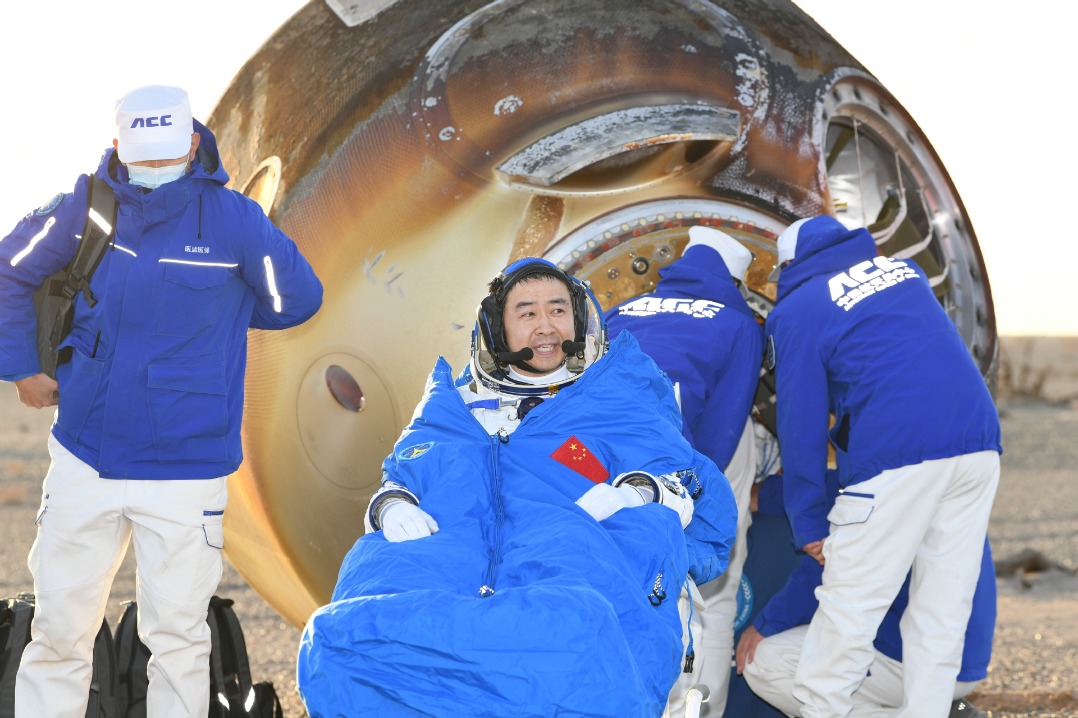
In a historic moment for China’s space program, the three astronauts of the Shenzhou-XX mission—Chen Dong, Chen Zhongrui, and Wang Jie—successfully exited their return capsule on Friday, November 14, 2025, at 5:21 pm Beijing Time. The crew had completed a remarkable 204-day mission in orbit, marking another milestone in China’s manned space exploration efforts. The China Manned Space Agency confirmed that all three astronauts are in excellent health following their return to Earth. Chen Dong, the mission commander, was the first to emerge from the capsule, solidifying his status as the first Chinese astronaut to accumulate over 400 days in space. This achievement underscores China’s growing capabilities in space technology and its commitment to advancing human spaceflight. The successful return of the Shenzhou-XX crew highlights the nation’s progress in long-duration space missions and paves the way for future endeavors, including the planned construction of a permanent space station.
-

Stunning aurora borealis observed over farm in Heilongjiang
On the evening of November 12, 2025, the night sky over Changshuihe Farm in Heilongjiang province was transformed into a canvas of natural wonder as the aurora borealis made a rare and mesmerizing appearance. The phenomenon, characterized by vibrant red and purple hues, captivated both local residents and professional photographers alike. Located in Heihe city, the farm is a subsidiary of the State-owned Beian Company under the Beidahuang Group, making the event even more extraordinary given its geographical setting. The aurora’s ethereal glow provided a once-in-a-lifetime opportunity for stunning photography, leaving onlookers in awe of nature’s grandeur. This rare occurrence in Northeast China has sparked widespread interest and admiration, highlighting the region’s unique potential for witnessing such celestial displays.
-

Shenzhou XX mission crew returns after debris delays landing
The Shenzhou XX mission crew successfully returned to Earth on Friday afternoon, marking the end of an extended stay aboard the Tiangong space station. The landing, initially scheduled for November 5, was delayed by nine days due to a suspected space debris impact that caused a cracked window on their spacecraft. The re-entry capsule, carrying mission commander Senior Colonel Chen Dong and crew members Colonel Chen Zhongrui and Colonel Wang Jie, touched down at the Dongfeng Landing Site in Inner Mongolia at 4:40 pm. The astronauts had to use the Shenzhou XXI mission’s re-entry capsule after their own vessel was deemed unsafe. Ground recovery personnel from the Jiuquan Satellite Launch Center conducted initial safety checks and assessed the crew’s health. The Shenzhou XXI mission crew had already taken over the space station on November 4, ensuring a smooth transition. This incident highlights the challenges of space exploration and the importance of contingency planning.
-
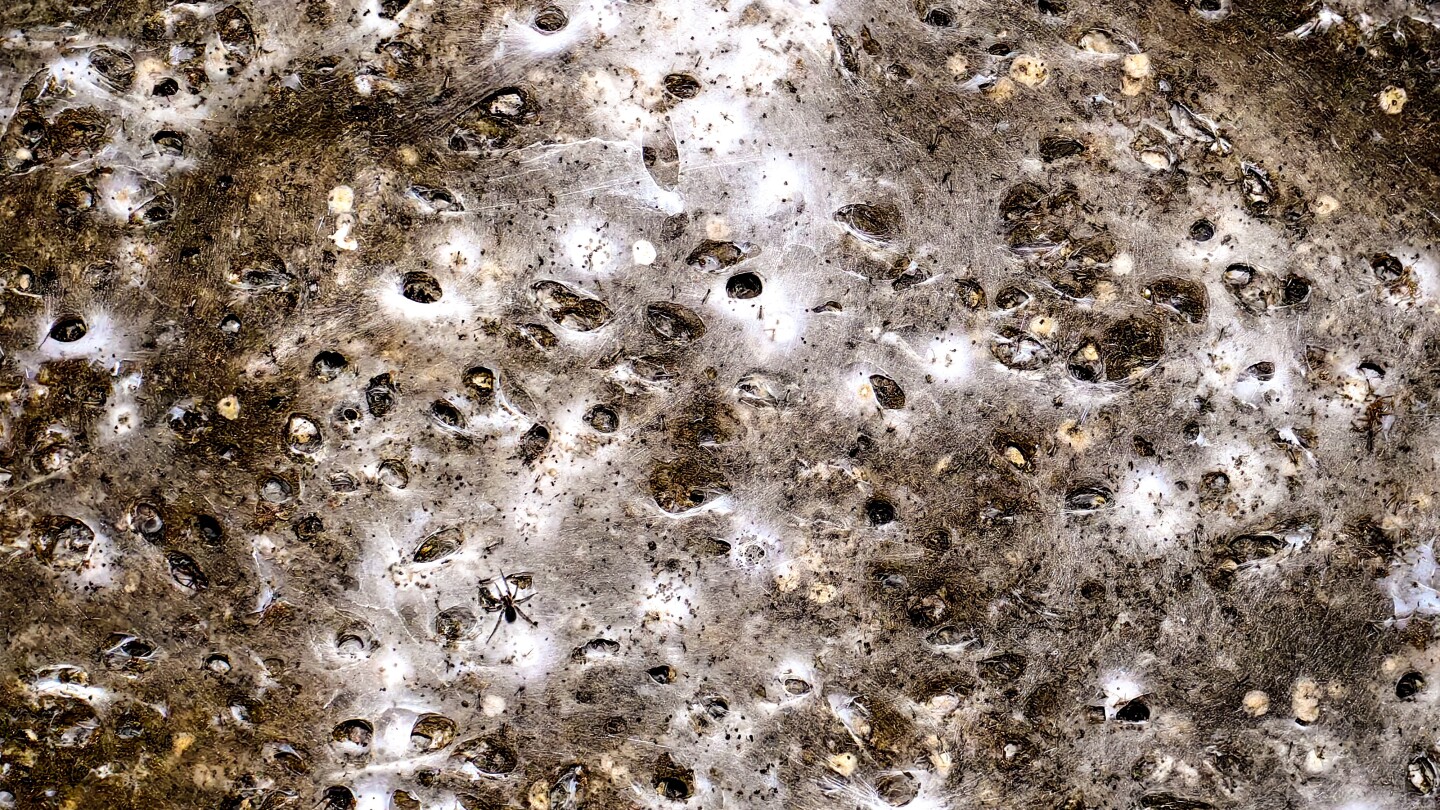
Arachnid super-web reveals the surprising ‘constant party’ life of cohabiting spiders
In a groundbreaking discovery, researchers have uncovered what is believed to be the world’s largest spider web, spanning an astonishing 1,140 square feet, within a sulfur-rich cave on the Albanian-Greek border. This colossal web, described as “carpet-thick,” houses an estimated 110,000 spiders from two distinct species—Tegenaria domestica (common house spider) and Prinerigone vagans—living harmoniously in a rare display of interspecies cohabitation. The findings, published in the journal Subterranean Biology, have captivated the scientific community and the public alike due to the unprecedented nature of this discovery. Evolutionary biologist Lena Grinsted, a senior lecturer at the University of Portsmouth, likened the phenomenon to humans sharing an apartment block, emphasizing the rarity of such group living among spiders. The cave’s unique environment, characterized by permanent darkness and an abundance of midge flies, is believed to facilitate this peaceful coexistence. Researchers speculate that the spiders’ reliance on vibratory cues for prey detection, rather than vision, may have contributed to their non-aggressive behavior. The study also revealed that the cave’s ecosystem supports large bat colonies, creating a thriving, interconnected habitat. While the discovery raises intriguing questions about evolutionary biology, it also underscores the importance of preserving such unique environments for future scientific exploration.
-

China’s Shenzhou XX spacecraft found unfit for crewed return
China’s Shenzhou XX spacecraft has been declared unfit for the safe return of astronauts due to structural issues, the China Manned Space Agency (CMSA) announced on Friday, November 14, 2025. The decision comes after the discovery of tiny cracks in the return capsule’s viewport window, likely caused by an external impact from space debris. As a result, the spacecraft will remain in orbit to continue conducting scientific experiments. This development highlights the challenges of maintaining spacecraft integrity in the harsh environment of space, where collisions with debris pose significant risks. The CMSA emphasized that the safety of astronauts remains its top priority and assured that alternative plans are being developed to ensure their secure return. This incident underscores the importance of ongoing advancements in space technology and debris mitigation strategies to safeguard future missions.
-
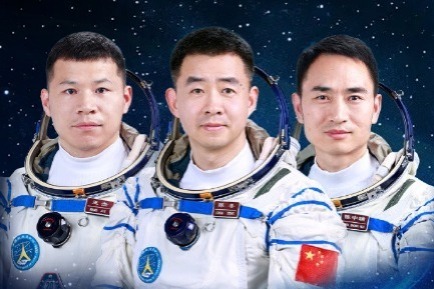
China’s Shenzhou XXI spaceship undocks from space station combination
In a significant milestone for China’s space exploration program, the Shenzhou XXI crewed spaceship successfully undocked from the space station combination on Friday, November 14, 2025. The operation marks the beginning of the return mission to bring the Shenzhou XX astronauts safely back to Earth. The China Manned Space Agency confirmed the successful undocking, highlighting the precision and coordination involved in the maneuver. This event underscores China’s growing capabilities in space technology and its commitment to advancing human spaceflight. The Shenzhou XXI mission is part of China’s broader strategy to establish a permanent presence in space, with the space station serving as a hub for scientific research and international collaboration. The return of the astronauts is expected to provide valuable data and insights for future missions, further solidifying China’s position as a key player in the global space race.