
China has inaugurated an international science program dedicated to advancing fusion burning plasma research, marking a significant step in global scientific collaboration. The program, launched in Hefei, the capital of East China’s Anhui province, was initiated by the Chinese Academy of Sciences’ Institute of Plasma Physics. It aims to provide scientists worldwide with access to several major fusion research platforms, including the state-of-the-art Burning Plasma Experimental Superconducting Tokamak facility in Hefei. This initiative underscores China’s commitment to fostering international cooperation in the pursuit of clean and sustainable energy solutions through nuclear fusion, often referred to as the ‘artificial sun.’ The program is expected to accelerate breakthroughs in fusion technology, which could revolutionize energy production by mimicking the processes that power the sun. By opening its research facilities to global experts, China is positioning itself as a leader in the field of fusion energy, which holds the potential to address global energy challenges and reduce reliance on fossil fuels.
分类: science
-
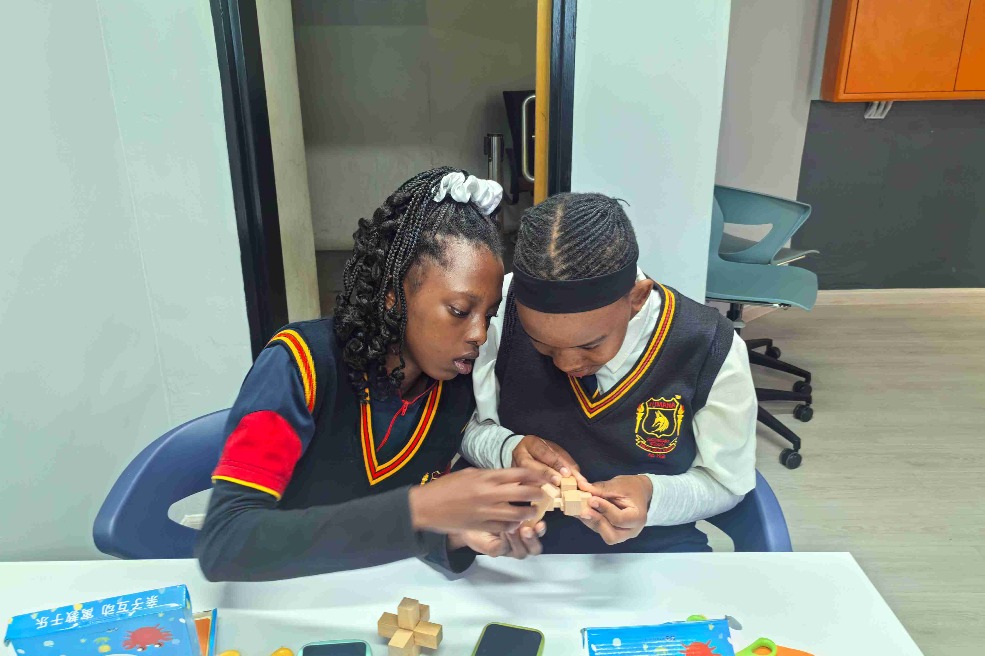
China-SA science exhibition showcases innovation, cultural exchange
A groundbreaking science exhibition, collaboratively developed by China and South Africa, is currently underway in Johannesburg, symbolizing a significant milestone in the bilateral partnership in science, technology, and cultural exchange. Titled ‘L.I.S.T.E.N Science Space,’ the exhibition is a joint initiative of the China Science and Technology Museum and South Africa’s Sci-Bono Discovery Center, occupying a 200-square-meter space within the latter’s premises. The exhibition is ingeniously divided into four thematic zones, each designed to stimulate innovative thinking, explore scientific principles embedded in traditional Chinese intangible cultural heritage, offer an immersive space exploration experience, and showcase the allure of bionic robot dogs. Beyond the exhibits, the event features regular open science classes, enabling visitors to engage in hands-on scientific activities. The China Science and Technology Museum has contributed its vast resources and expertise in science education, while the Sci-Bono Discovery Center has tailored the content to resonate with local audiences, exemplifying a model of cooperation aimed at fostering a shared future between China and Africa. The exhibition’s inauguration aligns with South Africa’s hosting of the G20 Summit, presenting a tangible demonstration of the fruitful collaboration between China and Africa to international delegates. Looking ahead, both nations intend to utilize this platform to expand bilateral cooperation through joint research, the creation of a digital resource library, and personnel exchanges, thereby sustaining the momentum for deepening China-Africa relations and enhancing mutual understanding.
-
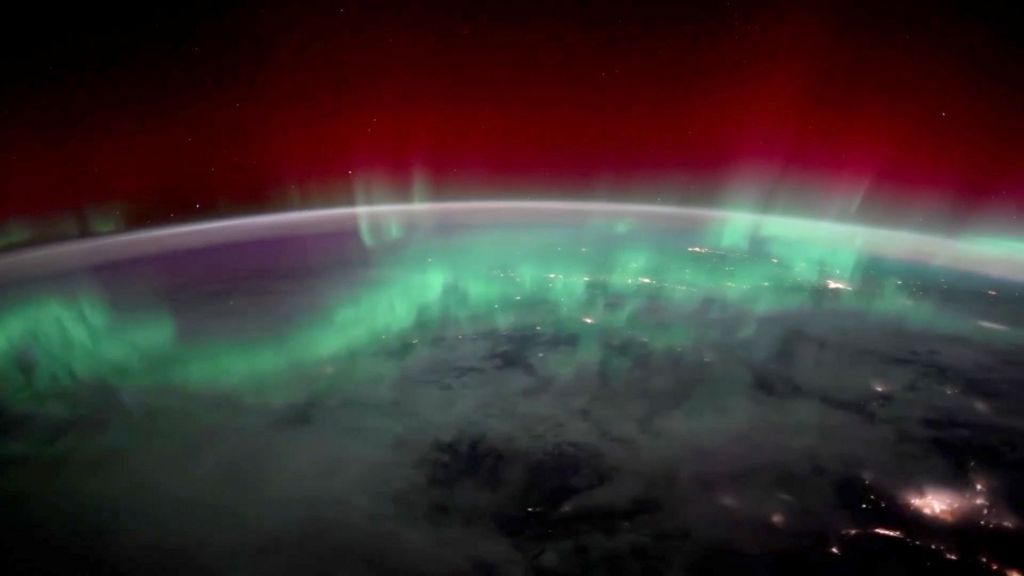
Nasa astronaut films Northern Lights from space
In a breathtaking display of nature’s splendor, NASA astronaut Zena Cardman has recorded a mesmerizing video of the Northern Lights from the International Space Station (ISS). The footage, captured on November 17, showcases the vibrant hues of the aurora borealis as they dance across Earth’s atmosphere. This rare perspective from space offers a unique glimpse into the phenomenon, highlighting the interplay between solar particles and the planet’s magnetic field. Cardman’s recording not only serves as a testament to the beauty of our planet but also underscores the scientific value of studying such events from orbit. The ISS, orbiting approximately 400 kilometers above Earth, provides an unparalleled vantage point for observing atmospheric and space phenomena. This footage adds to a growing collection of space-based observations that enhance our understanding of Earth’s magnetosphere and its interactions with solar activity.
-
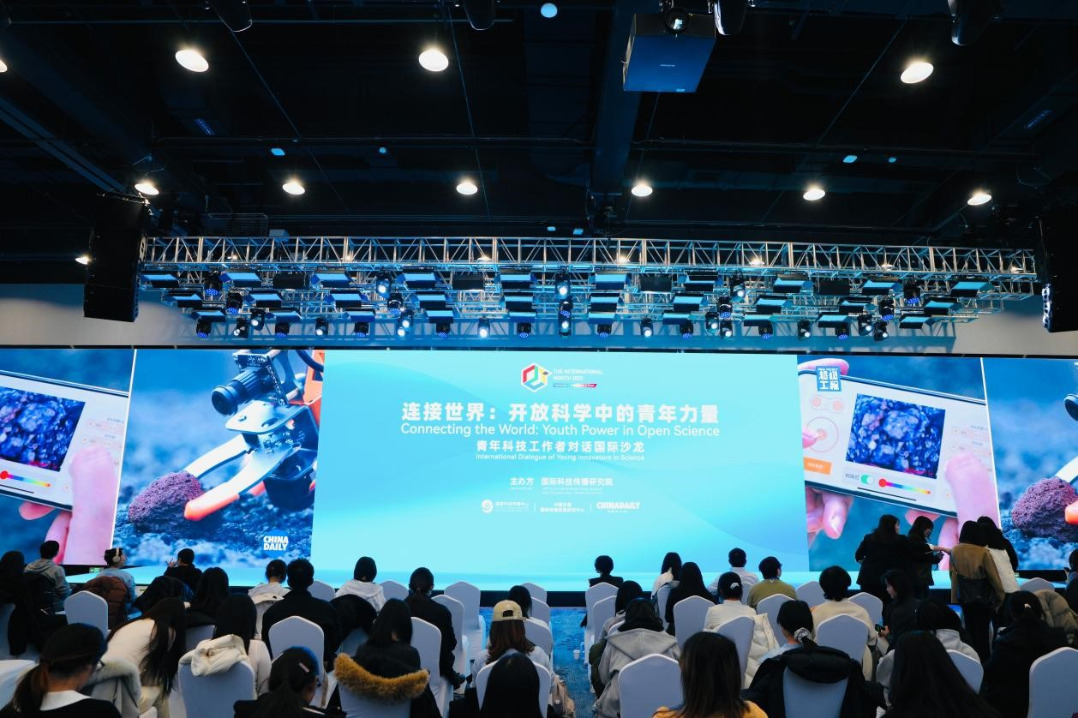
Young innovators voice commitment to open science
Beijing recently hosted an international dialogue titled ‘Connecting the World: Youth Power in Open Science,’ bringing together young innovators from diverse scientific disciplines. The event, held on Friday, highlighted the pivotal role of young scientists in fostering global scientific collaboration amidst the challenges of technological competition and the evolving open science landscape. Attendees included researchers from aerospace, life sciences, and disaster risk reduction, who shared insights on the opportunities and hurdles in international scientific partnerships. Ren Xiaoqiang, a researcher at China’s Deep Space Exploration Laboratory, emphasized the critical contributions of young scientists, noting their professionalism, rigor, openness, and passion as key drivers in China’s deep space exploration endeavors. Stephanie Stone, a US reporter at China Daily, highlighted the significance of global technological collaboration in cultural heritage preservation, citing recent Sino-Egyptian efforts in archaeological digitization as a prime example of how technology can safeguard human history while shaping the future.
-
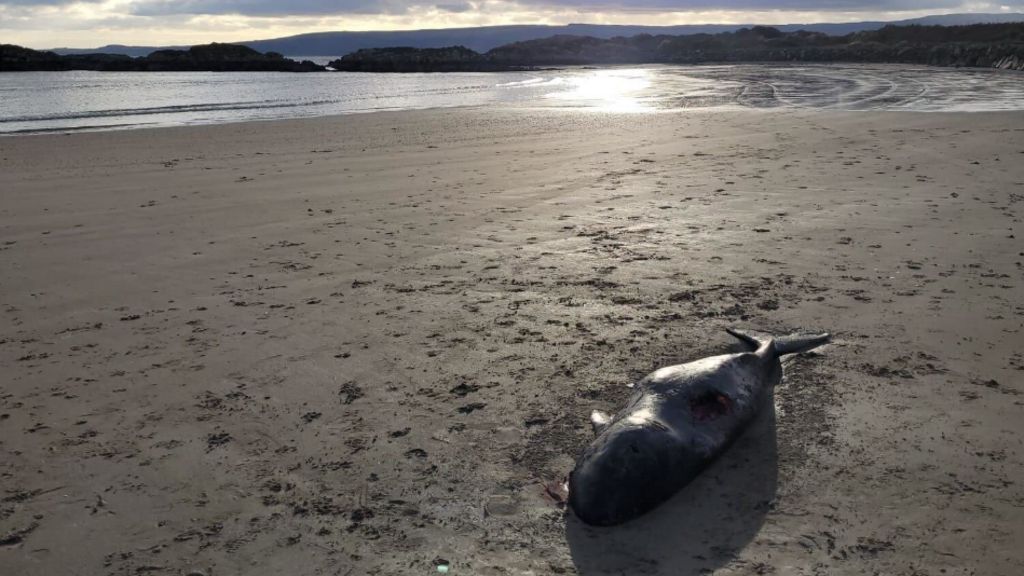
Narwhal carcass washes ashore on County Donegal beach
In an unprecedented event, the body of a female narwhal, a species typically found in Arctic waters, washed ashore on Sweet Nellies Beach in County Donegal, Ireland, last weekend. This marks the first recorded sighting of a narwhal in Irish waters and only the tenth recorded stranding of the species in western Europe. The discovery was made by a local family during a beach walk, prompting immediate attention from wildlife authorities. Niall Ó Donnchú of Ireland’s National Parks and Wildlife Service (NPWS) described the event as ‘extraordinary and unprecedented.’ The narwhal, often referred to as the ‘unicorn of the sea’ due to its distinctive spiraled tusk, was transported to the Regional Veterinary Laboratory in Cork for a post-mortem examination. While male narwhals typically grow tusks, some females also exhibit this rare trait. Narwhals inhabit the Arctic Circle, migrating to coastal waters in summer and returning offshore in winter to avoid ice entrapment. With an estimated global population of 170,000, their natural predators include polar bears, orcas, and sharks. Dr. Simon Berrow of the Irish Whale and Dolphin Group (IWDG) emphasized the significance of this stranding, noting that warming waters have caused a northward migration of marine species. ‘To have an Arctic species stranded for the first time is somewhat unexpected,’ he said. The incident underscores the importance of long-term monitoring and public involvement in reporting such events. Ireland’s Minister for Nature, Heritage and Biodiversity, Christopher O’Sullivan, highlighted the broader implications, stating that the narwhal’s stranding serves as a stark reminder of the vulnerability of wildlife in the face of climate change. The post-mortem results, expected soon, may provide crucial insights into the narwhal’s life history and the reasons behind its unusual journey to Irish shores.
-

Over 50 new foreign academicians elected to China’s top academic institutions
In a significant move highlighting China’s commitment to global scientific collaboration, the Chinese Academy of Sciences (CAS) and the Chinese Academy of Engineering (CAE) have elected a total of 51 foreign academicians in 2025. Among these, 27 were elected to the CAS, while 24 joined the CAE. This election underscores China’s growing influence in the global scientific community and its efforts to foster international partnerships in research and innovation. The newly elected academicians represent a diverse range of expertise and nationalities, reflecting China’s strategy to integrate global talent into its scientific endeavors. This development also aligns with China’s broader goals of advancing technological innovation and addressing global challenges through collaborative research. The election process, known for its rigor and selectivity, ensures that only the most distinguished scholars and engineers are chosen. This initiative not only strengthens China’s academic institutions but also enhances its reputation as a hub for cutting-edge research and development.
-

Ten photos from across China: Nov 14 – 20
The Shenzhou XXI mission marked another milestone in China’s space exploration efforts as its return capsule safely touched down at the Dongfeng landing site in Inner Mongolia on November 14, 2025. The capsule carried astronauts Wang Jie, Chen Dong, and Chen Zhongrui, who had completed their mission in space. This event was captured in a series of ten photographs showcasing significant moments from across China during the week of November 14 to 20. The successful landing underscores China’s growing capabilities in space technology and its commitment to advancing human spaceflight. The images, released by Xinhua, highlight not only the return of the astronauts but also other notable events and scenes from various regions of the country, reflecting the nation’s progress and diversity.
-
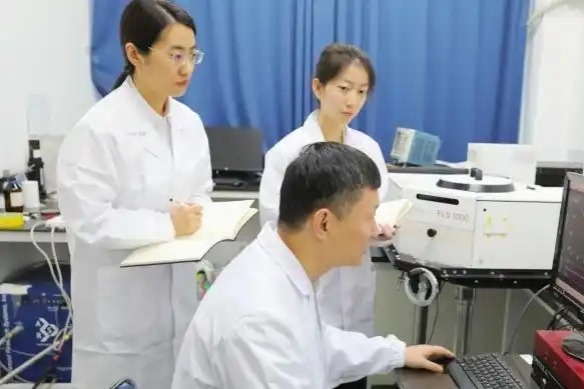
Scientists design new coating for rare earth materials to glow when powered by electricity
A groundbreaking study has unveiled a novel coating that allows rare earth materials to emit light when powered by electricity. This innovation, spearheaded by a collaborative team from Heilongjiang University, Tsinghua University, and the National University of Singapore, was recently published in the prestigious journal Nature. Rare earth nanocrystals, known for their vibrant and stable light emission, have traditionally been limited in electric-driven applications like LEDs and OLEDs due to their insulating properties. ‘It’s akin to running in a heavy winter coat,’ explained Han Sanyang, an associate professor at Tsinghua University, highlighting the challenge of electricity reaching these materials. The team’s solution involves a specialized molecular coating that acts as an ‘energy-conversion layer,’ efficiently transferring electrical energy to the nanocrystals, which then produce adjustable, high-purity light. This breakthrough paves the way for applications in human health monitoring, non-invasive testing, and agricultural lighting. The researchers are now refining the technology, particularly for healthcare and infrared uses.
-
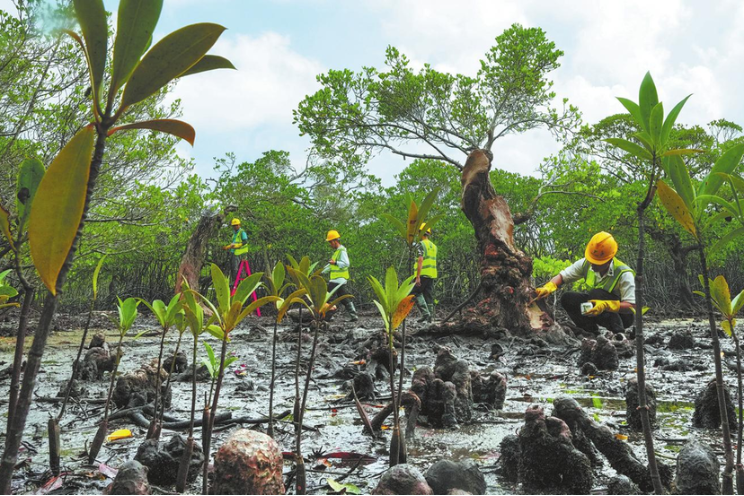
Resilience and recovery
In a remarkable display of resilience and scientific ingenuity, rare red-flowered black mangroves (Lumnitzera littorea) in Hainan province, China, are on the path to recovery following the devastating impact of Typhoon Kajiki. The storm, which struck on August 24, unleashed winds of up to 200 kilometers per hour, severely damaging the coastal regions of Hainan. Among the casualties were six of the only 14 known mother trees of this rare mangrove species in China.
-
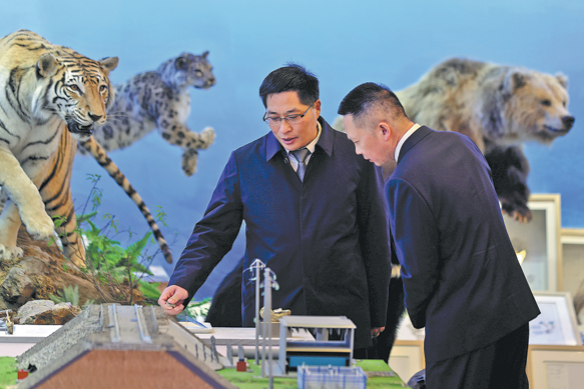
Scientific study drives law to protect ecology of Qinghai-Tibet Plateau
The second Qinghai-Tibet scientific expedition has significantly influenced the formulation of ecological protection legislation for the Qinghai-Tibet Plateau, as highlighted by academicians during a recent news conference in Lhasa, the capital of the Xizang autonomous region. The expedition’s top 10 application achievements, unveiled at the event, span ecological conservation, disaster prevention, resource exploration, carbon accounting, traffic safety, and border area development. Yao Tandong, an academician with the Chinese Academy of Sciences, emphasized that the expedition’s core legislative recommendations—such as enhancing glacier change monitoring, protecting ecological barriers, and promoting integrated environmental management—were integrated into the new legislation. This led to the adoption of the ‘Measures for the Implementation of the Qinghai-Tibet Plateau Ecological Protection Law’ by the 15th meeting of the Standing Committee of the 12th People’s Congress of Xizang in March, which took effect on August 1. Beyond legislative impact, the expedition has deepened scientific understanding of the plateau’s unique ecological challenges, particularly concerning the Asian Water Tower, a vital water source for over 2 billion people. Research indicates a significant increase in water supply capacity, with runoff from major basins projected to rise by 49% by the century’s end. However, the region faces growing threats from cryosphere disasters, such as glacier avalanches and glacial lake outburst floods, which have increased in frequency and severity. To address these challenges, the expedition team has established a comprehensive Earth system multisphere observation platform and developed an intelligent monitoring and early warning system for cryosphere-related disasters. These innovations aim to provide precise solutions for disaster prevention and mitigation, safeguarding major projects and local communities.