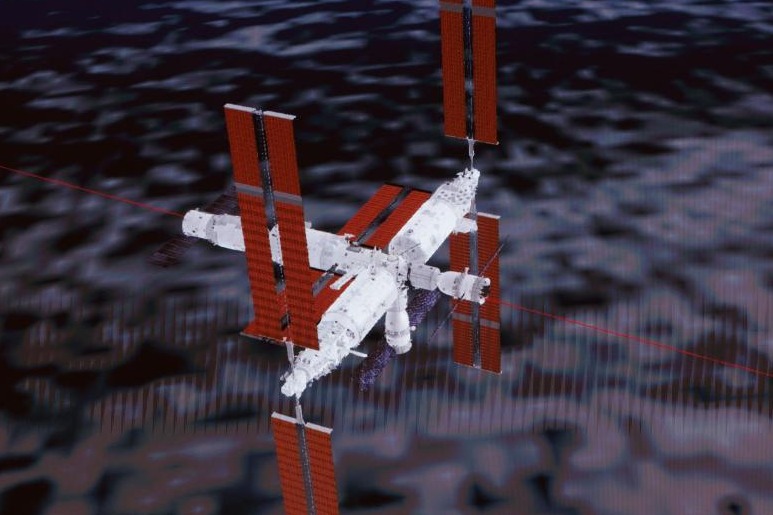
In a significant milestone for China’s space exploration program, the Shenzhou XXII spacecraft successfully docked with the country’s space station combination on Tuesday, November 25, 2025. The China Manned Space Agency confirmed the achievement, marking another step forward in China’s ambitious space endeavors. The docking operation, executed with precision, underscores China’s growing capabilities in space technology and its commitment to advancing human spaceflight. This mission is part of China’s broader strategy to establish a permanent presence in space, contributing to scientific research and international collaboration in space exploration. The successful docking of Shenzhou XXII highlights the nation’s progress in developing advanced space infrastructure and its determination to play a leading role in the global space race.
分类: science
-
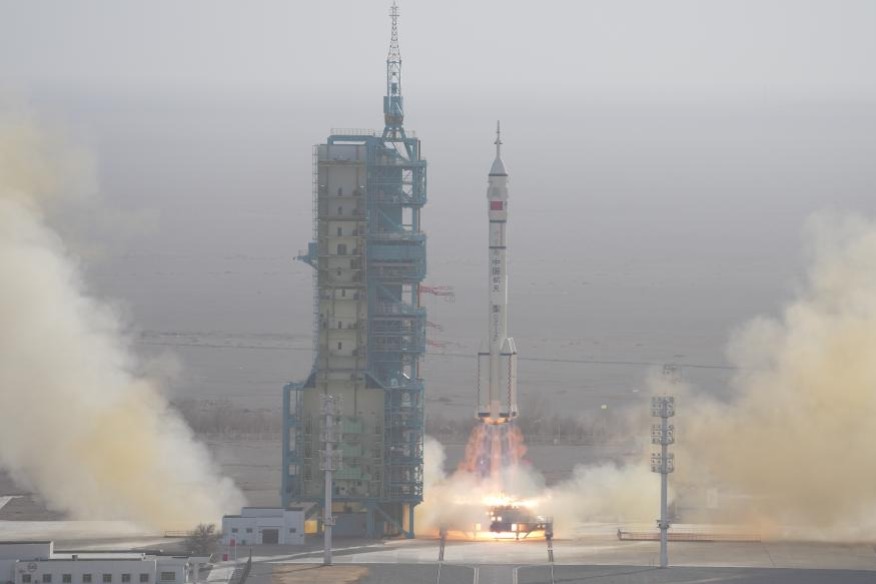
China launches Shenzhou XXII spacecraft
China has marked another milestone in its space exploration endeavors with the successful launch of the Shenzhou XXII spacecraft. The unmanned spacecraft was carried into orbit by a rocket that lifted off from the Jiuquan Satellite Launch Center on November 25, 2025, at 12:11 pm. This event underscores China’s growing capabilities in space technology and its commitment to advancing its space program. The Shenzhou XXII mission is part of China’s broader strategy to enhance its presence in space, which includes plans for lunar exploration, Mars missions, and the development of a space station. The launch was closely monitored by space agencies and enthusiasts worldwide, highlighting China’s increasing influence in the global space community. The successful deployment of Shenzhou XXII is expected to pave the way for future manned missions and further scientific research in space.
-
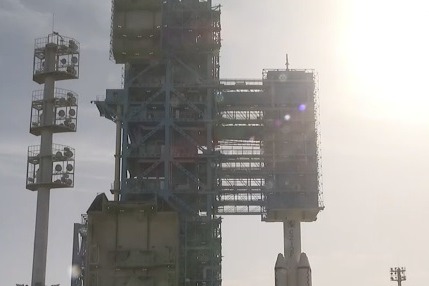
China to launch Shenzhou XXII at 12:11 pm
China is poised to achieve another milestone in its space exploration endeavors with the scheduled launch of the Shenzhou XXII spacecraft. The event is set to take place at precisely 12:11 pm today from the Jiuquan Satellite Launch Center, a key facility in China’s ambitious space program. This launch underscores China’s growing capabilities in space technology and its commitment to advancing scientific research and exploration. The Shenzhou series of spacecraft have been instrumental in China’s manned space missions, contributing to the nation’s reputation as a significant player in the global space race. The successful launch of Shenzhou XXII will further solidify China’s position in the international aerospace community, showcasing its technological prowess and dedication to pushing the boundaries of human knowledge.
-
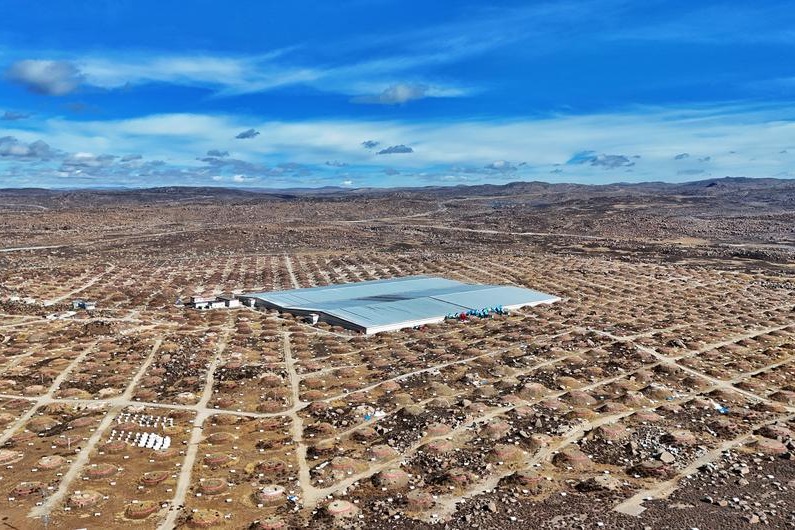
Chasing secrets of the universe on world’s rooftop in SW China
Nestled on the towering peaks of Haizi Mountain in Daocheng, Sichuan Province, China’s Large High Altitude Air Shower Observatory (LHAASO) stands as a beacon of scientific innovation. At an average altitude of over 4,400 meters, this sprawling 1.36-square-kilometer facility is unraveling the secrets of the universe by capturing cosmic rays—subatomic particles that journey from the depths of space. Recently, LHAASO made a groundbreaking discovery, providing crucial evidence that black holes, through their interaction with companion stars, act as powerful particle accelerators and may be key to the production of high-energy cosmic rays in the Milky Way. Nearby, the Daocheng Solar Radio Telescope, the world’s largest circular array of its kind, enhances space weather forecasting accuracy by tracking solar activity with unparalleled precision. The region’s unique atmospheric conditions—thin, stable air and minimal light pollution—make it an ideal hub for deep-space exploration. Since its inception in 2016, LHAASO has evolved into a global scientific platform, fostering international collaboration with partners from France, Russia, Thailand, and Pakistan. Its most notable achievement came in October 2022, when it detected the brightest gamma-ray burst in recorded history, a feat unmatched by other global detectors. As construction continues on additional facilities, including a 2.5-meter-wide-field solar telescope, Daocheng is cementing its status as a frontier for astrophysical research and a testament to China’s growing leadership in big science projects.
-
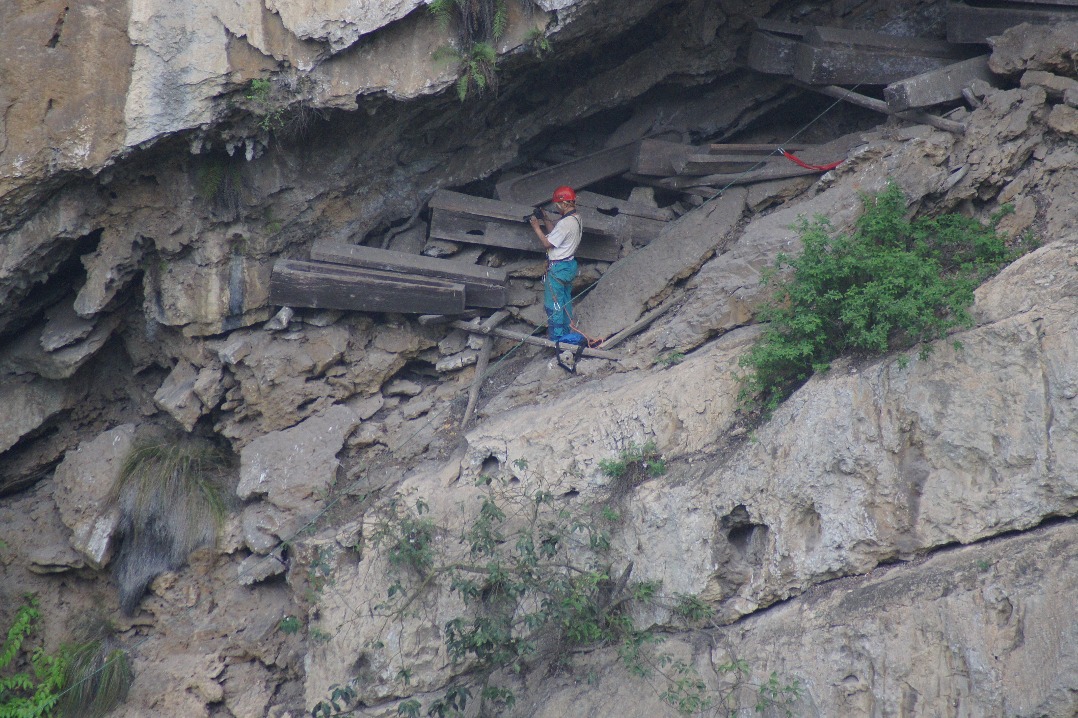
Genomic study links China’s ancient hanging coffins to modern community
A groundbreaking study led by Chinese researchers has established a genetic connection between the ancient practitioners of the hanging coffin tradition and a modern community in Southwest China. Published in the prestigious journal Nature Communications, the research marks the first time a direct genetic link has been confirmed at the nuclear genome level between these ancient individuals and their contemporary descendants. The study was conducted by the Kunming Institute of Zoology (KIZ) under the Chinese Academy of Sciences, based in Yunnan province. The hanging coffin custom, practiced for approximately 3,000 years across southern China, Southeast Asia, and the Pacific, involves placing coffins on cliffs, in caves, or rock crevices along rivers and steep mountainsides. This tradition has long been associated with the ancient Bo people, who inhabited southwest China but largely disappeared from historical records by the end of the Ming Dynasty (1368-1644). The research team identified a modern Bo community in Yunnan with similar cultural traits and conducted whole-genome sequencing on 30 of its members. They also analyzed nuclear DNA from human remains of 15 hanging-coffin individuals found in Yunnan, Guangxi Zhuang Autonomous Region, and northern Thailand. The findings revealed that 43 to 79 percent of the genomic components of modern Bo individuals can be traced directly to the hanging-coffin population from the Zhaotong site in Yunnan. Further analyses indicated a shared ancestry among hanging coffin remains in China and Thailand, suggesting a diffusion route for the culture that originated in Fujian province, East China, and spread to the Yunnan-Guizhou Plateau and Southeast Asia through human migration. The study also highlighted cultural inclusivity during the Tang Dynasty (618-907), with two genetically distinct individuals buried 1,200 years ago in Zhaotong sharing the same hanging-coffin custom. These individuals were linked to ancient farmers from the Yellow River Basin and Northeast Asia, respectively. The research team plans to expand their systematic sampling across South China and Southeast Asia to build a comprehensive database integrating burial practices, population genetics, and cultural transmission.
-
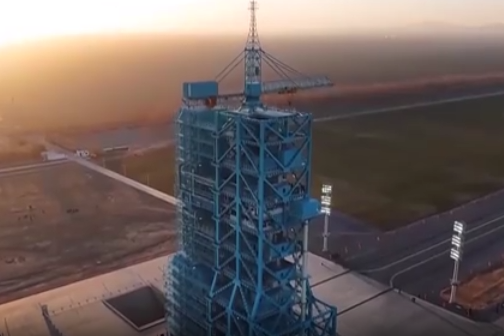
Spacecraft to launch with full cargo load
China is gearing up for the launch of the unmanned Shenzhou XXII spacecraft on Tuesday from the Jiuquan Satellite Launch Center in Northwest China, as announced by the China Manned Space Agency. The agency confirmed that the propellant injection for the Long March 2F carrier rocket, which will propel the spacecraft, has been successfully completed. The Shenzhou XXI crew aboard the Tiangong space station remains in good health, according to the agency’s statement released on Monday afternoon. Zhou Yaqiang, from the agency’s general technical bureau, revealed that Shenzhou XXII will be fully loaded with cargo, including essential provisions for astronauts and equipment necessary for the operations of the Tiangong space station. Originally slated to transport the Shenzhou XXII crew to Tiangong in April 2026, the spacecraft’s mission was adjusted due to the discovery of tiny cracks on the viewport window of the Shenzhou XX return capsule, likely caused by space debris. This rendered the capsule unsafe for use, prompting the need for Shenzhou XXII as a standby crew ship. The Shenzhou XX astronauts, who spent a record-breaking 204 days in orbit, returned safely to Earth on November 14 using the Shenzhou XXI spacecraft, nine days later than planned. Their successful return was facilitated by preplanned contingency measures, including the maintenance of a backup rocket and crew spacecraft, ensuring a rapid response in case of in-orbit emergencies.
-
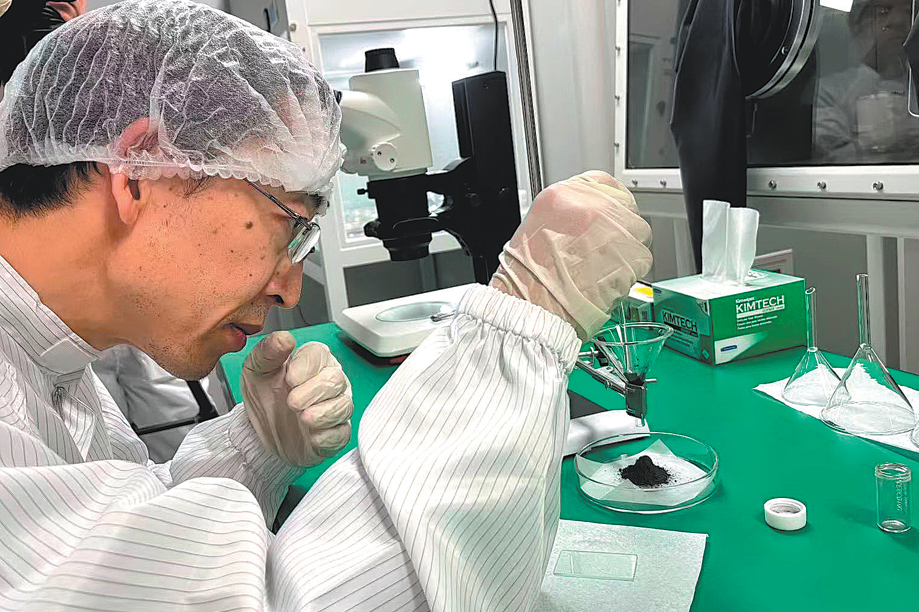
Mystery of sticky lunar soil solved
A recent study published in *Nature Astronomy* has unraveled the mystery behind the unexpectedly sticky lunar soil collected from the far side of the moon by China’s Chang’e 6 robotic probe. Unlike the loose, sandy regolith from the moon’s near side, the far side samples were clumpy and cohesive, a phenomenon now attributed to space weathering and the unique geometry of the soil particles. The research, led by Qi Shengwen from the Chinese Academy of Sciences’ Institute of Geology and Geophysics, reveals that the far side regolith consists of extremely small, jagged, and sharp particles, averaging 48.4 microns in diameter. These properties, combined with the effects of prolonged exposure to micrometeoroid bombardment and solar winds, create a cohesive environment. The study highlights the violent history of the lunar far side, which has been subjected to intense space weathering, resulting in the formation of irregular-shaped globs. The findings are not only of scientific interest but also have practical implications for future lunar exploration and base construction. Understanding the soil’s texture is crucial for designing equipment and infrastructure that can withstand the abrasive and sticky nature of the regolith. China’s ambitious space program, which aims to land astronauts on the moon before 2030, will benefit from these insights as engineers develop new technologies for lunar exploration.
-
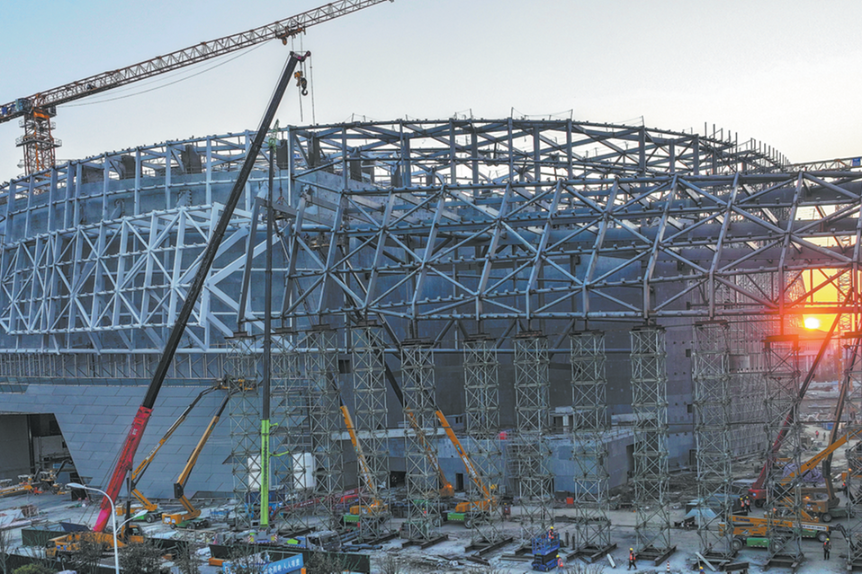
China launches intl program for fusion energy research
China has taken a monumental step in advancing fusion energy research by launching an international program dedicated to studying fusion burning plasma. The initiative, unveiled on Monday in Hefei, Anhui province, is spearheaded by the Chinese Academy of Sciences’ Institute of Plasma Physics. This groundbreaking program opens access to several major fusion research platforms, including the state-of-the-art Burning Plasma Experimental Superconducting Tokamak (BEST) facility, currently under construction in Hefei and set for completion by late 2027. Fusion energy, often referred to as the ‘artificial sun,’ replicates the sun’s power generation process and is considered a revolutionary clean energy source. The BEST facility, unlike its predecessors, is designed to demonstrate the actual ‘burning’ of deuterium-tritium plasma, a critical milestone for sustainable fusion power generation. At the program’s launch, scientists from over 10 countries, including France, the UK, and Germany, signed the Hefei Fusion Declaration, pledging to promote open science and foster global collaboration in fusion research. This initiative underscores China’s commitment to leading the global transition to clean energy and addressing the world’s energy challenges through innovative scientific advancements.
-
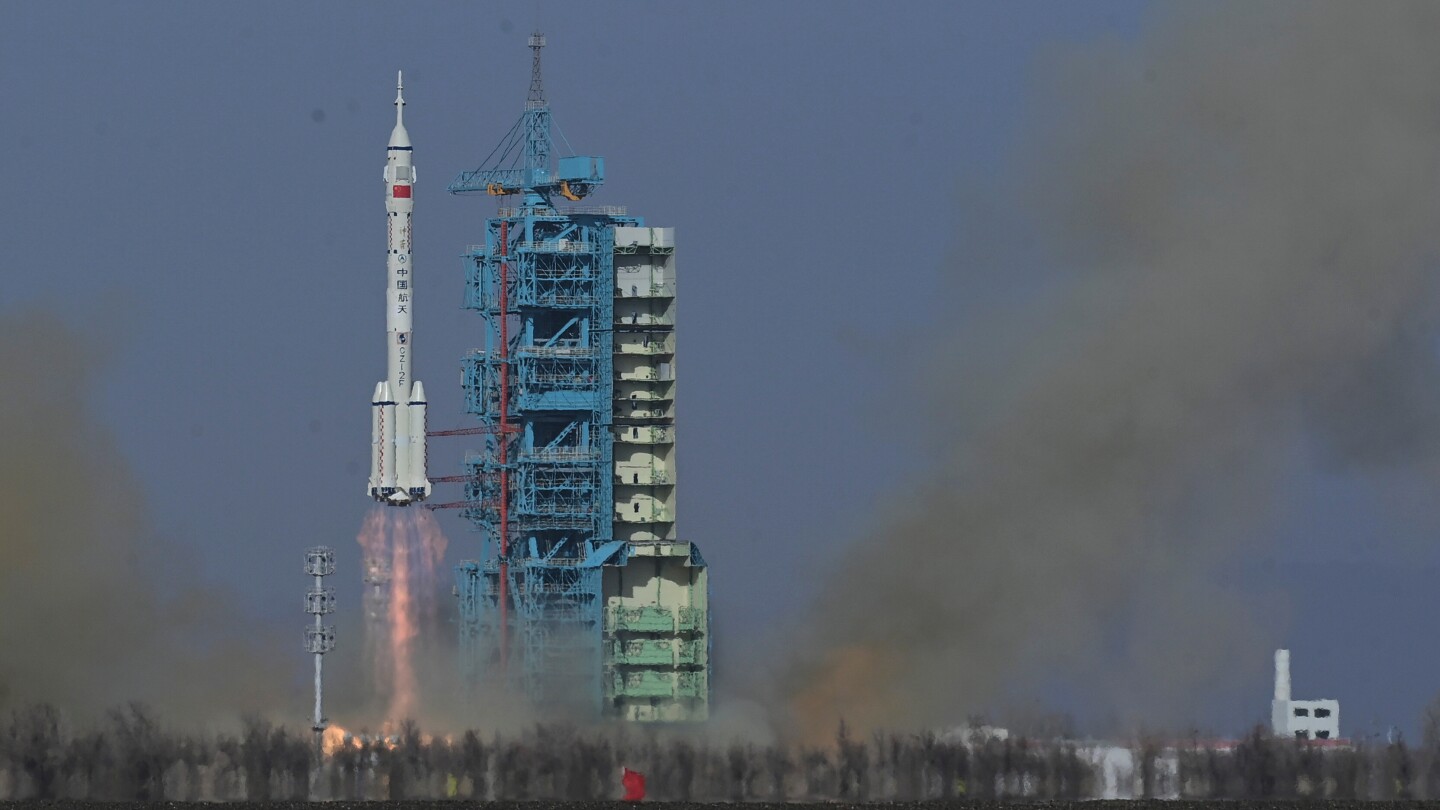
China launches Shenzhou 22 spacecraft to assist in return of 3 astronauts stranded on space station
In a critical mission to ensure the safety of its astronauts, China launched the Shenzhou 22 spacecraft on Tuesday. This move comes after a damaged spacecraft left a crew temporarily stranded on the Tiangong space station. The Shenzhou 22 successfully docked at the station and is slated to be used by the three astronauts who arrived on November 1, 2023, with its return mission planned for 2026. Earlier this month, another group of astronauts from the Shenzhou 20 mission experienced a nine-day delay in their return to Earth due to damage to their spacecraft’s window. They were eventually brought back using the Shenzhou 21 spacecraft, which had just delivered a replacement crew to Tiangong. While the three-person crew landed safely, their replacements were left without a guaranteed emergency return option. The damaged Shenzhou 20 spacecraft, currently still in orbit, will be brought back to Earth for assessment, as it was deemed unsafe for transporting astronauts. This incident highlights the challenges faced by China’s rapidly advancing space program, which has been constructing the Tiangong space station module-by-module in recent years. Tiangong, meaning ‘Heavenly Palace,’ hosted its first crew in 2021 and is smaller than the International Space Station, which has been operational for 25 years. China developed Tiangong after being excluded from the International Space Station due to U.S. national security concerns, as its space program is controlled by the military.
-
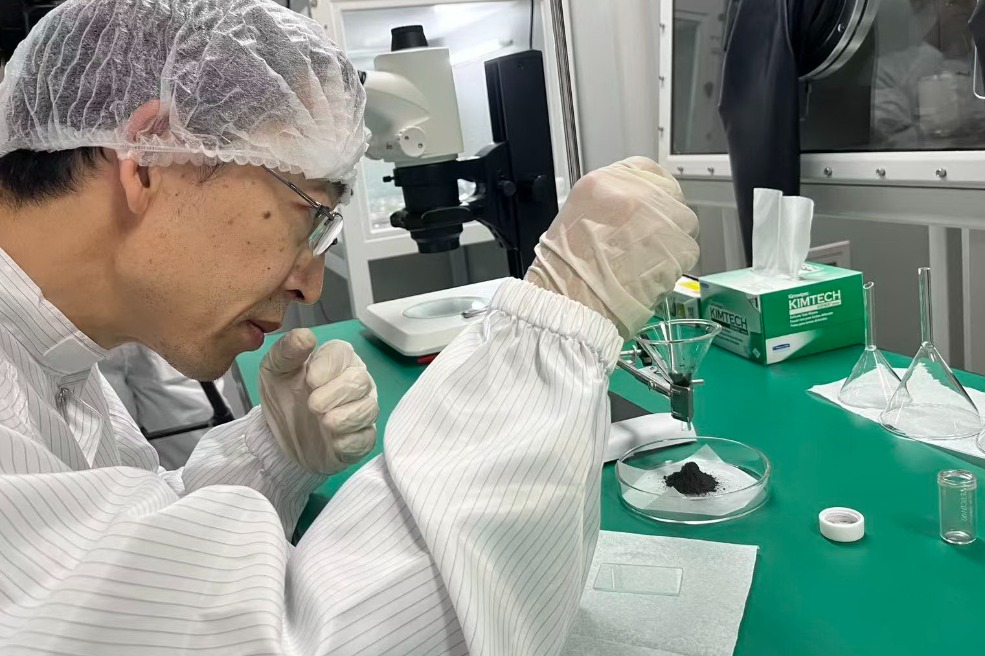
Study explains why Chang’e 6 moon soil is unexpectedly sticky
Chinese researchers have unveiled the scientific mystery behind the unexpectedly sticky lunar soil collected by the Chang’e 6 mission from the far side of the moon. Published in *Nature Astronomy*, the study reveals that the soil’s unique texture is due to a combination of extremely fine particles and irregular, jagged shapes. This discovery has significant implications for future lunar exploration and base construction. Led by Qi Shengwen from the Institute of Geology and Geophysics, the team conducted a series of tests, including an ‘angle of repose’ experiment, which demonstrated that the far-side soil behaves more like damp Earth soil than loose, sandy lunar dust. High-resolution CT scans of over 290,000 individual grains revealed that the particles are exceptionally small, averaging 48.4 microns in diameter, and unusually sharp. The researchers attribute this texture to the moon’s violent history of space weathering, including constant micrometeoroid bombardment and solar wind exposure. The findings are crucial for addressing engineering challenges in future lunar missions, such as preventing soil from clogging machinery or damaging equipment. As China accelerates its space program, aiming to land astronauts on the moon by 2030, this research provides a foundation for developing lunar infrastructure and resource utilization.