分类: science

  • China’s Shenzhou XXI crewed spaceship docks with space station combination

    China’s Shenzhou XXI crewed spaceship docks with space station combination

    In a significant achievement for China’s space program, the Shenzhou XXI crewed spaceship successfully docked with the country’s space station combination in the early hours of Saturday morning. The China Manned Space Agency confirmed the successful maneuver, which underscores China’s growing capabilities in space exploration. This mission is part of China’s broader strategy to establish a permanent presence in space and conduct advanced scientific research. The docking marks a critical step in the ongoing development of the space station, which is expected to play a pivotal role in future space missions. The Shenzhou XXI astronauts are set to embark on a series of tasks, including scientific experiments and maintenance activities, further solidifying China’s position as a major player in the global space race.

  • China sends astronauts — and mice — on its latest space station mission

    China sends astronauts — and mice — on its latest space station mission

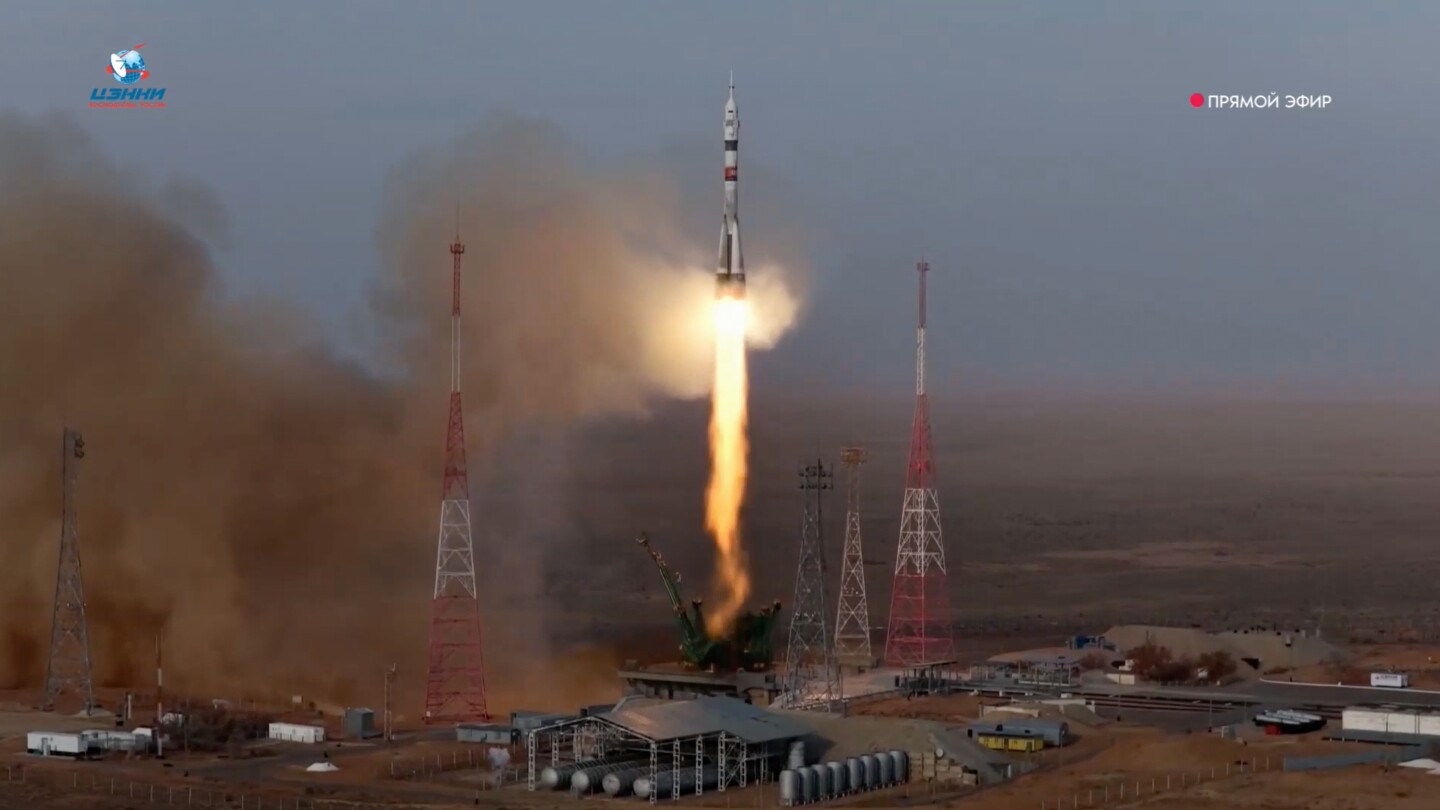
    China has successfully launched the Shenzhou-21 spacecraft, marking another milestone in its ambitious space program. The mission, which took off at 11:44 p.m. local time on Friday from the Jiuquan launch center in northwestern China, is sending three astronauts and four mice to the Tiangong space station. The crew includes mission commander Zhang Lu, a veteran of the Shenzhou-15 mission, alongside first-time astronauts Wu Fei, a 32-year-old engineer, and Zhang Hongzhang, a payload specialist with a background in new energy and materials research. The astronauts are expected to stay aboard the station for approximately six months, conducting 27 scientific experiments in fields such as biotechnology, aerospace medicine, and materials science. Notably, this mission includes the first-ever mice sent to China’s space station, with the aim of studying the effects of weightlessness and confinement on their behavior. The mice, selected from 300 candidates after rigorous training, will remain in space for five to seven days before returning to Earth. China’s space program, a source of national pride, continues to advance, with plans to land astronauts on the moon by 2030. The Tiangong space station, entirely Chinese-built, underscores China’s growing role in space exploration, particularly after being excluded from the International Space Station due to U.S. security concerns. Additionally, China is collaborating with Pakistan to train two Pakistani astronauts, one of whom may visit the Tiangong station in the future.

  • Crew members ready for Shenzhou XXI mission

    Crew members ready for Shenzhou XXI mission

    China is poised to launch the Shenzhou XXI mission, marking another significant milestone in its space exploration endeavors. The mission, scheduled for Friday night, will send three astronauts to the Tiangong space station for a six-month stay. The crew, led by mission commander Senior Colonel Zhang Lu, includes spaceflight engineer Major Wu Fei and payload specialist Zhang Hongzhang. Their primary objectives include conducting 27 scientific projects, performing spacewalks, and undertaking China’s first in-orbit experimentation on rodents. The launch will take place at the Jiuquan Satellite Launch Center in northwestern China, with the Long March 2F rocket propelling the Shenzhou XXI spacecraft into low-Earth orbit. The mission will also involve a crew shift, replacing the Shenzhou XX astronauts who have been aboard the space station for over six months. The Tiangong space station, completed in late 2022, remains the only independently operated space station in orbit. The Shenzhou XXI astronauts will focus on research in space life sciences, biotechnology, space medicine, and new spacecraft technologies. Additionally, the mission will observe the behavioral and physiological impacts of space on four mice, which will return to Earth for further analysis. This mission underscores China’s growing capabilities in space exploration and scientific innovation.

  • Report: China retains crown in global scientific papers published

    Report: China retains crown in global scientific papers published

    China has once again solidified its position as the global leader in scientific research publications, according to the latest annual report titled ‘Statistical Data of Chinese Science and Technology Papers.’ The report, published by the Institute of Scientific and Technical Information of China, reveals that the country accounted for 35.2% of the world’s top-tier scientific papers in 2024, maintaining its dominance for the second consecutive year. This achievement underscores China’s growing influence in the global scientific community and its commitment to advancing research across diverse disciplines. In 2024, China published over 15,000 papers in 163 high-impact journals spanning 178 disciplines, further cementing its status as a powerhouse in scientific innovation. Additionally, China led in both the number of publications and citation counts in 377 top international scientific journals, with 154,900 papers and over 1 million citations. The report highlights China’s decade-long leadership in citation counts across nine key scientific fields, including materials science, chemistry, and computer science. Notably, the average citation count of Chinese international papers reached 17.24, surpassing the global average for the second year in a row. Zhang Mingming, a researcher at the Chinese Academy of Sciences, attributed this success to China’s investment in advanced research facilities, efficient experimental methods, and the dedication of its researchers. As of August 2024, China also accounted for more than half of the world’s ‘hot papers’—recently published studies with high citation rates—with 2,342 papers, a 4.6% increase from the previous year. The United States followed with 1,511 hot papers. This remarkable progress reflects China’s strategic focus on fundamental research and its ambition to shape the future of global science and technology.

  • Shenzhou XXI astronauts to embark on journey to space

    Shenzhou XXI astronauts to embark on journey to space

    China is poised to take another significant step in its space exploration endeavors with the upcoming launch of the Shenzhou XXI mission. The China Manned Space Agency has announced that astronauts Zhang Lu, Wu Fei, and Zhang Hongzhang will embark on this historic journey. The mission is scheduled to lift off at 11:44 pm on Friday, Beijing Time, from the Jiuquan Satellite Launch Center in Northwest China. This mission underscores China’s growing capabilities in space technology and its commitment to advancing human spaceflight. The Shenzhou XXI mission is expected to contribute valuable data and experience to China’s broader space exploration goals, including potential future missions to the Moon and beyond.

  • The International Space Station marks 25 years of nonstop human presence in orbit

    The International Space Station marks 25 years of nonstop human presence in orbit

    CAPE CANAVERAL, Fla. — This weekend marks a monumental milestone in space exploration: 25 years of uninterrupted human habitation aboard the International Space Station (ISS). Since its first crew arrived on November 2, 2000, the ISS has hosted nearly 300 individuals from 26 countries, including professional astronauts, space tourists, and even a movie director. The pioneering trio of NASA’s Bill Shepherd and Russia’s Sergei Krikalev and Yuri Gidzenko laid the foundation for this extraordinary achievement, transforming the station into a functional and hospitable environment. Despite geopolitical tensions between the U.S. and Russia, collaboration in space remains strong, a testament to the unifying power of space exploration. Over the years, the ISS has evolved from a rudimentary outpost to a state-of-the-art facility, complete with advanced labs, an internet phone, and a glassed-in cupola offering breathtaking views of Earth. Astronauts have conducted thousands of experiments, including groundbreaking medical research and the famous twins study involving Scott and Mark Kelly. However, life aboard the ISS is not without challenges. Astronauts have faced close calls, such as a near-drowning incident, persistent air leaks, and the growing threat of space debris. As the ISS approaches its planned decommissioning in 2031, NASA is working with private companies like SpaceX and Axiom Space to ensure a seamless transition to future orbital stations. SpaceX has been tasked with safely deorbiting the ISS, while Axiom plans to repurpose its module into a new space station. NASA’s goal is to maintain a continuous human presence in orbit, ensuring that the legacy of the ISS endures.

  • Bios of Shenzhou XXI mission crew

    Bios of Shenzhou XXI mission crew

    Senior Colonel Zhang Lu, a distinguished astronaut and commander of the upcoming Shenzhou XXI mission, has been selected to lead China’s latest space endeavor to the Tiangong space station. The 49-year-old native of Hunan province, who joined the PLA Air Force in 1996, brings a wealth of experience to this critical mission. Zhang, who holds a master’s degree, began his career as an elite fighter jet pilot before being chosen as one of the seven second-generation astronauts in May 2010. His previous spaceflight experience includes the six-month Shenzhou XV mission, which commenced in November 2022. For his exceptional performance during that mission, Zhang was awarded the honorary title of ‘Heroic Astronaut’ and a Third-grade Space Service Medal. Currently, he serves as a first-grade astronaut in the PLA Astronaut Division. The Shenzhou XXI mission, set to launch on Friday, marks another significant milestone in China’s ambitious space exploration program, which includes plans for a manned moon landing by 2030.

  • Astronauts of China’s Shenzhou XXI mission meet press

    Astronauts of China’s Shenzhou XXI mission meet press

    The astronauts of China’s Shenzhou XXI mission, Zhang Lu, Wu Fei, and Zhang Hongzhang, addressed the media on October 30, 2025, ahead of their scheduled launch. The mission, set to depart from the Jiuquan Satellite Launch Center in Northwest China, marks another significant step in China’s ambitious space exploration program. The launch is scheduled for 11:44 pm on Friday, Beijing Time, as announced by the China Manned Space Agency during a press conference. The Shenzhou XXI mission is part of China’s ongoing efforts to expand its presence in space, particularly with the Tiangong space station. This mission underscores China’s commitment to advancing its space capabilities and contributing to global space exploration. The astronauts’ press appearance highlights the meticulous preparation and national pride associated with this endeavor.

  • Advanced heavy-ion accelerator successfully tested in South China

    Advanced heavy-ion accelerator successfully tested in South China

    In a groundbreaking achievement for scientific research, the High Intensity Heavy-Ion Accelerator Facility (HIAF), the world’s largest full ion accelerator, has successfully completed its beam commissioning phase. The milestone was announced by the Institute of Modern Physics (IMP) under the Chinese Academy of Sciences on Tuesday in Huizhou, Guangdong province. The HIAF, a flagship national science and technology project, began construction in December 2018 and features over 6,000 large-scale equipment units, nearly 5 million component parts, and a pipeline network exceeding 1 million meters in length. The project utilized digital twin technology, significantly reducing installation time from the typical two to three years to just eight months. The HIAF is set to conduct beam performance tests and is expected to initiate its first scientific experiment by the end of 2025. Once fully operational, it will provide the world’s highest pulse intensity heavy ion beams and the most precise multi-functional nuclear mass spectrometer. This facility will serve as a global hub for cutting-edge research in atomic nuclei exploration, nuclear astrophysics, nuclear energy development, and multidisciplinary applications. Additionally, the HIAF will offer a shared platform for facilities, services, data, and talent, fostering international collaboration among top scientists and research teams.

  • Shenzhou XXI launch to Tiangong space station set for Friday

    Shenzhou XXI launch to Tiangong space station set for Friday

    China is set to launch the Shenzhou XXI spacecraft on Friday night, marking a significant milestone in its space exploration program. The mission, led by Senior Colonel Zhang Lu, will transport three astronauts to the Tiangong space station for a six-month stay. The launch is scheduled for 11:44 pm from the Jiuquan Satellite Launch Center in Inner Mongolia, utilizing a Long March 2F carrier rocket. The crew includes Major Wu Fei, the spaceflight engineer, and mission payload specialist Zhang Hongzhang, both of whom are embarking on their first space mission. The Shenzhou XXI spacecraft will employ a rapid autonomous rendezvous-docking mode to connect with the Tianhe core module of the Tiangong space station, a process expected to take approximately three and a half hours. This mission will facilitate the crew exchange with the current occupants, Senior Colonel Chen Dong, Colonel Chen Zhongrui, and Colonel Wang Jie, who have been aboard the station since late April. The Tiangong space station, completed in late 2022, remains the only independently operated space station in orbit, positioned approximately 400 kilometers above Earth. This launch underscores China’s growing capabilities in space technology and its commitment to maintaining a continuous human presence in space.