In a significant step toward global agricultural sustainability, the BRI International Alliance of Science and Technology Innovation in Plant Protection was officially launched during the 2nd International Symposium on Plant Biosafety in Guangzhou, Guangdong province. The event, held from November 2 to 6, brought together over 250 experts and scholars from 18 countries and more than 40 domestic institutions. The alliance, a collaborative effort between the Chinese Academy of Agricultural Sciences’ Institute of Plant Protection and the Center for Agriculture and Bioscience International (CABI), aims to strengthen international cooperation in plant health and food security. Sun Tan, vice-president of the academy, emphasized the critical role of plant biosafety in addressing global food security and sustainable agricultural development. He highlighted that plant pests and diseases cause annual yield losses of 20 to 40 percent, resulting in over $220 billion in economic damage worldwide. The academy pledged to enhance international collaboration in biosafety research, improve cooperation mechanisms, and promote joint innovation platforms. Daniel Elger, CEO of CABI, underscored the fruitful partnership between China and CABI over the past three decades, expressing commitment to deepening collaboration for the global sharing and application of plant biosafety management technologies. The symposium also facilitated discussions on pest and disease outbreak patterns, integrated pest management, and innovative biosafety governance approaches.
分类: science
-

Solar storms bring colorful northern lights to unexpected places
A series of powerful solar storms have painted the night skies with dazzling auroras, reaching regions far beyond their typical polar confines. On Tuesday night, vibrant northern lights were observed in unexpected locations across Europe, including Hungary and the United Kingdom, while in the U.S., the celestial display stretched as far south as Kansas, Colorado, and Texas. These geomagnetic disturbances, classified as severe by space weather forecasters, have also caused minor disruptions to GPS communications and power grids, according to Shawn Dahl of the National Oceanic and Atmospheric Administration (NOAA).
The surge in solar activity has prompted NASA to delay the launch of Blue Origin’s new rocket, which was set to carry Mars orbiters, until space weather conditions stabilize. Over the past few days, the sun has emitted multiple coronal mass ejections (CMEs), with two already reaching Earth and at least one more expected to arrive on Wednesday. Forecasters warn that this upcoming solar outburst could be the most intense of the trio, potentially amplifying the brightness and southern reach of the auroras depending on its interaction with Earth’s magnetic field and atmosphere.
This heightened solar activity is part of the sun’s 11-year cycle, currently at its peak phase, which has made auroras more frequent and widespread. The phenomenon occurs when charged particles from the sun collide with Earth’s atmosphere, creating the mesmerizing light displays known as the northern and southern lights. Last year, the strongest geomagnetic storm in two decades illuminated skies across the Northern Hemisphere, followed by another powerful solar storm that brought auroras to unexpected locations like Germany, the United Kingdom, and New York City.
While auroras are a breathtaking spectacle, solar storms can also pose significant risks. They have the potential to disrupt power grids, interfere with air traffic control, and scramble radio and GPS communications. Historical events, such as the 1859 solar storm that set telegraph lines on fire and the 1972 storm that detonated magnetic sea mines off Vietnam’s coast, underscore the unpredictable and occasionally hazardous nature of space weather. Despite advancements in forecasting, experts can only provide alerts days in advance, leaving limited time for preparation.
For those eager to witness the auroras, NOAA’s Space Weather Prediction Center website and aurora forecasting apps offer real-time updates. Skygazers are advised to seek out dark, quiet areas away from city lights, such as local or national parks, and to check weather forecasts to avoid cloud cover. Smartphone cameras can also capture subtle auroral details invisible to the naked eye, enhancing the experience of this natural wonder.
-

Tianwen 1 Mars orbiter captures rare images of interstellar comet 3I/ATLAS
In a groundbreaking achievement for China’s space exploration program, the Tianwen 1 Mars orbiter has successfully captured rare images of the interstellar comet 3I/ATLAS as it traversed the solar system. The China National Space Administration (CNSA) announced the discovery on November 6, 2025, marking a significant milestone in the ongoing Tianwen 1 mission. The comet, which passed near Mars on October 3, is only the third confirmed interstellar object ever observed, following 1I/’Oumuamua and 2I/Borisov. This remarkable feat underscores China’s growing capabilities in deep-space observation and its contributions to planetary science. The images provide valuable insights into the composition and behavior of interstellar comets, offering scientists a unique opportunity to study objects originating from beyond our solar system. The Tianwen 1 mission, launched in 2020, continues to deliver groundbreaking discoveries, solidifying China’s position as a key player in global space exploration.
-

China’s Mars orbiter observes interstellar object 3I/ATLAS
In a groundbreaking achievement, China’s Tianwen 1 Mars orbiter has successfully observed the interstellar object 3I/ATLAS using its advanced high-resolution camera. The China National Space Administration (CNSA) announced the milestone, highlighting that the spacecraft was approximately 30 million kilometers from the object during the observation, marking one of the closest encounters by a probe to date. The data captured by the orbiter revealed distinct cometary features, with researchers creating an animation from a series of images taken over 30 seconds to illustrate the object’s trajectory through space. These findings are now being analyzed for further scientific insights into 3I/ATLAS. This accomplishment not only underscores the extended mission success of Tianwen 1 but also serves as a critical technical test for the upcoming Tianwen 2 mission, launched in May 2025, which aims to collect samples from a near-Earth asteroid and explore a main-belt comet. The observation of such a faint celestial object demonstrates China’s growing capabilities in deep-space exploration and its commitment to advancing astronomical research.
-

Great Barrier Reef may partially recover from ‘grim future’ if global warming stays below 2C
The Great Barrier Reef, one of the world’s most biodiverse ecosystems, is on track for a ‘grim future’ with a ‘rapid coral decline’ projected by 2050, according to a new study by researchers at the University of Queensland (UQ). However, the research offers a glimmer of hope, suggesting that parts of the reef may recover if global warming is kept below 2°C. The study utilized advanced modeling to simulate the lifecycles of various coral species, revealing that some corals are better equipped to adapt to warmer ocean temperatures, potentially aiding in the growth of new coral. Reefs situated near cooler-water currents were also found to be more resilient. The research underscores the critical importance of reducing carbon emissions to prevent a ‘near collapse’ of the reef. Dr. Yves-Marie Bozec, the lead researcher, emphasized that the study examined the ‘eco-evolutionary dynamics’ of over 3,800 individual reefs, including how corals interact and respond to warmer waters. ‘We forecast a rapid coral decline before the middle of this century regardless of the emissions scenario,’ he stated. The Great Barrier Reef, spanning over 2,300 km off Australia’s northeast coast, has endured four significant marine heatwaves between 2016 and 2022, leading to widespread coral bleaching—a process where corals expel the algae that provide them with life and color, often resulting in death. A recent report highlighted that parts of the reef experienced the largest annual decline in coral cover in nearly 40 years. Dr. Bozec noted that some reef areas ‘may partially recover after 2050, but only if ocean warming is sufficiently slow to allow natural adaptation to keep pace with temperature changes.’ He stressed that global action to reduce carbon emissions is essential to limit warming to below 2°C by 2100. Professor Peter Mumby, a co-author of the study, added that many reefs could persist under the Paris Agreement target of 2°C warming, but higher emissions would likely drive most reefs to near collapse. The study also identified more resilient areas of the reef network, suggesting that conservation efforts should focus on these strategic parts of the ecosystem.
-

Suspected debris strike delays Chinese spaceship’s return
The return of China’s Shenzhou-20 spacecraft and its three astronauts, initially scheduled for Wednesday, has been postponed due to a suspected collision with tiny space debris. The China Manned Space Agency (CMSA) announced the delay, emphasizing that the decision was made to prioritize the safety of the crew. Astronauts Chen Dong, Chen Zhongrui, and Wang Jie were expected to land at the Dongfeng site in Inner Mongolia, but a new return date has yet to be confirmed. The CMSA is currently conducting an impact analysis and risk assessment to evaluate the situation. Meanwhile, a relief crew arrived at the Tiangong space station last week aboard the Shenzhou-21 spacecraft. Tiangong, a cornerstone of China’s ambitious space program, hosts rotating crews of three astronauts every six months. The station represents China’s significant investment in space exploration, aiming to rival the achievements of the United States and Russia. Chinese state media recently shared a video of astronauts from both crews enjoying ‘barbecued’ chicken wings aboard the station. China’s space ambitions extend beyond Tiangong, with plans to send a crewed mission to the Moon by 2030 and establish a lunar base in the future.
-

Chinese researchers find freshwater snail species missing for nearly a century
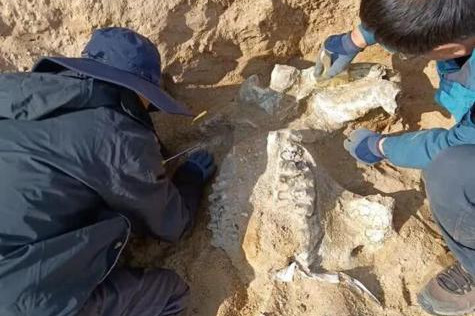
In a groundbreaking discovery, Chinese researchers have identified a living population of the freshwater snail species Yawangia leei, which had been presumed extinct for nearly a century. The finding, made in Guilin, Guangxi Zhuang Autonomous Region, marks a significant milestone in biodiversity research. The study, led by a team from the Kunming Institute of Zoology under the Chinese Academy of Sciences, utilized meticulous morphological and phylogenetic analyses to confirm the species’ identity. Yawangia leei is closely related to Dalipaludina, a group of snails native to the high-altitude still-water environments of Yunnan Province. Zhang Lejia, the study’s lead author and an assistant researcher at the institute, explained that the species was previously known only from fossilized shells discovered in Quaternary deposits within Guilin’s caves. The recent discovery of a small living population in a river near downtown Guilin has provided fresh insights into the species’ survival and evolution. The shells of the living specimens align perfectly with the fossilized type specimens, including all previously documented morphological variations. The findings, published on October 23 in the international journal Zoologica Scripta, underscore the importance of continued biodiversity research and conservation efforts.
-

Shenzhou XX crew’s return trip delayed due to space debris risk
The scheduled return of the Shenzhou XX crew from the Tiangong space station has been postponed due to potential risks posed by space debris, as announced by the China Manned Space Agency. Originally planned for Wednesday, the decision to delay the return was made after assessments revealed that the Shenzhou XX spacecraft, responsible for transporting the three astronauts back to Earth, faced a heightened risk of collision with small debris particles. The agency emphasized that the safety of the crew and the success of the mission remain the top priorities, though a new return date has yet to be disclosed. The Shenzhou XX team, consisting of mission commander Senior Colonel Chen Dong and crew members Colonel Chen Zhongrui and Colonel Wang Jie, has been stationed at the Tiangong space station since April 25, marking over six months in orbit. This mission represents China’s 15th manned spaceflight and the ninth group of residents aboard the Tiangong, which stands as the only independently operated space station globally. Meanwhile, the Shenzhou XXI mission, which arrived at the station on Saturday, has assumed control of operations, ensuring a seamless transition. The delay underscores the growing challenges posed by space debris, a critical issue for space agencies worldwide.
-

China becomes first to transmute thorium into uranium for nuclear fission
China has achieved a groundbreaking milestone in nuclear energy by becoming the first country to successfully transmute thorium into uranium for nuclear fission. This historic feat was accomplished at the experimental Thorium Molten Salt Reactor (TMSR) located in Wuwei, Gansu province, under the leadership of the Shanghai Institute of Applied Physics, Chinese Academy of Sciences. The reactor confirmed the successful conversion of thorium-232 to uranium-233, marking a significant step in the thorium fuel cycle’s technical feasibility. This achievement not only solidifies China’s leadership in molten salt reactor research but also addresses the nation’s reliance on imported uranium, offering a sustainable alternative. Thorium, abundant in China, boasts advantages such as a negative temperature coefficient of reactivity, reducing radioactive release risks, and producing less hazardous waste. The TMSR, a fourth-generation reactor, integrates seamlessly with renewable energy sectors and industrial applications. Initiated in 2011, the project has seen rapid progress, with full-power operation achieved in 2024 and the first thorium loading completed in October 2025. The program, involving nearly 100 institutions and companies, has established a fully localized supply chain, paving the way for commercial-scale thorium-based energy by 2035.
-

Astronauts savor grilled chicken and beef in space
In a groundbreaking culinary achievement, Chinese astronauts aboard the Tiangong space station have become the first humans to grill and consume chicken and beef in outer space. This historic event, facilitated by a specially designed oven delivered by the Shenzhou XXI spacecraft, marks a significant milestone in space exploration and living conditions for astronauts. The Shenzhou XXI crew, including mission commander Senior Colonel Zhang Lu and spaceflight engineer Major Wu Fei, collaborated with the Shenzhou XX team to prepare and enjoy grilled chicken wings and black pepper beef steaks. The process was captured in a video broadcasted from the space station, showcasing the astronauts’ excitement and satisfaction with their space-cooked meals. According to Liu Weibo, an engineer at the Astronaut Center of China, the oven was developed to enhance the dining experience and living quality of astronauts by allowing them to cook a variety of foods, including cakes and roasted peanuts, in microgravity. Wang Yanan, chief editor of Aerospace Knowledge magazine, highlighted the technical challenges of creating an oven for space use, emphasizing the need for innovative solutions to manage heat and cooking fumes in the absence of convection. This achievement not only underscores China’s advancements in space technology but also sets a new standard for future space missions, offering a glimpse into the potential for more diverse and enjoyable culinary experiences in space.