A groundbreaking development in material science has emerged from China, where researchers at Zhejiang University have created a polymer so powerful that a minuscule amount can tow a car. Inspired by traditional weaving methods, the team engineered a material by intertwining flexible and rigid polymer chains at the molecular level. Their findings, published in the journal Nature Materials, reveal a material with unparalleled strength and durability. The scientists used flexible polyurethane chains as the ‘warp’ and rigid epoxy resin chains as the ‘weft,’ mimicking the structure of textiles. This innovative approach resulted in a material with a lap shear strength more than double that of conventional adhesives. In a striking demonstration, a small adhesive patch measuring just 2.5 by 1.3 centimeters successfully towed a 2.1-tonne vehicle. This breakthrough opens new possibilities for designing advanced materials tailored for industrial applications, potentially revolutionizing fields such as construction, automotive, and aerospace.
分类: science
-

Chinese researchers solve mystery of seismic activities at eastern Himalayas
In a groundbreaking study published in the National Science Review, Chinese researchers have decoded the mechanisms driving seismic activities in the eastern Himalayas. This discovery sheds light on the region’s earthquake risks and the geological processes shaping this iconic mountain range. The Himalayas, formed by the collision of the Indian and Eurasian tectonic plates, have long been a focal point for seismic research. While the central section is well understood, the eastern Himalayas’ tectonic complexity has remained a mystery until now. Scientists from the Institute of Tibetan Plateau Research, Chinese Academy of Sciences, employed advanced broadband seismic arrays to analyze the regional stress field and the structural dynamics of the converging plates. Their findings reveal a dominant north-south horizontal compression, coupled with the gentle underthrusting of the Indian plate. This combination explains both the generation of megathrust earthquakes and the uplift of the mountain ranges. Dr. Bai Ling, the study’s lead author, emphasized the next phase of research will explore how continental collision influences seismic activity and plateau evolution. This study not only advances scientific understanding but also enhances earthquake preparedness in the region.
-

New frog species found in South China’s Guangdong, named after kung fu
A groundbreaking discovery has been made in Foshan, Guangdong province, where researchers have identified a new frog species named Leptobrachella kungfu. This unique name pays homage to Foshan’s rich cultural heritage as a renowned ‘City of Kung Fu.’ The discovery was a collaborative effort by scientists from the Guangdong Polytechnic of Environmental Protection Engineering and the Guangdong Provincial Academy of Environmental Science, with their findings published in the prestigious international journal ZooKeys on November 13, 2025. The new species was identified through detailed morphological and molecular analyses. Characterized by its small size, the adult male specimens measure between 25.7 mm and 28.2 mm in snout-vent length. Distinctive features include a black line behind the eye, slightly webbed toes with wide edges, uninterrupted ridges under the toes, and rough back skin without larger folds. The species primarily inhabits the hilly regions of the western Guangdong-Hong Kong-Macao Greater Bay Area, a densely populated and highly urbanized zone. Lin Shishi, the team leader, emphasized the importance of this discovery, stating that it highlights the critical role of small natural habitats within urban areas as sanctuaries for unique species. This finding also underscores the ongoing advancements in specialized biodiversity surveys in the region. To aid in further species recognition and conservation, the research team has developed an identification guide for the Leptobrachella genus in Guangdong.
-

Intl experts raise alarm over the accelerating loss of biodiversity
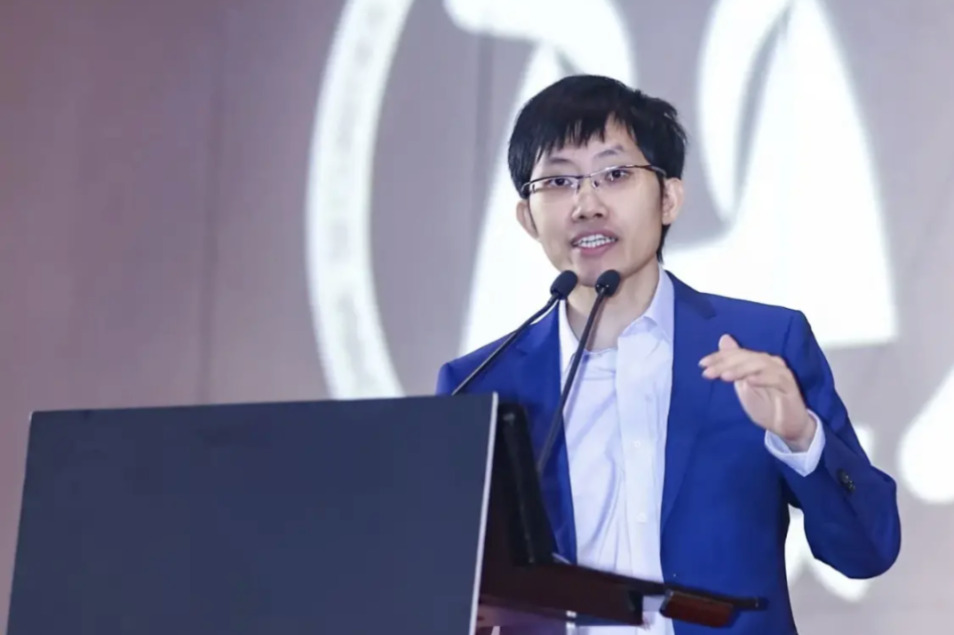
International experts have issued a stark warning about the accelerating loss of biodiversity, driven by global environmental changes. Speaking at the 2025 World Science and Technology Development Forum in Beijing, Rodolfo Dirzo, a biology professor at Stanford University, emphasized the urgent need for strengthened scientific research to combat this crisis. Dirzo described the current era as one of ‘anthropogenic, dramatic global environmental change,’ with biodiversity loss being the most critical issue. He cited the drastic decline of vultures in India as a case study, where a 95% population drop led to increased stray dogs, rabies cases, and public healthcare costs. Dirzo stressed the importance of halting habitat destruction, overexploitation of resources, and adopting a multidisciplinary approach to address the problem. Sun Baojun, a researcher from the Chinese Academy of Sciences, echoed these concerns, highlighting the need for proactive research to identify vulnerable species and regions. Sun’s team found that lizards from low-latitude areas are particularly at risk and should be prioritized for protection. Both experts underscored the critical role of science in mitigating biodiversity loss and its cascading effects on ecosystems and human health.
-

Watch: Timelapse video shows rare northern lights display in Iowa
A breathtaking celestial phenomenon graced the skies of Iowa this week as a powerful geomagnetic storm brought the northern lights to regions far beyond their typical Arctic confines. Captured in a stunning timelapse video, the aurora borealis painted the night sky with vibrant hues of green, purple, and pink, captivating residents and stargazers alike. This rare occurrence was triggered by heightened solar activity, which propelled charged particles toward Earth, interacting with the planet’s magnetic field to create the dazzling light show. While the northern lights are typically confined to higher latitudes, this event allowed even midwestern states like Iowa to witness the spectacle. Experts suggest that such displays may become more frequent as the sun approaches the peak of its 11-year solar cycle. The event has sparked widespread excitement and renewed interest in space weather phenomena.
-

Food-snatching seagulls are more likely to leave you alone if you shout at them, researchers say
A recent study conducted by researchers at the University of Exeter’s Center for Ecology and Conservation has uncovered an effective strategy to deter seagulls from stealing food: shouting. The research, published in the peer-reviewed journal Biology Letters, explored whether a human voice could discourage European herring gulls from snatching snacks in seaside towns. The findings revealed that while speaking can momentarily halt the birds, shouting is far more effective in making them flee. The study involved placing fries in a Tupperware box across southwest England and testing the reactions of 61 gulls to recordings of a robin’s song, a male voice speaking calmly, and a male voice shouting. The results showed that the gulls were more vigilant and less likely to approach the food when exposed to human voices, particularly when the tone was urgent. The birds tended to walk away from a speaking voice but flew away from shouting, indicating their ability to differentiate between vocalizations. Neeltje Boogert, a researcher involved in the study, noted that the gulls seemed to pay attention to the manner of speech, a behavior not previously observed in wild species. The study also highlighted that the experiment was designed to demonstrate non-aggressive methods of deterring gulls, a species of conservation concern in the U.K. Further research could explore whether gulls react differently to female voices.
-

Astronauts’ return mission proceeds smoothly
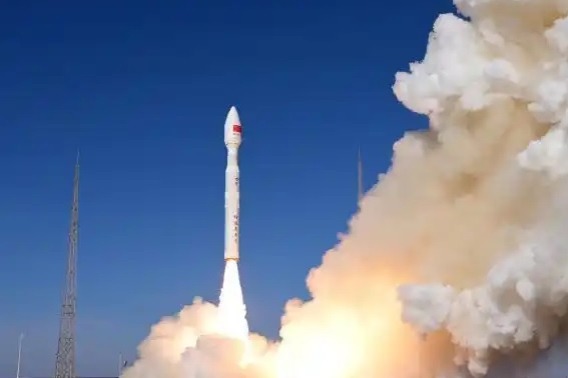
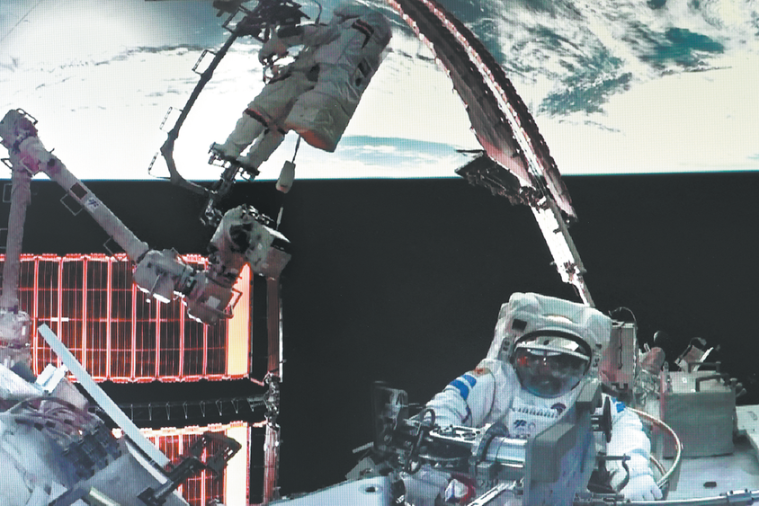
The return mission of the Shenzhou XX astronauts, initially delayed due to safety concerns over space debris, is now proceeding smoothly, according to the China Manned Space Agency. The agency announced on Tuesday that mission planners and engineers have implemented emergency response measures, prioritizing the safety of the astronauts. Comprehensive simulation analyses, tests, and safety assessments are being conducted to ensure the Shenzhou XX spaceship is in optimal condition and all potential risks are mitigated. Detailed steps are being formulated to facilitate the crew’s safe return to Earth. Ground personnel at the Dongfeng landing site in northern China are conducting intensive drills to prepare for the astronauts’ arrival. Currently, the Tiangong space station is in good condition and can accommodate two mission crews. The Shenzhou XX astronauts, who have been aboard the space station for six months, are living normally and collaborating with the Shenzhou XXI crew on scientific tasks. The Shenzhou XX team, led by mission commander Senior Colonel Chen Dong and including crew members Colonel Chen Zhongrui and Colonel Wang Jie, was originally scheduled to return on November 5. Their return was postponed after it was discovered that the Shenzhou XX spaceship might have been struck by small pieces of space debris. Space debris, which includes spent rocket stages, old satellites, and fragments from disintegration, erosion, and collisions, poses significant risks to operational spacecraft and manned spaceflights.
-

Nobel laureate urges China to deepen space collaboration
Renowned astrophysicist Reinhard Genzel, recipient of the 2020 Nobel Prize in Physics, has emphasized the necessity for China to embed long-term scientific endurance into its national strategy to secure a leading role in space exploration. Speaking at the Hong Kong Laureate Forum, Genzel highlighted that while China has made significant investments in space projects over the past decade, it must now transform this technological momentum into institutional permanence to avoid falling behind in the global race for space supremacy. Genzel, who also serves as co-director of the Max Planck Institute for Extraterrestrial Physics and professor at Ludwig Maximilian University of Munich and the University of California, Berkeley, stressed the importance of building structures that can sustain scientific efforts beyond political cycles. He noted that the era of US dominance in space science, driven by Cold War investments, has evolved into a more distributed landscape with China and Europe making substantial strides. Genzel pointed to China’s FAST telescope as a remarkable achievement but cautioned that future large-scale projects will require international collaboration due to their complexity and cost. He cited the James Webb Space Telescope and the Extremely Large Telescope in Chile as examples of projects that have pushed the limits of national capabilities and budgets. Genzel concluded that the next generation of scientific endeavors will necessitate multinational cooperation to achieve groundbreaking discoveries.
-

Evidence of ancient tree-climbing ‘drop crocs’ found in Australia
In a groundbreaking discovery, scientists have uncovered Australia’s oldest known crocodile eggshells, believed to belong to the enigmatic ‘drop crocs’—tree-climbing crocodiles that once roamed the continent. The 55-million-year-old eggshells were found in a sheep farmer’s backyard in Queensland, with the findings published in the Journal of Vertebrate Paleontology. These eggshells are linked to the mekosuchines, an extinct group of crocodiles that thrived in inland waters when Australia was still connected to Antarctica and South America. Co-author Prof. Michael Archer, a palaeontologist at the University of New South Wales, described these creatures as ‘bizarre,’ suggesting they may have hunted like leopards, dropping from trees onto unsuspecting prey. The mekosuchines, which could grow up to five meters in length, were abundant long before their modern counterparts arrived in Australia around 3.8 million years ago. The eggshells were discovered decades ago but were only recently analyzed with the assistance of Spanish scientists. This discovery complements earlier findings of younger mekosuchine fossils in 25-million-year-old deposits elsewhere in Queensland. Prof. Archer has been part of a team excavating a clay pit in Murgon since the early 1980s, a site renowned as one of Australia’s oldest fossil locations. The area, once a lush forest, was home to the world’s oldest-known songbirds, Australia’s earliest frogs and snakes, and a variety of small mammals with South American connections. Prof. Archer recounted how he and a colleague first approached the farmer in 1983, leading to the excavation of this prehistoric treasure trove. He expressed optimism that further digging will reveal even more surprises from this ancient ecosystem.
-

Scientists predict new ultrastable 2D materials for fast-charging, long-lasting batteries
A groundbreaking study led by researchers at Tianjin University has unveiled a new family of two-dimensional (2D) topological telluride materials that could significantly enhance the performance and durability of lithium-ion and sodium-ion batteries. Published in the prestigious journal Advanced Science, the research utilized first-principle calculations to identify materials such as HfTiTe4, ZrTiTe4, and HfZrTe4. These ultrathin layers exhibit remarkable properties, including fast-charging capabilities, structural stability, and thermal endurance up to 227 degrees Celsius. Dr. Ji Kemeng, a key researcher, emphasized that these materials could pave the way for next-generation batteries with higher specific capacity and longer lifespans. The study, a collaborative effort involving institutions like Shanghai Jiao Tong University, Zhejiang University, and the University of California, Irvine, highlights the potential of theoretical computation in designing advanced energy-storage solutions. The findings are particularly promising for applications in electric vehicles, industrial-scale storage, and portable electronics, where high performance under demanding conditions is crucial.