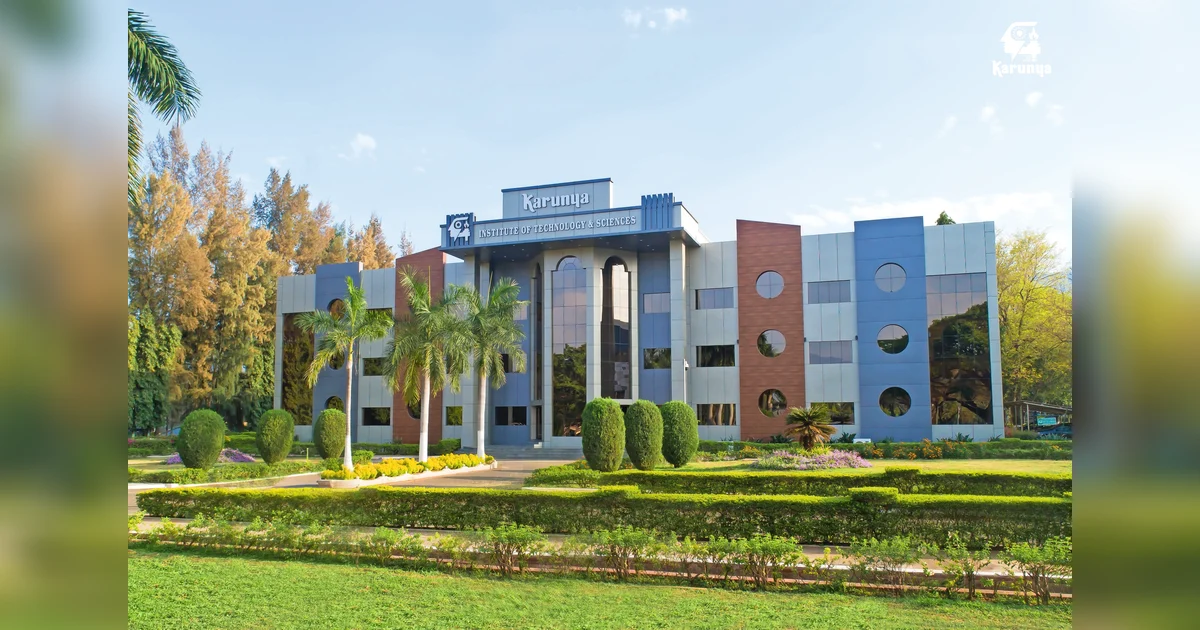
The southern Indian city of Coimbatore has undergone a remarkable transformation from its industrial roots to become a leading destination for higher education, particularly attracting Non-Resident Indian families from Gulf regions. This evolution stems from the city’s unique combination of robust industry presence, academic excellence, and exceptional quality of life that creates an ideal ecosystem for globally-relevant education.
Central to Coimbatore’s educational appeal is its strong integration with thriving engineering, manufacturing, healthcare, IT, and emerging deep-tech sectors. This industrial connectivity provides students with unparalleled opportunities for industry-linked learning, applied research, and practical problem-solving experiences. The city offers academic distinction within a culturally grounded, safe environment without the excessive pressures and costs associated with larger metropolitan centers.
For Gulf-based NRI families, Coimbatore presents particular advantages including cultural familiarity, English-medium instruction, robust infrastructure, and strong academic outcomes that ease the transition from overseas schooling to Indian higher education. The city delivers global standards and employability while maintaining affordability and traditional values that resonate with international Indian families.
Karunya University stands at the forefront of this educational transformation, having established itself as a benchmark for private higher education in South India. The institution’s impressive credentials include NAAC A++ accreditation, UGC Category 1 status, QS I-GAUGE Platinum rating, and recognition in the Times Higher Education World University Rankings 2025. These accolades reflect sustained investments in research infrastructure, faculty development, and global engagement initiatives.
The university’s industry-integrated programs represent a significant draw for international students. Notable collaborations include B.Tech in Computer Science with Google, Robotics and Automation with FESTO, MBA integrated with Zoho, Energy Science with AMARON, and Biomedical Engineering with Phoenix Medical Systems. These partnerships ensure academic learning remains aligned with real-world market requirements.
Financial accessibility is enhanced through scholarship programs offering up to 70% support for eligible NRI students, complemented by structured assistance for accommodation, mentorship, and visa processing. This combination of affordability and credibility creates a compelling proposition for international families.
Beyond teaching excellence, Karunya has established itself as a research-intensive institution, securing over ₹600 million in funded projects from prestigious agencies including DST, DRDO, ISRO, DBT, and ICMR. Research focuses address critical global challenges through advanced AI, robotics, renewable energy, water sustainability, biomedical innovation, and precision agriculture.
The university’s technological infrastructure includes an Nvidia DGX Supercomputer supporting advanced AI and deep learning research. Centers of Excellence with industry leaders such as Siemens, IBM, Nvidia, CISCO, Microsoft, and Novell bridge theoretical knowledge with practical application.
Karunya’s research initiatives have generated substantial societal impact through collaborations with international partners. These include developing desalination and wastewater treatment systems with Ben-Gurion University and SUEZ India, creating AI-based assistive technologies for the visually impaired in partnership with Harvard Medical School, and designing precision farming solutions with Israel’s Agricultural Research Organization.
Global engagement forms a core component of Karunya’s educational philosophy. The university maintains active collaborations with prestigious institutions worldwide including Technion and Hebrew University in Israel, RWTH Aachen in Germany, University of Wisconsin Milwaukee, and numerous partners across Europe, North America, Asia, and Australia. Students benefit from semester-abroad programs, international internships, joint research opportunities, and academic exchanges spanning more than 90 countries.
While maintaining a 100% placement record across all departments, Karunya measures success beyond conventional employment metrics. The university’s comprehensive incubation ecosystem—comprising the Karunya Technology Business Incubation Park (K-TBIP), Karunya Incubation Foundation (KIF), and Karunya Innovation Design Studio (KIDS)—supports student startups, patent development, and entrepreneurial ventures. This approach cultivates not just employable graduates but ethical innovators and change-makers prepared for global leadership roles.