分类: education

  • Thai students to train in China as universities expand high-speed rail cooperation

    Thai students to train in China as universities expand high-speed rail cooperation

    In a significant expansion of Sino-Thai educational cooperation, over 40 Thai students are scheduled to undertake specialized high-speed rail training programs in China throughout 2026. This initiative follows a newly established partnership between Tianjin Railway Technical and Vocational College and Thailand’s Mahasarakham University.

    The collaboration will see 30 Thai students arriving in Tianjin this April for an intensive 40-day practical course focused on rail transit systems. Additionally, between 15 to 25 students will participate in a joint ‘2+1’ undergraduate program specializing in railway signal automatic control, representing a deepening of academic exchanges between the two nations.

    This educational partnership operates under the framework of the Luban Workshop initiative, China’s vocational training cooperation program with Belt and Road participant countries. The program aims to share technological expertise and establish standardized training protocols across participating nations.

    Since initiating cooperation in 2018, Tianjin Railway Technical and Vocational College has actively collaborated with Thai educational institutions to transfer Chinese high-speed rail standards, advanced technologies, and specialized training equipment. Notably, Chinese-developed training equipment has been integrated into Thai campus curricula and has received official designation for Thailand’s national skills competitions, demonstrating the practical implementation of this knowledge transfer.

    The partnership was highlighted during a recent visit by Mahasarakham University President Prayook Srivilai, who experienced Chinese railway technology firsthand through a subway driving simulator. This hands-on demonstration underscored the practical nature of the technological and educational exchange occurring between the two countries.

  • Award-winning education leader Dr Richa Arora promoted to CEO; Named among Forttuna Global 100 Visionary Leaders

    Award-winning education leader Dr Richa Arora promoted to CEO; Named among Forttuna Global 100 Visionary Leaders

    The University of Stirling’s Ras Al Khaimah Campus has entered a transformative new chapter with the promotion of Dr. Richa Arora from Chief Operating Officer to CEO and Head of Institution in January 2026. This strategic leadership transition signals a significant development in the UAE’s higher education landscape, positioning the UK-based institution for accelerated growth under Dr. Arora’s internationally recognized expertise.

    Dr. Arora’s elevation follows an exceptionally productive tenure as COO, during which she engineered substantial institutional transformation through disciplined governance frameworks, automation-driven operational models, and employability-focused educational systems. Her leadership philosophy centers on building sustainable institutions rather than merely expanding campuses, evidenced by her successful implementation of robust academic governance structures aligned with both UK standards and UAE regulatory requirements.

    A hallmark of Dr. Arora’s approach has been the strategic integration of automation across all campus functions. She conceptualized digital systems not merely as efficiency tools but as comprehensive governance frameworks that enhance transparency, break down departmental silos, and enable data-informed decision-making. This technological foundation has been crucial in maintaining academic integrity while supporting responsible expansion.

    Under her guidance, graduate employability has been transformed from a peripheral service into an institutional strategic priority. The campus has established industry advisory boards, employer-led curriculum development initiatives, and technology-enabled tracking systems that monitor internships, employer feedback, and graduate outcomes as executive-level key performance indicators.

    Dr. Arora’s contributions have garnered significant international recognition, including the prestigious Forttuna Award for Education Leader of the Year and placement among the Forttuna Global 100 World’s Most Visionary Leaders for 2026. Her leadership profile was further elevated through feature appearances at New York’s Times Square, cementing her status as a global education innovator.

    Looking forward, Dr. Arora is spearheading the development of an AI-enabled and metaverse-integrated campus ecosystem. Her visionary roadmap includes intelligent academic analytics, predictive student success systems, virtual laboratories, and immersive learning environments designed to prepare students for emerging industries rather than historical roles. Simultaneously, she is introducing region-specific programs aligned with UAE economic priorities, including artificial intelligence, fintech, and digital transformation specialties.

    Beyond her institutional responsibilities, Dr. Arora serves as an advisor to education startups, sharing her expertise in regulatory compliance, academic governance, and future-ready program design. Her leadership represents a new paradigm in higher education management that balances technological innovation with sustainable institutional development, positioning the Ras Al Khaimah campus as a model for transnational education excellence.

  • UAE schools expand FS2, Grade 1 capacity to meet rising demand amid new age cut-offs

    UAE schools expand FS2, Grade 1 capacity to meet rising demand amid new age cut-offs

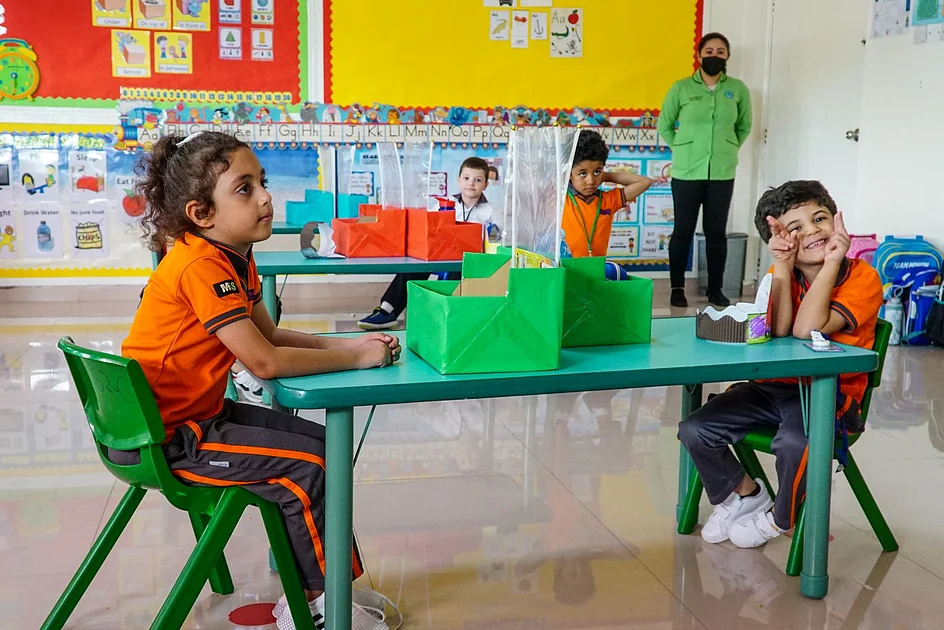
    United Arab Emirates educational institutions are significantly increasing capacity for Foundation Stage 2 and Grade 1 classes to address substantial enrollment demand following recent adjustments to national school entry regulations. The capacity expansion comes as Dubai’s private education sector implements revised age eligibility guidelines issued by the Knowledge and Human Development Authority (KHDA).

    In December, the Ministry of Education extended the enrollment cutoff date from August 31 to December 31 for Foundation Stage One admissions within the British curriculum system. This regulatory change has subsequently influenced placement decisions for FS2, Year 1, and Year 2 admissions across the country.

    The implementation has created logistical challenges for both families and educational institutions. Numerous parents have reported limited availability at preferred schools, necessitating alternative placement arrangements. Concerns have emerged regarding developmental readiness as some children are being placed in older age groups earlier than originally anticipated.

    Marah Kadoura, Principal of Woodlem American School in Ajman, indicated that schools are strategically planning enrollment while prioritizing early applicants. “Although some classes such as KG2 and Grade 1 are approaching capacity, institutions are implementing measures to increase seating availability where feasible,” Kadoura noted, while acknowledging physical infrastructure and class size limitations.

    The KHDA has clarified that children born between September 1 and December 31, 2021, who were previously ineligible for the 2025-2026 academic year, may now register for FS2 or Year 1 for the 2026-2027 session. Final enrollment decisions remain subject to individual assessments of developmental readiness and seat availability.

    Education experts emphasize the critical importance of transparent communication during this transition. Neil Hopkin, Director of Education at Fortes Education, highlighted their comprehensive outreach to affected families: “We have engaged closely with parents to explain how the updated KHDA guidance functions and its implications for individual placements.”

    Developmental considerations remain paramount amidst the regulatory changes. Vandana Gandhi, CEO of British Orchard Nursery, emphasized that “not all children meeting the new age criteria may be developmentally prepared for FS2.” Her organization has implemented an Enhanced Readiness Programme specifically designed to support children requiring additional preparation before transitioning to more formal educational environments.

    As the academic community adapts to these regulatory modifications, maintaining educational quality while accommodating increased demand represents the primary challenge facing UAE educational institutions.

  • A-level exams 2026: Key dates, fees; what students need to know

    A-level exams 2026: Key dates, fees; what students need to know

    As the 2026 A-level examination period approaches, approximately one thousand students throughout the United Arab Emirates are intensifying their preparations for these critical academic assessments that significantly influence future educational pathways. The examination window has been officially scheduled from May 11 to June 23, 2026, with results anticipated for release on August 13, 2026.

    Administrative protocols confirm that AS-level examinations will coincide with the same testing period as their A-level counterparts. Unlike GCSE assessments, A-level examinations generally exclude formula or equation sheets for mathematical, scientific, or economic disciplines, requiring candidates to memorize and appropriately apply relevant formulas during testing.

    Financial considerations indicate examination fees ranging between AED 350 to AED 900 per subject, with variations depending on both the specific subject and examining board. Institutional policies differ regarding fee structures, with some educational establishments incorporating these costs within tuition fees while others levy them as separate charges.

    The grading framework employs a letter-based system from A* to E, with U denoting ungraded performance. Grading boundaries demonstrate annual variability, reflecting examination difficulty and overall cohort performance rather than predetermined distribution percentages. AS-level assessments utilize a parallel grading scale from A to E, excluding the A* designation.

    Recent statistical analysis reveals Mathematics maintains its position as the most frequently selected A-level subject, accounting for 112,138 entries (12.7% of total submissions) during the 2025 examination cycle. Psychology and Biology followed with 75,943 and 71,400 entries respectively, while Chemistry, Business Studies, Physics, History, Sociology, and Art & Design completed the top ten subject preferences.

    Educational institutions are implementing comprehensive support mechanisms addressing both academic preparation and psychological wellbeing during this high-pressure period. These initiatives encompass evidence-based revision methodologies, wellness programs promoting balanced routines, and mental health resources tailored to examination stressors.

  • How ChatGPT is replacing Google search, helping UAE students learn much faster

    How ChatGPT is replacing Google search, helping UAE students learn much faster

    A profound educational transformation is underway across United Arab Emirates universities as artificial intelligence tools fundamentally alter academic practices and student psychology. According to extensive interviews with Emirati students conducted by Khaleej Times, AI platforms—particularly ChatGPT—have largely supplanted traditional Google search methodologies, creating both unprecedented learning efficiencies and new philosophical dilemmas about knowledge acquisition.

    Students report that AI integration has dramatically reduced academic anxiety while accelerating comprehension. Zayed Ahbabi, among those interviewed, revealed that ChatGPT serves as his primary educational tool for rapid concept clarification during fast-paced lectures. The psychological impact appears equally significant, with students describing diminished embarrassment when confronting challenging material and increased confidence in their learning capabilities.

    The technological shift has fundamentally altered study behaviors. Multi-tab Google searching—once synonymous with student research—has substantially declined in favor of AI-driven clarification. Khalifa Ahmed utilizes ChatGPT for structural organization and reading summarization rather than direct answer generation, transforming studying from memorization exercises into conversational learning experiences.

    Yousef AlNaqbi noted the social implications, observing that AI consultation often precedes peer discussion, creating more informed collaborative learning environments. This paradigm shift has enabled students to approach classroom interactions with greater preparedness and confidence.

    Despite overwhelming enthusiasm, students universally expressed caution regarding over-dependence. Concerns about intellectual laziness, reduced critical struggle, and potential social isolation emerged consistently across interviews. UAE academic institutions have responded by incorporating AI into integrity policies while emphasizing student accountability for submitted work.

    The central debate no longer revolves around whether to use AI, but rather how to establish appropriate usage boundaries. Students unanimously agreed that personal judgment and examination performance should remain exclusively human domains, particularly for decisions impacting future trajectories. The emerging challenge has become developing discernment about when AI enhancement serves genuine learning versus when it potentially undermines intellectual development.

  • UK, Chinese universities join hands to tackle global health challenges

    UK, Chinese universities join hands to tackle global health challenges

    In a landmark move for international academic collaboration, the University of Nottingham and its Chinese counterpart, the University of Nottingham Ningbo China (UNNC), have announced the joint establishment of a Division of Life and Health Sciences. This strategic initiative was unveiled during UK Prime Minister Keir Starmer’s official visit to China, signaling strengthened Sino-British relations through educational partnership.

    The new division will serve as an advanced transnational platform integrating education, research, and innovation in life and health sciences. By combining the University of Nottingham’s globally recognized expertise with UNNC’s China-focused regional development approach, the collaboration aims to address pressing global health challenges through cutting-edge solutions and leadership development.

    Through innovative joint academic appointments, collaborative teaching methodologies, and shared research programs, the division will create an internationally benchmarked academic team. It will establish a comprehensive talent pipeline spanning from undergraduate to doctoral levels, facilitating global talent mobility via cross-campus exchanges, clinical placements, and advanced research training opportunities.

    UNNC Provost Jon Garibaldi emphasized the institution’s evolution, stating: ‘Over two decades, UNNC has educated tens of thousands of internationally-minded professionals while expanding cooperation in scientific innovation and industry engagement. This initiative marks our transformation from educational pioneer to multi-sector innovation powerhouse, contributing sustained momentum to closer Sino-British relations.’

    The establishment represents a significant milestone in UNNC’s 20-year history as a pioneering force in Sino-British educational cooperation, potentially creating new paradigms for international academic partnerships in addressing global health challenges.

  • KT UniExpo returns with 10th edition as trusted education gateway

    KT UniExpo returns with 10th edition as trusted education gateway

    Dubai prepares to host the prestigious KT UniExpo for its milestone 10th edition on April 29-30, 2026, at The H Hotel. This landmark event celebrates ten years of serving as the UAE’s premier higher education and career guidance platform, connecting students and parents with leading international universities during critical decision-making phases.

    Organized by KT Events, the exhibition emerges as an essential resource amid evolving discussions about future skills, global mobility, and career preparedness. The 2026 edition will feature over 35 universities and educational institutions from across the globe, including representation from the UAE, United Kingdom, United States, Canada, India, Australia, and various European nations.

    The expo’s comprehensive programme showcase spans cutting-edge disciplines including artificial intelligence, data science, aviation engineering, business management, finance, medical sciences, healthcare studies, media communications, and design innovation. Each participating institution will present curricula specifically designed to align with both emerging industry trends and established professional pathways.

    Beyond traditional university displays, KT UniExpo functions as a practical decision-making forum where attendees can engage in personalized consultations with admissions specialists, financial aid advisors, and career guidance professionals. Students and parents will gain direct access to crucial information regarding admission requirements, scholarship opportunities, visa procedures, and how academic selections translate into tangible career prospects.

    The event holds particular significance for secondary school students contemplating undergraduate education and parents seeking reliable information amidst an increasingly complex global education landscape. With free admission and operational hours from 8:00 AM to 5:00 PM across both days, advance registration through www.ktuniexpo.com is recommended to ensure optimal participation experience.

  • Building an education destination for non-resident Indians

    Building an education destination for non-resident Indians

    The southern Indian city of Coimbatore has undergone a remarkable transformation from its industrial roots to become a leading destination for higher education, particularly attracting Non-Resident Indian families from Gulf regions. This evolution stems from the city’s unique combination of robust industry presence, academic excellence, and exceptional quality of life that creates an ideal ecosystem for globally-relevant education.

    Central to Coimbatore’s educational appeal is its strong integration with thriving engineering, manufacturing, healthcare, IT, and emerging deep-tech sectors. This industrial connectivity provides students with unparalleled opportunities for industry-linked learning, applied research, and practical problem-solving experiences. The city offers academic distinction within a culturally grounded, safe environment without the excessive pressures and costs associated with larger metropolitan centers.

    For Gulf-based NRI families, Coimbatore presents particular advantages including cultural familiarity, English-medium instruction, robust infrastructure, and strong academic outcomes that ease the transition from overseas schooling to Indian higher education. The city delivers global standards and employability while maintaining affordability and traditional values that resonate with international Indian families.

    Karunya University stands at the forefront of this educational transformation, having established itself as a benchmark for private higher education in South India. The institution’s impressive credentials include NAAC A++ accreditation, UGC Category 1 status, QS I-GAUGE Platinum rating, and recognition in the Times Higher Education World University Rankings 2025. These accolades reflect sustained investments in research infrastructure, faculty development, and global engagement initiatives.

    The university’s industry-integrated programs represent a significant draw for international students. Notable collaborations include B.Tech in Computer Science with Google, Robotics and Automation with FESTO, MBA integrated with Zoho, Energy Science with AMARON, and Biomedical Engineering with Phoenix Medical Systems. These partnerships ensure academic learning remains aligned with real-world market requirements.

    Financial accessibility is enhanced through scholarship programs offering up to 70% support for eligible NRI students, complemented by structured assistance for accommodation, mentorship, and visa processing. This combination of affordability and credibility creates a compelling proposition for international families.

    Beyond teaching excellence, Karunya has established itself as a research-intensive institution, securing over ₹600 million in funded projects from prestigious agencies including DST, DRDO, ISRO, DBT, and ICMR. Research focuses address critical global challenges through advanced AI, robotics, renewable energy, water sustainability, biomedical innovation, and precision agriculture.

    The university’s technological infrastructure includes an Nvidia DGX Supercomputer supporting advanced AI and deep learning research. Centers of Excellence with industry leaders such as Siemens, IBM, Nvidia, CISCO, Microsoft, and Novell bridge theoretical knowledge with practical application.

    Karunya’s research initiatives have generated substantial societal impact through collaborations with international partners. These include developing desalination and wastewater treatment systems with Ben-Gurion University and SUEZ India, creating AI-based assistive technologies for the visually impaired in partnership with Harvard Medical School, and designing precision farming solutions with Israel’s Agricultural Research Organization.

    Global engagement forms a core component of Karunya’s educational philosophy. The university maintains active collaborations with prestigious institutions worldwide including Technion and Hebrew University in Israel, RWTH Aachen in Germany, University of Wisconsin Milwaukee, and numerous partners across Europe, North America, Asia, and Australia. Students benefit from semester-abroad programs, international internships, joint research opportunities, and academic exchanges spanning more than 90 countries.

    While maintaining a 100% placement record across all departments, Karunya measures success beyond conventional employment metrics. The university’s comprehensive incubation ecosystem—comprising the Karunya Technology Business Incubation Park (K-TBIP), Karunya Incubation Foundation (KIF), and Karunya Innovation Design Studio (KIDS)—supports student startups, patent development, and entrepreneurial ventures. This approach cultivates not just employable graduates but ethical innovators and change-makers prepared for global leadership roles.

  • Shing-Tung Yau: We aim to cultivate interdisciplinary talent

    Shing-Tung Yau: We aim to cultivate interdisciplinary talent

    In an exclusive interview with China Daily, renowned mathematician and Fields Medal recipient Shing-Tung Yau outlined the educational philosophy behind Tsinghua University’s Qiuzhen College, emphasizing the critical need for cultivating interdisciplinary talent rather than narrow specialists. As the founding dean of this specialized institution launched in October 2020 with central government approval, Yau articulated a vision for developing innovative thinkers with broad knowledge bases and adaptable mindsets.

    The distinguished mathematician criticized conventional educational approaches that confine students within rigid disciplinary boundaries, advocating instead for an integrated learning model that fosters intellectual versatility. Yau’s comments come as China continues to strengthen its advanced education system, particularly in foundational sciences and mathematics.

    Qiuzhen College represents a significant experiment in Chinese higher education, established specifically to nurture exceptional mathematical talent through a unique curriculum that encourages cross-disciplinary exploration. Yau emphasized that true innovation emerges from the intersection of different fields, where mathematical thinking can inform and transform other domains of knowledge.

    The college’s approach aligns with global trends in elite education that prioritize synthetic thinking and problem-solving capabilities over specialized technical proficiency. Yau, who has previously noted that Tsinghua’s mathematical talent rivals top US institutions, believes this educational model will produce graduates capable of addressing complex, multidimensional challenges that define contemporary scientific and technological advancement.

  • Tsinghua math talent rivals top US peers, Yau says

    Tsinghua math talent rivals top US peers, Yau says

    World-renowned mathematician Shing-Tung Yau has declared that Tsinghua University’s specialized mathematics program has surpassed expectations, with students demonstrating capabilities that rival and even exceed those from top American universities. The Fields Medalist and dean of Tsinghua’s Qiuzhen College revealed these findings in an exclusive interview, simultaneously calling for fundamental reforms in China’s education system.

    The Yau Mathematical Sciences Leaders Program, established in 2020 with central government approval, selects approximately 100 secondary students annually for an accelerated eight-year bachelor’s-to-PhD track, exempting them from the traditional gaokao examination system. Now in its fifth year with nearly 800 students, the program has yielded exceptional results in the prestigious Putnam Competition—an intensely challenging undergraduate mathematics contest—where Tsinghua students have performed comparably to MIT counterparts and surpassed those from other elite US institutions since 2022.

    Beyond competitive achievements, Yau emphasized the program’s interdisciplinary approach that integrates mathematics and physics with artificial intelligence, biology, and humanities. Students visit historical sites to develop cultural connections, with some producing reflective travel notes in classical Chinese. The program aims to cultivate passionate, innovative thinkers rather than narrow specialists.

    Yau has additionally pioneered over 50 junior classes across China for gifted middle school students, enrolling approximately 3,000 twelve-year-olds annually. These programs emphasize authentic learning over exam preparation, fostering early interest in foundational sciences. The group-based admissions structure helps prevent psychological pressure and loneliness through peer support and mentoring from undergraduate and postdoctoral students.

    Despite these successes, Yau acknowledged challenges as students advance to postgraduate studies. While undergraduate training remains strong, the true measure of success will be whether graduates can produce world-leading research that transforms mathematical paradigms. Although Qiuzhen College already features world-class mathematicians like Fields Medalist Caucher Birkar and top symplectic geometry scholar Kenji Fukaya as chair professors, Yau stressed the need for additional elite scholars to guide students toward groundbreaking research.

    Yau criticized the exam-oriented approach that has dominated Chinese education over the past two decades, noting that drill-based preparation doesn’t represent traditional methodology. He expressed optimism about math graduates’ employment prospects given strong government support for basic science, urging young scholars to pursue deep engagement with their field rather than quick professional advancement.

    The mathematician also defended humanities’ role in scientific education, arguing that literature, history, and philosophy provide emotional depth and perspective that computers cannot replicate. While AI can synthesize historical poetry and produce well-written texts, it cannot cultivate genuine personal emotion or the human capacity for inspired creation.

    Yau measures the program’s ultimate success by its ability to produce thinkers who can change mathematics’ direction, not merely excel at examinations. With solid institutional backing, he believes Qiuzhen College students can eventually achieve this transformative impact on the field.